 Blaine Window
 Storm Damage Roof Repair for Custer Homes
Custer sits inland from the Semiahmoo and Drayton Harbor shoreline, just south of Blaine and east of Birch Bay, in a part of Whatcom County that takes weather from two directions at once: wet, wind-driven systems rolling in off the Salish Sea, and cold outflow winds that funnel down out of the Fraser Valley to the north. Roofs out here don't fail because of one dramatic storm most of the time — they fail because of what a string of ordinary Whatcom County winters does to shingles, flashing, and decking when nobody's looking closely. Storm damage repair in this area is as much about catching slow damage before it becomes a leak as it is about patching what a windstorm tore loose last week.
This page covers what storm damage actually looks like on a Custer roof, what a repair should include if it's going to hold, and how we handle the job from first call to final walk-through.
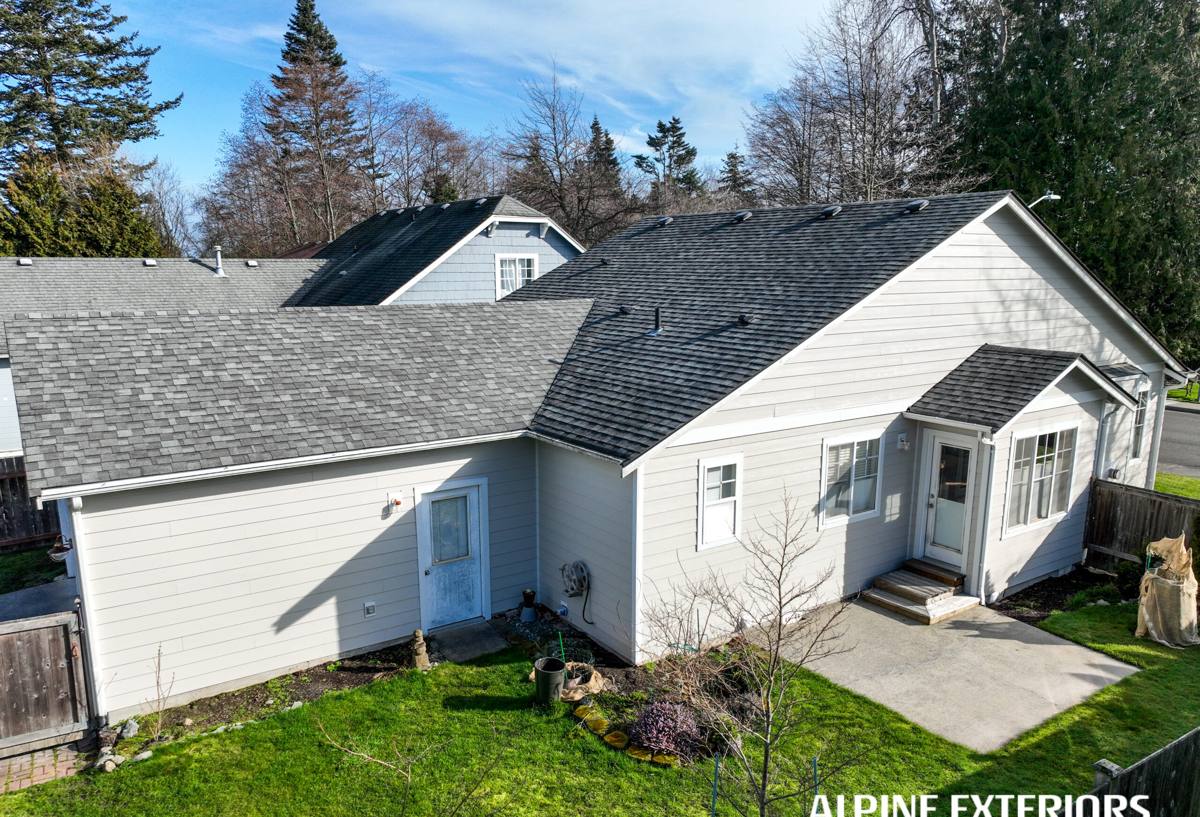
Why This Climate Is Hard on Roofs
Three things do most of the damage to roofs in and around Custer, and they compound each other over a season rather than acting alone.
Salt Air
Being this close to Semiahmoo Bay and the broader Salish Sea means airborne salt reaches roofing metal — flashing, fasteners, gutter hardware, vent caps — well before it reaches a roof further inland. Salt-laden moisture accelerates corrosion on unprotected or lower-grade metal, and once a fastener or flashing edge starts to corrode, it stops sealing the way it did when it was new. That's often where a leak starts, long before a homeowner notices anything wrong with the shingles themselves.
Driving Rain
Whatcom County storms frequently come with sideways rain rather than straight-down rain, especially when outflow winds are pushing weather systems at an angle. Driving rain finds every gap a calm rain would never reach — under lifted shingle tabs, behind poorly lapped flashing, into nail holes that have backed out slightly. A roof that would shed a normal rain event without issue can still take on water during a wind-driven storm if the details underneath aren't right.
A Long Moss Season
Shade, moisture, and mild temperatures for most of the year add up to a moss season that runs far longer here than it does in drier parts of the state. Moss holds moisture directly against the shingle surface, works its way under tab edges as it grows, and lifts shingles just enough for wind and rain to get underneath. Left alone through a few wet seasons, moss doesn't just look bad — it actively shortens the life of the roofing material underneath it.
What Actually Counts as Storm Damage
Not every problem a homeowner notices after a windy night is dramatic, and not every dramatic-looking problem is actually storm damage. Here's what we're usually asked to look at in Custer:
- Wind-lifted or torn shingle tabs — the seal strip breaks and the tab flaps loose, or tears off entirely in a gust.
- Flashing pulled away from chimneys, walls, or roof-to-roof transitions — often from wind uplift or from corrosion weakening the fastener.
- Granule loss from wind-driven debris — branches, grit, and hail-sized debris strip protective granules, exposing the asphalt mat underneath.
- Gutter and downspout damage — pulled fasteners, dented sections, or downspouts torn loose that then let water sheet down the siding instead of draining away.
- Moss-related lifting — not a storm event on its own, but moss growth that has already lifted shingles is often what turns an ordinary storm into an active leak.
- Impact damage from falling limbs — common where mature trees overhang a roofline, which describes a good share of properties in this area.
The honest answer to "is this storm damage" is usually: partly. A storm is often the event that exposes a weakness — corroded flashing, moss-lifted shingles, a fastener that had already backed out — that was building for a while beforehand.
Signs a Custer Roof Needs a Post-Storm Inspection
Most storm damage isn't obvious from the ground, and getting on a wet, sloped roof yourself after a windstorm is not worth the risk. These are the signs worth calling about:
- Shingle pieces or granules collecting in gutters or on the ground near the foundation
- A new stain on a ceiling or the top of an interior wall, even a small one
- Daylight visible through the attic roof deck at any point
- Gutters pulling away from the fascia or sagging between hangers
- Flashing that looks bent, lifted, or missing around chimneys, skylights, or vent pipes
- Moss patches that have visibly thickened or spread since the last dry season
- Any exposed underlayment or roof deck visible from the ground with binoculars
If you see any of these after a wind or rain event, it's worth having someone look before the next storm rolls through — not because every sign means a major problem, but because catching it early is almost always the cheaper path.
What a Correct Storm Damage Repair Actually Involves
A storm damage repair done right is not just laying a new shingle over the damaged spot. It involves checking what's underneath and matching the repair to what actually failed:
Assessment Before Any Work Starts
We look at the full roof, not just the area the homeowner pointed out, because wind and moss damage rarely stay confined to one spot. We check the decking for soft spots, the underlayment for tears, and the flashing details for corrosion or separation — all before quoting a repair.
Matching the Repair to the Failure
A torn shingle tab needs a shingle replacement. A corroded flashing joint needs new flashing, not a bead of sealant over the old metal — sealant over corrosion is a delay, not a fix. Soft or rotted decking found under a damaged area needs to be cut out and replaced before anything goes back over it; roofing over bad decking just hides the problem until the next leak.
Material Matching
Where possible, we match the existing shingle color and profile so a repair doesn't stand out as a patch. Weathered shingles don't always match new ones perfectly, and we'll be upfront about that rather than promise an invisible repair on a roof that's had a few seasons of sun and moss exposure.
Our Process, Start to Finish
- Initial call and scheduling — we get a description of what you noticed and when, which helps us prioritize active leaks ahead of cosmetic damage.
- On-site inspection — a full roof walk, not just a look at the reported problem area, including attic access if there's any sign of water intrusion.
- Written scope and estimate — what we found, what needs repair versus what's cosmetic, and a clear price before any work begins.
- Repair work — tear-back of damaged materials, decking repair if needed, new underlayment and flashing where required, and shingle or material replacement matched as closely as possible to the existing roof.
- Cleanup and walk-through — debris and old materials removed, and we walk the completed repair with you before we consider the job done.
Repair or Replacement — How to Tell
Not every storm-damaged roof needs a full replacement, and not every roof that looks fine on the surface is actually a good repair candidate. These are the factors that usually decide it:
| Factor | Repair Is Usually Enough | Replacement Is Usually the Better Call |
|---|---|---|
| Age of existing roof | Under roughly 12–15 years | Already near or past its expected service life |
| Extent of damage | Isolated to one section or slope | Spread across multiple slopes or the whole roof |
| Decking condition | Solid, no rot found | Soft or rotted decking in multiple areas |
| Moss history | Minor, recently treated | Long-term moss growth with widespread lifting |
| Prior repair history | Few or no previous patches | Multiple past patches stacking up |
When a roof is a genuine repair candidate, we'll say so — a repair that's done correctly, with the right decking and flashing work underneath it, can add real years to a roof's life. When it isn't, we'd rather tell you that up front than sell a patch that won't hold through the next wet season.
Insurance and Storm Damage Claims
Many storm damage repairs in this area do go through homeowners insurance, particularly when damage follows a documented wind event. We can provide a written inspection report and photos documenting the damage and its likely cause, which is what most adjusters ask for. We don't process claims or promise coverage outcomes — that's between you and your insurer — but we'll give you an honest, specific description of what we found so you're working from accurate information either way.
Why Local Experience in Custer Matters
A crew that already works this stretch of Whatcom County knows the difference between a routine repair and one that needs extra attention because of proximity to salt air, tree cover, or a north-facing slope that holds moss longer than the rest of the roof. That familiarity shows up in small but meaningful ways: knowing which flashing details tend to fail first in this climate, recognizing moss damage that's more advanced than it looks from the ground, and understanding how outflow wind events tend to hit roofs from an angle most repair work doesn't account for.
It also matters for response time. Storm damage that's left exposed to another round of Whatcom County rain gets worse fast, and a crew already working in and around Custer and Blaine can usually get an inspection scheduled sooner than one traveling in from farther away.
Ready for a Roof Inspection?
If a recent storm left you with lifted shingles, a stain on the ceiling, or a gutter that's pulling loose, it's worth getting a straight answer about what's actually going on before it turns into a bigger repair. We offer a free, no-pressure estimate for storm damage repair in Custer and the surrounding area — use the form below to get in touch and we'll take it from there.