 Blaine Window
 James Hardie Siding, Installed for Custer's Actual Conditions
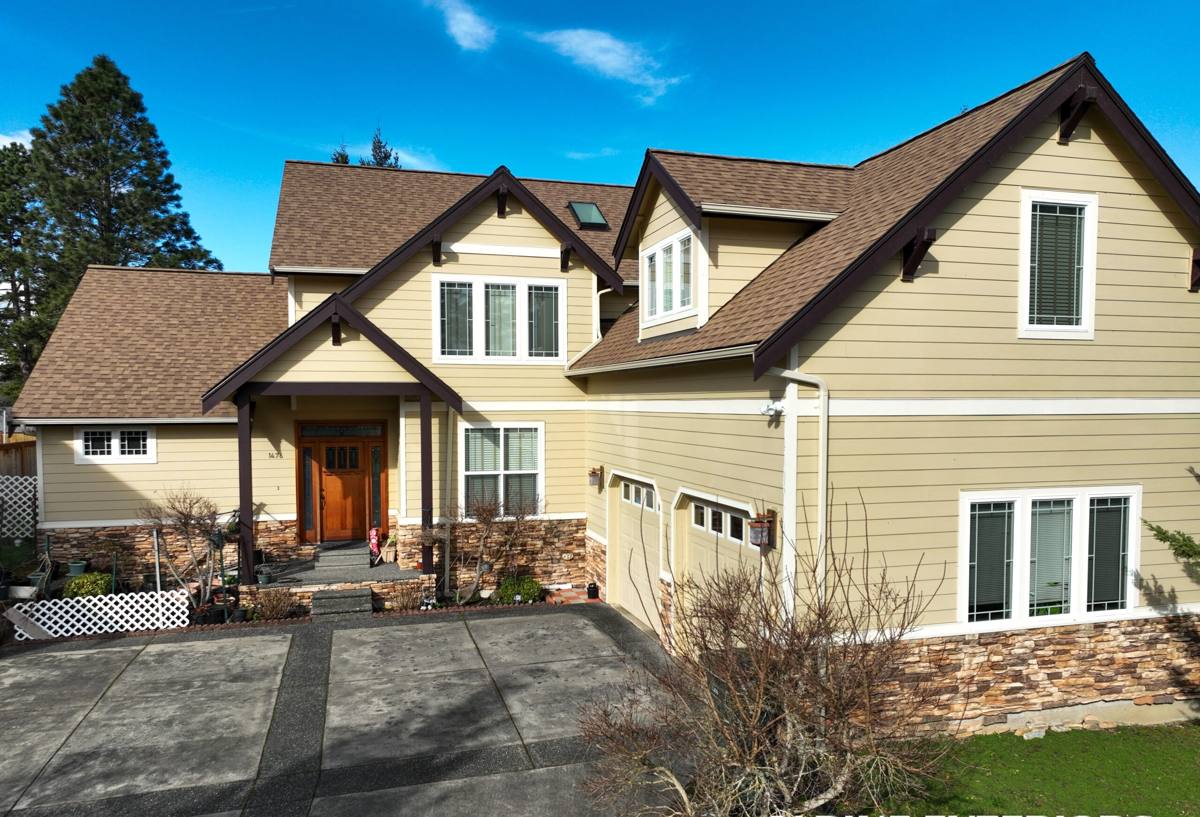
Custer sits on flat, open agricultural land in Whatcom County, close enough to the Salish Sea that salt-laden air reaches most properties on a windy winter storm, not just the homes closest to the water. Add driving rain that comes in sideways more often than it falls straight down, and a moss season that runs long on shaded and north-facing walls, and you get a climate that's genuinely harder on exterior siding than it looks on a mild-mannered Pacific Northwest weather report. We install James Hardie fiber cement siding exclusively, and this page is about what that looks like specifically for a Custer home: what the climate demands, what a correct installation actually involves, how our process runs from first look to final walkthrough, and why it matters that we're already working this area rather than passing through it once.
What Custer's Climate Actually Asks of a Siding System
Salt Air, Even Away from the Waterfront
Custer isn't a waterfront community in the way Blaine's bay-front neighborhoods are, but it's close enough to open water that salt-laden air moves inland on winter storms and settles on siding, trim, and fasteners across town. That exposure accelerates corrosion on lower-grade hardware and wears down factory finishes faster than the same product would age in a drier, inland market. It's a slow effect, not an obvious one, which is exactly why it gets underestimated on properties that don't look "coastal" at first glance.
Wind-Driven Rain Across Open Ground
Flat, open land gives storms very little to slow them down before they reach a house. Rain moving through Custer tends to arrive with real wind behind it, pushed sideways into lap joints, trim seams, and window and door flashing rather than falling straight down the wall. That's a harder test for any siding's water management detailing than a simple annual rainfall number would suggest, and it's the detail that separates a job that holds up for decades from one that starts letting moisture in behind the cladding within a few wet seasons.
A Moss Season That Runs Most of the Year
Mild temperatures combined with near-constant moisture keep moss and mildew active on shaded, tree-lined, and north-facing walls for most of the calendar year around Custer. Any siding surface that's even slightly porous, or that traps moisture against the substrate instead of shedding it, becomes a growth surface over time. That organic growth then holds even more moisture against the wall, which is where a lot of long-term siding problems actually start.
Why James Hardie Is the Right Match for These Conditions
James Hardie fiber cement is a blend of Portland cement, sand, and cellulose fiber, cured into rigid boards and panels. Because it's an inorganic material, it doesn't have a wood-based or petroleum-based core that can absorb water and swell, rot, or feed pests the way organic siding materials can, and it doesn't expand and contract with temperature the way vinyl does. Hardie also engineers its HZ5 product line specifically for regions with sustained moisture exposure and freeze-thaw cycling, which is a closer match to a Whatcom County winter than a product engineered mainly for hot, dry climates. On top of the substrate, Hardie's ColorPlus finish is baked on in a controlled factory process rather than brushed on in the field, which holds color and adhesion noticeably longer under sustained salt air and UV exposure than a site-painted surface does. None of that means the product does all the work by itself — installation quality is still what determines whether a Custer home actually gets that full service life.
What a Correct Hardie Installation Involves
Fiber cement's real-world performance depends heavily on installation details that are easy to rush and hard to inspect once the siding is up. We treat these as the baseline standard on every job, not an upgrade:
- Manufacturer-specified clearances from grade, roofline, and deck surfaces, so splash-back and standing moisture stay away from board edges
- Correct fastener type, spacing, and depth, driven into framing rather than just sheathing
- Proper flashing at every window, door, and wall penetration, detailed to direct wind-driven rain away from seams instead of trapping it
- Factory-cut edges used wherever the layout allows, with every field cut sealed to spec so the factory finish's protection isn't compromised at the cut line
- A drainage plane or rain screen behind the siding, so any moisture that does get past the surface has somewhere to go instead of sitting against the wall
- Correct joint and seam treatment at butt joints and corners, since these are the points wind-driven rain finds first
Skipping any one of these doesn't usually show up as a visible problem on install day. It shows up two or three wet seasons later, as staining, softness, or a warranty claim that gets complicated by an installation detail nobody documented.
How the Process Runs on a Custer Home
Assessment and Estimate
Every job starts with a real look at the house rather than a flat per-square-foot guess: current siding condition, any signs of trapped moisture already showing at trim or grade level, and how exposure to wind and salt air varies across the different sides of the home given how flat and open the surrounding land is. That walk-through is what the estimate is actually based on.
Tear-Off and Sheathing Check
Once the old siding comes off, we check the sheathing underneath for rot or soft spots before anything new goes up. Covering damaged sheathing with new siding just hides a problem that keeps getting worse behind the wall, so this step happens before installation, not as an afterthought if something looks off later.
Weather Barrier and Flashing Detail
Because most coastal-climate siding failures trace back to water getting behind the cladding rather than through the board itself, the house wrap, window and door flashing, and every wall penetration get careful attention here. This is the step that's easiest to shortcut and hardest to catch after the fact, so we treat it as non-negotiable rather than something to move quickly through.
Installation to Manufacturer Spec
James Hardie's warranty depends on installation following their published specifications, and we install to that spec as the default, not as a premium option. That includes the clearances, fastening, and flashing details covered above, applied consistently across every wall, including the sides of the house that don't get direct exposure but still deal with wind-driven moisture wrapping around the structure.
Final Walkthrough
We walk the finished job with the homeowner, cover what maintenance actually looks like for a property in this specific location, and confirm everything matches what was estimated before calling the job done.
Choosing a Hardie Siding Profile for a Custer Home
James Hardie makes several board profiles and panel styles, and the right choice usually comes down to the home's existing architecture, exposure, and the homeowner's maintenance preferences rather than one style being universally "correct."
| Hardie Profile | Where It Fits Well in Custer |
|---|---|
| HardiePlank lap siding | The most common choice for traditional and farmhouse-style homes; wide exposure options shed wind-driven rain effectively when installed with correct overlap |
| HardieShingle straight-edge panels | Works well on gable ends and accent areas; more seams to detail correctly, so flashing and fastening precision matters even more |
| HardiePanel vertical siding | A good fit for board-and-batten style homes and outbuildings; battens need correct fastening since they see direct wind load |
| HardieTrim boards | Used around windows, doors, and corners regardless of field siding choice; correct flashing behind trim is what actually keeps water out |
Why Hiring a Crew That Already Works Custer Matters
A siding crew that's on job sites across this part of Whatcom County through every season, not just when the weather cooperates, builds up a working knowledge that's hard to get any other way: which elevations catch the worst of the wind coming across open ground, which properties see moss pressure heavy enough to change the maintenance conversation before the job even starts, and which install-day details are worth the extra time so a homeowner isn't dealing with a callback two winters later. It also means that if a warranty question or a maintenance issue comes up years down the line, it's a call to a crew still working in the same area and familiar with the property, not a company that quoted the job once and moved on to a different region.
What Maintenance Actually Looks Like After Installation
James Hardie siding is genuinely lower-maintenance than wood-based alternatives, but "low-maintenance" isn't "no-maintenance," especially in a climate that stays damp most of the year. A realistic maintenance routine for a Custer home includes:
- Rinsing siding gently once or twice a year to keep salt residue and dust from building up, especially on walls that catch the prevailing wind
- Checking caulk joints around trim, windows, and doors annually and renewing any that have cracked or pulled away
- Cleaning moss and algae from shaded or north-facing walls with a soft wash rather than high-pressure equipment that can drive water behind the boards
- Keeping gutters clear and grade clearance intact, since ground-level moisture is the most common starting point for long-term siding problems
- Watching for any impact damage or chipped finish and having it addressed before a wet season sets in
What to Ask Before You Sign a Siding Contract
Whether you go with us or another contractor for a Custer siding project, these are worth asking upfront:
- Is the crew manufacturer-certified for the specific James Hardie product line being proposed, not just experienced with siding in general?
- What clearances, flashing details, and fastening spec will actually be used, and can they show you the manufacturer's install sheet?
- How is sheathing damage handled if it turns up during tear-off, and how is that priced?
- What does the warranty actually cover, and does it transfer if the home sells?
- Does the estimate account for this property's specific wind and moisture exposure, or is it a flat per-square-foot number?
If your Custer home needs new siding, or you'd like an honest read on what's already on the walls, we're glad to come take a look and put together a free, no-pressure estimate. Reach out using the form below to get started.