 Blaine Window
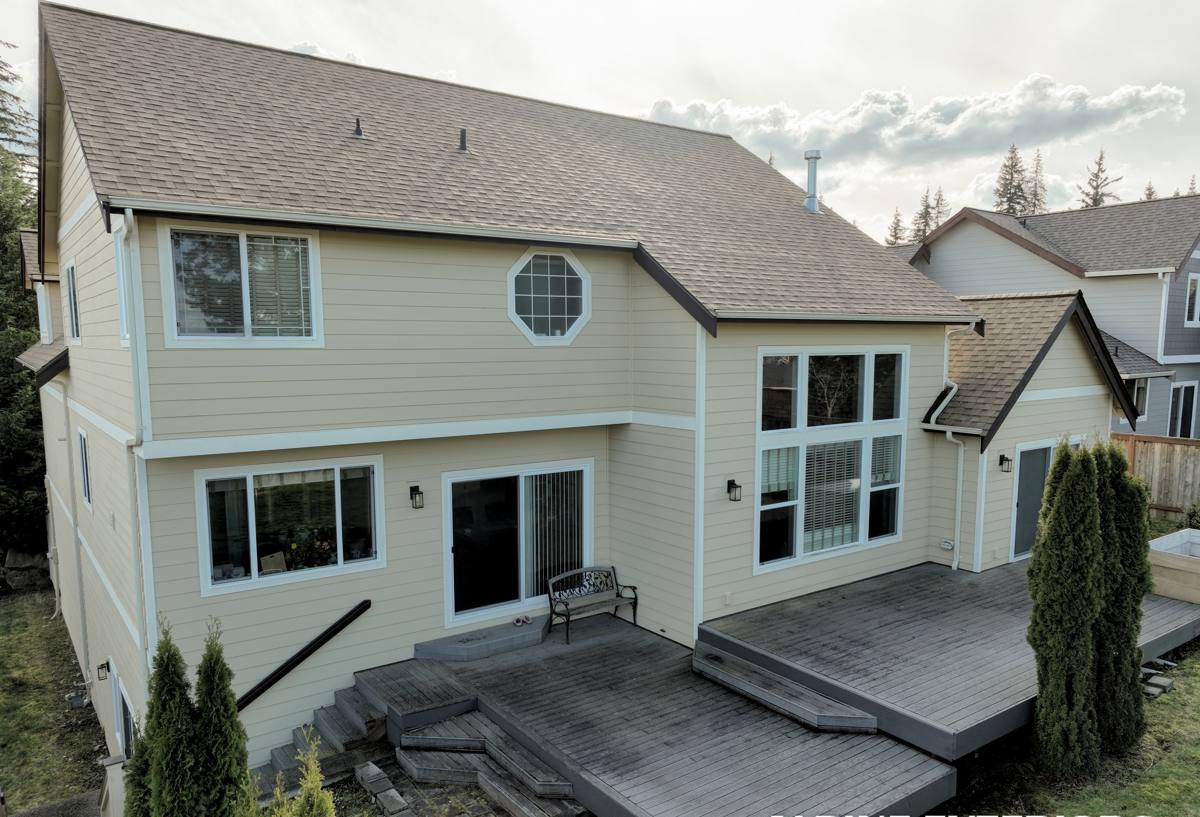
 Composite Decking for Sumas Homes
Sumas sits inland from Blaine, but it doesn't escape Whatcom County's marine-influenced weather. Driving rain off the Pacific, long stretches of damp gray days, and a moss season that can stretch from October well into spring all take a toll on outdoor structures here — decks included. A deck that looks great going in but wasn't built with this climate in mind will show algae streaking, soft spots, and warped boards within a few seasons. Composite decking, installed correctly, is one of the most reliable answers to that problem for homeowners in and around Sumas.
This page is about that one job, done right, for this one area: what local conditions demand from a composite deck, what a correct installation actually involves, and why it matters to hire a crew that already understands how Whatcom County weather behaves against a deck's substructure — not just its surface.
Why Composite Makes Sense Here
Wood decks aren't a bad choice everywhere, but in a climate that stays damp for months at a time, they demand a maintenance schedule most homeowners don't keep up with — annual sealing, regular moss and mildew treatment, and board replacement when rot sets in. Skip a year or two and the deck starts working against you.
Composite decking doesn't need sealing or staining, and modern capped boards resist moisture absorption far better than wood, which cuts down significantly on the moss and mildew growth that's constant in this area's shaded, wet yards. That doesn't mean composite is maintenance-free — it still needs to be kept clean and the substructure underneath still needs to manage water correctly. But it removes the biggest recurring maintenance burden that wood decking creates in a climate like this one.
What Local Homes Specifically Need
- Boards and fastening systems rated for sustained moisture exposure, not just occasional rain
- Proper airflow underneath the deck so water doesn't sit and stagnate against framing
- Gap spacing between boards that accounts for seasonal expansion and drainage
- Flashing details at the house connection that keep water out of the wall assembly, not just off the deck surface
- A substructure that's protected from rot even though the visible decking won't rot itself
What a Correct Composite Deck Build Involves
The composite boards get most of the attention, but they're only part of the job. Most of the problems we get called out to fix on other contractors' decks trace back to the framing and fastening underneath — the part nobody sees until it fails.
Substructure and Framing
Composite decking is heavier than wood in some product lines and behaves differently under load and temperature swings, so joist spacing needs to match the manufacturer's requirements for that specific product — not just whatever spacing was used for a wood deck in the past. In a wet climate, joist protection tape over the top of every joist is not optional. It's a thin barrier that keeps standing moisture from ever reaching bare framing lumber, which is what actually rots and causes a deck to sag or fail, even when the composite surface still looks fine.
Fasteners and Board Spacing
Hidden fastener systems are standard on most composite decks now, and they matter for more than looks — a clean fastening system means fewer penetration points where water can work its way into the board or the joist below. Board spacing has to account for how composite expands and contracts with temperature and moisture, which is different from wood. Too tight, and boards can buckle. Too loose, and the deck feels unfinished and traps debris.
Flashing and Ledger Attachment
Where the deck attaches to the house is the single most common failure point we see on wet-climate decks, composite or wood. Proper ledger flashing keeps rainwater from tracking behind the siding and into the wall structure — a problem that can go unnoticed for years and cause far more expensive damage than the deck itself. This detail matters just as much on a composite deck as it does on a wood one, and it's often the part that gets rushed on a fast, low-bid install.
Composite vs. Wood: What It Actually Costs Over Time
Composite decking typically costs more upfront than wood. Whether that's worth it depends on how much ongoing maintenance you're willing to keep up with and how long you plan to stay in the home.
| Factor | Composite Decking | Wood Decking |
|---|---|---|
| Upfront material cost | Higher | Lower |
| Annual maintenance | Occasional cleaning | Sealing/staining most years |
| Moss and mildew resistance | Better, but not immune | Requires regular treatment |
| Refinishing needed | Rarely, if ever | Every 1-3 years in this climate |
| Typical lifespan (installed correctly) | 25+ years | 10-15 years with upkeep |
| Performance in sustained wet weather | Strong, if substructure is built right | Depends heavily on maintenance discipline |
The honest trade-off: composite costs more to install, but for homeowners who don't want a yearly deck-maintenance chore in a climate that doesn't give decks much of a chance to dry out, it usually pays for itself in avoided upkeep and replacement costs over time.
Our Process, Start to Finish
- On-site assessment — we look at your existing deck or build site, drainage patterns, sun/shade exposure, and how the deck ties into the house
- Product selection — we walk through composite grades, board profiles, and color options that fit your home and budget, with honest input on what performs well here
- Framing and substructure work — repair or build joists to spec, install joist protection, and correct any drainage issues before a single composite board goes down
- Flashing and ledger attachment — done to keep water out of the house structure, not just off the deck
- Composite installation — hidden fastening, correct spacing, and manufacturer-specified detailing around posts, stairs, and edges
- Final walkthrough — we go over the finished deck with you, including basic care so it stays looking right
Problems We Commonly Fix From Other Installs
A fair amount of our composite decking work in this area is repair or rebuild work following an install that skipped steps. The most common issues:
- Moss and algae building up in shaded corners because there was no airflow planned underneath the deck
- Soft, spongy spots where framing rotted under composite boards that were installed without joist protection
- Board buckling from spacing that didn't account for composite's expansion behavior
- Water intrusion at the house wall from missing or incorrect ledger flashing
- Fastener corrosion or staining from hardware that wasn't rated for constant moisture exposure
None of these are unusual products failing — they're framing and detailing shortcuts that show up faster in a climate this wet than they would somewhere drier.
Choosing the Right Product for Your Home
Composite decking comes in a range of grades, from base-level boards to fully capped, higher-end lines with deeper color and grain variation. We don't push one brand over another as a blanket rule — the right choice depends on your budget, how much sun and shade the deck gets, and how the color and profile fit the house. What we do insist on, regardless of brand, is a fully capped board for any deck we install in this climate. A capped composite board has a protective outer layer on all sides, which matters more here than in a drier region because it's the difference between a board that sheds moisture and one that can gradually absorb it at the core over years of damp weather.
Why Hiring a Crew That Already Works in Sumas Matters
A deck built to a generic spec sheet can still fail here if the crew installing it hasn't dealt with Whatcom County's specific combination of sustained rain, humidity, and moss growth. Knowing which fastening systems and joist protection products actually hold up locally, understanding how sun exposure and shade patterns on a given lot affect moss buildup, and being familiar with local permitting and inspection expectations all come from doing this work in this area repeatedly — not from a manufacturer's install manual alone. A crew that's already built and repaired decks around Sumas and greater Whatcom County has already seen what fails here and builds accordingly from the start.
Maintenance Checklist for Composite Decks in This Climate
Composite cuts down maintenance significantly, but a little seasonal attention keeps it performing the way it should:
- Sweep debris and leaves out of gaps between boards regularly, especially in fall
- Rinse the deck surface periodically to prevent pollen and organic buildup from feeding moss growth
- Check that gutters and downspouts aren't dumping extra water directly onto or under the deck
- Inspect underneath the deck once a year for standing water or debris blocking airflow
- Address any moss as soon as it appears rather than letting it establish, since it's easier to keep off than to remove once it takes hold
If you're planning a new composite deck or replacing one that hasn't held up to Sumas weather, we're happy to take a look and give you a straight, no-pressure estimate — just fill out the form below.