 Blaine Window
 Why Cherry Point Windows Wear Out Differently
Cherry Point sits close enough to the water that salt-laden air is a constant, low-grade stress on anything metal, painted, or sealed. Add Whatcom County's driving rain — the kind that comes in sideways off the Strait rather than straight down — and a long moss season that keeps north and shaded sides of a house damp for weeks at a time, and you get a climate that finds every weak point in a window faster than it would inland. Seals that might last fifteen years in a drier region can fail in eight or ten here. Aluminum hardware corrodes. Wood sashes that aren't properly protected hold moisture and start to soften from the inside out, often before any rot is visible from the yard.
None of this means Cherry Point homes need exotic solutions. It means the basics — flashing, drainage, sealant choice, frame material — have to be done right the first time, because this climate doesn't forgive shortcuts the way a milder one might.
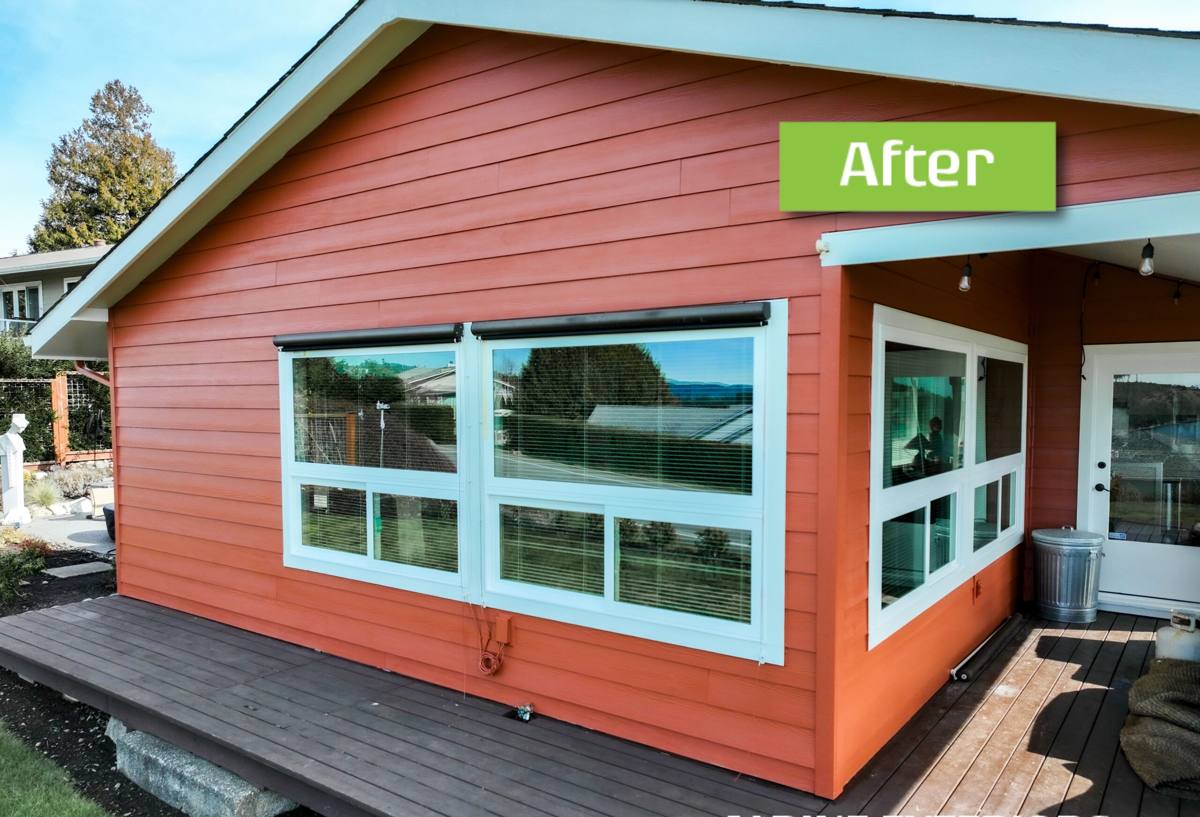
Signs a Cherry Point Home Is Ready for Replacement
Windows rarely fail all at once. In this climate, the tells usually show up gradually, and homeowners often live with them longer than they should before calling anyone.
- Condensation building up between the panes (a sign the seal has already failed)
- Drafts you can feel near the frame on windy, wet days
- Wood sashes or sills that feel soft, spongy, or show dark staining
- Visible corrosion or pitting on aluminum frames or hardware
- Windows that are difficult to open, close, or latch — often from swelling
- Persistent moss or black streaking on the frame that keeps returning even after cleaning
- A noticeable jump in heating costs during the wetter months
Any one of these on its own might just need a repair. Several together, especially on the side of the house that takes the worst of the weather, usually means the window has reached the end of its useful life.
What a Correct Replacement Actually Involves
The window itself is only part of the job. In a marine climate like Blaine's, how it's installed matters as much as what's installed — a good window put in poorly will leak within a few wet seasons regardless of its price tag.
Removal and Opening Inspection
Once the old window is out, the rough opening gets inspected before anything new goes in. This is the point where hidden water damage — softened framing, rusted fasteners, missing or degraded house wrap — actually gets found. Skipping this step and just dropping a new window into a compromised opening is how "new windows" end up leaking again within a couple of years.
Flashing and Moisture Management
Proper flashing directs any water that gets behind the siding back out, rather than letting it sit against the frame. Given how much driving rain this area sees, we treat flashing detail — sill pan, jamb flashing, head flashing that laps correctly over the layer above it — as non-negotiable, not an upsell.
Frame and Sill Prep
Any damaged framing gets replaced, not just sealed over. Sills are shimmed level and the opening is squared before the window is set, so the sash operates properly and the seals aren't put under uneven stress from day one.
Sealing and Finish
Exterior sealant is chosen for UV and moisture exposure, not just cost, and applied in a way that leaves a drainage path rather than trapping water in the wall assembly. Interior trim and sill work is finished so it holds up to condensation without long-term staining.
Choosing a Frame Material for Salt Air and Rain
There's no single "best" window material for every house — the right choice depends on exposure, budget, and how much upkeep an owner wants to take on. Here's how the common options actually perform in a Cherry Point / Blaine setting.
| Material | Salt Air Behavior | Moisture Behavior | Upkeep |
|---|---|---|---|
| Vinyl | Doesn't corrode; color can fade slowly over many years | Won't rot; seals are the main failure point | Low — occasional cleaning |
| Fiberglass | Very stable, resists pitting and corrosion well | Excellent — minimal expansion/contraction | Low |
| Aluminum | Prone to corrosion and pitting near the water without a quality finish | Conducts cold, prone to condensation | Moderate to high in this climate |
| Wood / wood-clad | Needs a well-maintained exterior cladding or finish to hold up | Vulnerable if any moisture gets behind the finish | Highest — regular inspection and refinishing |
We don't push wood-frame windows on unprotected, weather-exposed elevations near the water — not because wood is a bad material, but because it demands a level of upkeep many homeowners underestimate, and a missed maintenance cycle in this climate can mean hidden rot before anyone notices a problem. Vinyl and fiberglass tend to be the more forgiving, lower-maintenance choices for most Cherry Point homes, with fiberglass generally holding up best on the most exposed walls.
Our Process, Start to Finish
Estimate and Measurement
We look at each opening individually — exposure direction, current condition, existing flashing — rather than quoting a flat per-window price. Two windows on the same house can need different attention depending on which way they face.
Ordering and Prep
Once sizes and materials are confirmed, we schedule around the weather where we can, since opening up a wall to the elements on a day with driving rain isn't good for anyone's house.
Install Day
We work opening by opening rather than removing every window in the house at once, so your home isn't sitting exposed longer than necessary. Each opening is inspected, flashed, and sealed before we move to the next.
Final Walkthrough
Every replaced window gets tested — opened, closed, latched — and we walk the exterior with the homeowner so everyone can see the finished flashing and trim before we consider the job done.
Why It Matters to Hire a Crew That Already Works This Area
Window replacement isn't a one-size-fits-all trade. A crew that mostly works drier, inland areas can do fine work there and still underestimate what Blaine's weather does to a wall assembly over time — because they haven't had to fix the callbacks that come from it. Working Cherry Point and the surrounding Whatcom County shoreline regularly means we've seen how these specific homes age: which elevations take the worst of the wind-driven rain, which older flashing details don't hold up, and where moss buildup tends to hide moisture problems longer than it should. That experience shows up in the small decisions on install day, not in anything you'd notice from a brochure.
Local presence also matters after the job is done. If a question comes up during the first heavy rain of the season, you're calling a crew that's still in the area, not chasing down a company that's moved on to a different region.
Maintaining Windows in a Marine Climate
Even a correctly installed window benefits from basic upkeep out here.
- Rinse salt residue off frames and glass periodically, especially after windy weather off the water
- Keep weep holes on the exterior frame clear so water can drain instead of pooling
- Remove moss and organic buildup from sills and tracks before it holds moisture against the frame
- Check exterior caulking annually and touch it up before gaps widen
- Operate each window through its full range a few times a year so seals and hardware don't seize
None of this takes much time, but it meaningfully extends the life of a new installation in a climate that's harder on materials than most.
What Replacement Typically Costs
Exact pricing depends on window size, material, and how much flashing or framing repair an opening needs — but broadly, here's how the factors stack up.
| Factor | Impact on Cost |
|---|---|
| Frame material (vinyl vs. fiberglass vs. wood-clad) | Moderate to significant — fiberglass and wood-clad run higher than vinyl |
| Hidden frame or sill damage found at removal | Can add cost if rot or corrosion requires repair before install |
| Window size and configuration | Larger or multi-pane units cost more per opening |
| Number of windows done in one project | Doing several at once is typically more efficient than one-offs |
| Exposure and flashing complexity | Higher on walls with heavier rain or wind exposure |
We'd rather give you an honest, opening-by-opening estimate than a rough number that doesn't hold up once we see the actual condition behind the old window.
If you're seeing drafts, condensation, or moss buildup around your windows in Cherry Point, we're glad to take a look and put together a free, no-pressure estimate — just fill out the form below.