 Blaine Window
 Windows Built for Cherry Point's Waterfront Conditions
Cherry Point sits along the Strait of Georgia just outside Blaine, and homes out here take a different kind of weather beating than houses a few miles inland. The water is close, the wind comes off the strait with nothing to slow it down, and the tree cover that shades much of Whatcom County gives way to more open, exposed lots along the shoreline. That combination — salt-laden air, wind-driven rain, and long stretches of damp, low-light weather — is hard on windows in ways that aren't always obvious until a frame starts failing from the inside out.
We install windows for homes in Cherry Point and the surrounding Blaine area regularly, and the jobs here are not identical to the jobs we do in town. The products that hold up, the flashing details that matter most, and the mistakes that cause callbacks are all shaped by this specific stretch of coastline. This page covers what that means for a window installation done right.
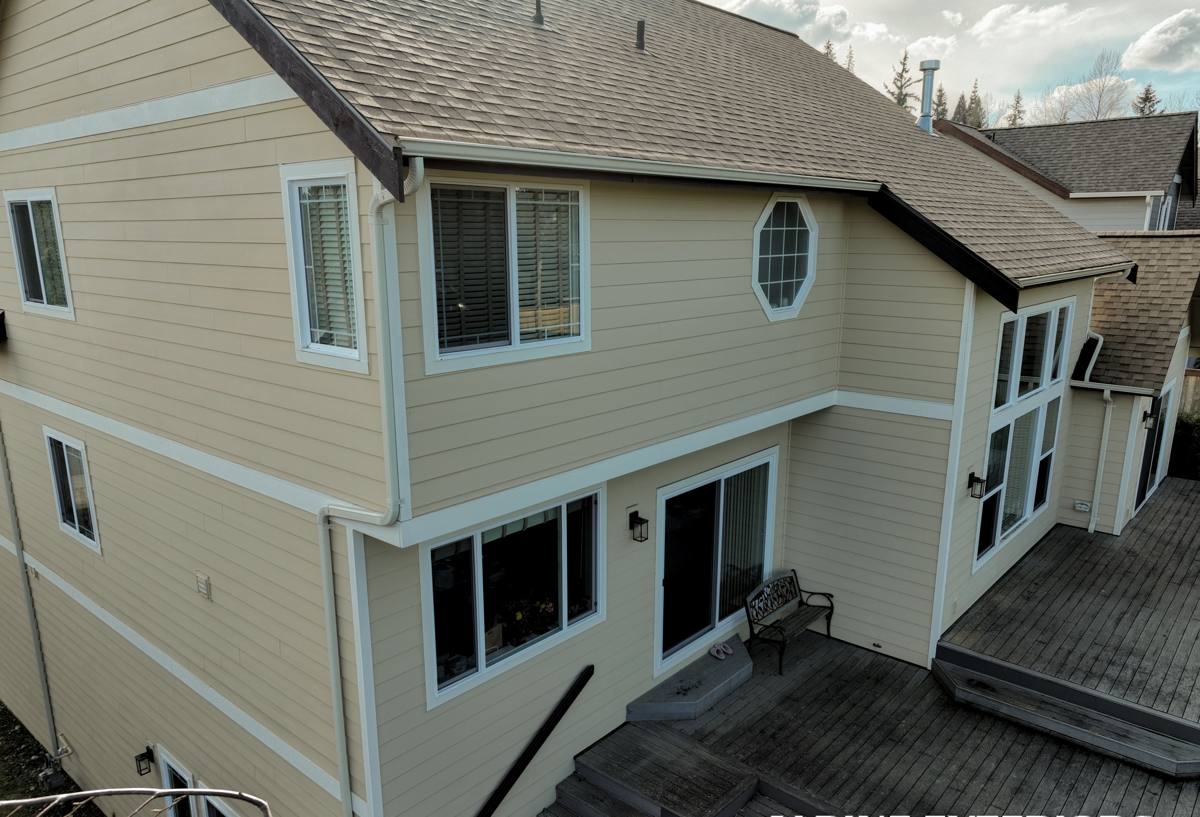
What Salt Air, Driving Rain, and Moss Season Actually Do to Windows
Salt Air
Airborne salt from the strait settles on everything, including window frames, hardware, and exposed fasteners. Over years, it accelerates corrosion on lower-grade metal components — hinges, cranks, screws, and some aluminum cladding — and it can dull or pit finishes that aren't rated for coastal exposure. This is less about any single storm and more about slow, constant exposure that most homeowners don't notice until hardware starts sticking or a finish starts chalking.
Driving Rain
Wind off open water doesn't just drop rain straight down — it pushes it sideways and upward, forcing water into gaps that would stay dry in a calmer, more sheltered location. This is why flashing and sealant details matter more here than in a typical inland install. A window that would perform fine on a protected lot can leak on a Cherry Point property if the water management around it wasn't built for wind-driven rain specifically.
Moss Season
Whatcom County's long wet season keeps moss and algae growth active for much of the year, especially on north-facing walls and anywhere sunlight is limited. Around windows, that moisture and organic growth can sit against trim, sills, and the transition between the window and the siding, slowly breaking down caulk and paint and giving water a path inward. A window installed with the wrong sill flashing or without back-ventilated trim gives moss and moisture a place to take hold right where you can't easily see it.
What a Correct Window Installation Involves Here
A window installation is judged by what you can't see once the trim goes back on. The window itself matters, but the details around it — flashing, sealant, and how the opening was prepared — determine whether that window stays watertight for the next twenty years or starts leaking in five.
- Opening inspection: checking the rough opening, sheathing, and existing flashing for rot or prior water damage before anything new goes in
- Flashing sequence: sill pan flashing installed first, then side flashing, then head flashing, layered so water always sheds outward and down — never trapped behind the next layer
- Sill pan with a back dam: a raised lip at the interior edge of the sill so any water that does get past the window has somewhere to go besides your wall cavity
- Correct sealant placement: sealing the outer edges of the window while leaving the interior weep path open, so any incidental moisture can still drain instead of getting sealed in
- Proper shimming and fastening: the window set plumb, level, and square, fastened per the manufacturer's schedule so it isn't relying on foam or caulk to hold shape
- Weather-resistant barrier integration: new flashing tied into the existing house wrap correctly, so water sheds over the barrier rather than behind it
Skip or rush any one of these steps and the window can look perfect from the curb while quietly letting water into the wall assembly. On a Cherry Point lot facing open water, that's not a hypothetical — it's the difference between a window that lasts decades and one that causes hidden rot behind the drywall in a few winters.
Choosing Materials for a Coastal Blaine Property
Not every window product line is a good fit for a home exposed to salt air and driving rain. We look at frame material, hardware quality, and how the manufacturer rates the product for coastal or marine-adjacent use before recommending anything for a Cherry Point install.
| Frame Material | Coastal Performance | Maintenance | Best Fit |
|---|---|---|---|
| Vinyl | Good — resists corrosion, no metal fatigue from salt exposure | Low — occasional cleaning, no repainting | Most Cherry Point homes; strong value for the exposure level |
| Fiberglass | Very good — dimensionally stable, holds finish well in wind and moisture | Low to moderate | Homes wanting a higher-end look with minimal upkeep |
| Wood-clad | Fair — cladding protects the exterior, but joints and cladding seams need monitoring | Higher — trim, caulk lines, and any exposed wood need regular checks | Homes prioritizing interior wood aesthetics who accept more upkeep |
| Bare aluminum | Poor to fair in this environment unless marine-rated — prone to corrosion and condensation | Moderate to high | Generally not recommended for direct waterfront exposure |
Hardware is just as important as the frame. We favor stainless or coated hardware over standard-grade components on any Cherry Point install, since that's the part most likely to corrode first when it's exposed to salt air day after day.
Our Installation Process
- On-site assessment: we look at existing window condition, sill and trim damage, sun and wind exposure on each elevation, and any signs of past water intrusion
- Product recommendation: frame material, glass package, and hardware matched to the home's exposure and your budget — not a one-size-fits-all pitch
- Written estimate: a clear scope covering removal, disposal, flashing and sealant work, and the installed product, so there's no guessing what's included
- Removal and opening prep: old windows removed carefully, framing checked for rot or moisture damage, and any needed repairs addressed before the new window goes in
- Flashing and installation: sill pan, side and head flashing, shimming, fastening, and sealant done in the correct sequence for wind-driven rain conditions
- Interior and exterior finish: trim, caulk lines, and touch-up work completed to match the home
- Final walkthrough: operation checked on every window, sightlines and reveals confirmed, and any questions about care and maintenance answered before we leave
Signs Your Current Windows Are Losing the Battle
Homeowners in Cherry Point often call us after noticing one or two of these signs, not realizing they usually show up together once a window starts failing:
- Fogging or moisture between panes of double-glazed glass — a sign the seal has failed
- Soft or discolored trim and sill areas, especially on the side of the house facing the water or prevailing wind
- Windows that are hard to open, close, or lock, particularly ones that were fine a year or two ago
- Visible moss or dark streaking building up on trim and siding directly around a window
- A noticeable draft or cold spot near the window frame during windy weather
- Paint or caulk that's cracking, peeling, or pulling away from the frame edge
Any one of these on its own might just mean routine maintenance. Several together, especially on a wall that takes the brunt of the weather off the strait, usually mean the window and its flashing are due for a real look, not another bead of caulk.
Living With Moss Season: Maintenance That Actually Helps
Even a correctly installed window benefits from some seasonal attention in a climate like this. Keeping weep holes clear of debris and moss buildup lets the window drain the way it was designed to. Rinsing salt residue off frames and hardware a couple of times a year — especially after storms — slows corrosion on hinges and cranks. And keeping an eye on caulk lines at the trim-to-siding transition catches small gaps before moss and moisture turn them into bigger ones. None of this requires a professional visit; it's the kind of five-minute check that saves a much bigger repair down the road.
Why Local Installation Experience Matters in Cherry Point
A window that's rated for coastal exposure still needs to be installed by someone who understands how wind and rain actually behave on a given property. Wind direction off the water, how exposed a particular elevation is, and how moisture tends to collect around a home's specific layout are things you learn by working in an area repeatedly — not from a spec sheet. A crew that installs windows across Blaine and the Whatcom County coastline day in and day out builds a practical sense for where water wants to go on a house like yours, and flashes accordingly.
That local familiarity also means fewer surprises during the job. We know what to expect when we open up an older wall near the water — where rot tends to show up first, what past repairs typically look like, and what it takes to get a fresh install watertight the first time.
Get a Free, No-Pressure Estimate
If your windows are showing wear, letting in drafts, or you're planning ahead for a Cherry Point home built to handle salt air and driving rain for the long haul, we're happy to take a look. The estimate is free, there's no pressure to commit on the spot, and you'll get a straight answer about what your home actually needs — just fill out the form below to get started.