 Blaine Window
 Building New in California Creek: What the Climate Actually Asks of Your Windows
If you're framing a new home in the California Creek area near Blaine, the windows you choose and how they're installed will do more work than in most inland builds. This stretch of Whatcom County sits close enough to the water that salt-laden air is a constant, low-grade factor in how exterior materials age. Add driving rain that comes in sideways off winter storms, plus a damp, overcast season that stretches for months and keeps north- and shade-facing surfaces wet longer than they'd like to be, and you have a climate that is genuinely tougher on window assemblies than a typical Puget Sound suburb.
None of this means new-construction windows here need to be exotic or expensive. It means the frame material, the glass package, and — most importantly — the flashing and sealing details have to be right the first time. On new construction you get one real shot at doing the water management correctly, before siding and trim close everything up. Get it wrong and the problems don't show up for a few years, by which point they're hidden behind finished walls.
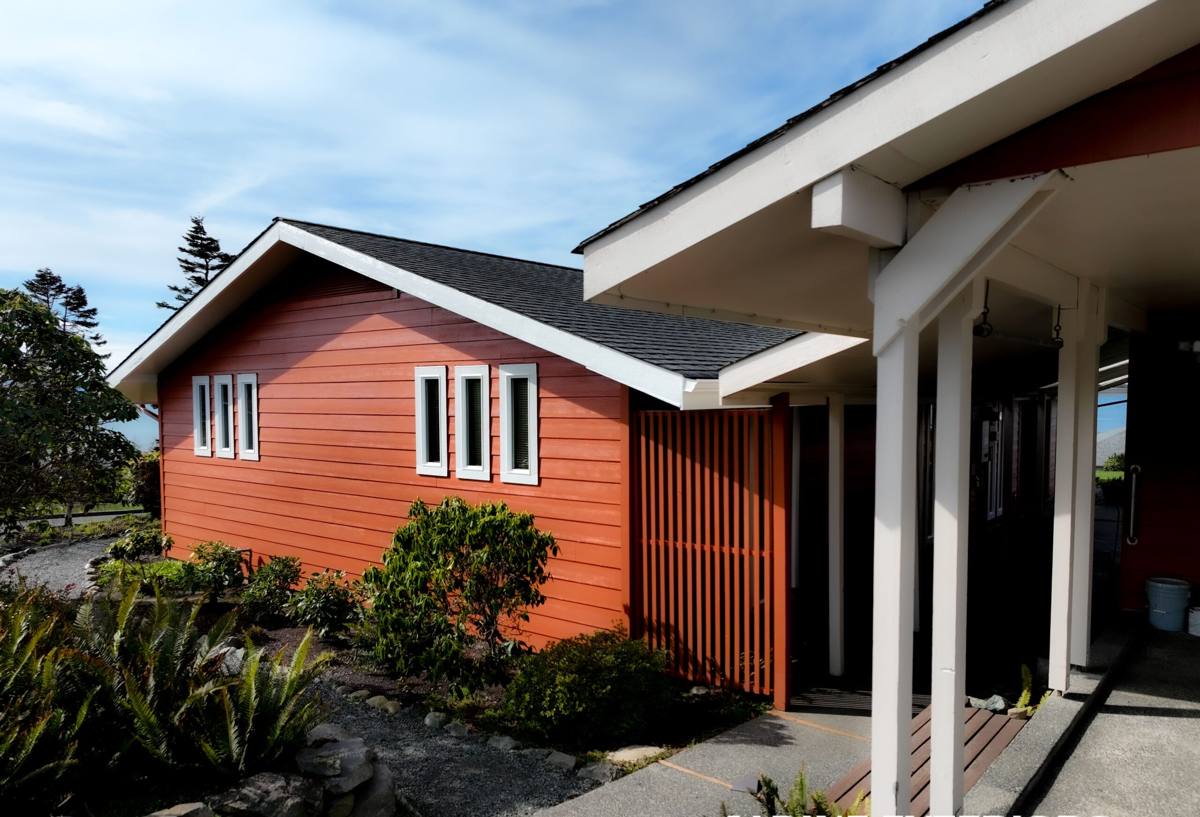
What "Correct" New-Construction Window Installation Involves
New-construction windows are different from a replacement job in one key way: the window has a nailing fin and gets integrated directly into the house wrap and flashing system before siding goes on, rather than fitted into an existing opening. That gives you a better opportunity to get the water management right, but only if every layer is installed in the correct order and lapped correctly — shingle-style, top over bottom, so water always sheds outward and down, never inward.
The core sequence, done right
- Rough opening is checked for square, level, and correct size before the window ever arrives on site
- Sill pan flashing installed first, sloped slightly to the exterior, with end dams to stop water from migrating sideways into the wall cavity
- Window set, shimmed, and fastened per the manufacturer's structural requirements — not just "nailed in place"
- Jamb and head flashing integrated with the weather-resistive barrier in strict shingle-lap order
- Sealant used only where the manufacturer specifies it — and just as importantly, left out where it isn't specified, since sealing the wrong joint can trap water instead of releasing it
- Interior air sealing and insulation around the frame completed separately from exterior weatherproofing
Every one of those steps matters more here than in a dry climate, because a flaw in any single layer eventually meets sustained rain and salt-air moisture that finds it. We treat sill pan flashing and end dams as non-negotiable on every new-construction opening in this area, regardless of what the plans call for as a minimum.
Frame and Glass Choices That Hold Up Near the Water
There isn't one "correct" window brand or material for California Creek — there are trade-offs, and an honest contractor should walk you through them rather than push one option. What matters is picking a combination that matches how exposed the specific elevation is (south and west walls generally take more weather than north and east) and how much long-term upkeep you're willing to do.
| Frame Material | How It Handles Salt Air & Rain | Maintenance Load |
|---|---|---|
| Vinyl | Won't corrode or rot; performs well against salt air and moisture generally | Low — occasional cleaning, no painting |
| Fiberglass | Very stable dimensionally, resists moisture and corrosion well, holds paint if a custom color is wanted | Low to moderate |
| Aluminum-clad wood | Attractive interior wood look with an exterior shell, but any breach in the cladding exposes wood to sustained moisture | Higher — cladding seams and any exposed wood need monitoring |
| Bare wood | Traditional look but the most vulnerable to a damp, salt-influenced climate over time | Highest — regular refinishing and inspection required |
For most new construction in this area, we steer clients toward vinyl or fiberglass on exposed elevations specifically because of the low-maintenance moisture performance, and we're candid about the added upkeep that comes with wood or wood-clad options — that's a maintenance and warranty-structure trade-off, not a knock on any manufacturer.
Glass packages worth discussing
Beyond frame material, ask about low-E coatings and gas-filled dual- or triple-pane glass for energy performance through our wet, mild winters. In a marine climate, condensation resistance matters as much as raw insulation value — a poorly specified glass package can fog or sweat on the interior during cold, damp stretches even if the U-factor looks fine on paper.
Moisture, Flashing, and the Long Rainy Season
Blaine and the surrounding Whatcom County coastline get a lot of rain events where wind drives water horizontally against the building, not just straight down. That's the scenario a correctly lapped flashing system is built for. Where new-construction windows most commonly fail here isn't the window unit itself — it's a skipped or reversed flashing layer, a missing end dam on the sill pan, or sealant used as a substitute for proper flashing instead of a supplement to it.
We also pay close attention to the transition between window flanges and the weather-resistive barrier at rough openings on exposed walls, since that's the joint most likely to see standing water during a long, sustained rain event rather than a quick shower. Getting this right during framing, before siding closes it up, is far cheaper than diagnosing a leak two winters later.
Moss, Algae, and What a Long Damp Season Does to Exteriors
California Creek's shaded and north-facing surfaces stay damp for extended stretches in fall, winter, and spring, which is exactly the environment moss and algae favor. Windows themselves aren't a moss risk the way a roof or north-facing siding is, but the trim, sills, and drainage paths around them are. Sills that don't shed water cleanly, or trim details that trap moisture against the wall, become the first places you'll see green growth and eventual wood or caulk failure.
Correct sill slope, a drip cap or head flashing that actually throws water clear of the wall below, and drainage gaps that let any incidental moisture escape are all details that reduce how much of a foothold moss and algae get around your new windows. This is one of the reasons we don't treat trim and flashing as an afterthought on new-construction jobs in this area — it's directly tied to how the exterior looks and performs five or ten years out.
Our New-Construction Window Process
- Plan review — we look at window schedules and elevations before framing is finalized, flagging any exposed elevations that warrant extra flashing detail
- Rough opening verification — every opening checked for size, square, and plumb before windows are set
- Sill pan and flashing installation — done to a consistent standard on every opening, not just the ones facing the weather
- Window setting and fastening — per manufacturer structural requirements, with shimming that keeps the frame square under load
- Integration with house wrap — shingle-lapped, taped, and inspected before siding crews start
- Interior finish coordination — air sealing and insulation handled so the opening performs as a complete assembly, not just a window sitting in a hole
- Final walkthrough — operation, sealant lines, and flashing visible at trim checked before we call the job done
Because new-construction windows go in during framing, we coordinate directly with builders and general contractors on scheduling — the window trade has to move at the right point in the sequence, not too early and not after siding crews are already staged.
Why It Matters to Hire a Crew That Already Works California Creek
A window crew that mostly works drier, inland jobs isn't wrong about window installation in general — but they may not default to the extra flashing discipline this coastline calls for, simply because it isn't strictly necessary where they usually work. Crews familiar with California Creek and the broader Blaine coastline already know which elevations tend to take the worst weather, where moss shows up first, and how much margin to build into flashing details rather than following a bare-minimum manufacturer diagram.
That familiarity shows up less in what you can see on installation day and more in what you don't see three or five winters later — no staining at the sill, no soft trim, no interior moisture surprises during the wet season.
Quick Checklist Before You Sign Off on a New-Construction Window Package
- Frame material matched to each elevation's actual sun and weather exposure, not a single blanket choice for the whole house
- Sill pan flashing with end dams specified for every opening, not just the ones facing prevailing weather
- Low-E, gas-filled glass specified with condensation resistance considered, not just U-factor
- Flashing integration sequence confirmed in writing with your builder or window contractor
- Trim and sill details designed to shed water fully, reducing long-term moss and algae buildup
- Manufacturer warranty terms reviewed — including what voids coverage if installation deviates from spec
Get a Straightforward Estimate
If you're framing a new build or addition in California Creek and want the window package specified and installed correctly from the start, we're happy to walk the plans with you and give a straightforward, no-pressure estimate — just fill out the form below.