 Blaine Window
 Siding Installation Built for Blaine Harbor's Water-Facing Exposure
Blaine Harbor sits about as close to the water as a Whatcom County property can get, and that proximity changes the math on siding installation. Homes here don't just get occasional salt air on a breezy day — the water is close enough that salt-laden moisture is part of the daily environment, and the same wind that makes the harbor useful for boats also drives rain sideways into walls that a more sheltered property never has to deal with. This page is about siding installation specifically for Blaine Harbor: what the local exposure demands from the work, what a correct installation looks like, and how our process handles it.
We install James Hardie fiber cement siding exclusively, on every job, including the ones we do in and around Blaine Harbor. That's a professional standard we hold to because we've seen what happens on tear-offs when a lesser material or a rushed installation meets this kind of sustained coastal exposure. Everything below assumes James Hardie, since it's the only system we'll put our name behind here.
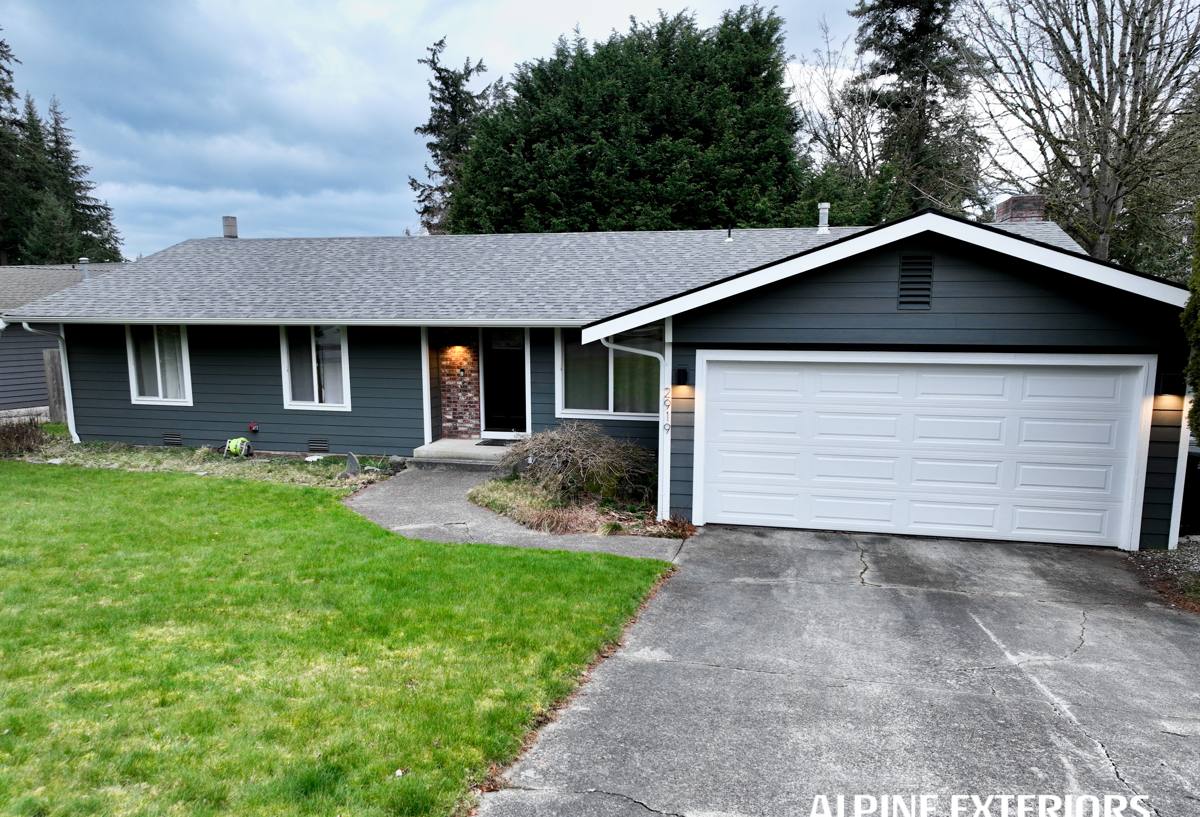
Why Blaine Harbor's Exposure Is Different
Salt Air, Close and Constant
Properties near Blaine Harbor sit close enough to open water that salt exposure isn't a seasonal nuisance — it's a near-daily condition. Salt accelerates corrosion on fasteners, flashing, and any exposed metal trim, and it breaks down lower-quality paints and coatings faster than a dry, inland climate ever would. For siding installation, that means fastener grade and flashing material aren't places to save money; they're the parts of the job that determine how the house looks and performs a decade from now.
Driving Rain Off the Water
Wind coming off the harbor pushes rain sideways into wall assemblies rather than letting it fall straight down and run off. That sideways-driven moisture finds its way into panel joints, window flashing, and roof-to-wall transitions that a plumb-and-level, straight-down-rain installation wouldn't need to worry about as much. Blaine Harbor's open exposure to the water means this pattern shows up more often and with more force than it does even a few miles inland.
A Moss Season That Runs Most of the Year
Mild temperatures and near-constant moisture add up to a moss and mildew season that barely lets up on shaded or north-facing walls around the harbor. Any siding material with even a little surface porosity, or any wall assembly that traps moisture instead of shedding it, becomes a growth surface. Trees and structures close to the water can also block afternoon sun on some walls, which slows drying time and extends the window moss has to take hold.
What a Correct Siding Installation Involves Here
Siding performance comes down to the installation at least as much as the material. In Blaine Harbor's conditions, a handful of details separate a job that holds up for decades from one that starts showing problems within a few wet seasons.
Drainage Plane and Rainscreen Gap
A small drainage cavity behind the siding lets any moisture that gets past the outer surface drain down and evaporate instead of sitting against the wall sheathing. This detail matters everywhere, but it matters more on a harbor-facing wall that takes wind-driven rain directly and needs a real chance to dry out between storms.
Fastener Type and Spacing
James Hardie specifies fastener type, spacing, and placement for a reason, and those specs get more conservative in high-exposure coastal zones. Corrosion-resistant fasteners set at the correct spacing and depth are one of the details we won't shortcut, because loose or incorrect fastening is one of the more common causes of early siding failure we see when we're called out to inspect someone else's work.
Flashing and Water-Resistive Barrier
Every window, door, and roof-to-wall transition needs flashing that's properly lapped so water sheds down and out rather than finding a path in. The water-resistive barrier underneath the siding gets taped and lapped at every seam and penetration, since on a harbor-facing wall this barrier is doing real work most of the year, not just during the occasional storm.
Sealed Joints and Trim Transitions
Butt joints, corner trim, and transitions between siding and other materials are where wind-driven, salt-laden moisture finds its way behind the cladding first if they're left open or poorly sealed. We treat these as full-attention details rather than a step to move through quickly at the end of a run.
Clearance at Grade and Hard Surfaces
Siding installed too close to the ground, a deck, or a patio surface stays damp longer and picks up splash-back moisture that a properly clearanced installation avoids. Near the harbor, where humidity is already elevated, that clearance is one more detail that affects how long a wall stays wet after a storm.
Our Siding Installation Process
1. Walk the Property
We look at the home's actual exposure — how close it sits to the water, which walls take direct wind-driven rain, how much shade and tree cover affect drying time — before putting together a scope. Two houses near the harbor can need noticeably different approaches depending on orientation and site conditions.
2. Assess What's Underneath
On a re-side, removing the old siding is when we find out whether moisture has already gotten into the sheathing or framing. In a high-exposure area like Blaine Harbor, we build time into the schedule to address what we find rather than covering it back up and hoping it holds.
3. Install to Manufacturer Spec
Fastening, flashing, drainage plane, and clearance all follow James Hardie's published installation requirements for the product line and exposure category. That's what keeps the manufacturer's warranty valid and what keeps the wall performing the way it's supposed to.
4. Final Walkthrough
Before we consider a job finished, we walk the exterior with the homeowner, checking sealed joints, trim transitions, and overall fit and finish. Any punch-list items get handled before we call it done.
Siding Installation Approaches Compared
| Approach | What It Involves | Fit for Blaine Harbor |
|---|---|---|
| Overlay (new siding over old) | Faster, less labor, doesn't expose sheathing | Risky here — traps any existing moisture damage behind a new surface |
| Full tear-off and re-side | Old siding removed, sheathing and barrier inspected and repaired as needed | Standard recommendation for water-facing homes with real coastal exposure |
| Spot repair only | Replacing damaged sections without a full re-side | Reasonable for isolated, recently-discovered damage on an otherwise sound wall |
| New construction install | Siding installed on new sheathing and barrier with no legacy issues | Best-case scenario — full control over drainage plane and flashing from the start |
These are general approaches, not a quote for your property. What's right for a specific home near the harbor depends on the age of the existing siding, what we find once it's off the wall, and how exposed that particular lot is to wind and water.
Signs a Blaine Harbor Home May Need New Siding
- Moss or dark staining that returns quickly after cleaning, especially on shaded or north-facing walls
- Soft or spongy siding, particularly low on the wall or around window and door trim
- Rust streaking from fasteners or corroded trim hardware
- Peeling or chalking paint on walls that face the water directly
- Visible gaps, warping, or separation at butt joints and corner trim
- A musty smell or visible staining on interior walls that back up to exterior siding
Timing a Siding Project Around Blaine Harbor's Weather
The wettest, windiest stretch of the year in this part of Whatcom County typically runs from late fall through winter, and Blaine Harbor's open exposure to the water makes that stretch harder on both the crew and the materials than it is a few miles inland. Spring and summer generally offer the driest, most stable conditions for installing fiber cement siding, since the material, house wrap, and sealants all perform better when they can be installed and cure under dry conditions. That said, a wall that's already showing active moisture damage is worth addressing on its own timeline rather than waiting for ideal weather.
Why a Crew That Already Works Blaine Harbor Matters
A contractor who works this stretch of coastline regularly has already seen how salt air, wind-driven rain, and a long moss season play out on real houses here — not just how a product performs on a spec sheet. That experience shows up in small decisions on install day: which walls need extra flashing attention, where clearance at grade matters most, and which fastener and sealant choices are worth the added time. Blaine Harbor's exposure isn't identical to more sheltered parts of Whatcom County, and an installation built for average conditions elsewhere often falls short here.
If your Blaine Harbor home needs new siding or you're planning ahead for a re-side, we're happy to walk the property and give you a straightforward, no-pressure assessment of what it actually needs. Use the form below to schedule a free estimate.