 Blaine Window
 Board & Batten Siding for Birch Point's Waterfront Climate
Birch Point sits right up against the marine weather that defines this corner of Whatcom County — salt-laden air off the water, wind-driven rain that doesn't fall straight down, and a long, gray moss season that can run from fall through spring. Board and batten siding, with its clean vertical lines and deep shadow reveals, is one of the most requested looks for homes out here. But a board and batten job that looks good in year one and holds up in year ten are two different projects. The difference comes down to material choice and installation detail, not the style itself.
We install board and batten exclusively in James Hardie fiber cement, and we do it because this particular siding style has more seams, more trim, and more places for water to find a way in than a standard lap profile. In a climate like Birch Point's, that margin for error matters.
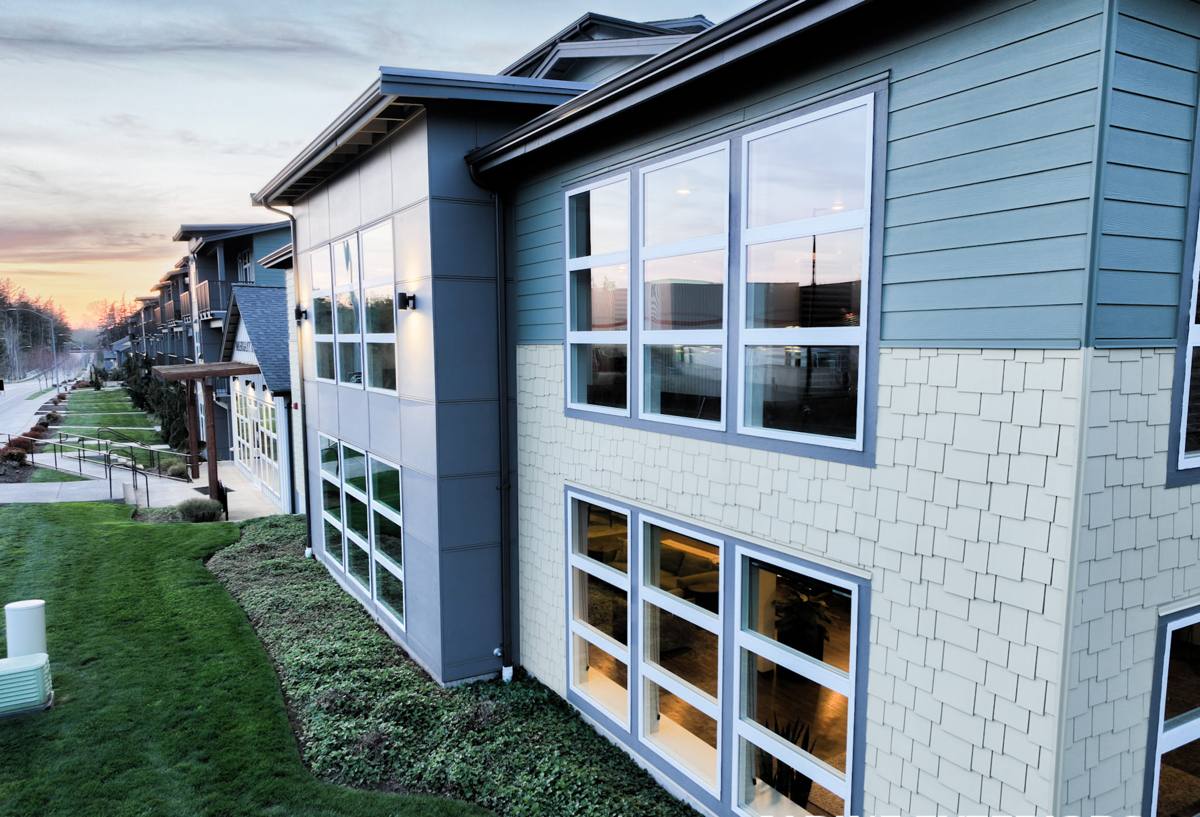
What Board and Batten Siding Actually Is
Board and batten is a vertical siding pattern: wide flat panels or boards installed side by side, with narrower strips — the battens — covering the seams between them. It's a look with roots in early American barns and farmhouses, and it's had a strong resurgence in modern coastal and craftsman-style homes because of the strong vertical shadow lines it creates.
Two Ways to Build It
There are two common approaches. The first uses individual boards installed with a small gap, then battens fastened over each seam. The second uses wide fiber cement panels as the base layer, with battens applied on top at regular intervals to create the same visual rhythm with fewer field seams to manage. We generally favor the panel-and-batten approach on Birch Point homes because fewer horizontal and vertical joints means fewer places for water to test the assembly over time.
Where It Gets Used
Board and batten can cover a whole home, or it can be used as an accent — on a gable end, a dormer, or a porch surround — paired with a different Hardie profile elsewhere on the house. Either way, the fundamentals underneath have to be right, because this is a trim-heavy style and trim is where most siding failures start.
Why We Only Install This in James Hardie Fiber Cement
Board and batten is sold in several materials — engineered wood, primed cedar, vinyl, and fiber cement among them. We made the decision to install James Hardie only, across every style we offer, and board and batten is where that decision matters most, because the batten strips and panel edges take the brunt of direct weather exposure.
James Hardie's HZ5 product line is engineered specifically for climates with prolonged moisture exposure and freeze-thaw cycling, which describes a normal Whatcom County winter. The fiber cement core doesn't absorb and swell the way wood-based products can, it's non-combustible, and the ColorPlus factory finish is baked on under controlled conditions rather than field-applied — which matters on a style with this many painted edges and cut lines.
| Material | Moisture Behavior | Maintenance | Typical Lifespan (Coastal) |
|---|---|---|---|
| James Hardie Fiber Cement | Dimensionally stable, does not swell or rot | Periodic wash, occasional caulk check | 30+ years to warranty limit |
| Engineered Wood | Can swell at cut edges if seal is compromised | Requires vigilant edge sealing | Variable, edge-dependent |
| Primed Cedar | Natural material, moves with moisture | Repaint and reseal cycles | Highly maintenance-dependent |
| Vinyl | Won't rot, but can warp under heat/cold cycling | Low, but limited repair options | Variable, UV and impact sensitive |
We're not going to tell you every one of those products fails on the water — plenty of them perform adequately when installed and maintained well. What we will tell you is that we've standardized on one product because it lets us give a consistent answer about how a wall assembly will behave in this specific climate, instead of managing a different maintenance conversation for every material on the truck.
What a Correct Board & Batten Installation Involves
The siding itself is only part of the job. Most of the water-management work happens behind it, and it's invisible once the project is done — which is exactly why it's worth understanding before you hire someone.
The Drainage Plane Comes First
Behind every board and batten wall we install, there's a weather-resistive barrier and a drainage gap — a rainscreen — that lets any moisture that gets past the siding drain and dry out instead of sitting against the sheathing. On a home exposed to driving, wind-blown rain off open water, this gap is not optional. It's the single biggest factor in whether a wall assembly stays dry over decades rather than years.
Fastening and Batten Spacing
Battens need consistent spacing and a fastening pattern that accounts for expansion and contraction without over-driving nails through the fiber cement. In a salt-air environment, fastener material matters too — we use corrosion-resistant fasteners rated for the exposure, because a rusting nail head telegraphing through a painted batten years down the road is a cosmetic problem that started as a hardware shortcut.
Flashing, Joints, and Trim Details
Every horizontal joint, every window and door opening, and every inside and outside corner needs proper flashing and correctly sequenced installation — siding and trim overlapped in the right order so water sheds down and out, never in. James Hardie publishes specific fastening and clearance requirements for its products, and we follow them to the letter rather than treating them as suggestions, because board and batten's extra trim lines mean extra opportunities to get this wrong.
Our Process for a Birch Point Project
Assessment
We start by looking at what's actually happening on the wall now — moisture staining, soft spots, failed caulk joints, and how the existing siding has handled its exposure to wind and salt air. On a waterfront or near-waterfront property, we pay particular attention to the sides of the house that take the most direct weather, since that's rarely uniform around all four walls.
Preparation and Installation
Any compromised sheathing or framing gets addressed before new siding goes up — covering a wet wall with new material just delays the same problem. From there we install the weather barrier, drainage gap, panels, and battens in sequence, with flashing detailed at every penetration and opening as we go, not patched in afterward.
Final Walkthrough
We walk the finished job with you, covering how the siding was detailed, what maintenance looks like going forward, and what's covered under the manufacturer warranty versus our workmanship warranty. You should never be left guessing which is which.
Salt Air, Moss, and What Maintenance Actually Looks Like
Board and batten's vertical lines and horizontal battens create more shadowed, slower-drying surface area than a flat lap profile — which is exactly where moss and algae like to establish themselves during the long wet stretch of a Whatcom County winter. James Hardie's factory finish resists this better than field-applied paint, but no exterior surface in this climate is maintenance-free.
- Rinse the siding periodically to clear salt residue and organic buildup, especially on north- and shade-facing walls
- Keep gutters clear so overflow isn't running down and pooling behind battens
- Trim back vegetation and tree cover that keeps any wall section shaded and slow to dry
- Check caulk joints at trim and penetrations annually — this is the first place to show wear
- Address moss or algae growth with a gentle wash rather than pressure-washing directly into seams
- Have any impact damage or loose battens looked at promptly, since a small gap is how bigger moisture problems start
Design Considerations for Birch Point Homes
Batten spacing and width change the whole character of a board and batten wall — narrow, tightly spaced battens read more traditional and farmhouse, while wider spacing with broader battens gives a more modern, coastal-cottage look. ColorPlus finishes come in a range of tones that hold up well against the flatter, often overcast light typical of this area, and darker colors in particular benefit from the factory finish's fade resistance compared to field-applied paint.
Many Birch Point homeowners use board and batten as an accent on gables, dormers, or entry features rather than the whole house, paired with a different Hardie plank or shingle profile on the main walls. That mix can be a good way to get the look without covering the entire home in the highest-detail, highest-labor siding style.
What Board & Batten Typically Costs
Board and batten runs higher than a standard lap installation on the same house, mainly because of the extra batten material and labor, not because the base panels themselves cost dramatically more. The factors below are the ones that actually move a bid up or down.
| Cost Factor | Why It Matters |
|---|---|
| Batten spacing and quantity | More battens per wall means more material and more fastening labor |
| Trim and corner detail complexity | Board and batten has more cut lines and joints than lap siding |
| Existing wall condition | Sheathing repair or moisture remediation adds scope before siding starts |
| Site access | Waterfront and sloped lots can affect staging and scaffolding needs |
| Whole-house vs. accent use | Using it as a feature on part of the home costs less than full coverage |
Why Hiring a Crew That Already Works in Birch Point Matters
A crew that regularly works this stretch of Whatcom County shoreline already understands how the wind and rain behave differently on an exposed waterfront wall versus a sheltered inland one, and details the flashing and drainage plane accordingly rather than applying a one-size-fits-all approach. They also know what this air does to fasteners and finishes over years, not just what looks good on installation day.
Board and batten in particular punishes shortcuts because there's more trim, more seams, and more places for a rushed detail to show up later as a stain or a soft spot. Ask any contractor bidding this work how they handle the drainage plane, fastener corrosion resistance, and flashing sequence specifically — the answer tells you a lot about how the finished wall will hold up.
If you're weighing board and batten siding for a home in Birch Point, we're glad to take a look and talk through what your specific walls need. Reach out for a free, no-pressure estimate using the form below.