 Blaine Window
 Why Birch Bay Siding Wears Differently Than Siding Inland
Birch Bay sits right on the water, and that changes the math on how long siding actually lasts. Salt-laden air moves off the bay and settles on exterior walls day after day, accelerating corrosion on fasteners and trim, breaking down cheap paint films faster than manufacturers' warranties account for, and leaving a fine residue that traps moisture against the wall surface. Add in wind-driven rain that comes in sideways off the water during winter storms, and siding here has to shed water horizontally, not just vertically the way a textbook installation assumes.
Then there's moss. Whatcom County's long, wet, mild winters give moss and algae months at a time to establish themselves on any siding surface that stays damp and shaded — north-facing walls, areas under eaves with poor airflow, and anywhere siding sits too close to landscaping. Moss holds moisture against the substrate, and moisture held against wood-based or improperly finished siding is exactly how rot gets started. None of this is unique to one house in Birch Bay — it's the baseline condition every home on this stretch of coastline deals with.
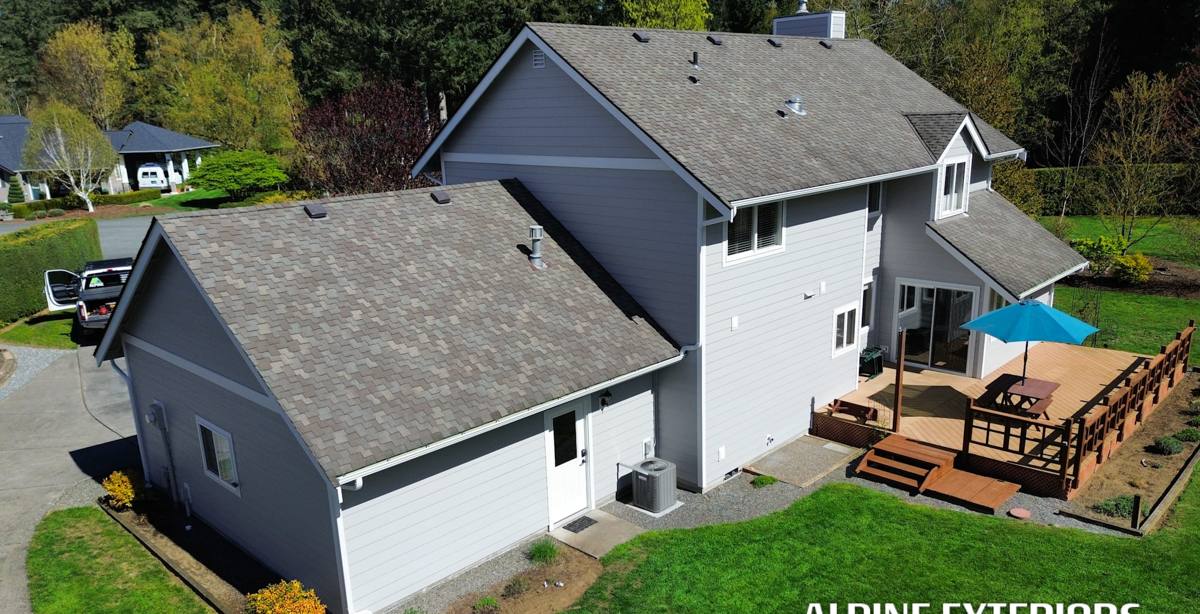
Signs a Birch Bay Home Needs Siding Replacement, Not Just Repair
Coastal exposure tends to hide damage until it's advanced, because surface paint can still look presentable while the material underneath is failing. Here's what we look for during an inspection:
- Soft or spongy spots when you press on the siding, especially near the bottom courses and around window and door trim
- Persistent moss or algae staining that comes back within a season or two of cleaning
- Visible swelling, delamination, or bubbling — common on wood-based and engineered wood products exposed to repeated wetting
- Paint that's failing faster than it should, peeling or chalking heavily within just a few years of a repaint
- Gaps opening up at seams, corners, or butt joints where caulking has pulled away
- A musty smell or visible staining on interior walls that back up to exterior siding
- Rust streaking from fasteners, a sign that hardware wasn't rated for this environment
Any one of these on its own might be a spot repair. Several of them together, especially on a home that's had multiple repaint cycles, usually means the siding system itself has reached the end of its useful life and patching it is just delaying a bigger bill.
What a Correct Siding Replacement Job Actually Involves
Pulling old siding off and nailing up new material is the easy part to see — it's not the part that determines whether the job lasts. The work that actually protects a Birch Bay home happens underneath the new siding, and it's worth understanding before you hire anyone.
Tear-Off and Sheathing Inspection
Once old siding comes off, the sheathing underneath gets a real inspection, not a glance. This is where we find out if moisture has already gotten into the wall assembly — soft sheathing, staining, or rot around window openings needs to be addressed before anything new goes up, or the replacement siding is just covering the same problem.
Weather-Resistive Barrier and Flashing
A correctly detailed water-resistive barrier, properly lapped and taped, is what actually keeps wind-driven rain out of the wall — the siding itself is the first line of defense, not the only one. Window and door flashing gets integrated into that barrier so water is directed out and down, never trapped behind the trim. This step matters more here than in a lot of inland markets, given how much horizontal rain Birch Bay gets off the water.
Fastener and Hardware Selection
In a salt-air environment, fastener choice isn't a minor detail. We use corrosion-resistant fasteners rated for coastal exposure, because standard hardware in a location like this can start rusting and staining the siding face within a few years.
Rainscreen and Ventilation Considerations
Where conditions call for it, a ventilated rainscreen gap behind the siding lets any moisture that does get past the cladding dry out instead of sitting against the wall — a meaningful advantage in a climate where things rarely get a long stretch of dry, sunny days to air out.
Material Choice: Why We Install James Hardie and Nothing Else
We get asked regularly why we don't offer vinyl, LP SmartSide, or the cedar and primed wood siding that's still common on older Birch Bay homes. It's a fair question, and the honest answer is that each of those products has real trade-offs that show up faster in this specific climate than they would somewhere drier and inland.
| Material | How It Performs in Salt Air & Coastal Rain |
|---|---|
| Vinyl | Low upfront cost, but it can warp or fade with sun and salt exposure over time, and it's not a fire-resistant material — a consideration homeowners increasingly weigh in Washington's wildfire-conscious insurance market |
| LP SmartSide / engineered wood | An engineered wood product — performs well when installation and caulking are perfect and maintained on schedule, but any lapse in maintenance in a wet climate like this raises the risk of edge swelling and moisture intrusion |
| Cedar / primed wood | Attractive material, but it's the most maintenance-intensive option in a moss-prone, high-moisture environment — repainting and moisture monitoring become a recurring commitment |
| James Hardie fiber cement | Non-combustible, engineered specifically for moisture resistance, holds factory-applied ColorPlus finish far longer than field-applied paint on other substrates, backed by a strong transferable warranty |
James Hardie's HZ5 product line in particular is engineered for climates with exactly this kind of moisture exposure and freeze-thaw cycling. It's non-combustible, it doesn't swell or delaminate the way wood-based products can when a seam fails, and the ColorPlus factory finish is baked on under controlled conditions rather than applied on-site where weather and humidity affect cure quality. That's not a knock on the homeowners who chose other products in the past — it's why, after years of doing this work along the coast, we made the decision to install only James Hardie going forward.
Our Process for Birch Bay Siding Replacement
Every job starts with an in-person inspection, not a drive-by estimate. We walk the full exterior, check for the warning signs above, and look closely at sheathing condition wherever we can access it — around existing damage, at corners, near grade. From there we put together a written scope that spells out tear-off, sheathing repair if needed, barrier and flashing details, the specific Hardie product and profile, and fastener specs. We schedule around weather windows realistically, because trying to force an install during a driving rain event does nobody's wall assembly any favors. And because we work this area regularly, we're familiar with the wind exposure and moisture patterns specific to homes closer to the water versus those set back further inland.
What Drives Siding Replacement Cost
| Factor | Why It Matters |
|---|---|
| Home size and wall complexity | More corners, dormers, and trim details mean more labor and material cuts |
| Sheathing condition | Rot or moisture damage found during tear-off adds repair scope before new siding can go up |
| Siding profile and color | Lap width, shingle-style panels, and factory color options carry different material costs |
| Trim and accessory scope | Corner boards, window trim, and fascia work are often bundled into a full siding project |
| Access and site conditions | Multi-story sections, tight lot lines, or landscaping close to the house affect labor time |
We don't quote a number until we've actually seen the house — anyone offering a firm price sight-unseen for a coastal siding job is guessing, and that guess tends to change once tear-off reveals what's really underneath.
Why Local Experience in Birch Bay Matters
A crew that only occasionally works this close to the water can underestimate what salt exposure and driving rain do to fastener choice, flashing details, and even how soon moss returns after cleaning. Working Birch Bay and the surrounding Whatcom County coastline regularly means we've seen how different products and installation details hold up here specifically, not just in a manufacturer's general climate zone rating. That local track record is also why we're comfortable standing behind the work with follow-up if something needs attention after the fact.
After Your Siding Is Replaced: Keeping It Performing
Fiber cement with a factory ColorPlus finish is low-maintenance, not no-maintenance. A rinse-down once or twice a year keeps salt residue and early moss growth from establishing, and keeping gutters clear prevents water from sheeting down the wall face in spots it wasn't designed to handle. Trimming back landscaping that shades and dampens a wall section goes a long way toward keeping moss from coming back on the north side of the house. None of this is heavy lifting — it's the kind of upkeep that, paired with a properly installed system, is what actually gets you the decades of service life the material is capable of.
If your Birch Bay home is showing any of the signs above, or you're just tired of repainting siding that won't hold a finish, we're happy to come take a look. The estimate is free, there's no pressure, and you'll get a straight answer about what your siding actually needs.