 Blaine Window
 Roofing in Grandview: What the Climate Actually Demands
Grandview sits close enough to the water that homes here take on a different kind of weathering than roofs just a few miles inland. Salt-laden air moves through on the prevailing winds, driving rain comes in sideways during winter storms, and the shaded, damp stretches of the year give moss and algae months to establish themselves on north-facing slopes. None of this is dramatic on its own, but stacked together over a Whatcom County winter, it adds up to real wear on a shingle roof that wasn't installed with these conditions in mind.
An asphalt shingle roof that's built and maintained correctly can handle all of this well. The issue isn't usually the shingle itself — it's shortcuts in the details underneath it: flashing, underlayment, ventilation, and fastening. Those are the parts of the job that don't show up in a curb-side look at the finished roof, and they're exactly where a roof either holds up through fifteen or twenty Whatcom County winters or starts giving you trouble in year six or seven.
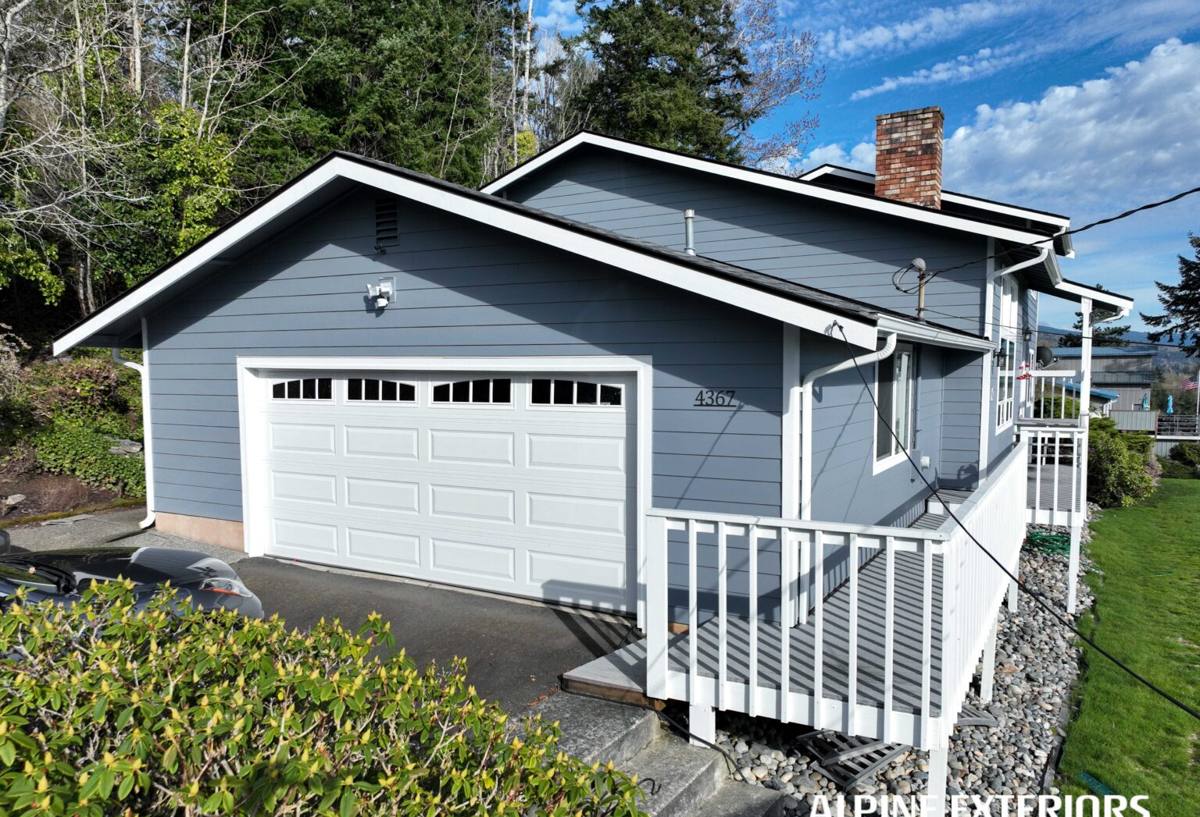
How Salt Air, Rain, and Moss Wear Down a Roof
Salt Air and Metal Components
Salt air accelerates corrosion on exposed metal — nail heads, flashing edges, and vent stacks age faster here than they would on a roof twenty miles inland. Cheaper electro-galvanized fasteners and thin-gauge flashing show rust and pitting years before a comparable roof in a drier, saltier-air-free zone. This is one of the main reasons material selection matters more in Grandview than it does in a lot of other places.
Driving Rain and Wind-Driven Water
Storms coming off the water don't just drop rain straight down — they push it sideways and up under shingle edges, at valleys, and around any roof penetration. A roof that relies on shingles alone to shed water, without proper underlayment and ice-and-water shield at the vulnerable spots, is more likely to develop slow leaks that go unnoticed for a season or two before they show up as a stain on a ceiling.
Moss, Algae, and Shade
Grandview has enough tree cover and enough damp, overcast stretches that north-facing and shaded roof slopes stay wet longer than they do in sunnier parts of the county. That moisture is what moss needs to get started. Once moss roots into a shingle's granule layer, it holds water against the roof surface and gradually lifts shingle edges, which is how a moss problem turns into a leak problem if it's ignored long enough.
What a Correctly Installed Shingle Roof Includes
A shingle roof is a system, not a single product. Every layer underneath the visible shingle does specific work, and skipping or under-speccing any one of them is where problems start in a coastal climate like this one.
Underlayment
Synthetic underlayment across the full roof deck, with self-adhering ice-and-water shield at eaves, valleys, and around penetrations, gives the roof a real second line of defense if wind-driven rain gets past the shingles. This isn't optional detailing for a Grandview roof — it's the layer that protects the deck when the weather does what it does here in January and February.
Flashing
Step flashing at walls, proper valley metal, and correctly sized flashing around chimneys and vents matter more in salt air, because the metal itself is under more stress. We spec flashing gauge and coating with that in mind rather than defaulting to whatever's thinnest and cheapest.
Fasteners
Nail type and placement affect both wind performance and how well a roof resists corrosion staining over time. Under-driven or over-driven nails are one of the most common causes of early shingle failure, and it's a detail that's entirely about installation quality, not materials.
Ventilation
Balanced intake and exhaust ventilation keeps the attic dry and keeps shingle temperatures more even, which matters for shingle lifespan and for moisture control in a climate that already has plenty of ambient dampness to deal with.
Choosing a Shingle for This Climate
Not every asphalt shingle product is built the same way, and in a salt-air, moss-prone environment the differences matter more than they would somewhere drier. Below is a general comparison of the shingle classes we most often discuss with Grandview homeowners.
| Shingle Type | Typical Lifespan | Moss/Algae Resistance | Best Fit |
|---|---|---|---|
| Standard 3-tab | 15–20 years | Low unless treated | Budget-conscious re-roofs, sunnier slopes |
| Architectural (laminate) | 25–30 years | Moderate, better with algae-resistant granules | Most Grandview homes; better wind and impact performance |
| Algae-resistant (copper/zinc granule) architectural | 25–30+ years | Higher — granules actively inhibit growth | Shaded or north-facing roof planes, tree-covered lots |
| Premium/designer laminate | 30+ years | Moderate to higher, product-dependent | Homeowners prioritizing appearance and longer warranty terms |
For most homes in Grandview, we lean toward architectural shingles with algae-resistant granules, especially on any slope that sits in shade for a meaningful part of the day. The upcharge over standard 3-tab is modest relative to how much longer the roof stays clean and performs before moss becomes a maintenance issue.
Our Process for a Grandview Re-Roof
The steps below are the same ones we'd walk any Grandview homeowner through before, during, and after a shingle roof replacement:
- On-site inspection of the existing roof, decking, flashing, and attic ventilation before any pricing is finalized
- Honest assessment of whether decking needs partial or full replacement — this gets flagged up front, not discovered as a surprise mid-job
- Written scope covering underlayment type, ice-and-water shield placement, flashing material, fastener type, and ventilation plan
- Tear-off and deck inspection, with any soft or damaged sheathing replaced before new materials go down
- Full underlayment and flashing installation per manufacturer specification, not just at the minimum code requirement
- Shingle installation with attention to nailing pattern and exposure, especially at valleys, eaves, and wall transitions
- Site cleanup, including magnetic sweep for stray fasteners
- Final walk-through so you understand what was done and what warranty coverage applies
Ventilation and Moisture: The Part Homeowners Rarely Ask About
Attic ventilation gets overlooked because it's invisible from the ground, but it has a direct effect on how long a shingle roof lasts in a climate as damp as this one. Poor ventilation traps moisture in the attic, which can lead to condensation on the underside of the decking, premature shingle aging from heat buildup, and in some cases mold or wood rot that has nothing to do with the shingles themselves. When we replace a roof, we check existing intake and exhaust venting and flag any imbalance as part of the scope, rather than treating it as a separate, optional conversation.
Maintenance That Actually Matters Here
A shingle roof in Grandview doesn't need constant attention, but a few habits go a long way given the local conditions:
- Keep gutters clear so water isn't backing up under eave-line shingles during heavy rain
- Trim back overhanging branches on shaded slopes to reduce the moss-friendly damp environment
- Have moss physically removed (not just chemically killed) before it lifts shingle edges — dead moss left in place still holds moisture
- Watch for granule buildup in gutters, which can signal a shingle surface that's wearing faster than expected
- Get flashing points — chimneys, vents, wall transitions — checked periodically, since these are the most common leak origins
None of this requires a specialist visit every month. A yearly look, timed for after the wettest part of winter, is usually enough to catch small issues before they become roof-deck problems.
Why Local Grandview Experience Matters
A roofing crew that mostly works inland doesn't always think about salt-air corrosion on fasteners or plan flashing details around wind-driven rain the way a crew that works this specific area does. We spec materials and installation details for Grandview and the broader Blaine, Whatcom County environment as a matter of course, not as an upgrade. That means the underlayment, flashing, and ventilation choices on your quote already account for what this climate does to a roof over time, rather than treating this job the same as one in a drier, more sheltered part of the state.
It also means we've seen what tends to go wrong first on roofs in this area — which slopes moss establishes on, which flashing details fail early in salt air, where wind-driven rain finds its way in — and we build around those failure points from the start rather than learning them on your roof.
Get a Straightforward Estimate
If your Grandview roof is showing granule loss, moss on the shaded slopes, or you're just planning ahead for a replacement, we're glad to take a look and give you a straightforward, no-pressure estimate. Use the form below to get started.