 Blaine Window
 Why Custer Windows Wear Faster Than You'd Expect
Custer sits close enough to the water that homes here take a different kind of weathering than houses further inland. Salt-laden air moves through on a regular basis, driving rain comes in sideways during winter storms, and the shaded, damp conditions that stick around for months at a time turn window sills, tracks, and trim into prime real estate for moss and mildew. None of that is dramatic on its own, but stacked up year after year, it's exactly the kind of slow, steady exposure that finds every weak point in a window system — a slightly under-sealed corner, a frame material that wasn't meant for this much moisture, glass that was never rated for the wind load a coastal storm can put on it.
A window that performs fine in a drier part of Washington can start failing early once it's installed on a Custer property, not because the window is bad, but because it was never matched to this particular climate. That's the piece we focus on: not just swapping old glass for new, but making sure what goes in is actually built to hold up here.
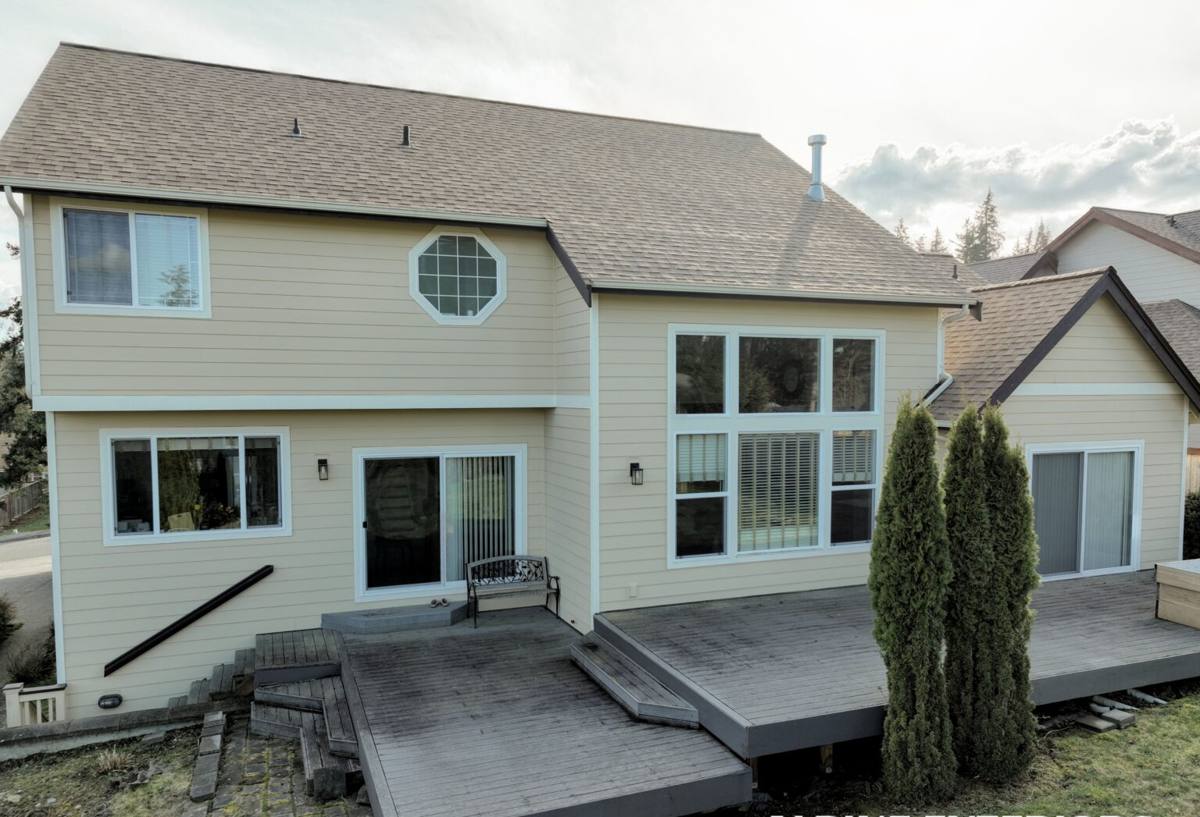
Signs Your Windows Are Already Losing the Fight
Most homeowners don't notice window failure until it's obvious — but there are earlier warning signs worth catching first. Look for:
- Fogging or a hazy film between panes of double-glazed glass (a sign the seal has failed and the insulating gas has escaped)
- Soft, discolored, or spongy wood around the frame or sill, especially on the sides that face prevailing weather
- Moss or dark green growth building up in the corners of the frame or on the exterior trim, even after cleaning
- Drafts you can feel by hand along the frame edges on a windy day
- Windows that are difficult to open, close, or lock — often a sign the frame has swollen or shifted from moisture
- Visible daylight or gaps where the frame meets the siding or wall opening
- A noticeable jump in heating costs without any other explanation
Any one of these on its own might not mean much. Two or three together, especially on a home that's been standing through a few winters of driving rain, usually means the window system has started to give up.
What a Correct Window Replacement Actually Involves
Window replacement is one of those jobs that looks simple from the outside and is genuinely not. The window itself is only part of it — the bigger factor in how long the job lasts is what happens at the opening before the new window ever goes in.
Removing the old window without damaging the opening
The rough opening underneath your existing window is often in worse shape than the window itself, especially if moisture has been getting behind the frame for a while. Careful removal means checking that framing and sheathing as it's exposed, not just yanking the old unit and moving on. If there's rot or soft wood, that needs to be dealt with before anything new goes in — otherwise you're sealing a problem inside the wall instead of fixing it.
Flashing and sealing before the new window ever goes in
This is the step that matters most in a climate with this much driving rain, and it's also the step that's easiest to rush. Proper flashing directs water that gets behind the siding back out and away from the wall assembly instead of letting it pool at the sill. Skipping or shortcutting this is one of the most common reasons a window that looks fine on day one starts leaking within a year or two.
Insulating the gap correctly
The space between the new window frame and the rough opening needs to be filled with the right material and the right amount of it — not stuffed too tight, not left with gaps. Too much rigid foam can bow the frame and affect how the window operates; too little leaves a cold, drafty gap that also gives moisture somewhere to travel.
Choosing a Window Built for This Climate
There's no single "best" window material — there are trade-offs, and the right call depends on your home, your budget, and how much upkeep you want to take on. Here's how the common options stack up for a coastal Whatcom County property:
| Frame Material | Moisture & Salt Air Resistance | Maintenance | Typical Lifespan |
|---|---|---|---|
| Vinyl | Good — won't rot or corrode, handles salt air well | Low — occasional cleaning | 20–30 years |
| Fiberglass | Very good — dimensionally stable, resists moisture movement | Low | 30-plus years |
| Wood / wood-clad | Fair — needs a well-maintained exterior cladding or finish to hold up to constant damp and moss exposure | Higher — periodic finish maintenance | Varies widely with upkeep |
| Aluminum | Fair — can corrode near salt air over time and conducts cold, leading to condensation | Moderate | 15–25 years |
For most Custer homes, we steer clients toward vinyl or fiberglass frames precisely because they don't give moisture and salt air anything to work with over time. Wood-clad windows can still be the right choice for a specific look, but we're upfront that they come with a real maintenance commitment in a climate this wet — it's a trade-off, not a flaw, and it's one we'd rather you understand before you buy than discover after year five.
Our Process, Start to Finish
- Assessment and estimate. We look at your existing windows, check for signs of rot or moisture damage around the openings, and talk through what you actually need — not every window on a house needs replacing at once.
- Measuring and ordering. Every opening gets measured individually. Homes settle unevenly over the years, so "same size as the old one" isn't always accurate.
- Prep and any structural repair. If we find soft framing or water damage during removal, we address it before installation continues — we won't seal a new window over a problem that's still there.
- Installation. Flashing, sealing, and insulating are done in the order that actually protects the wall assembly, not just the order that's fastest.
- Cleanup and walkthrough. We clear debris, and we walk you through how the new windows operate and what to watch for as they settle in.
What Affects the Cost of a Job Like This
Costs vary enough from house to house that we'd rather give you real numbers after a look at your specific windows than a broad figure that doesn't apply. That said, here's what tends to move the price up or down:
| Factor | Why It Matters |
|---|---|
| Number of windows | Per-window cost usually drops slightly as the job gets larger |
| Frame material | Vinyl is typically the most budget-friendly; fiberglass and wood-clad cost more upfront |
| Size and window type | Large picture windows, bays, and custom shapes cost more than standard double-hungs |
| Condition of the opening | Rot repair or reframing adds labor and materials that aren't part of a standard swap |
| Glass package | Upgraded glazing for extra insulation or sound reduction adds cost but pays back in comfort |
| Accessibility | Second-story or hard-to-reach windows take more time and equipment |
Why a Crew That Already Works in Custer Makes a Difference
A contractor who's worked on homes throughout this part of Whatcom County has already seen how these specific conditions play out — which corners of a house tend to catch the worst of the weather, which frame materials actually hold up once salt air and constant damp get a few years to work on them, and how much flashing and sealing really matters versus how much it's tempting to skip. That's not something you get from a crew that mostly works dry, inland jobs and treats every install the same way.
It also means fewer surprises during the job itself. If we open up a wall and find moisture damage, that's not a shock — it's a known risk in this area, and we know how to handle it without derailing the schedule or the budget.
Living With New Windows Through Whatcom County's Wet Season
A correctly installed window with the right frame material will need very little from you, but a few habits go a long way in this climate:
- Rinse frames and sills periodically to keep salt residue and moss spores from building up
- Clear debris and standing moisture from sills, especially on shaded sides of the house
- Check exterior caulking annually and touch up anywhere it's cracked or pulled away
- For wood-clad windows, keep the exterior finish maintained on the schedule your window manufacturer recommends
- Open and close each window a few times each season so hardware doesn't seize up from disuse
None of this takes much time, but it's the difference between a window system that quietly does its job for decades and one that starts showing the same problems your old windows had, just on a faster timeline.
If your windows in Custer are fogging, drafting, or growing more moss than they used to, we're happy to take a look and give you a straightforward, no-pressure estimate — just fill out the form below and we'll go from there.