 Blaine Window
 Windows Built for the Sumas Climate
Sumas sits in the northern stretch of Whatcom County, close enough to the Salish Sea and the Fraser Valley that homes here deal with a mix of marine-influenced weather and inland humidity. Winters bring long stretches of driving rain, spring and fall carry heavy dew and fog, and shaded north-facing walls can stay damp long enough to grow moss and mildew on siding, trim, and window frames. None of that is dramatic on any single day, but it adds up year after year, and windows are one of the first places that slow damage shows up.
A window that was installed correctly for a drier climate can still fail here if it wasn't detailed for constant moisture exposure. That's the difference between a window that looks fine for five years and one that performs for twenty. Our approach to custom windows in Sumas starts with the assumption that water will find every gap eventually, and the job is to make sure it never finds a path inside.
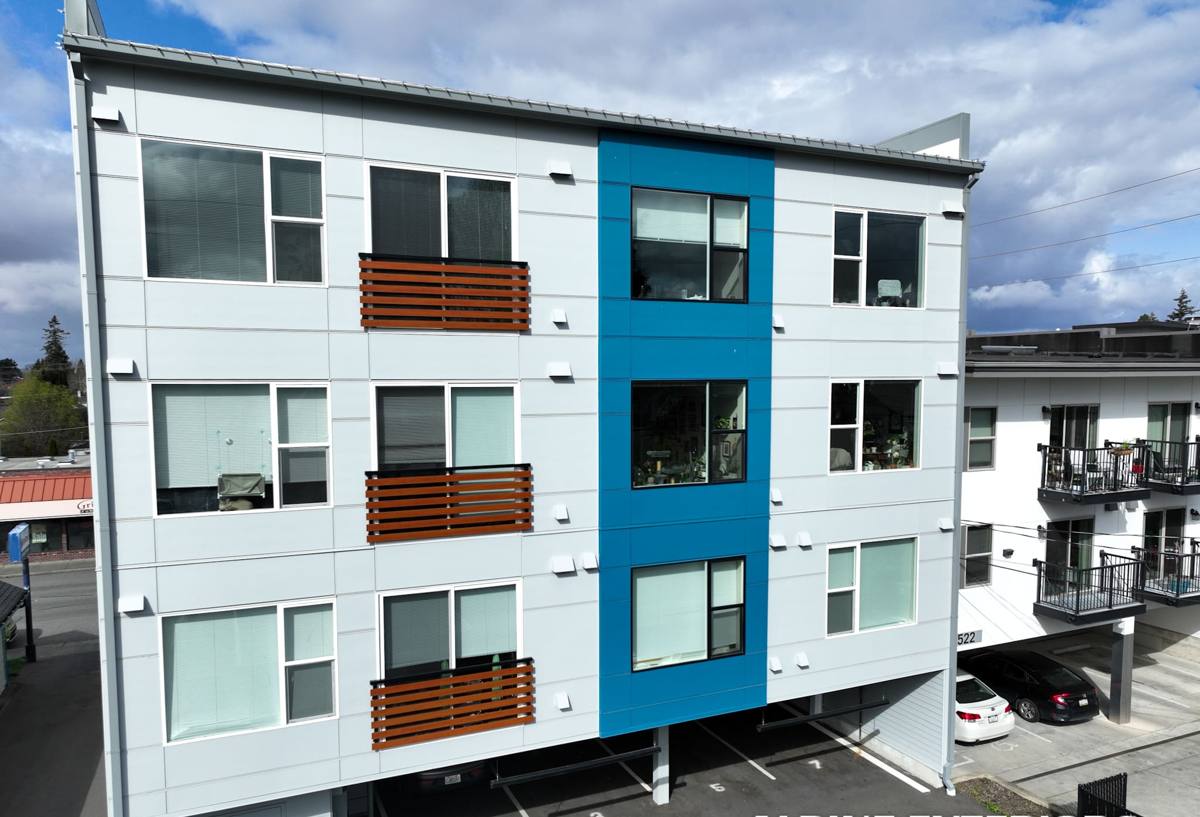
What Local Homes Are Up Against
Every region has its own pattern of wear, and Whatcom County's is fairly consistent once you've seen enough of it:
- Sustained rain, not just heavy rain. It's the duration of wet weather, not just storm intensity, that stresses seals and sills over time.
- Moss and organic growth. Shaded, north- and west-facing window trim holds moisture longer and is more prone to moss, algae, and soft wood.
- Temperature swings. Cold mornings and warmer afternoons cause condensation on interior glass, especially with older or single-pane windows.
- Wind-driven rain. Storms off the water push rain sideways into wall and window assemblies, testing flashing details that a calmer climate would never expose.
None of these are exotic problems, but together they mean window installation in this area has less room for shortcuts than it does in drier parts of the state.
Signs Your Windows Are Losing the Fight
Homeowners usually notice a problem long before they can name the cause. Some of the most common early warnings we see on service calls in the Sumas area include:
- Fogging or moisture trapped between panes on double-glazed units — a sign the seal has failed
- Soft, discolored, or spongy wood at the sill or lower frame corners
- Black or green staining on the exterior trim, especially on shaded sides of the house
- Noticeable drafts even when the window is fully latched
- Difficulty opening or closing a window that used to move freely — often a sign the frame has swollen or shifted
- Peeling paint or caulk that keeps cracking within a year of being reapplied
Any one of these can be a minor fix. Several at once, especially on the same wall, usually means water has been getting behind the window assembly for a while.
What a Correct Installation Actually Involves
"Custom windows" doesn't just mean a non-standard size — it means the window and the installation are built to match the specific wall assembly, orientation, and exposure of that opening. In a climate like ours, the installation detailing matters as much as the window product itself. A correct job includes:
Proper Flashing and Water Management
Flashing tape and pan flashing are installed in the right sequence — sill first, then jambs, then head — so any water that does get behind the siding is directed back out, not trapped against the framing. This is the single most common thing we find missing or done backward on older installs.
Sealed but Ventilated Assemblies
The window needs to be sealed against air and bulk water infiltration on the exterior while still allowing any incidental moisture to escape rather than get sealed inside the wall cavity. Over-sealing is almost as damaging as under-sealing in a wet climate.
Correct Fastening and Shimming
A window that isn't shimmed level and square will stress its own seals over time, leading to premature failure regardless of how good the product is. This is especially true on older Sumas-area homes where original framing has settled or shifted slightly.
Interior Air Sealing
Insulating and air-sealing the gap between the window frame and rough opening controls condensation risk on the interior side — a detail that's often skipped but makes a real difference during cold, damp mornings.
Choosing Materials and Glass for This Region
There's no single "best" window material — the right choice depends on the wall's exposure, the home's style, and how much maintenance the owner wants to take on. Here's how the common options compare for a climate like ours:
| Material | Moisture Performance | Maintenance | Best Use |
|---|---|---|---|
| Vinyl | Very good — won't rot or corrode | Low | Most exposures, budget-conscious replacements |
| Fiberglass | Excellent — dimensionally stable in wet/dry cycles | Low | High-exposure walls, larger custom openings |
| Wood (clad exterior) | Good if detailing is correct; exterior clad protects the wood | Moderate | Historic or traditional-style homes |
| Solid wood (exposed) | Requires diligent upkeep in constant rain exposure | High | Sheltered openings, owners committed to regular repainting/sealing |
For glass, we typically recommend dual-pane units with low-E coatings and argon gas fill as the practical standard for this area — they cut heat loss, reduce condensation risk on interior glass, and hold up well against the temperature swings common here. Triple-pane is worth discussing for north-facing rooms or homes with especially high heating costs, but it's not always necessary to hit good performance.
Our Process for Sumas Projects
- On-site assessment. We look at each opening individually — orientation, existing damage, wall assembly, and how water has historically behaved around that window.
- Custom measurement and product selection. Windows are ordered to the exact opening, not a nearest-standard-size approximation, and material/glass options are matched to that wall's exposure.
- Removal and inspection. When we pull the old window, we check the framing and sheathing underneath for hidden rot or moisture damage before anything new goes in.
- Flashing and installation. Sill pan, flashing tape, shimming, and fastening are done in sequence, per manufacturer specs and our own moisture-management standards for this climate.
- Interior and exterior sealing. Air sealing inside, weather sealing outside — matched to the material so nothing traps moisture where it shouldn't be.
- Final walkthrough. We check operation, sightlines, and seals with the homeowner before calling the job done.
What Affects Cost
Every project is different, but the main cost drivers on custom window jobs in this area are consistent enough to lay out honestly:
| Factor | Why It Matters |
|---|---|
| Opening size and shape | Non-standard or oversized openings require true custom manufacturing, not stock sizing |
| Material choice | Vinyl, fiberglass, and clad-wood carry different product costs and lead times |
| Existing damage | Rot repair to framing or sheathing found during removal adds labor beyond the window swap itself |
| Number of openings | Whole-house projects typically bring a better per-window rate than single replacements |
| Access and exposure | Second-story or hard-to-access openings take more time to flash and finish correctly |
We'd rather walk a homeowner through these factors on-site than quote a number without seeing the actual openings — it's the only way to give a figure that holds up once the job starts.
Maintaining Windows Once They're In
Even a well-installed window benefits from a little seasonal attention in a climate that stays wet as much as ours does:
- Clear debris and moss buildup from sills and drainage weep holes at least once a year
- Check exterior caulk lines each fall before the heavy rain sets in, and touch up any cracked sections
- Wipe down interior glass and frames if condensation appears regularly — it's often an early clue to indoor humidity levels, not the window itself
- Operate every window through its full range a few times a year so hardware doesn't seize from disuse
- Look for staining or soft spots at the base of frames during your regular exterior walk-around
Why Local Experience Matters for This Job
Window installation isn't a one-size-fits-all trade, and the details that matter in a drier climate aren't the same ones that matter here. A crew that regularly works Sumas and the surrounding Whatcom County area already knows which orientations take the worst weather, which older home styles tend to have hidden framing issues, and which flashing sequence actually holds up through a full wet season rather than just looking right on installation day. That kind of familiarity comes from doing the work locally and repeatedly, not from a general checklist.
It also matters for accountability — a local crew is the one you call if something needs a follow-up look next winter, not a name you have to track down after the fact.
Get a Straightforward Estimate
If your Sumas-area home has windows showing signs of wear, or you're planning a custom replacement project, we're happy to take a look and walk you through what we see — no pressure, no obligation. Use the form below to request a free estimate.