 Blaine Window
 Why Birch Point's Waterfront Climate Is Hard on Siding
Homes in Birch Point take a different kind of weather beating than a house a few miles inland. Sitting close to the water means siding is exposed to salt-laden air on a near-constant basis, and that fine salt film does real work over time — it accelerates corrosion of exposed metal fasteners and trim, and it can shorten the life of finishes that weren't engineered to handle it. Layer on the driving, wind-blown rain that comes with exposed shoreline lots in northern Whatcom County, and siding here isn't dealing with occasional wetting the way a sheltered inland wall might. It's dealing with sustained moisture loading, often pushed sideways into laps and joints by wind rather than falling straight down.
Then there's the moss season, which around Blaine runs long. Shaded walls, north-facing elevations, and anything tucked under tree cover stay damp for extended stretches, which is exactly the condition moss and algae need to take hold. Put salt exposure, wind-driven rain, and a long damp season together, and you've got three separate stressors working on a home's exterior at the same time. Siding that isn't built for that combination shows it early — paint fails ahead of schedule, seams open up, and organic growth creeps across shaded panels within a few seasons instead of many.
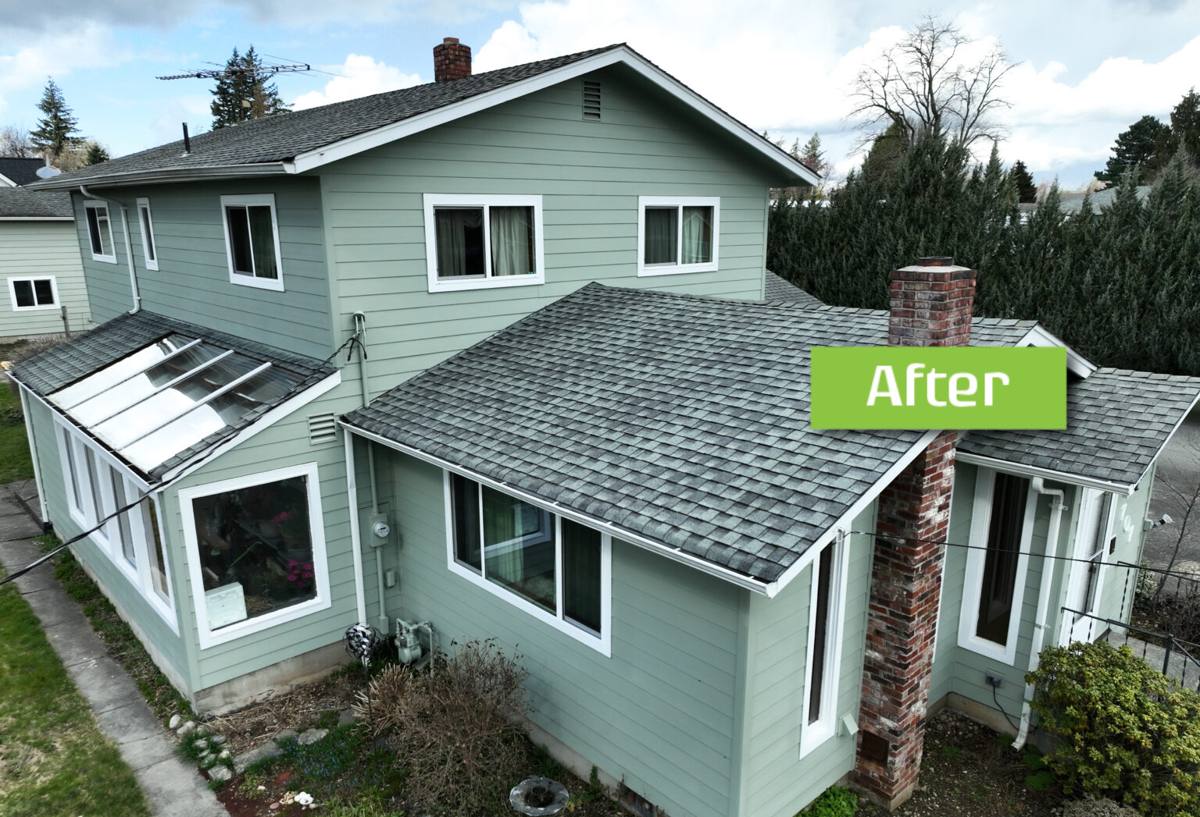
Why We Only Install James Hardie Fiber Cement
We install James Hardie fiber cement siding exclusively — not vinyl, not engineered wood, not primed spruce or cedar. That's a deliberate standard, not a lack of options. Fiber cement is made from cement, sand, and cellulose fiber, which makes it dimensionally stable in ways wood and vinyl aren't: it doesn't swell and rot at cut edges the way wood can, and it doesn't soften, warp, or become brittle the way vinyl can under UV and temperature swings. It's also non-combustible, which matters to a lot of homeowners regardless of climate. For a property exposed to salt air and sustained moisture, the material's stability is what keeps a siding job looking and performing the way it did on day one, years later.
Built for Coastal Exposure — the HZ5 Product Line
James Hardie engineers its siding in climate-specific formulations rather than shipping one national product everywhere. The HZ5 line is formulated for the wetter, milder climate of the Pacific Northwest, with a moisture-resistance profile suited to exactly the kind of sustained dampness Birch Point sees. That's the product line we specify for homes in this area — not because it's the most expensive option, but because it's the one actually engineered for this region's weather pattern rather than a generic average.
ColorPlus Factory Finish
Most James Hardie siding on our jobs goes up with a ColorPlus factory-applied finish rather than field-applied paint. The finish is baked on in a controlled factory environment across multiple coats, which gives it better UV and moisture resistance than paint applied on site after installation, along with much more consistent color and sheen from panel to panel. That matters more on a shoreline home than an inland one, because repainting a full exterior every few years to keep up with sun and salt exposure is real, recurring work — a factory finish is built to push that timeline out considerably.
What a Correct Installation Looks Like in a Salt-Air Environment
Fiber cement only performs as well as the installation behind it. It's a more installation-sensitive product than people expect — the material itself resists moisture and pests well, but if the assembly behind it traps water instead of shedding it, you can still end up with hidden damage to the sheathing, framing, or insulation underneath, even with siding that looks fine on the surface.
Moisture and Flashing Details
In a wind-driven-rain environment, the details behind the panels matter as much as the panels themselves:
- A drainage gap or rainscreen behind the siding so any moisture that gets past the surface has somewhere to go instead of sitting against the wall assembly
- Correct flashing integration at every window and door opening, not just caulk covering the gap
- Kick-out flashing at roof-to-wall intersections, so water running down a roof edge is diverted away from the siding instead of running behind it
- Back-primed or sealed cut edges wherever a panel is field-cut, since a raw cut edge is the most vulnerable point on the board
- Proper clearance from grade, roof lines, decks, and patios so siding isn't sitting in a spot that stays wet longer than it should
Fastening, Gaps, and Manufacturer Spec
Salt air is hard on standard fasteners, which is why corrosion-resistant fastening — stainless steel or hot-dip galvanized, depending on the application — is the right call this close to the water. Beyond the fasteners themselves, correct nail spacing and penetration depth, proper expansion gaps at butt joints and trim, and following Hardie's climate-specific installation guidance all affect how the siding handles seasonal movement and moisture over time. Caulking is part of that too, but only where the manufacturer's instructions call for it — sealing every joint on a fiber cement installation isn't a shortcut to a tighter house, it can trap moisture in places it's supposed to be able to escape.
How Hardie Compares for Birch Point Homes
Every siding material has trade-offs. Here's how the common options stack up against the specific conditions Birch Point homes deal with:
| Factor | James Hardie Fiber Cement | Vinyl | Wood / Cedar |
|---|---|---|---|
| Salt air resistance | Strong — non-organic, dimensionally stable | Moderate — can fade and become brittle faster near salt exposure | Weak — accelerates weathering and finish breakdown |
| Moisture / rot resistance | Strong when installed to spec | Not organic, but seams and fasteners are moisture entry points | Weak — prone to swelling, cupping, and rot at joints |
| Moss / algae resistance | Better than organic materials; still needs periodic cleaning | Moderate — smooth surface, but grows on shaded panels | Weak — porous surface holds moisture that feeds growth |
| Fire rating | Non-combustible | Combustible | Combustible |
| Typical repaint interval (factory-finished) | Long — factory finish is designed to outlast field paint | None needed, but color is baked into the material and can't be refreshed | Short — repainting or restaining is routine maintenance |
Our Process, Start to Finish
- Assessment — We walk the property and look at exposure by elevation: which sides take the worst wind-driven rain, which stay shaded and damp longest, and where existing moisture or growth issues are already showing.
- Tear-off and inspection — Old siding comes off and we inspect the sheathing and framing underneath before anything new goes up. On older homes near the water, this step sometimes turns up hidden moisture damage that needs to be repaired first — better to find it now than to seal it behind new siding.
- Installation — HZ5 James Hardie panels go up per manufacturer specification: proper drainage gap, corrosion-resistant fasteners, correct flashing at every penetration, and expansion gaps sized for this climate.
- Trim and detail work — Corners, trim boards, and transitions are finished to shed water rather than collect it.
- Final walkthrough — We go over the finished job with you, including what to expect from the finish over time and what routine care looks like in this environment.
Maintaining Hardie Siding Near the Water
Fiber cement is genuinely low maintenance, but "low" isn't "none," especially with salt air and a long damp season working on it year-round. A little periodic attention goes a long way toward protecting the installation:
- Rinse salt film and general grime off the exterior a couple of times a year, especially on sides facing the water
- Keep gutters and downspouts clear so roof runoff isn't dumping extra water onto siding below
- Trim back branches and vegetation touching or shading the siding to cut down on the moss and algae that thrive in damp, shaded spots
- Check caulking annually where it's actually specified to be used, and re-seal any that's cracked or pulled away
- Watch for early chalking or dulling on sun- and wind-exposed elevations, and address touch-up needs before they spread
- Make sure landscaping, mulch, or soil buildup isn't reducing the clearance between the siding and the ground over time
Why Hiring a Crew That Already Works Birch Point Matters
A crew that's already worked this stretch of coastline knows things a general contractor coming from inland Whatcom County wouldn't necessarily catch on the first walkthrough — which elevation on a shoreline home usually takes the worst weather, what a few seasons of salt and driving rain typically do to an under-detailed installation, and what access and staging look like on the kind of lots common near the water. That familiarity shows up in the small decisions made during install — where extra flashing attention goes, which details get reinforced — not just in the finished look of the siding.
What Affects Your Project's Cost and Timeline
Every home is different, but a few factors tend to drive both price and schedule on a Birch Point siding job: the size and number of stories on the home, how much trim and detail work is involved, whether the existing sheathing is in good shape or needs repair once the old siding comes off, how accessible the lot is for staging materials and equipment, and whether you choose a standard ColorPlus color or a custom option. We walk through all of this during the estimate so you know what's driving the number, not just what the number is.
If you're weighing siding options for a home in Birch Point, we're glad to come take a look and talk through what your specific exposure and existing siding condition call for. The estimate is free, there's no pressure, and you'll walk away with a clear picture of what the job actually involves — just fill out the form below to get started.