 Blaine Window
 Siding in a Border-Town Marine Climate
Homes near Peace Arch sit close enough to Semiahmoo Bay and the Strait of Georgia that salt-laden air is a constant, low-grade presence on every exterior surface. Add Whatcom County's long, wet winters and the shaded, slow-drying conditions that many Peace Arch-area lots have from mature landscaping, and you get a climate that is genuinely hard on siding. It's not one dramatic event that wears out a wall system here — it's years of small, repeated exposure: salt air working into seams and fastener heads, driving rain finding any gap in the water-resistive barrier, and moss and algae taking hold wherever a surface stays damp and shaded too long.
None of that is unique to this one neighborhood, but the combination is more pronounced this close to the water and the border. A siding replacement done right here has to account for salt exposure, sustained moisture, and moss the way a siding job forty miles inland doesn't need to as urgently.
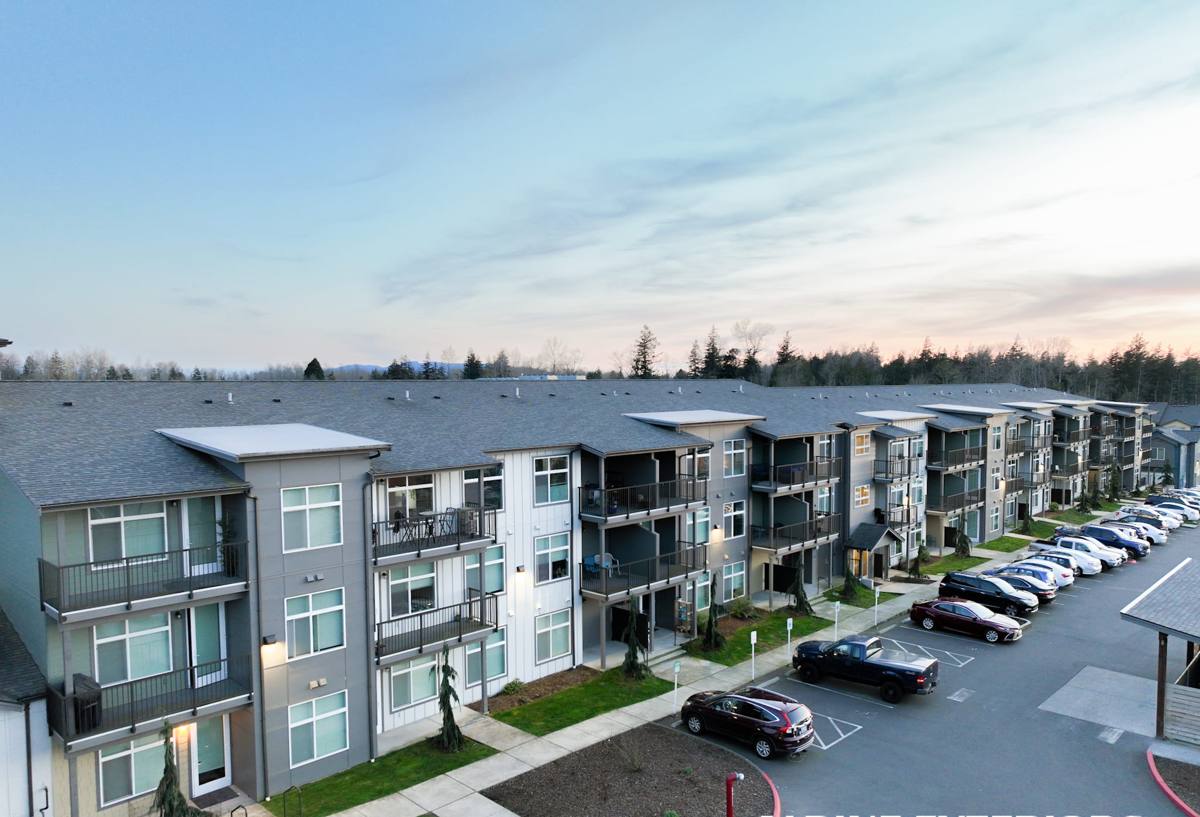
Signs a Peace Arch Home Needs Siding Replaced, Not Just Patched
Homeowners often ask whether a section of bad siding can just be swapped out. Sometimes it can. But there are signs that point to a full replacement being the more honest answer:
- Soft or spongy siding when pressed, especially near the bottom courses and around window and door trim
- Paint that keeps failing every few years no matter how well it's prepped and applied
- Persistent moss or dark streaking that returns within a season of cleaning
- Visible warping, cupping, or delamination, common on older wood-based or engineered wood products
- Rust staining around fasteners, a sign moisture is reaching the nail or screw heads
- Interior signs — musty smells, peeling interior paint near exterior walls, or bubbling drywall — that suggest moisture has already gotten past the siding
One or two of these on an otherwise sound wall might mean localized repair. Several at once, especially combined with a house that's twenty-plus years old, usually means the underlying water management system has failed and patching will only buy a year or two.
Why We Install Only James Hardie Fiber Cement Siding
We don't install vinyl, LP SmartSide, primed spruce, cedar, or other fiber cement brands. That's a deliberate standard, not a sales preference, and it matters more in a climate like this one. Vinyl expands and contracts with temperature swings and can crack in cold snaps; it also isn't the product to lean on where wildfire-adjacent conditions or ember exposure are a concern, since it's a combustible plastic. Engineered wood products and untreated wood siding depend heavily on paint film integrity to keep moisture out — once that film fails in a climate that stays wet for months at a stretch, the substrate underneath can swell, delaminate, or rot before anyone notices from the ground.
James Hardie fiber cement is dense, non-combustible, and engineered specifically for wet coastal climates through its HZ10 product line — Hardie's own zone designation for high-moisture regions like ours. It doesn't swell with water the way wood-based products can, it holds a factory-applied ColorPlus finish far longer than field-applied paint, and it carries a strong transferable warranty when installed to spec. We standardized on it because it's the product that holds up to salt air and driving rain over decades, not just years — and because when we put our name on a job, we want the material underneath to still be doing its job well after we're done talking about it.
What "Installed to Spec" Actually Means
Hardie's warranty and performance claims assume correct installation — proper clearances, fastening pattern, and joint treatment. A lot of the siding failures we get called out to inspect on older homes aren't material failures at all; they're installation shortcuts from years ago finally catching up with the house. Getting this right the first time is most of what separates a siding job that lasts thirty-plus years from one that needs attention again in ten.
What a Correct Siding Replacement Involves
Replacing siding is really a water management project that happens to end with new siding on the wall. The visible board is the last five percent of the work. Here's what has to happen underneath it for the job to actually hold up in a wet, salt-exposed climate.
Tear-Off and Sheathing Inspection
Old siding comes off down to the sheathing, and that sheathing gets inspected — not glanced at. This is where hidden rot from a failed water-resistive barrier or old flashing mistakes shows up. Any soft or delaminated sheathing gets cut out and replaced before anything new goes on; covering over compromised sheathing just hides a problem that will keep spreading behind the new siding.
Water-Resistive Barrier and Flashing
A new weather-resistive barrier goes on correctly lapped, shingle-style, so water sheds down and out rather than working its way behind seams. Every window, door, and penetration gets proper flashing integrated into that barrier — head flashing above openings, kick-out flashing where roof lines meet walls, and sealed penetrations for vents, hose bibs, and electrical. In an area that gets sustained driving rain off the water, flashing details are usually where a marginal job separates from a good one.
Fastening, Clearances, and Coursing
Hardie board gets fastened per the manufacturer's pattern for our exposure zone, with correct clearance from grade, roof lines, and decks so water can't wick up into the bottom edge of the siding. Butt joints get treated correctly rather than just caulked and hoped for. Small details — like not letting siding sit directly against concrete, hardscape, or soil — matter more here than in a drier climate, because that's exactly where moisture and moss get a foothold first.
| Wall detail | Why it matters near the water in Blaine |
|---|---|
| Weather-resistive barrier lap direction | Wrong lap lets driving rain track behind the barrier instead of shedding out |
| Flashing above windows and doors | Concentrates and redirects the heaviest rain load away from openings |
| Bottom-course clearance from grade | Prevents splash-back moisture and moss growth at the most exposed course |
| Fastener pattern and depth | Under- or over-driven fasteners create entry points for salt-laden moisture |
| Caulk and joint treatment | Poor joints are the first place algae and moss establish on a new wall |
Our Process, Start to Finish
- On-site assessment — we walk the exterior, check current siding condition, and look at drainage, shading, and moisture exposure specific to the lot
- Written estimate — scope, product line, color, and a clear breakdown of what's included, with no pressure to sign on the spot
- Tear-off and sheathing check — old material removed, sheathing inspected and repaired where needed
- Water management install — new barrier, flashing, and any trim work done before a single piece of new siding goes up
- Hardie siding installation — fastened, coursed, and joined to manufacturer spec for our exposure zone
- Final walkthrough — we go over the finished job with the homeowner and answer questions about care and warranty registration
Choosing the Right Hardie Line and Finish
Not every Hardie product is the right fit for every home, and the right call depends on the home's exposure, existing trim, and the look the owner wants.
| Product | Best fit | Notes for this area |
|---|---|---|
| HardiePlank lap siding | Most traditional homes, widest color range | Most common choice locally; performs well against sustained rain |
| HardieShingle | Homes wanting a shingle-style accent or full facade | Good for gable accents on homes with heavier architectural detail |
| HardiePanel | Modern or board-and-batten looks | Clean vertical lines; joint detailing matters even more with this profile |
| ColorPlus factory finish | Any of the above | Baked-on finish resists the fading and chalking that field paint struggles with in salt air |
What Affects the Cost of a Siding Replacement
We don't quote ranges without seeing the house, but these are the factors that move the number up or down on most Peace Arch-area projects:
| Factor | Effect on cost |
|---|---|
| Sheathing condition underneath old siding | Hidden rot repair adds cost that's rarely knowable until tear-off |
| Home size and wall complexity | More corners, gables, and trim details mean more labor and material cuts |
| Product line and profile chosen | Shingle and panel profiles generally cost more in labor than standard lap |
| Existing trim and window flashing condition | Failed flashing found during tear-off needs correcting before siding goes back on |
| Access and site conditions | Steep grades, tight setbacks, or heavy landscaping near the walls affect staging and labor time |
Why a Crew That Already Works Peace Arch Matters
Siding work this close to the water isn't just about following a manufacturer's install manual — it's about knowing how a specific stretch of coastline behaves. A crew that regularly works homes in and around Blaine has already seen where moss tends to establish first on local lots, how prevailing wind-driven rain hits certain wall orientations harder than others, and which older flashing details around here tend to fail first. That local pattern recognition shows up in small decisions during a job — where to add extra flashing attention, how tight to run clearances, which corners of a house need the most careful joint work — that a crew unfamiliar with the area might not think to prioritize.
It also matters for the long haul. A local contractor is still around in five or ten years if a warranty question comes up, and has a track record on other homes nearby that you can actually see and ask neighbors about.
What to Ask Before Hiring Anyone for This Job
- Do they install to the manufacturer's specified fastening and clearance details, or their own shortcuts?
- Will they inspect and, if needed, replace sheathing — not just cover over it?
- What's their approach to flashing at windows, doors, and roof-wall intersections?
- Is the warranty transferable, and is it backed by both the manufacturer and the installer?
- Can they show recent local work in similar coastal or moisture-heavy conditions?
Living With Hardie Siding Once It's Installed
Fiber cement is low-maintenance compared to wood, but "low-maintenance" doesn't mean "no attention." In a moss-prone climate like this, an occasional gentle rinse to keep organic buildup from establishing in joints and under trim goes a long way. Keeping gutters clear and landscaping trimmed back from the wall face helps airflow and drying, which is the single biggest factor in keeping moss from taking hold in the first place. Beyond that, correctly installed Hardie siding is built to go decades without the recoating or plank replacement that wood and engineered wood products often need.
If your Peace Arch home's siding is showing its age, or you just want an honest read on what shape it's really in, we're happy to walk the exterior with you and give a straight assessment. Use the form below to request a free, no-pressure estimate.