 Blaine Window
 Storm Damage Roofing on an Exposed Waterfront Property
Semiahmoo sits out on a narrow spit between Semiahmoo Bay and Drayton Harbor, at the edge of Blaine near the Canadian border. It's one of the most exposed residential stretches in Whatcom County — open water on more than one side, almost nothing to break the wind, and storms that arrive with more force than they do just a mile or two inland. When a windstorm or heavy rain event moves through, roofs out here take the worst of it, and they take it from more directions than a typical inland roof ever has to handle.
We repair storm-damaged roofs for homes in and around Semiahmoo, and we treat storm repair as its own discipline — not a smaller version of a full roof replacement. The goal after a storm is to stop water intrusion fast, assess what's actually damaged versus what's cosmetic, and put the roof back into a condition that will hold through the next one, without over-selling work the roof doesn't need.
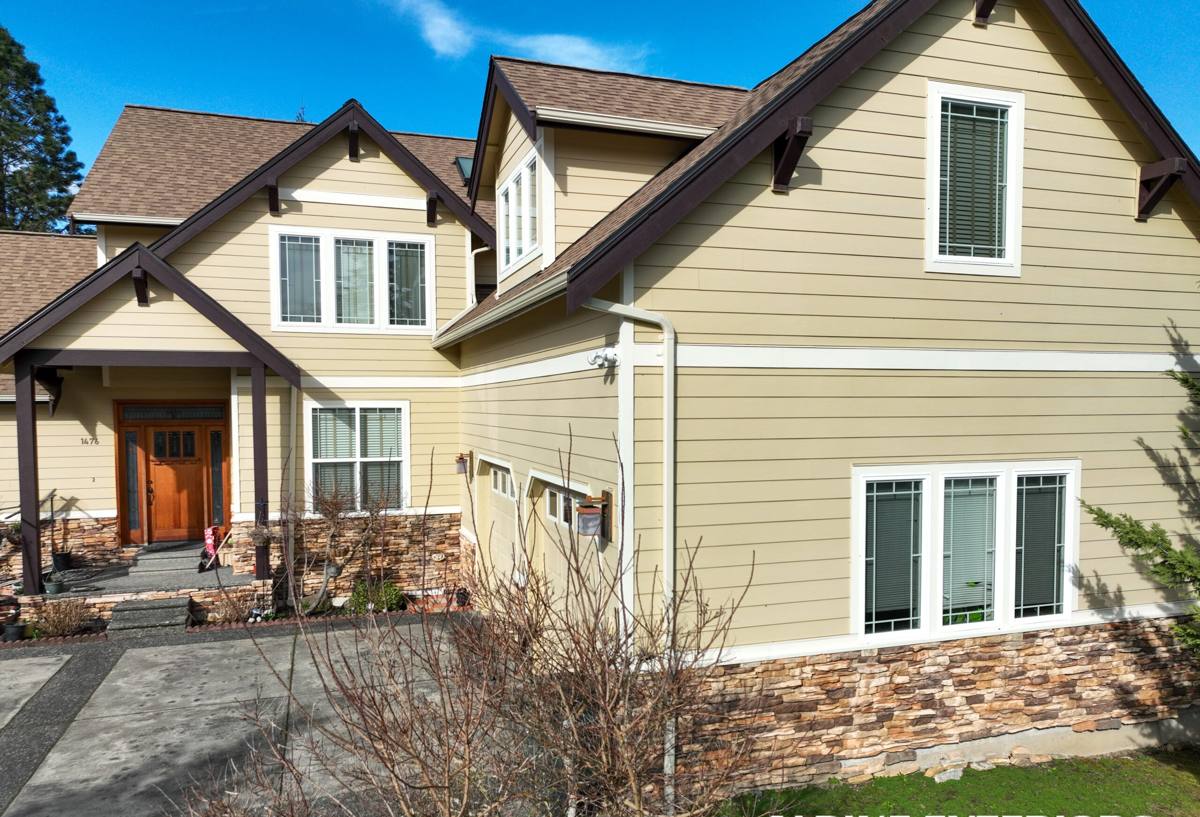
What This Climate Does to a Roof on the Spit
Wind-Driven Rain From Multiple Directions
Because Semiahmoo has water on more than one side, storms don't hit from a single prevailing direction the way they often do a few miles inland. Wind-driven rain gets pushed sideways into ridge caps, valleys, and roof-to-wall transitions with more force than a sheltered lot ever sees. That matters for storm repair specifically: damage from a wind event out here is more likely to show up as lifted or torn shingles along ridges and edges, and as water finding its way in sideways through flashing that held fine in calmer weather.
Salt Air and Accelerated Wear
Salt-laden air moving off the water speeds up corrosion in fasteners, flashing, and any exposed metal on a roof. A roof that's already dealing with salt exposure year-round is more vulnerable when a storm hits — fasteners that have lost some holding strength to corrosion are more likely to back out or fail under wind load, and flashing that's started to corrode is more likely to leak once a storm stresses the seams.
A Long Moss and Mildew Season
Whatcom County's mild, wet climate keeps moss and mildew active for most of the year, and Semiahmoo's waterfront exposure doesn't shorten that season. Moss that's been building on shaded or north-facing slopes holds moisture against the roofing material, and it can mask storm damage underneath — a homeowner checking their roof after a windstorm may see moss and assume that's the whole story, when there's lifted shingles or damaged flashing hiding under it.
What Storm Damage Actually Looks Like
Not all storm damage is obvious from the ground, and not everything that looks dramatic after a storm is actually a structural problem. Part of doing this right is telling the difference.
| What You See | Likely Cause | Urgency |
|---|---|---|
| Shingles missing or torn along ridges and edges | Wind uplift during a storm | High — exposed underlayment fails fast in continued rain |
| Granules collecting in gutters or downspouts after a storm | Wind and hail abrasion accelerating normal wear | Moderate — worth an inspection, not always urgent |
| Water staining on an interior ceiling near an exterior wall | Flashing failure or wind-driven rain intrusion | High — active leak, needs prompt attention |
| Lifted or cracked flashing around chimneys, vents, or skylights | Wind stress on sealant and fastening over time | Moderate to high depending on how exposed the gap is |
| A tree limb or debris strike leaving a visible dent or puncture | Impact damage | High — often a point-source leak that worsens quickly |
| Persistent moss on shaded slopes, unchanged by the storm | Long-term moisture and shade exposure, not storm-related | Low to moderate — maintenance item, not emergency repair |
Our Storm Repair Process
Assessment First
We start with a full roof assessment, not just a look at the spot the homeowner is worried about. Storm damage is rarely confined to one area — wind that lifted shingles on one slope has usually stressed flashing and fasteners elsewhere on the same roof. We check ridges, valleys, all roof-to-wall transitions, and every penetration (chimneys, vents, skylights) before scoping any repair, because missing a second problem area is how a roof ends up back on the emergency list a few months later.
Stop the Water First
If a roof has an active leak or exposed underlayment, our first priority is getting it weathertight — that can mean a temporary dry-in while materials are sourced, or a same-visit repair if the damage and materials on hand allow it. Waiting on a full scope-of-work before addressing an active leak just lets more water into the structure in the meantime.
Repair to Match, Not Just Patch
A storm repair should blend into the surrounding roof system, not sit on top of it as an obvious patch. That means matching shingle type, color, and exposure where possible, and making sure any new flashing ties into the existing roof-to-wall and underlayment detailing correctly rather than just getting caulked over the top. A patch that isn't properly integrated into the surrounding roofing is often the first thing to fail in the next storm.
Documentation for Insurance
Most storm repair work involves an insurance claim, and how the damage is documented matters as much as the repair itself. We photograph the damage before touching anything, note the likely cause (wind, impact, or age-related failure that a storm exposed), and provide a written scope of repair that a homeowner can hand directly to their adjuster. We're not a public adjuster and don't negotiate the claim for you, but a clear, specific scope from the contractor doing the work makes that conversation with the insurance company go a lot smoother.
Repair Versus Replacement: An Honest Read
Not every storm-damaged roof needs to be replaced, and not every roof with visible damage can be safely repaired. We give homeowners a straight answer based on a few factors, not a default push toward the larger job.
- Age and remaining service life: A roof already near the end of its expected life may not be worth patching if the storm exposed damage across a wide area — a repair on a roof with a few years left can be money spent twice.
- Extent of the damage: Isolated damage to one slope or one section is usually a clear repair. Damage spread across multiple slopes, or repeated storm damage on the same roof, points toward a bigger underlying problem.
- Material availability: Older or discontinued shingle lines can be hard to match. Sometimes a full slope replacement makes more visual and practical sense than a patch that will always look slightly different.
- What's underneath: If the underlayment or decking has taken on water damage from a longer-standing leak the storm just exposed, that changes the scope regardless of how the shingles look.
Signs a Semiahmoo Roof Needs Storm Repair
- Missing, torn, or curling shingles anywhere on the roof, especially along ridges and edges after a wind event
- New water staining on ceilings or upper walls following a storm off the water
- Visible daylight or gaps at flashing around chimneys, vents, or skylights
- A sudden increase in granules in gutters or at downspout outlets
- Sagging or soft spots anywhere on the roof deck
- Debris strike marks, dents, or punctures from wind-thrown branches
Why We Build to Correct Flashing and Ventilation Standards
A storm repair that ignores the roof's ventilation and flashing fundamentals doesn't hold up, even if the visible shingle damage gets fixed. Trapped moisture in an attic that can't breathe accelerates rot and mold from the inside, and flashing that's re-caulked instead of properly integrated will fail again the next time wind pushes rain sideways into it. We treat correct flashing laps, ventilation, and underlayment as the baseline for every repair, not as an upsell — a roof repaired to a lower standard on an exposed property like Semiahmoo is a roof we'll likely be called back to fix again.
What Correct Storm Repair Involves
- Removing and replacing damaged shingles and underlayment rather than sealing over them
- Re-lapping flashing correctly at every affected penetration and roof-to-wall transition
- Checking and clearing attic ventilation paths near the repair area
- Using corrosion-resistant fasteners appropriate for salt-air exposure
- Confirming the repair area sheds water the same way the rest of the roof does, with no reverse laps or low spots
Why a Crew That Already Works Semiahmoo Matters
A contractor who regularly works this stretch of Whatcom County coastline already knows how wind and rain behave differently on the spit than they do even a mile or two inland in Blaine proper. That shows up in the details that actually determine whether a storm repair lasts: which slopes take the worst of a wind event out here, how far flashing needs to be extended to handle sideways-driven rain, and which fastener grade actually holds up against salt air over time. A crew seeing this property type for the first time is more likely to under-scope those details, because they haven't watched what fails here before.
A Simple Checklist Before Hiring for Storm Roof Repair
- Ask for a written, itemized scope of repair before any work begins
- Confirm current Washington contractor licensing and active liability insurance
- Ask whether they document damage with photos in a form your insurance adjuster can use
- Ask how they handle an active leak while a full repair is being scoped
- Get a straight answer on repair versus replacement, not an automatic push toward the bigger job
What Homeowners Should Do Right After a Storm
If you can safely see parts of your roof from the ground or from inside the attic, a quick look right after a storm can catch problems early — missing shingles, new water stains, or debris on the roof are all worth noting. Don't get on the roof yourself, especially after a wind event when the structure and any remaining debris can be unstable. If there's an active leak, containing the water inside (a bucket, moving anything valuable out of the drip path) is reasonable while you wait for an assessment, but the roof itself should be left to a professional.
If a recent storm has left your Semiahmoo roof with missing shingles, a new leak, or damage you're not sure how serious it is, we're happy to take a look and give you a straight answer on what it needs. Reach out below for a free, no-pressure estimate.