 Blaine Window
 Roofing in Grandview: A Different Set of Conditions
Grandview sits close enough to the water and to the Canadian border that its roofs deal with a combination most inland Washington homes never see: salt-laden air off the Strait, wind-driven rain that gets pushed sideways under poorly sealed edges, and a moss season that can run eight months or more out of the year. None of that is exotic on its own. Together, over the life of a 20-25 year roof, it adds up to premature granule loss, soft decking under valleys, and moss mats that hold moisture against the shingle surface long after a storm has passed.
A roof replacement done right for this neighborhood isn't just "put new shingles on." It's choosing materials and details that specifically answer salt exposure, rain intrusion, and moss growth — in that order of priority, based on what's actually causing damage on the home.
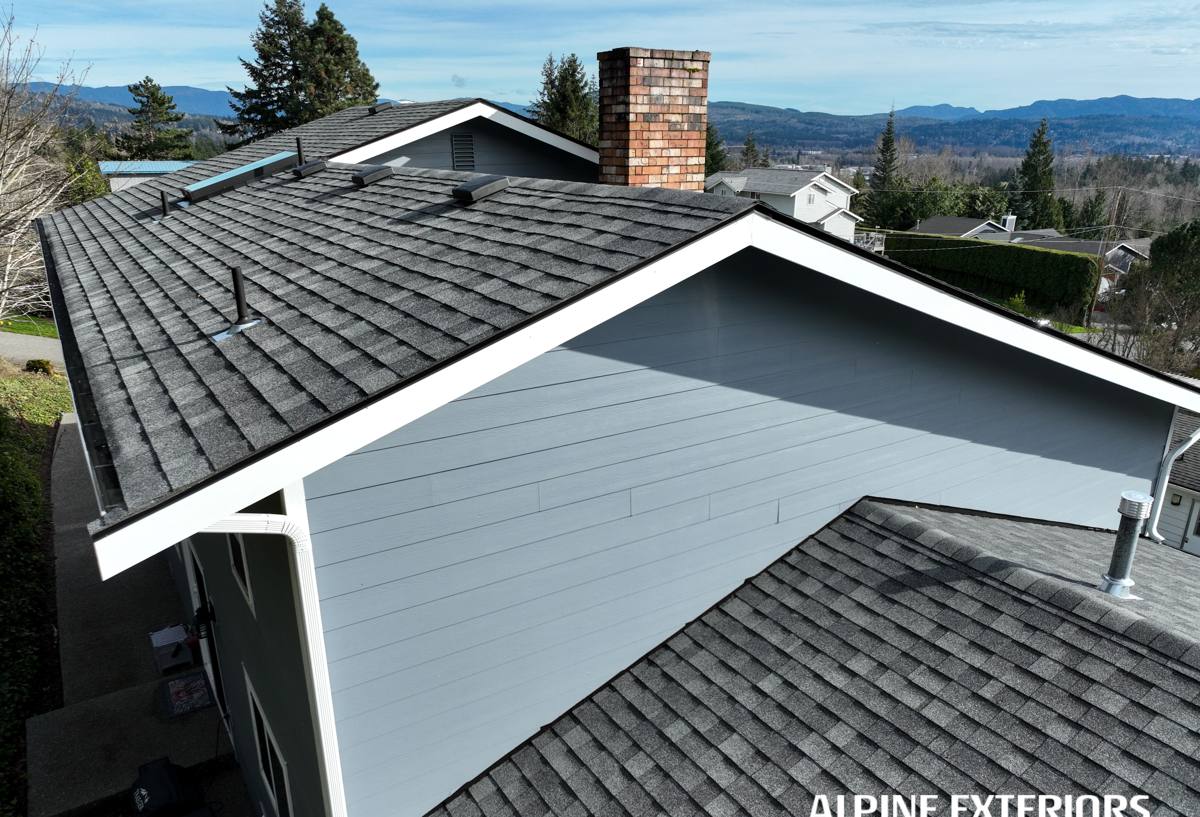
What Whatcom County Weather Does to a Roof Over Time
Salt Air and Metal Fatigue
Being near saltwater means airborne salt settles on every exterior surface, including the roof. Standard steel fasteners, flashing, and vent components can corrode faster here than they would ten or fifteen miles inland. It's not usually dramatic — it's slow pitting and rust bleed that shows up as brown streaking near nail heads and flashing seams, and it's often the first visible sign that metal components are wearing out ahead of the shingles themselves.
Driving Rain and Wind-Driven Water
Blaine gets weather off the water that doesn't always fall straight down. Wind-driven rain pushes water sideways and upward under shingle edges, at ridge caps, and around any roof penetration — vents, chimneys, skylights. A roof can look fine from the ground and still be taking on water at these transition points because the underlayment and flashing details weren't built for lateral water pressure.
Moss: The Slow, Quiet Damage
Moss doesn't puncture a roof. It does something arguably worse over time — it holds moisture directly against the shingle mat, keeps that section of roof from ever fully drying out, and lifts shingle edges as it grows, creating entry points for water. On north-facing slopes and anywhere shaded by trees, moss can establish within a couple of seasons on a roof that isn't treated or kept clear.
Signs a Grandview Roof Needs Replacing, Not Patching
- Granule loss heavy enough that you can see bare, shiny patches on shingles from the ground
- Moss coverage across more than a small section, especially if it's been there more than one season
- Soft or spongy decking felt when walking the roof, usually near valleys or old vent penetrations
- Recurring leaks in the same area even after prior patch repairs
- Curling, cupping, or cracked shingles across a large portion of the roof rather than isolated spots
- Rust staining or visible corrosion at flashing, vents, or fasteners
- Roof is at or past the manufacturer's expected service life for this climate
If only one or two of these apply and they're localized, a repair may still make sense. When several show up together, or the damage is spread across the roof, replacement is usually the more honest recommendation — repeated patching on an aging roof in this climate tends to cost more over a few years than doing the job once, correctly.
What a Correct Roof Replacement Includes Here
Tear-Off and Deck Inspection
Full removal of the old roofing down to the deck, not a layover. This is the only way to actually see the condition of the sheathing — soft or delaminated plywood, especially around valleys and old penetrations, needs to be identified and replaced before anything new goes down. Skipping this step just buries a problem under new shingles.
Underlayment Built for Wind-Driven Rain
Given how much of the water intrusion risk here comes from rain pushed sideways rather than straight down, underlayment choice and installation detail matter more than they would in a drier, calmer climate. Ice-and-water shield or a comparable self-sealing membrane at eaves, valleys, and around penetrations gives the roof a second line of defense where wind-driven water actually reaches.
Corrosion-Resistant Metal Components
Because of the salt air exposure, we favor flashing, fasteners, and vent hardware rated for coastal or high-corrosion conditions rather than standard-grade components. It costs a little more up front and pays for itself by not being the first thing to fail again in five years.
Ventilation That Actually Balances
Proper intake and exhaust ventilation keeps moisture from condensing inside the attic space, which matters in a climate where the air itself carries a lot of moisture much of the year. A roof can be installed perfectly and still fail early from the inside if the attic isn't breathing correctly.
Moss-Resistant Detailing
Where zinc or copper strips are appropriate, they provide ongoing moss suppression as rain washes trace metal down the roof slope. This isn't a substitute for keeping trees trimmed back and gutters clear, but it reduces how aggressively moss re-establishes on north-facing and shaded sections.
Material Options for This Climate
| Material | How It Handles This Climate | Trade-Offs to Know |
|---|---|---|
| Architectural asphalt shingle | Good performance for the cost; algae-resistant granules help slow moss and staining | Still needs periodic moss and debris removal; mid-range lifespan |
| Metal roofing | Sheds water and moss well due to slope and surface; long service life | Higher upfront cost; requires coastal-rated fasteners and coatings near saltwater |
| Synthetic/composite shingle | Resists moisture absorption and moss better than standard organic shingles | Higher material cost; fewer local installers experienced with it |
| Cedar shake | Traditional look that fits many Pacific Northwest homes | Needs the most maintenance in a wet, moss-prone climate; shorter lifespan without diligent upkeep |
There's no single "right" material for every Grandview home — it depends on the roof's slope, sun exposure, tree cover, and the homeowner's tolerance for maintenance. We'll walk through the real trade-offs for your specific roof rather than pushing one product.
Our Process for a Grandview Roof Replacement
- On-site inspection. We walk the roof and attic, not just look from the ground, to find the actual cause of any damage before recommending replacement.
- Honest scope and estimate. A written breakdown of what needs to happen and why, including whether any deck repair is likely, before work starts.
- Material selection. We go over the realistic options for your roof's exposure and slope, with straight talk about cost and maintenance.
- Tear-off and deck check. Old roofing comes off completely so the deck can be inspected and repaired where needed.
- Installation with climate-appropriate detailing. Underlayment, flashing, fasteners, and ventilation chosen and installed for salt air and wind-driven rain, not generic defaults.
- Final walkthrough. We go over the completed roof with you, including any care recommendations specific to your property's sun and tree exposure.
Timing the Job Around Moss Season
Roof replacement can technically happen most of the year here, but scheduling around the wettest stretches makes for a cleaner install and lets underlayment and sealants cure properly. We'll talk through realistic timing when we scope the job, rather than promising a date that weather won't cooperate with.
Why a Crew That Works Grandview Matters
A roofing crew that's worked other homes in this specific area already knows which details actually matter here — which slopes hold moss longest, where wind-driven rain tends to find weak points, and which fastener and flashing grades hold up against the salt air rather than corroding early. That's not something you get from a generic checklist; it comes from having done the work in this exact climate, on homes facing the same conditions as yours.
It also means faster, more accurate estimates. We're not guessing at how Whatcom County weather affects a roof — we're applying what we've already seen work and not work on homes near yours.
What Homeowners Can Do Between Now and a Replacement
- Keep gutters and downspouts clear so water isn't backing up under roof edges
- Trim back tree limbs that shade the roof and feed moss growth
- Have moss physically removed rather than just power-washed, which can drive granules loose
- Watch for granule buildup in gutters — a sign the shingle surface is wearing down
- Get a roof looked at after any major windstorm, even if nothing looks obviously wrong
If your Grandview roof is showing moss buildup, granule loss, or recurring leaks, we're happy to take a look and give you a straightforward assessment — no pressure, no obligation. Use the form below to request a free estimate.