 Blaine Window
 Point Roberts Sits at the Edge of the Weather
Point Roberts is one of the more exposed residential pockets in Whatcom County. Surrounded by water on three sides, homes here take a more direct hit from salt-laden air, wind-driven rain, and the long gray stretch of moss season than properties further inland toward Blaine or Bellingham. Siding on the Point isn't just cosmetic — it's the first line of defense against a marine climate that never really lets up for long.
That combination of salt, moisture, and shade is exactly the environment fiber cement siding was engineered to handle, and exactly the environment where a rushed or careless install shows its weaknesses first. Homes here don't get away with shortcuts the way a drier, more sheltered lot might.
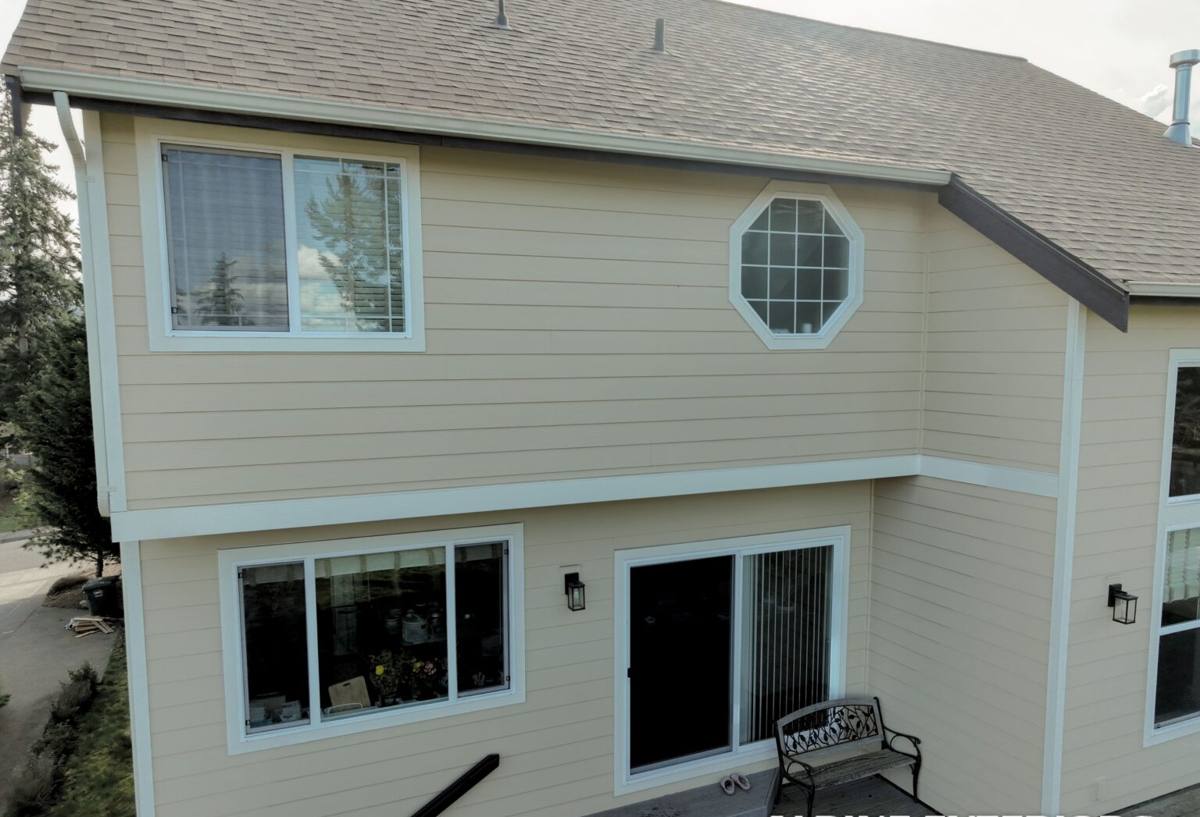
Signs the Climate Is Already Winning
Before talking about replacement, it's worth knowing what failure actually looks like on a Point Roberts home. Most of these signs show up gradually, on the north and west-facing walls first, where salt spray and shade linger longest.
- Dark green or black streaking that comes back within weeks of being cleaned off
- Soft or spongy spots when you press on wood or composite siding, especially near the bottom courses
- Paint that's chalking, peeling, or bubbling faster than it should for its age
- Visible gaps, warping, or cupping in individual boards
- Rust streaks below nail heads or fasteners
- A musty smell along interior walls that back up to exterior siding
Any one of these on its own might just mean a cleaning or a repaint. Several together, especially on a home that's been through more than one Pacific Northwest winter without attention, usually mean the siding system itself is losing the battle.
Why We Only Install James Hardie Fiber Cement Here
We don't install vinyl, LP SmartSide, Cemplank, Allura, primed spruce, or cedar. That's a deliberate standard, not a lack of options. Each of those products has genuine strengths, but every one of them asks a Point Roberts homeowner to accept a trade-off — ongoing repainting, moisture sensitivity at seams and cut edges, or a maintenance schedule that's hard to keep up with in a climate this wet and salty.
James Hardie fiber cement is non-combustible, doesn't rot or feed insects the way wood-based products can, and holds its shape without the expansion and contraction that causes gapping and buckling in humid, temperature-swinging air. Hardie's ColorPlus factory finish is baked on and warranted against fading and peeling, which matters more here than in a drier climate — repainting a whole house on the Point isn't a small job, and salt air is hard on field-applied paint. Hardie also engineers its products by climate zone; the HZ5 line used across the Pacific Northwest is formulated for our specific combination of moisture and moderate temperatures, not a generic national spec.
None of that replaces good installation. Fiber cement performs the way it's designed to only when it's installed to Hardie's actual specifications — and that's where a lot of siding jobs, on any product, quietly go wrong.
What Correct Installation Looks Like on a Point Roberts Home
Prep and the Moisture Barrier
Everything starts underneath the siding, not on top of it. A correct install means a continuous weather-resistant barrier, properly lapped and taped, with flashing at every window, door, and horizontal trim transition so water is directed out and down rather than trapped behind the panel. On a home this exposed to driving rain, skipping or rushing this step is the single most common reason siding fails early — from any manufacturer.
Fastening and Clearances
Hardie specifies exact nailing patterns, fastener types, and clearances — including gaps at the ground, roofline, and any abutting surface — that allow the material to shed water and breathe. Nailing too tight, too high, or too close to an edge voids the manufacturer's warranty and creates the exact stress points that lead to cracking later.
Trim, Caulking, and Cut Ends
Every field-cut edge needs to be sealed with the appropriate touch-up product before it goes up, and caulking at trim joints needs to be a Hardie-compatible sealant applied correctly, not just wherever a gap looks awkward. In a salt-air environment, an unsealed cut edge is where moisture intrusion starts.
Our Process, Start to Finish
- On-site assessment — we look at your current siding condition, sheathing, and any signs of the moisture damage common to exposed Point Roberts walls before quoting anything.
- Tear-off and inspection — removing the old siding lets us actually see the sheathing and framing underneath. Hidden rot gets addressed before new siding ever goes up, not painted over.
- Weather barrier and flashing — a continuous, correctly lapped moisture barrier and flashing package goes in first, matched to your home's specific window and trim details.
- Hardie installation to spec — panels, fastening, and clearances installed per the manufacturer's current installation manual, which is also what keeps your warranty valid.
- Trim, caulking, and touch-up — cut ends sealed, joints caulked, and any factory-finish touch-up done with Hardie-matched product.
- Final walkthrough — we go over the finished work with you before calling the job done.
Choosing the Right Hardie Product Line
Hardie makes several profiles, and the right one depends on your home's style and how much of the wall is exposed to direct weather.
| Product | Best Use on a Point Roberts Home | Look | Install Notes |
|---|---|---|---|
| HardiePlank Lap Siding | Most homes; strong performance on wind- and rain-exposed walls | Traditional horizontal lap | Widest range of textures and exposure widths |
| HardieShingle | Accent areas, gables, or a full shingle-style home | Staggered or straight-edge shingle | More labor-intensive install; strong coastal-style look |
| HardiePanel (vertical) | Modern designs, porch ceilings, accent walls | Clean vertical lines | Requires battens or trim at seams for correct drainage |
| HardieTrim | Corners, window and door surrounds, fascia | Smooth or textured trim boards | Paired with siding for a finished, sealed edge |
Most Point Roberts projects use HardiePlank as the primary field material, with HardieTrim at corners and openings and sometimes HardieShingle as an accent on a gable or entry feature.
What Affects the Cost of a Point Roberts Siding Project
Every home is different, but the same handful of factors drive most of the variation in price on siding jobs out here.
| Factor | Why It Matters |
|---|---|
| Home size and wall complexity | More corners, gables, and dormers mean more cutting, trim, and labor time |
| Condition of existing siding and sheathing | Hidden moisture damage found during tear-off may need repair before new siding goes on |
| Product line and profile chosen | Lap, shingle, and panel styles have different material and labor requirements |
| Trim and architectural detail | Custom trim work around windows, doors, and rooflines adds time |
| Color choice | Factory ColorPlus finishes cost more up front but avoid a repaint down the road |
| Site logistics | Material delivery and crew scheduling for Point Roberts factor in the drive through the border crossing, so lead times are planned for, not improvised |
Maintaining Hardie Siding in a Salt Air, Moss-Prone Environment
Fiber cement cuts down maintenance compared to wood, but it isn't maintenance-free, especially this close to the water. A yearly rinse with a garden hose or soft wash — never a high-pressure wash aimed directly at seams — keeps salt residue and early moss growth from taking hold. Keep gutters clear and downspouts directed away from the wall base, since standing water at the bottom courses is the most common place moss and staining start. Check caulking at trim joints every year or two, since sealant is the one part of the system that ages faster than the siding itself. Trim back vegetation that keeps a wall shaded and damp longer than the rest of the house.
Why Local Experience in Point Roberts Matters
Point Roberts isn't like scheduling a job in most of Whatcom County. Crews and material deliveries have to plan around the drive through Canada to reach the peninsula, and a contractor who hasn't done that before can turn a simple scheduling hiccup into days of delay. A crew that already works on the Point knows how to plan material drops, sequence the job around weather windows, and get the work done without the learning curve costing you time.
There's also a practical read on the climate itself. A contractor who's installed siding on several Point Roberts homes knows which walls take the worst of the wind-driven rain, where moss tends to establish first, and how much clearance and flashing detail actually holds up here versus what looks fine on paper. That's the kind of judgment that only comes from having done the work in this specific place, not just from a manufacturer's install manual.
If your siding is showing its age, or you're planning ahead rather than waiting for a problem, we're happy to take a look and give you a straightforward, no-pressure estimate — use the form below to get started.