 Blaine Window
 Why Peace Arch Homes Take a Different Kind of Beating
Homes near the Peace Arch border crossing in Blaine sit in one of the more demanding exterior environments in Whatcom County. You're close enough to Semiahmoo Bay and Drayton Harbor to pull in salt-laden air off the water, exposed enough to catch wind-driven rain coming straight off the Strait of Georgia, and shaded and damp enough through the fall and winter to grow moss on anything that holds moisture for more than a day or two. None of that is unique to one house on one block — it's the baseline condition for siding anywhere near this stretch of the border.
That combination is exactly why we only install James Hardie fiber cement siding, and why we're specific about how it goes on a Peace Arch-area home. A siding product that performs fine forty miles inland in a drier microclimate can fail early here — not because it's a bad product everywhere, but because it isn't matched to what this location actually does to a wall assembly year-round.
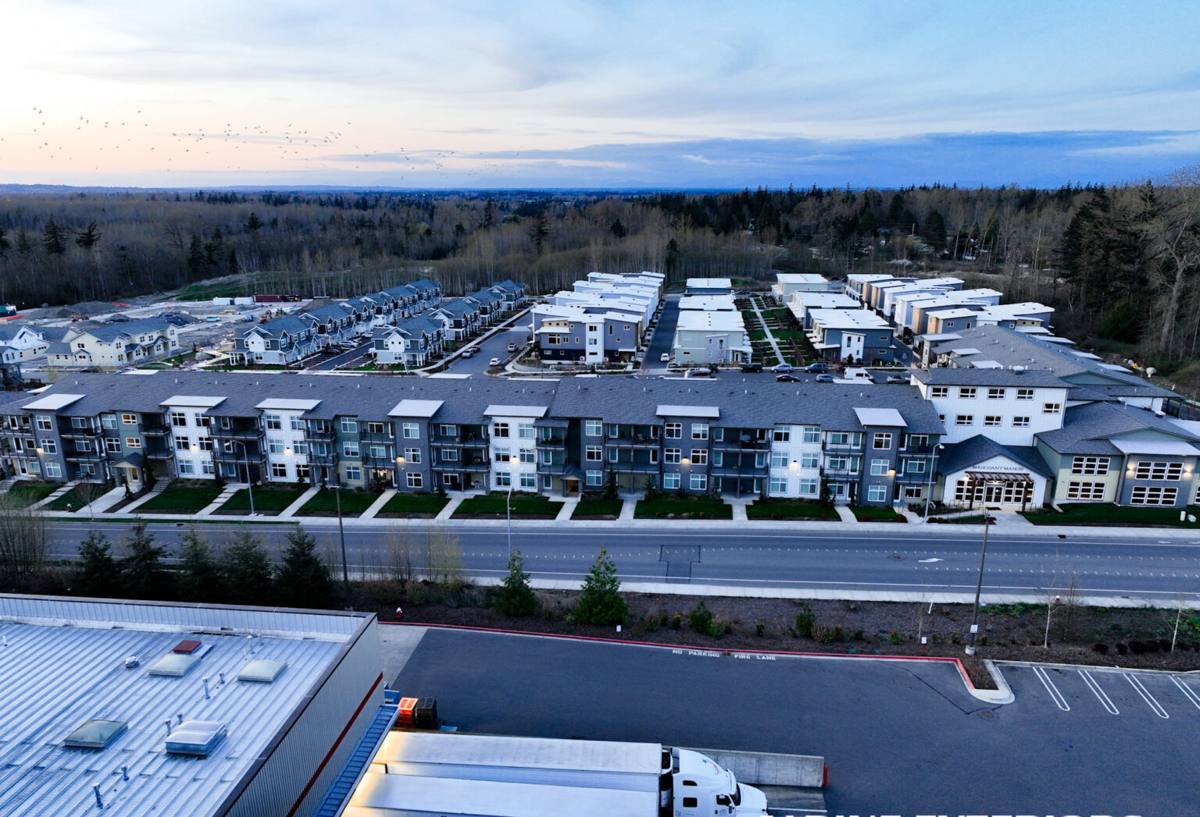
The Salt Air, Rain, and Moss Triangle
Salt Air
Airborne salt is corrosive to exposed metal fasteners, trim flashing, and hardware, and it accelerates the breakdown of finishes that aren't engineered to resist it. Over years, a coastal-adjacent home can show chalking, fading, or fastener corrosion well ahead of schedule if the siding and the accessory materials weren't chosen with salt exposure in mind.
Driving Rain
Wind off the water doesn't just add rain volume — it pushes water sideways into laps, seams, and penetrations that would stay dry in a calmer climate. This is a wind-driven-rain exposure problem, not just a rainfall-totals problem, and it changes how joints, flashing, and caulking need to be detailed.
Moss Season
Blaine's long, wet, low-sun stretch from fall through spring keeps north- and west-facing walls damp for extended periods, especially under eaves, behind landscaping, and in shaded side yards. Moss and algae need sustained moisture to establish, and siding that absorbs or traps water gives them exactly that. Siding that sheds water and dries quickly starves them out before they get a foothold.
Why We Standardized on James Hardie for This Climate
James Hardie fiber cement is engineered around moisture, not just painted to resist it. It's a non-combustible cement-based product that doesn't absorb and swell the way wood-based or wood-fiber composite sidings can, and it doesn't develop the long-term maintenance burden that vinyl's expansion-contraction cycling and UV fading create in a marine climate. The factory-applied ColorPlus finish is baked on under controlled conditions, which gives it materially better fade, chip, and moisture resistance than field-applied paint — a meaningful advantage on a wall that's going to see salt air and driving rain for the next several decades.
Hardie also builds region-specific product engineering into its HardieZone system. Whatcom County, including Blaine, falls into the HZ5 zone, which accounts for the freeze-thaw cycling and moisture exposure typical of the Pacific Northwest coast. That's not marketing — it affects the actual composition and specification of the board you're getting.
We won't install LP SmartSide, vinyl, Cemplank, Allura, primed spruce, or cedar on homes in this area. Each of those products has legitimate uses somewhere, but for a wall assembly that has to shed salt-laden, wind-driven rain and resist moss for 30-plus years with minimal upkeep, we've made James Hardie our standard and we stand behind that decision on every job we take on near the border.
What a Correct Installation Involves Here
Fiber cement siding is only as good as the installation underneath it. In a high-moisture, high-wind-driven-rain location like Peace Arch, a handful of details matter more than they would in a milder climate.
Water Management Behind the Siding
A weather-resistive barrier and properly lapped, taped seams come first — the siding is the outer layer of a drainage system, not a standalone waterproof shell. Rainscreen or drainage gap detailing helps siding dry faster after the region's extended wet stretches, which directly reduces moss and mildew risk on shaded elevations.
Clearances and Flashing
Hardie's own installation specifications call for minimum clearances from grade, roof lines, decks, and horizontal surfaces, plus proper flashing at every window, door, and penetration. Skipping or shortcutting these details is the single most common cause of moisture problems traced back to "bad siding" that was actually a bad install.
Fastening for Coastal Exposure
Corrosion-resistant fasteners matter more here than in a drier inland location. We fasten per Hardie's specifications with materials suited to salt air exposure, and we don't rely on undersized or mismatched fasteners to save time.
Joint and Caulk Detailing
Butt joints, trim intersections, and penetrations get sealed with products and techniques matched to wind-driven rain exposure — not just a bead of caulk wherever two pieces meet.
Our Process for a Peace Arch Project
- On-site assessment — we walk the exterior, check current siding and sheathing condition, note moss/algae patterns and shaded elevations, and identify moisture entry risks specific to your home's orientation and exposure.
- Scope and product selection — we recommend the appropriate Hardie plank, panel, or shingle profile and ColorPlus color, matched to your home's style and the HZ5 climate zone.
- Removal and substrate check — old siding comes off and we inspect sheathing for hidden rot or moisture damage before anything new goes up, since covering a compromised substrate defeats the purpose of a better siding.
- Water barrier and flashing install — weather-resistive barrier, flashing, and drainage detailing go in to Hardie spec before a single plank is hung.
- Siding installation — installed to manufacturer clearance, fastening, and joint specifications, with attention to the elevations most exposed to wind-driven rain.
- Trim, caulking, and final detailing — all seams, penetrations, and trim intersections sealed appropriately for coastal exposure.
- Walkthrough — we review the completed work with you before calling the job done.
James Hardie Product Lines for This Area
Most Peace Arch-area homes fall into a few common Hardie configurations depending on style and exposure. Here's a general comparison to frame the conversation before an estimate:
| Product Line | Typical Use | Why It Fits Here |
|---|---|---|
| HardiePlank Lap Siding | Most common — full wall coverage | Traditional look, wide profile options, ColorPlus finish stands up to salt air and rain exposure |
| HardieShingle | Accent areas, gables | Staggered or straight-edge look for architectural detail without sacrificing moisture performance |
| HardiePanel Vertical Siding | Modern facades, accent walls | Clean vertical lines; drainage detailing especially important on this profile |
| HardieTrim | Corners, window/door surrounds, fascia | Matched system with the siding for consistent water management at transitions |
Cost Factors on a Peace Arch Siding Project
Every home is different, but the variables that move price on jobs in this area are consistent enough to walk through honestly:
| Factor | Why It Affects Cost |
|---|---|
| Substrate condition | Hidden rot or moisture damage found during tear-off adds repair scope before new siding can go on |
| Home size and complexity | More corners, gables, and trim transitions mean more labor and material detailing |
| Product line and profile | Panel, plank, and shingle profiles carry different material and labor costs |
| Exposure and elevation count | Sides facing prevailing wind and rain often need extra flashing and drainage attention |
| Access and site conditions | Setbacks, landscaping, and multi-story sections affect scaffolding and staging time |
We don't quote off square footage alone — the assessment visit is where these factors actually get priced, based on your specific home.
Signs Your Current Siding Is Already Losing the Fight
If you're not sure whether your home's siding is holding up to Blaine's coastal conditions, these are the signs we look for first:
- Moss or dark green/black staining on north- or west-facing walls that returns soon after cleaning
- Soft, spongy, or visibly swollen spots, especially near the bottom courses or trim
- Paint that's peeling, bubbling, or chalking faster than expected for its age
- Visible gaps, warping, or separation at seams and butt joints
- Rust streaking from fasteners or trim hardware
- Caulk that's cracked, shrunk, or pulled away from joints and penetrations
- A musty smell or interior moisture signs on exterior-facing walls
Any one of these on its own isn't necessarily an emergency, but a few of them together usually means the siding is no longer managing water the way it should.
Why It Matters That We Already Work This Neighborhood
Installing siding correctly in a coastal border-crossing climate isn't something you get right by following a generic national spec sheet. It's knowing which elevations on a Blaine home take the worst of the wind-driven rain, which shaded corners grow moss first, and which flashing details actually hold up against salt air over a decade instead of just at final walkthrough. A crew that's done this work repeatedly in Peace Arch and the surrounding Blaine area brings that judgment to your home instead of learning it on the job.
We also know this climate doesn't forgive shortcuts. A siding job that looks fine on installation day can fail behind the surface in three to five years if the water management underneath was rushed. Hiring locally experienced installers who work James Hardie exclusively means the crew on your roofline isn't guessing at how this product performs here — they've already seen how it holds up through several Blaine winters.
Ready for a Straight Answer on Your Home
If your siding is showing wear, or you're planning ahead of a renovation, we're happy to take a look and give you an honest read on what your home actually needs — no pressure, no upsell. Fill out the form below to schedule a free estimate for your Peace Arch-area property.