 Blaine Window
 Board & Batten Siding Built for Peace Arch's Coastal Climate
Peace Arch sits about as close to saltwater and the Canadian border as a Whatcom County neighborhood gets, and that location shapes what the exterior of a house has to survive. Homes here take on a steady mix of marine humidity, wind-driven rain off the Strait, and long stretches of gray, shaded weather that keeps siding wet longer than it is in drier inland pockets of the county. Board and batten siding, done correctly, is one of the more durable and visually striking ways to handle that exposure — but "done correctly" is doing a lot of work in that sentence. This page covers what board and batten siding needs to hold up in Peace Arch specifically, what a proper installation actually involves, and why we install it exclusively in James Hardie fiber cement rather than the wood, vinyl, or engineered-wood versions of the same look.
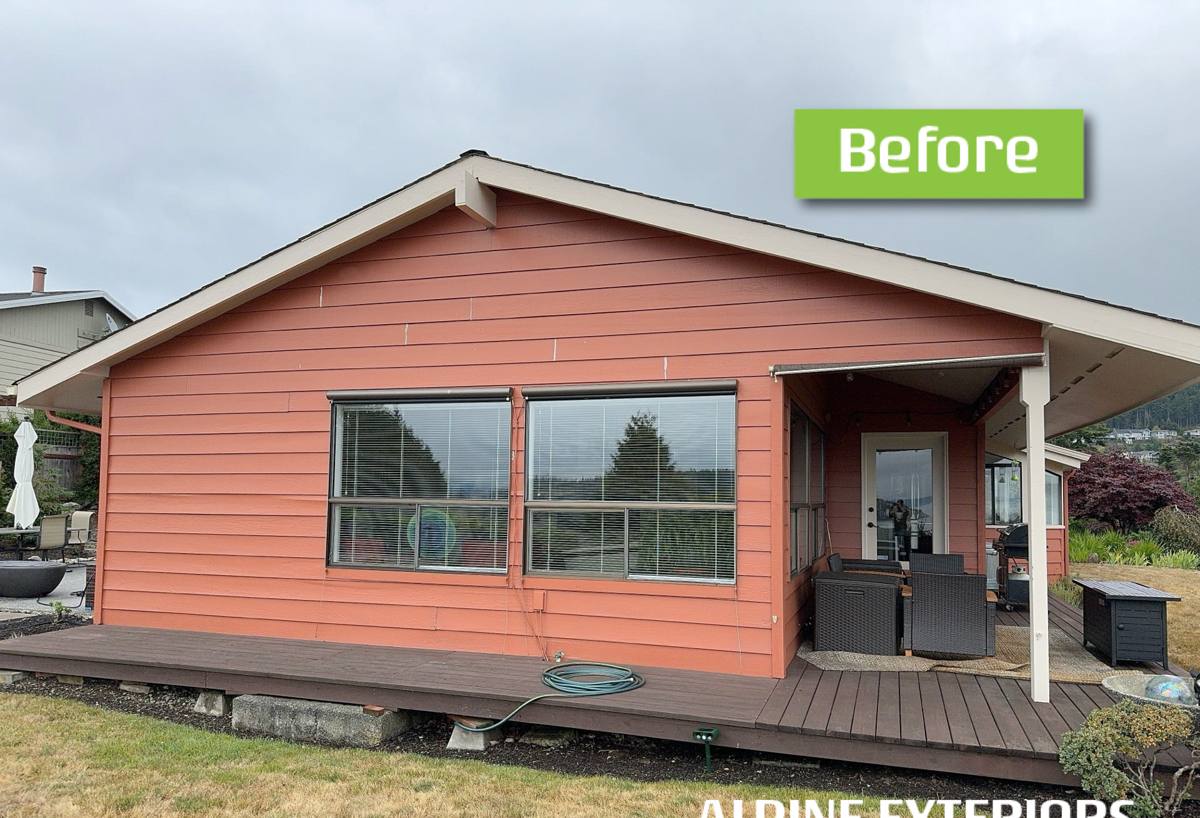
What Peace Arch Siding Is Actually Up Against
Three regional factors drive almost every siding failure we see in this part of Blaine:
- Salt air: Proximity to the water means airborne salt settles on exterior surfaces year-round. It accelerates corrosion on fasteners and metal flashing and slowly breaks down finishes that aren't formulated to resist it.
- Driving rain: Storms off the Strait of Georgia don't just fall straight down — wind pushes rain sideways into wall assemblies, which puts real stress on any siding profile with horizontal seams, joints, or battens where water can be forced upward or sideways instead of just running down.
- A long moss season: Shaded elevations, north-facing walls, and the general dampness of a Whatcom County winter give moss, algae, and mildew months to establish themselves on any surface that stays damp. Once organic growth takes hold, it holds moisture against the siding face and speeds up whatever deterioration is already happening underneath.
None of these factors are unique to Peace Arch, but the combination — coastal salt exposure plus sustained rain plus shaded, slow-drying conditions — is more demanding than what siding faces in most of the rest of the state. A siding choice that works fine in a drier, sunnier part of Washington can underperform here.
What Board and Batten Siding Is, and Why the Profile Matters
Board and batten is a vertical siding profile: wide flat panels or boards installed with narrower strips (battens) covering the seams between them. It's a classic look for Pacific Northwest homes, farmhouses, and craftsman-style exteriors, and it reads as clean, linear, and a little more distinctive than standard lap siding.
The Practical Case for Vertical Siding Here
Beyond the look, the vertical profile has a real functional advantage in a climate like this: seams run up and down rather than stacking horizontally across the wall. That means there are fewer horizontal ledges for water to sit on and fewer places where wind-driven rain can get pushed up under a lapped edge. Done right, board and batten sheds water efficiently down the face of the wall.
Where It Can Go Wrong
The profile's strength is also where sloppy installation causes the most damage. Every batten seam, every panel joint, and every point where the siding meets a window, door, or roofline is a potential entry point for moisture if it isn't flashed and fastened correctly. In a low-exposure climate, installation mistakes might take years to show. In Peace Arch's combination of salt, wind, and rain, they show up faster — as staining, soft spots, or moss colonizing a seam that's staying damp.
Why We Only Install James Hardie Board & Batten
We install James Hardie fiber cement exclusively — we don't offer board and batten in vinyl, primed spruce, cedar, or engineered wood products like LP SmartSide. That's a deliberate standard, not a limitation on our part, and it matters more in a coastal climate than almost anywhere else in the county.
James Hardie's board and batten systems (HardiePanel vertical siding with HardieTrim battens) are fiber cement: a mix of cement, sand, and cellulose fiber engineered specifically to resist moisture, rot, and pest damage in ways that wood-based and wood-derived products fundamentally cannot, because they aren't wood-based to begin with. A few specifics that matter for this location:
- Non-combustible material — fiber cement doesn't feed a fire the way wood-based sidings can.
- HZ5 climate-engineered formulation — Hardie manufactures region-specific product lines, and the versions specified for the Pacific Northwest are engineered for high-moisture, freeze-thaw-adjacent climates rather than a one-size-fits-all national formula.
- ColorPlus factory finish — a baked-on finish applied under controlled conditions, which holds color and resists the fading and chalking that field-applied paint is prone to, especially under UV and salt exposure.
- Won't rot, and doesn't feed moss and mildew growth the way organic wood-based sidings do — an advantage that matters directly in a neighborhood with a long moss season.
- A strong, transferable manufacturer warranty backing the material itself, on top of our own installation workmanship.
We get asked from time to time about installing engineered wood board and batten (LP SmartSide is the most common brand people mention) because it's often less expensive up front. We won't install it, and we're upfront about why: it's still a wood-strand product with an engineered resin coating, which means its long-term performance depends heavily on keeping cut edges sealed and joints tight — exactly the kind of maintenance discipline that's hard to guarantee over a 20-plus year lifespan in a wet coastal climate. Fiber cement doesn't carry that same vulnerability, which is why it's the only material we put on a Peace Arch home.
What a Correct Installation Involves
Board and batten siding is less forgiving of installation shortcuts than standard lap siding, because every batten is a potential water path if it's placed wrong. A correct job in this climate includes:
Water Management Behind the Siding
Proper installation starts with a weather-resistive barrier and correctly lapped flashing at every window, door, and horizontal transition — installed so water is always directed outward and down, never trapped behind the panel. In a high-rain-exposure area like Peace Arch, we also pay close attention to a drainable gap behind the siding so any moisture that does get past the surface has somewhere to go instead of sitting against the wall sheathing.
Fastening and Batten Spacing
Battens need consistent spacing and fastening patterns that follow Hardie's engineering specifications — not just what looks even from the ground. Fasteners themselves matter too: corrosion-resistant fasteners are non-negotiable this close to saltwater, since standard fasteners can start staining or failing well before the siding itself would.
Gaps, Caulking, and Expansion
Fiber cement expands and contracts slightly with temperature and moisture changes. Panels and battens need the correct gaps at joints and terminations, sealed with the right sealant in the right locations — too tight and the material has nowhere to move; too loose or unsealed and it's an open door for wind-driven rain.
Board & Batten vs. Other Siding Choices for This Climate
| Siding Option | Moisture Behavior in Coastal Climate | Maintenance Burden | Our Position |
|---|---|---|---|
| James Hardie fiber cement board & batten | Non-organic, resists rot and moisture-driven decay; HZ5 formulation for PNW | Low — factory finish, occasional wash | What we install |
| Engineered wood (e.g. LP SmartSide) board & batten | Wood-strand core; performance depends on sealed edges and joints staying intact | Moderate — edge sealing and joint inspection matter | We do not install |
| Cedar or primed spruce board & batten | Natural wood; absorbs moisture, prone to rot and moss growth in shaded/damp areas | High — regular refinishing, moss and rot monitoring | We do not install |
| Vinyl board & batten profile | Water-resistant surface but relies on rigid panel seams; can warp or crack with age | Low, but limited repair/refinish options | We do not install |
Our Process, Start to Finish
- On-site assessment — we look at your home's exposure: which walls face prevailing wind and rain, where shade keeps surfaces damp longer, and the condition of the existing siding and sheathing underneath.
- Material and layout plan — panel and batten spacing, trim details, and color selection from Hardie's ColorPlus line, planned for your home's specific elevations.
- Removal and substrate check — old siding comes off and we inspect the sheathing and framing underneath for any moisture damage that needs to be addressed before new siding goes on. Covering up an existing problem doesn't solve it.
- Weather barrier and flashing installation — the water management layer goes in first, correctly lapped and sealed, since this is the part that determines long-term performance more than the siding itself.
- Panel and batten installation — installed to Hardie's fastening and spacing specifications, with corrosion-resistant fasteners throughout.
- Trim, caulking, and final inspection — all joints and terminations sealed correctly, then a full walk-through before we call the job done.
Cost Factors for Board & Batten in Peace Arch
| Factor | How It Affects Cost |
|---|---|
| Home size and number of stories | More surface area and access complexity (scaffolding, staging) increase labor |
| Current siding removal | Tear-off and disposal of existing siding adds cost versus new construction |
| Sheathing or framing repairs | Moisture damage found during removal must be repaired before new siding goes on |
| Trim and detail complexity | Dormers, multiple gables, and window/door trim detail add labor time |
| Color and finish selection | Standard ColorPlus colors vs. custom or premium finish options |
We give exact numbers only after seeing the specific home — anyone quoting a firm price over the phone for board and batten siding hasn't actually assessed the exposure, substrate condition, or detailing involved.
Maintenance in a Salt-Air, Moss-Prone Climate
James Hardie board and batten siding is low-maintenance, but "low" isn't "none." A short seasonal routine keeps it performing the way it's designed to:
- Rinse the exterior periodically to clear salt residue and airborne grime, especially on walls facing the water or prevailing wind.
- Keep an eye on shaded, slow-drying elevations for early moss or algae growth and address it before it spreads.
- Trim back vegetation and landscaping that keeps siding shaded and damp longer than it needs to be.
- Check caulking at trim, window, and door joints every year or two, since sealant is the first line of defense and the first thing to wear.
- Have flashing and water management points inspected periodically, particularly after major storms.
Why a Crew That Already Works Peace Arch Matters
Siding installation isn't just about following a manufacturer's manual — it's about knowing how a specific neighborhood's exposure actually behaves. A crew that's worked other homes in Peace Arch and nearby parts of Blaine already knows which elevations catch the worst of the wind-driven rain, where moss tends to establish first, and how the salt air here compares to installations further inland. That local pattern recognition shows up in the details: where we pay extra attention to flashing, how we plan drainage behind the siding, and which fastener and sealant choices actually hold up through a Whatcom County winter rather than just looking right on installation day.
If you're considering board and batten siding for a home in Peace Arch, we're glad to take a look and walk you through what your home specifically needs. Reach out for a free, no-pressure estimate — there's a form below to get started.