 Blaine Window
 Window Installation in Nooksack: Built for This Part of Whatcom County
Nooksack sits inland along the Nooksack River, back from the open water that Blaine sits on, but it's still squarely inside the same marine-influenced weather system that shapes exterior work across this whole corner of Washington. Moist air moves in from the Sound and pushes up the river valley, rain arrives wind-driven more often than straight down, and the mild, cloudy stretches between storms give moss and mildew a long season to work on anything that stays shaded or damp. None of that is unique to Nooksack, but it's exactly the set of conditions a window installation has to be built around, because a window is one of the few places in a house where the outside weather and the inside wall assembly meet directly.
Blaine Window Co installs windows across Whatcom County, and Nooksack gets the same standard of work as everywhere else we go — full-frame and insert replacements, new construction installs, and the flashing and sill detail that determines whether a window stays dry for decades or starts leaking behind the wall within a few wet seasons. We also handle siding, roofing, and decks, because a window installation doesn't happen in isolation. It has to tie into the siding and weather barrier around it, and getting that connection right is as much a part of the job as setting the window itself.
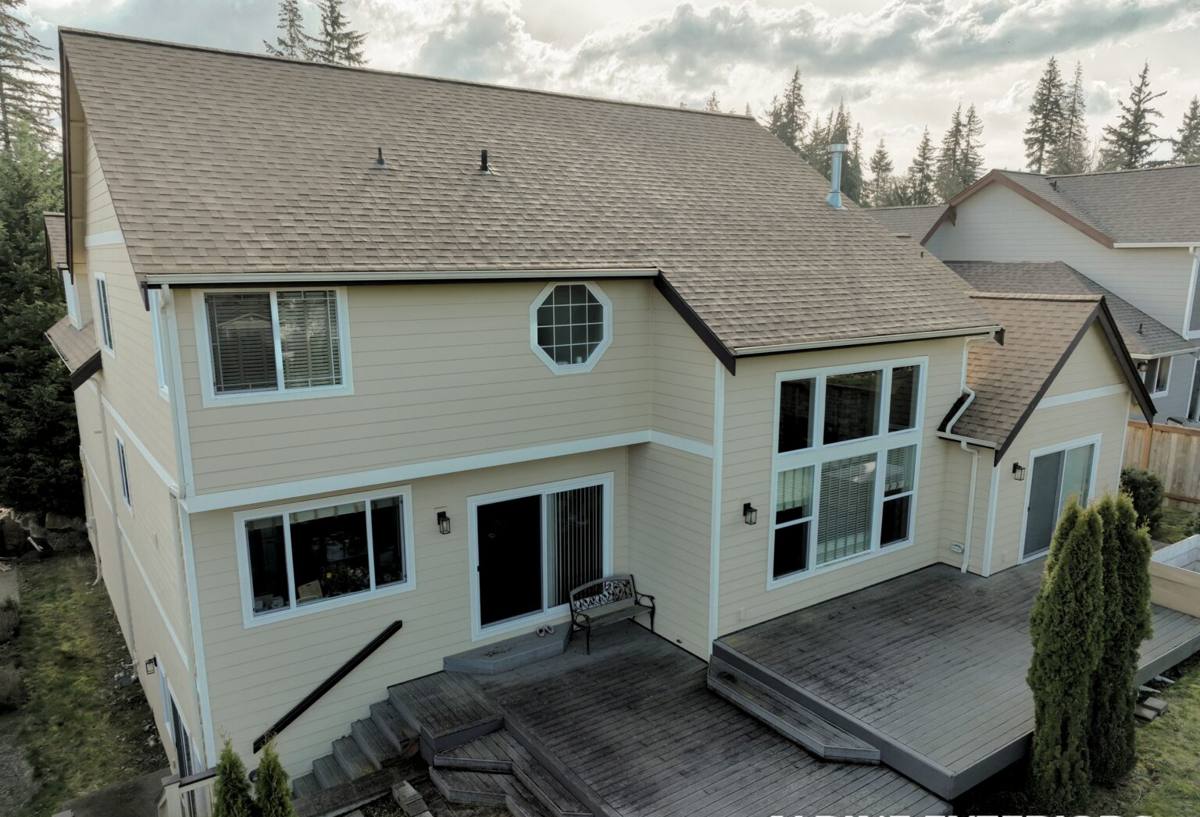
What Nooksack's Climate Demands From a Window Installation
Salt Air Doesn't Stop at the Coastline
Being set back from open water reduces direct salt spray, but it doesn't eliminate salt-carrying marine air working its way up the river valley over time. That air still finds its way to window hardware, screen frames, and any lower-grade fasteners used during installation. Corrosion shows up slowly — pitting on hinges, stiffness in a track, a screen frame that starts to chalk — and it shows up first wherever the installer used the wrong-grade hardware to save a few dollars. This is a spec decision made at install time, not something you can fix later without pulling the window.
Driving Rain and the Flashing Behind Every Window
Rain here rarely falls straight down. Wind pushes it sideways into head trim, jamb flashing, and the sill beneath the frame, and that sideways load is a far bigger test of the installation than of the window product itself. A well-made window installed with a poorly pitched sill pan or flashing that isn't properly lapped into the weather barrier will leak. A modest window installed correctly usually won't. Most window-related water damage we find traces back to how the unit was installed, not what brand it was.
A Long Moss Season and River-Valley Moisture
The Nooksack valley holds humidity a bit longer than more open, wind-exposed sites, especially on shaded elevations and around tree cover near the river. That extra dampness gives moss and mildew more time to establish on sills, trim, and any wood surface that doesn't dry out quickly between rains. It's a slow problem — most homeowners don't notice it until paint starts failing or a sill feels soft — which is exactly why drainage details matter as much at install time as the window unit itself.
Full-Frame vs. Insert Installation: Which Fits a Nooksack Home
One of the first decisions on any window installation is whether to do a full-frame job, which removes the old window down to the rough opening and rebuilds the flashing from scratch, or an insert installation, which fits a new window into the existing frame. Both are legitimate approaches, but they solve different problems, and the right call depends on what's actually happening behind the old window, not on which option is cheaper.
| Factor | Insert Installation | Full-Frame Installation |
|---|---|---|
| Best suited for | Existing frame is sound, dry, and properly flashed | Existing frame has rot, moisture damage, or flashing was never correct |
| Time and disruption | Faster, less disturbance to surrounding siding and trim | Longer, more invasive to siding, trim, and interior finish work |
| Cost | Lower per opening | Higher per opening, reflects the added labor and materials |
| Moisture problem correction | Doesn't address hidden damage behind the old frame | Lets us rebuild the sill pan and flashing correctly |
| Glass area | Slightly reduced due to new frame nesting inside old one | Full original glass area preserved |
We'll tell you which situation your home is actually in once the old window comes out and we can see the framing and sill condition. Defaulting to the cheaper option when there's already hidden moisture damage just seals the problem up behind a brand-new window, and that's not a trade-off we're willing to make quietly.
What a Correct Installation Actually Involves
Most window problems in this climate aren't failures of the window itself — they're a shortcut taken during installation that doesn't show up until a wet season or two later. On every job in Nooksack, that means working through the same sequence, in order, without skipping steps to save time:
- Remove the old window and inspect the rough opening and surrounding framing for hidden rot or moisture damage before anything new goes in
- Repair or rebuild any damaged framing found during that inspection, rather than installing over it
- Install a properly pitched sill pan that sheds water outward instead of letting it pool under the frame
- Set the new window plumb, level, and square in the opening, shimmed correctly so the frame isn't under stress
- Integrate head and jamb flashing with the housewrap or building paper, lapped so water is directed downward and outward, not just caulked over
- Insulate and air-seal around the frame without trapping moisture against the framing
- Reinstall or replace exterior trim and seal it with materials rated for sustained moisture exposure
- Test operation, check for square and smooth function, and confirm weep holes and drainage paths are clear before calling the job done
None of these steps add meaningfully to the cost of the job relative to the window itself. Skipping any of them is what turns a window that should last decades into one that's quietly leaking behind the wall within a few years.
Choosing a Frame Material for a New Installation
There's no single right answer for every home in Nooksack — budget, sun and shade exposure, and how long you plan to stay in the house all factor into the decision. What matters at install time is understanding how each material actually behaves once it's in the wall, not just how it looks on a showroom sample.
| Frame Material | Installation Sensitivity | Moisture Behavior Once Installed | Typical Maintenance |
|---|---|---|---|
| Vinyl | Expands and contracts with temperature; needs correct shimming and fastening to stay square | Won't rot, but poor installation can distort the frame over time | Low; occasional track and weep-hole cleaning |
| Fiberglass | Dimensionally stable, more forgiving of minor installation variance | Resists moisture and corrosion well | Low |
| Wood, painted or clad | Requires careful sealing at every joint and fastener point during install | Vulnerable to moisture at sills and corners without diligent upkeep | Higher; regular paint or finish maintenance |
| Aluminum | Rigid but conducts cold; thermal breaks and correct flashing matter more than with other materials | Can corrode over time in salt-influenced air without a good finish | Moderate |
We'll walk through which material actually fits your home's exposure and the look you're after, rather than defaulting to whichever product is easiest for us to sell. A shaded, tree-covered elevation and an open, sun-exposed wall on the same Nooksack property don't always call for the same material.
New Construction vs. Replacing Existing Windows
Whatcom County's rural and small-town areas, Nooksack included, have a real mix of older farmhouses, mid-century homes, and newer construction, and the installation approach differs depending on which one you're working with. New construction windows go into a rough opening that's built to spec from the start, which gives us more control over the flashing and drainage plane before siding ever goes up. Replacement installs into an existing wall have to work with whatever framing, flashing, and siding condition is already there, which is why the inspection step in our process matters so much — you can't plan the right approach until you know what's actually behind the old window. Either way, the fundamentals don't change: a properly pitched sill, flashing that's integrated rather than caulked over, and hardware suited to this climate.
Signs a Nooksack Home Is Ready for New Windows
- Visible fogging or condensation trapped between panes, usually a sign of a failed seal on a double- or triple-pane unit
- Noticeable drafts or a cold spot near a closed window
- Soft, discolored, or spongy sill or trim material, especially on shaded or weather-facing walls
- Windows that are difficult to open, close, or latch compared to how they used to operate
- Peeling paint or bubbling finish around a wood-framed window
- Visible daylight, gaps, or cracked caulk around the frame from inside the house
- Water staining on interior wall or ceiling surfaces near a window
Any one of these is worth a professional look before scheduling a full installation. Some point to a straightforward repair; others, especially sill rot or staining, usually mean the surrounding framing needs attention as part of the installation, not just a new window dropped into a compromised opening.
Why a Crew That Already Works in Nooksack Makes a Difference
A crew that installs windows across Whatcom County through every season learns how salt-tinged air, wind-driven rain, and a long moss season actually behave on real houses over years, not just how a product performs on a spec sheet. That experience shows up in small, practical decisions on install day: how much attention a shaded, tree-covered wall in Nooksack needs compared to an open, wind-exposed one, how a sill pan should be pitched for the amount of water a given elevation actually sees, and which flashing details are worth the extra half hour so you're not dealing with a leak two winters from now. It also means knowing the difference between a river-valley property and a coastal one, and not installing the same way on both just because it's faster.
Get a Free, No-Pressure Estimate
If you're planning a window installation in Nooksack, whether it's a full-frame replacement, an insert job, or new construction, we're glad to take a look and give you a straightforward read on what your home actually needs. Reach out using the form below to schedule a free estimate — no pressure, no upsell script.