 Blaine Window
 Roofing on the Semiahmoo Spit Is Its Own Category of Work
Semiahmoo sits about as far northwest as you can build in Washington State — a low, narrow spit reaching into Semiahmoo Bay with open water on multiple sides and the Canadian border a few minutes away. That geography is part of what makes it beautiful, and it's also exactly why roofs here wear out differently than roofs ten miles inland. Homes on or near the spit take wind off open water almost year-round, salt-laden air that never really lets a roof dry out completely, and the kind of sustained, driving rain that Whatcom County is known for. A roof designed for a subdivision in the Puget Sound lowlands doesn't automatically hold up the same way out here.
We install new roofs for homeowners throughout the Semiahmoo area and the broader Blaine market, and we treat this as a distinct job, not a copy-paste of what works elsewhere. That means different fastener choices, different flashing details, and a different eye toward ventilation and moss control from day one.
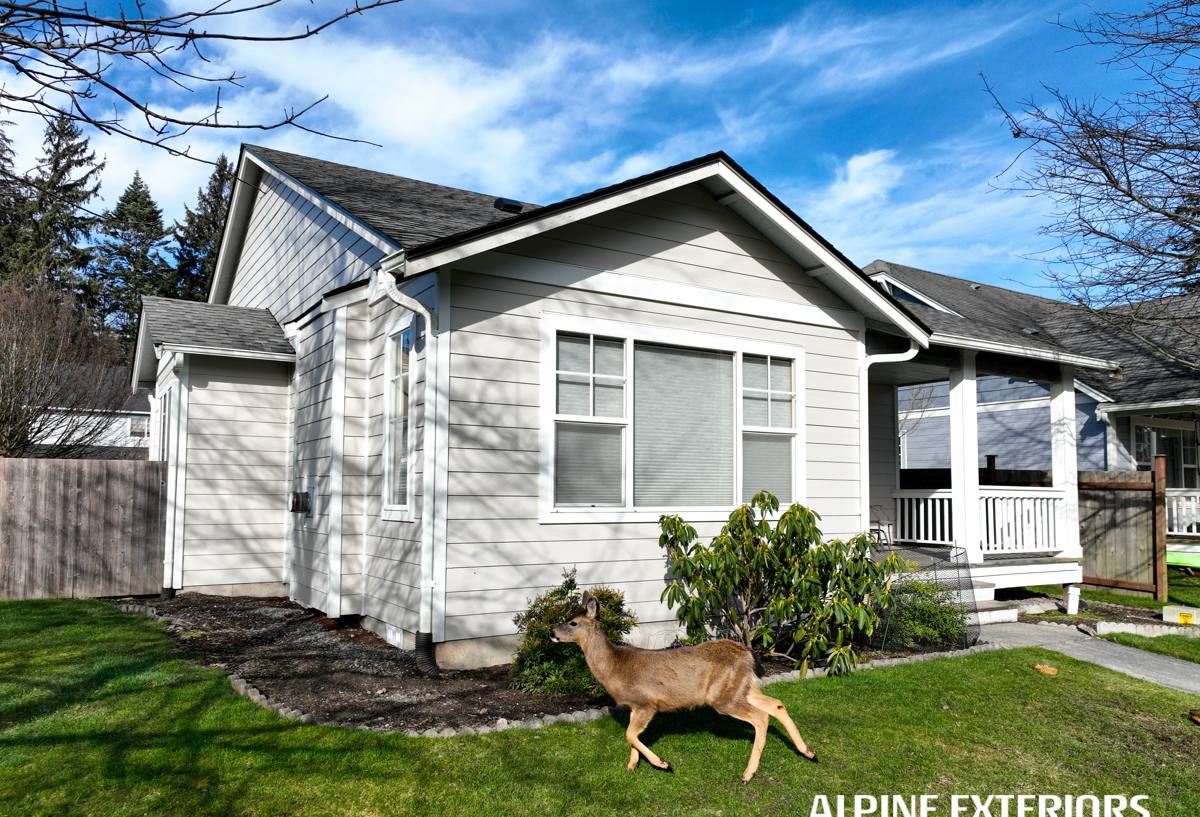
What the Local Climate Actually Does to a Roof
Salt Air and Corrosion
Proximity to Semiahmoo Bay and the Strait of Georgia means airborne salt is a constant, low-level presence, even on homes that aren't directly waterfront. Salt accelerates corrosion on exposed metal — nails, screws, flashing, vents, and gutter hardware — well before the shingles or panels themselves are due for replacement. A roof that looks fine from the ground can still be failing at the fastener level if the wrong materials went in the first time.
Driving Rain and Wind-Driven Water
Blaine and the surrounding Whatcom County coastline get frequent wind-driven rain, not just straight-down rain. That distinction matters at every horizontal seam, valley, and penetration on a roof. Water pushed sideways by wind will find gaps that gravity alone would never expose, which is why underlayment coverage and flashing overlap have to be treated as primary defenses, not afterthoughts.
Moss, Shade, and a Long Wet Season
Between fall and late spring, roofs here rarely get a long enough dry stretch to fully shed moisture between rain events. Combine that with tree cover common in this area and you get long moss and algae seasons that hold moisture against roofing material for months at a time. Left unmanaged, moss lifts shingle edges, holds water under itself, and works its way into fastener penetrations — turning a cosmetic nuisance into a structural one.
Signs a Semiahmoo Roof Needs Full Replacement, Not Another Repair
- Granule loss heavy enough that you can see bare asphalt mat on multiple slopes, not just one worn patch
- Moss or algae that returns within a season or two of cleaning, even after treatment
- Soft, spongy decking felt underfoot in the attic or from the ground near valleys and eaves
- Rusted or heavily corroded flashing, vents, or exposed fasteners, especially on the water-facing slope
- Interior staining, attic moisture, or musty odor that shows up during or right after wind-driven rain
- Curling, cracked, or missing shingles concentrated on the side of the house that faces prevailing wind and weather
- A roof original to a home built more than 20–25 years ago, regardless of how it looks from the street
Any one of these on its own might still be repairable. Two or three together, especially on a home exposed to open water or persistent shade, usually means the roof system as a whole has aged out.
What a Correctly Built Roof Looks Like Out Here
Fasteners and Metal Components
Given the salt exposure, we default to corrosion-resistant fastener and flashing choices rather than the lowest-cost standard hardware. This is a small line-item difference at install time and a large difference in how the roof performs ten and fifteen years out. Cutting this corner is one of the more common reasons we see premature rust staining and fastener failure on roofs that are otherwise still structurally sound.
Underlayment as a Real Second Layer of Protection
On a coastal, wind-driven-rain climate, underlayment isn't a formality — it's the backup system when wind pushes water past the primary roofing surface. We install synthetic underlayment with proper overlap, and we add self-adhered ice-and-water membrane at the vulnerable points: eaves, valleys, and around every penetration, regardless of whether the roof is asphalt shingle, metal, or another material.
Flashing Detail Work
Most roof leaks don't come from open field area — they come from where the roof meets something else: a chimney, a wall, a skylight, a vent stack. We custom-fit and seal flashing at every one of these transitions rather than relying on pre-formed pieces that "mostly fit." This is slower work, and it's where a roof either holds for decades or starts leaking within a few wet seasons.
Ventilation That Matches the Attic
Balanced intake and exhaust ventilation keeps attic moisture from condensing under the deck during our long wet stretches, and it helps control the temperature swings that stress shingles from underneath. We assess each attic individually — soffit venting, ridge venting, and any obstructions — rather than installing a generic vent package and moving on.
Moss-Conscious Material and Detailing Choices
Where shade and moisture risk are high, we talk through options like algae-resistant shingle products, zinc or copper strips near the ridge, and roof geometry considerations that reduce standing moisture. None of this eliminates moss entirely in this climate, but it meaningfully slows its return and buys years between treatments.
Roofing Material Options for a Semiahmoo Home
| Material | How It Handles This Climate | Ongoing Maintenance |
|---|---|---|
| Architectural asphalt shingle | Solid performance with proper underlayment and flashing; algae-resistant lines help with moss pressure | Periodic moss/debris clearing, gutter checks |
| Standing seam metal | Excellent water-shedding on wind-driven rain; needs corrosion-resistant fasteners and coatings near the water | Low; occasional fastener and sealant inspection |
| Composite/synthetic shingle | Good moisture resistance, resists moss better than untreated wood | Low to moderate; product-specific care |
| Cedar shake | Traditional look, but sustained dampness and moss pressure here mean it needs disciplined upkeep to avoid rot | High; regular treatment and inspection needed |
We'll walk through these trade-offs honestly for your specific home — sun exposure, tree cover, roof pitch, and how close you are to open water all factor into which material makes sense.
Our Process for a New Roof Installation
- On-site assessment — We inspect the existing roof, decking condition, ventilation, and flashing points, and we look specifically at exposure direction relative to prevailing wind and water.
- Written scope and material selection — You get a clear breakdown of tear-off, decking repair allowances if needed, underlayment system, flashing plan, and material choice, with straightforward pricing.
- Tear-off and decking inspection — Old roofing comes off down to the deck so we can actually see what's underneath, including any soft or water-damaged sheathing that needs replacing before new roofing goes on.
- Underlayment and flashing installation — Ice-and-water membrane at vulnerable areas, synthetic underlayment across the field, and custom-fit flashing at every penetration and transition.
- Roofing material installation — Installed to manufacturer specification with corrosion-resistant fasteners appropriate for a coastal environment.
- Ventilation check and adjustment — Intake and exhaust venting confirmed and corrected as part of the job, not treated as a separate add-on.
- Final walkthrough — We go over the finished roof with you, including care and moss-prevention guidance specific to your property's sun and shade pattern.
Cost Factors Specific to This Area
| Factor | Why It Matters in Semiahmoo |
|---|---|
| Roof exposure/orientation | Water-facing slopes may warrant upgraded flashing or fastener specs beyond baseline code |
| Tree cover and shade | Higher moss risk can justify algae-resistant materials or added moss-control detailing |
| Decking condition | Long-term moisture exposure sometimes means hidden decking damage isn't known until tear-off |
| Roof access and pitch | Wind exposure on open sites can affect staging, scaffolding, and scheduling around weather windows |
| Material choice | Metal, composite, and asphalt carry different upfront costs and different long-term maintenance needs |
We'd rather walk your roof and give you real numbers than quote a range that doesn't reflect your actual property. Decking condition in particular is hard to price accurately until the old roofing is off.
Why It Matters to Hire a Crew That Already Works Semiahmoo
A roofing crew that mostly works drier, more sheltered inland areas can still do competent general roofing work — but they may not default to the fastener grade, flashing overlap, or ventilation approach that a wind-exposed, salt-air property actually needs. That's not a knock on their skill; it's just a different set of conditions than they see every day. We work in and around Blaine and Whatcom County's coastal communities regularly, so decisions like corrosion-resistant hardware near the water or extra moss-control detailing under tree cover aren't upsells we have to talk you into — they're standard practice for us because we see what happens when they're skipped.
We're also familiar with the local permitting and inspection process for Whatcom County, which keeps your project moving without avoidable delays.
Get a Straightforward Estimate
If your roof is showing its age, dealing with persistent moss, or you just want an honest read on how many years it has left, we're glad to take a look. Reach out for a free, no-pressure estimate using the form below, and we'll give you a clear picture of what your Semiahmoo home actually needs.