 Blaine Window
 Birch Bay's Waterfront Location Is Hard on a Roof
Birch Bay sits right on the water, and that location cuts both ways. It's a big part of why people live there, and it's also why roofs in this pocket of Whatcom County take more abuse than roofs a few miles inland in Blaine. Salt-laden air off the bay settles on every exposed surface, wind comes off the water with nothing to slow it down, and the wet Pacific Northwest winter keeps everything damp for months at a stretch. None of that is unique to Birch Bay in isolation, but the combination — salt, wind, and sustained moisture — is more concentrated here than it is on a sheltered inland lot.
A roof that's rated fine for general Pacific Northwest conditions can still underperform on a bay-front or near-bay property if it wasn't specified with that combination in mind. That's the gap we're addressing on this page: not metal roofing in general, but what actually holds up on a Birch Bay roof specifically.
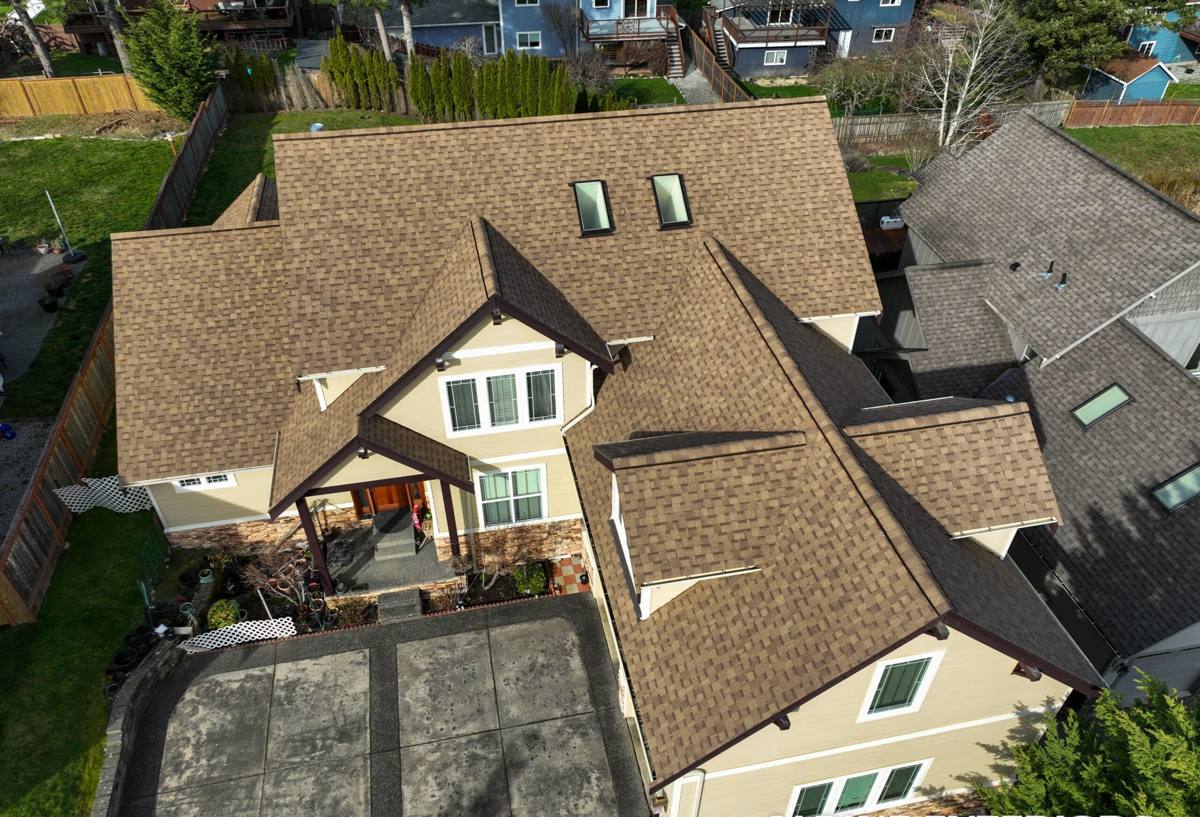
What Salt Air, Wind, and Moss Actually Do to a Roof
Salt Air and Corrosion
Airborne salt is corrosive to bare or poorly coated metal, and it accelerates corrosion at any point where two dissimilar metals touch — a steel fastener against an aluminum flashing, for example, or the wrong screw driven into a panel it wasn't designed for. On an inland roof this kind of mismatch might take decades to show. Near open water, it can show up in a fraction of that time.
Wind-Driven Rain
Open exposure toward the water means wind hits roof edges, ridges, and penetrations from angles a sheltered roof rarely sees, and it pushes rain sideways and upward under laps and around flashing that would otherwise shed water fine in a straight-down rain. Fastener spacing, panel overlap, and flashing detail all matter more here than they do on a roof tucked behind trees or other structures.
Moss and Sustained Moisture
Whatcom County's wet season runs long, and shaded, north-facing, or tree-covered sections of a roof can stay damp for weeks at a time. Moss and algae don't need bare wood or shingles to take hold — they'll colonize dirt and organic debris that collects in panel seams, around fasteners, and in valleys on any roofing material, metal included. Metal doesn't feed moss the way an organic shingle mat can, but it isn't moss-proof either, and buildup left unaddressed traps moisture against the panel and coating.
Why Metal Makes Sense for This Environment — With Caveats
Metal roofing has real advantages for a bay-exposed home: it sheds water fast, it doesn't have an organic mat for moss to root into, it handles wind uplift well when installed correctly, and a quality coated panel can go decades without needing replacement. Those are legitimate reasons homeowners near the water ask about it.
The caveat is that "metal roof" isn't one product. Panel gauge, coating type, fastener material, and installation detail all vary, and the wrong combination of any of those can turn a normally durable material into a maintenance headache in a salt-air setting. Our job is matching the system to the specific exposure of your lot — a roof three blocks off the water with tree cover behaves differently than one facing open water with nothing breaking the wind.
Panel Systems and Coatings: What Holds Up Near the Water
| System | How It's Fastened | Coastal Suitability | Typical Maintenance |
|---|---|---|---|
| Standing seam | Concealed clips, no exposed fasteners on the field of the panel | Best choice for direct or near-direct water exposure — no exposed screw heads to corrode or back out | Periodic seam and flashing inspection; low routine upkeep |
| Exposed-fastener panel | Screws driven through the panel face into the deck or purlins | Workable on sheltered or inland-facing sections; fastener gaskets degrade faster in salt air and need earlier attention | Fastener and washer inspection every few years; expect earlier resealing near penetrations |
| Steel or aluminum shingle/shake profile | Interlocking panels, mostly concealed fasteners | Reasonable middle ground; check specific coating and substrate rating for coastal use | Similar to standing seam; verify manufacturer's coastal warranty terms |
Coating matters as much as profile. A quality PVDF (often sold under names like Kynar) or high-grade polyester finish resists chalking and color loss from UV and salt exposure far better than a basic paint system. On bare or mill-finish substrates, we look at the base metal itself — Galvalume-coated steel and marine-grade aluminum both perform differently in salt air, and the right choice depends on the panel profile and your budget.
Fasteners and Flashing: The Detail Most Often Overlooked
Galvanic corrosion — one metal accelerating the breakdown of another when they're in direct contact with moisture present — is one of the more common causes of early metal roof failure near water, and it's almost always a specification mistake rather than a product defect. Steel fasteners in an aluminum panel, or the wrong flashing metal at a transition, can cause staining and pitting years before the panel itself would have worn out. Matching fastener and flashing material to the panel system is a basic requirement on every bay-exposed roof we install, not an upgrade.
What a Correct Installation Involves
The panel is the part homeowners see; the parts that determine whether it lasts are underneath and around it.
- Underlayment: A synthetic or self-adhered underlayment rated for wind-driven rain, with extra protection at eaves, valleys, and any low-slope transition.
- Deck condition: Sheathing checked for rot or soft spots before anything goes down — a new roof over a compromised deck fails regardless of the panel on top.
- Ventilation: Balanced intake and exhaust ventilation so moisture from inside the home doesn't condense against the underside of the panel.
- Fastener spacing and torque: Manufacturer-specified spacing and torque, tighter where wind exposure is higher, so panels resist uplift without over-compressing gaskets.
- Flashing at every penetration: Pipe boots, chimneys, skylights, and wall transitions detailed with compatible metal and proper lap direction — not just sealant.
- Minimal reliance on sealant: Correctly lapped and mechanically fastened details that don't depend on caulk as the primary water barrier, since sealant is the first thing to fail in sustained sun and salt exposure.
Our Process on a Birch Bay Project
1. On-Site Assessment
We look at your specific exposure — direction the roof faces relative to the water, tree cover, existing ventilation, and the condition of the current roof and deck — before recommending a system. A roof facing open water gets a different recommendation than one on the same street with tree buffer on the exposed side.
2. Tear-Off or Overlay Decision
In most cases we recommend a full tear-off so we can inspect and repair the deck, which matters more here given how long moisture sits on a shaded roof through the wet season. Overlay is occasionally appropriate on a sound existing roof, but we'll tell you plainly if we don't think it's the right call rather than defaulting to it.
3. Installation
Panels, fasteners, and flashing installed to manufacturer spec with the coastal-specific details above — matched fastener metal, proper lap direction against prevailing wind, and flashing at every penetration rather than sealant shortcuts.
4. Final Walkthrough and Cleanup
We walk the finished roof with you, cover care and warranty terms in plain language, and make sure the site is cleaned of debris, old materials, and stray fasteners before we leave.
Maintenance Specific to a Salt-Air Property
Metal roofing is genuinely lower-maintenance than most alternatives, but "lower" isn't "none," and a bay-front property benefits from a bit more attention than an inland one.
- Rinse accumulated salt film and debris off the roof periodically, especially on sections facing the water directly.
- Keep gutters and valleys clear so water doesn't pond against panel seams or fastener heads.
- Check and clear moss or organic buildup in shaded areas before it holds moisture against the coating.
- Have fasteners, boots, and flashing inspected every few years, sooner on exposed-fastener systems than on standing seam.
- Trim back overhanging branches to reduce shade, debris, and abrasion on the roof surface.
Why a Crew That Already Works Birch Bay Matters
General roofing knowledge gets you most of the way to a decent metal roof. It doesn't automatically tell you which lots in Birch Bay take direct wind off the water versus which ones sit in enough tree cover to change the calculus, or which fastener and flashing combinations we've seen hold up over time in this specific setting versus a few miles inland in Blaine. That kind of judgment comes from doing the work here repeatedly, not from a manufacturer's spec sheet alone.
There's also a practical side: familiarity with Whatcom County permitting requirements, knowing which suppliers stock the coastal-rated fasteners and coatings we specify, and being close enough to actually stand behind a warranty rather than being a crew that did one job in the area and moved on.
Questions Worth Asking Before You Commit
Whoever you hire, a few questions separate a roof built for this exposure from one that just happens to be metal:
- What panel profile and coating are you specifying, and why for this specific roof?
- What fastener and flashing metal will be used, and is it compatible with the panel to avoid galvanic corrosion?
- Is this a full tear-off, and will the deck be inspected before anything is installed?
- What does the manufacturer's warranty actually cover in a coastal environment, and what voids it?
- What ongoing maintenance do you recommend for this property specifically?
If you're weighing a metal roof for a home in or near Birch Bay, we're happy to take a look and walk you through what your specific lot and exposure call for. There's no obligation and no pressure — just a straight assessment and a written estimate, which you can request through the form below.