 Blaine Window
 Why California Creek Homes Wear Out Siding Faster
California Creek sits close enough to the water that homes here deal with a different set of stresses than siding fifty miles inland. Salt-laden air drifts in off Semiahmoo Bay and the Strait of Georgia, driving rain comes in sideways during winter storms, and the shaded, damp pockets around mature trees and low-lying yards stay wet long enough to grow moss on almost anything that doesn't dry out fast. None of this is exotic — it's just the normal weather pattern for this part of Whatcom County — but it adds up over years in a way that punishes the wrong siding choice.
Salt air is corrosive to exposed metal fasteners and trim, and it accelerates the breakdown of paint films on wood and some composite products. Driving rain finds every gap in flashing, caulking, and lap joints, and it doesn't take much of a path for water to get behind a wall and stay there. Moss and algae need shade and moisture to establish, and California Creek has plenty of both along tree lines, north-facing walls, and anywhere siding sits too close to landscaping or grade. Siding that isn't built for this combination shows it early: peeling paint, swollen edges, streaking, and soft spots that show up years before they should.
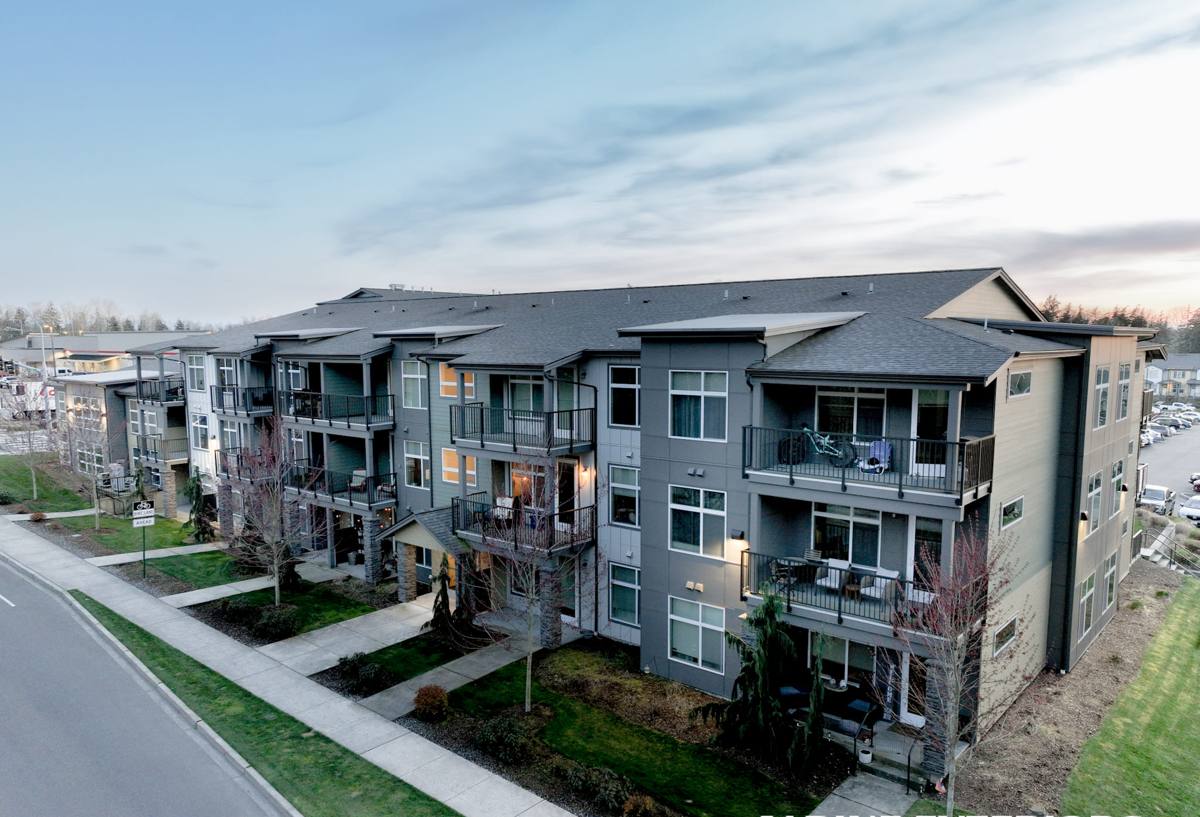
What This Climate Demands From a Siding Product
A siding material that holds up in California Creek needs to do three things well: resist moisture absorption, hold a factory finish without cracking or peeling, and stay dimensionally stable through repeated wet-dry cycles. Wood products swell and shrink with moisture, which eventually opens up joints and cracks paint. Vinyl doesn't rot, but it flexes with temperature and wind, and in coastal wind exposure it can loosen, warp, or crack at fastener points over time. Products that rely on wood fiber or engineered wood cores are vulnerable to the exact kind of sustained dampness this area produces, especially at cut edges and butt joints where the core is exposed.
Fiber cement, by contrast, is dimensionally stable and doesn't absorb water the way wood-based products do. That's the core reason this company installs James Hardie exclusively — it's a fiber cement product engineered specifically for regional moisture exposure, with a factory-applied finish that's built to outlast field-applied paint. We don't install LP SmartSide, vinyl, Cemplank, Allura, primed spruce, or cedar, not because those products have no merit, but because in a moisture and salt environment like this one, the long-term maintenance burden and failure points don't compare favorably to what Hardie delivers when installed correctly.
Where James Hardie's HZ Engineering Fits In
James Hardie makes climate-specific versions of its siding — HZ5 for wetter, more variable climates like the Pacific Northwest. The formulation and engineering account for freeze-thaw cycling, sustained moisture exposure, and the kind of weather swings common to Whatcom County. It's not a marketing distinction; it changes how the product performs against the specific stresses California Creek homes face year-round.
What a Correct Installation Actually Involves
Fiber cement siding is only as good as the installation behind it. Most of the siding failures we get called out to inspect aren't product failures — they're installation shortcuts that let water get behind the cladding. In a coastal, high-rain area like this, the margin for error is smaller than it is inland.
- A correctly installed weather-resistive barrier and drainage plane behind the siding, so any moisture that does get past the cladding has somewhere to go
- Proper flashing at every window, door, roofline, and horizontal trim transition — the single most common source of hidden water intrusion
- Correct fastener type, spacing, and depth per James Hardie's published installation specs, since incorrect fastening voids warranty coverage and invites cracking
- Manufacturer-specified clearance between the bottom of the siding and grade, decks, patios, and roof surfaces, to keep splash-back and standing moisture away from the material
- Properly caulked and sealed joints using compatible sealants — the wrong sealant can fail well before the siding does
- Factory-cut edges used wherever possible, with any field cuts sealed per Hardie's specifications to protect the cut edge from moisture
Skip any one of these steps and you can end up with a wall that looks right for a few years and then fails from the inside out. This is why installation quality matters as much as product choice — a premium product installed poorly will still trap moisture and fail early.
Our Process for California Creek Homes
Assessment and Planning
We start by walking the exterior with the homeowner, looking at exposure direction, shading, drainage patterns around the foundation, and the condition of the existing wall assembly. Wind and rain exposure varies a lot depending on where a house sits relative to the water and tree cover, and that shapes decisions on flashing details and trim.
Prep and Moisture Check
Before any new siding goes up, we check the sheathing and framing underneath for existing moisture damage, especially around windows, corners, and any area where the old siding showed staining or soft spots. Any rot or compromised sheathing gets addressed before the new weather barrier goes on — covering up a wet wall with new siding just delays a bigger problem.
Installation
Installation follows James Hardie's published specifications for fastening, clearances, and flashing, adjusted for the specific exposure of the wall being sided. Corners, butt joints, and penetrations get the most attention, since that's where the majority of long-term failures start.
Final Walkthrough
We finish with a walkthrough covering caulking lines, trim details, and clearances, and we talk through what basic upkeep looks like going forward — which for correctly installed Hardie siding is minimal, but not zero.
Comparing Siding Options for This Kind of Exposure
| Material | Moisture Behavior | Finish Durability | Long-Term Upkeep in This Climate |
|---|---|---|---|
| James Hardie Fiber Cement | Dimensionally stable, low water absorption | Factory ColorPlus finish, backed by product warranty | Low — periodic cleaning, no repainting cycle in most cases |
| Vinyl | Doesn't rot, but can warp or loosen under wind and temperature swings | Color molded in, but can fade and become brittle over time | Low to moderate — panels can crack or dislodge in coastal wind |
| Cedar | Absorbs moisture, prone to swelling and checking | Requires repainting or restaining on a recurring cycle | High — regular refinishing and moisture monitoring needed |
| Engineered Wood (LP SmartSide) | Wood-based core is vulnerable at cut edges and joints if moisture gets in | Factory-treated but still dependent on sealed edges staying intact | Moderate — edge sealing and joint inspection are ongoing concerns |
Cost Factors Homeowners Should Know
Pricing for a siding project depends on more variables than the material itself, and it's worth understanding what actually drives the number before getting quotes.
| Factor | Why It Matters |
|---|---|
| Existing wall condition | Rot or moisture damage found during tear-off adds repair scope before new siding can go on |
| Home shape and trim detail | More corners, windows, and rooflines mean more flashing and cutting labor |
| Siding profile and accessories | Lap width, trim style, and factory-finished color all affect material cost |
| Access and site conditions | Waterfront lots, slopes, and tree cover can affect staging and crew time |
| Full replacement vs. sectional | Full tear-off allows proper barrier and flashing work; patch jobs limit what can be corrected |
We give straight, itemized estimates and explain what's driving the cost, rather than a flat number with no breakdown.
Why the Installer Matters as Much as the Product
James Hardie siding installed to spec performs the way it's designed to. Installed with shortcuts — wrong fasteners, missing flashing, tight clearances — it can develop the same kinds of problems people associate with cheaper materials, and it will do it faster in a climate like this one. A crew that already works in California Creek and the surrounding Blaine area knows the wind exposure patterns, the moisture behavior of local lots, and the drainage quirks that come with being this close to the water. That local familiarity shows up in the details — flashing choices at grade, clearance decisions near decks and patios, and where extra attention to sealing actually matters versus where it's overkill.
It also matters for accountability. A contractor who works this area regularly has a reputation to maintain with neighbors and repeat clients, and stands behind the work with a warranty that means something because the crew isn't leaving town after the job.
Signs Your Current Siding May Already Be Struggling
- Persistent moss or dark streaking on north-facing or shaded walls that keeps returning after cleaning
- Paint that's peeling, bubbling, or chalking, especially on wood or engineered wood siding
- Soft or spongy spots when pressed, particularly near the bottom of walls or around window trim
- Visible gaps at seams, corners, or trim where caulking has failed or pulled away
- Warping or waviness in panels, which often points to moisture trapped behind the surface
Any of these is worth a look before it turns into a larger repair. Catching moisture intrusion early is almost always cheaper than waiting until it reaches the sheathing.
Get a Straight Answer for Your Home
If you're weighing a siding replacement in California Creek, we're happy to take a look, explain what we see, and give you a clear, no-pressure estimate for James Hardie siding built for this exact climate. There's no obligation — just a straightforward assessment from a crew that installs this product and only this product, because we've seen what holds up out here and what doesn't.