 Blaine Window
 Metal Roofing Built for How Grandview Actually Weathers
Grandview sits close enough to the water that homes here take a different kind of beating than roofs a few miles inland. Salt-laden air moves in off the Strait of Georgia and Boundary Bay, wind-driven rain comes in sideways more often than straight down, and the long, gray Whatcom County wet season gives moss and algae months at a time to get established. A roof that would hold up fine in a drier, more sheltered part of the county can struggle here. When we install metal roofing in Grandview, we're not just putting panels on a house — we're accounting for exposure, wind direction, and moisture load that's specific to this stretch of Blaine.
This page covers what that means in practice: what the climate actually does to a roof, what a correctly installed metal roof looks like for this area, how we approach the job, and why it's worth hiring a crew that already knows Grandview's conditions instead of learning them on your roof.
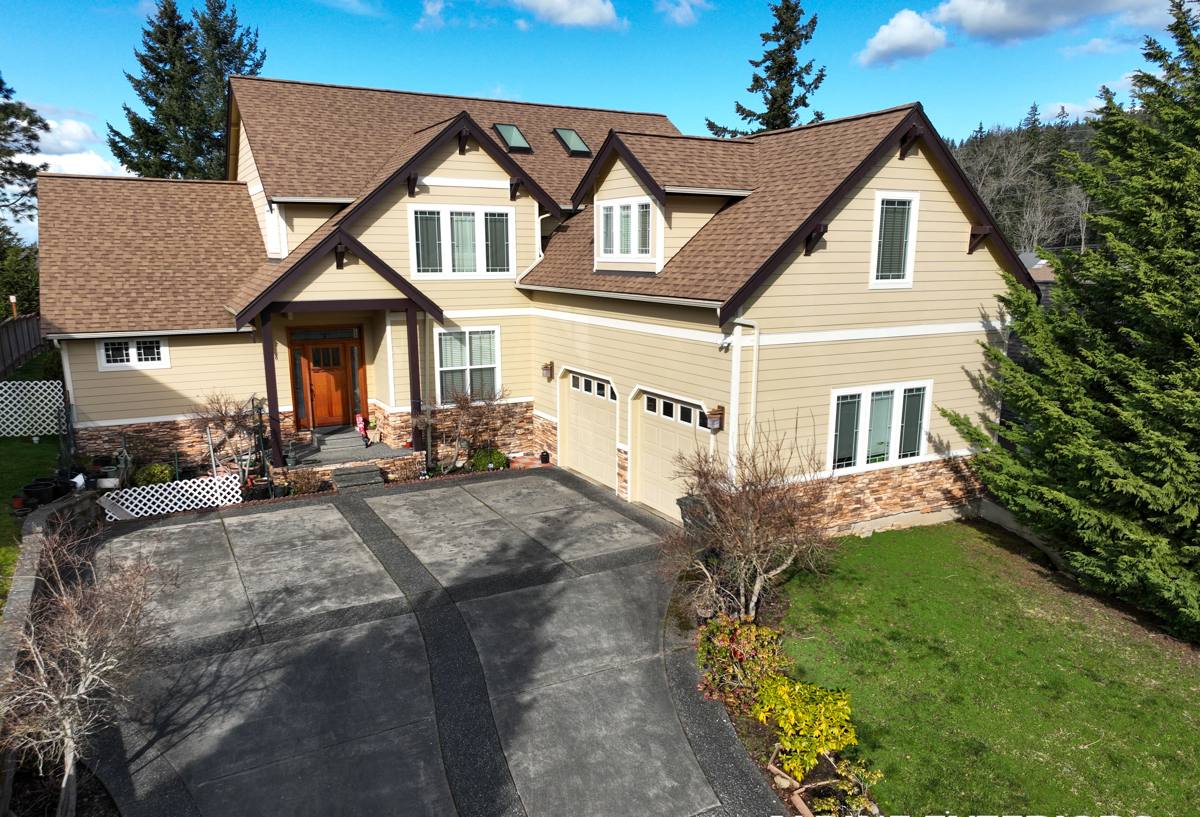
What Salt Air, Driving Rain, and Moss Season Do to a Roof
Each of these factors causes a distinct kind of wear, and they compound each other over the life of a roof.
Salt Air
Airborne salt accelerates corrosion on any exposed metal — fasteners, flashing, gutters, and the roofing panels themselves if the wrong coating or base metal is used. On a roof close to the water, uncoated or lightly coated steel components can start showing rust well before a standard warranty period would suggest, especially at cut edges, fastener heads, and any spot where the protective finish gets scratched during installation.
Driving Rain
Wind-driven rain doesn't behave like rain falling straight down. It gets pushed sideways and can work its way under laps, around fasteners, and into seams that would stay dry in calmer weather. This is a wind-and-water problem more than a "how much rain falls" problem, and it's why fastener pattern, seam design, and underlayment matter more here than the raw rainfall total would suggest.
Moss and Algae Season
Western Washington's wet season can run the better part of the year, and shaded or north-facing roof sections in particular stay damp for extended stretches. Moss needs sustained moisture to take hold, and once it does, it holds water against the roof surface, works into seams and laps, and can lift the edges of certain roofing materials. On a metal roof done correctly, moss has a much harder time getting a foothold in the first place.
What a Correct Metal Roof Involves in This Climate
"Metal roofing" covers a wide range of quality, and the difference between a roof that performs for decades in Grandview's conditions and one that causes problems in five years usually comes down to details that aren't visible once the job is done.
- Corrosion-resistant fasteners and flashing — matched to the panel metal so you don't get galvanic corrosion where two dissimilar metals touch
- Proper underlayment — a synthetic or self-adhered underlayment rated for high-moisture exposure, not a minimal builder-grade layer
- Correct seam and lap design — laps oriented and sealed to shed wind-driven rain rather than just gravity-fed water
- Ventilation that actually moves air — trapped moisture under a metal roof causes condensation problems regardless of how good the exterior surface is
- Clean panel cuts and sealed penetrations — every screw, vent boot, and flashing detail is a potential entry point if it's rushed
None of this is exotic. It's standard trade practice done without shortcuts, applied with an understanding of what this specific location throws at a roof over its lifespan.
Comparing Metal Roofing Options for a Grandview Home
Not every metal roofing system is a good fit for a coastal-influenced property. The table below lays out the honest trade-offs between the systems we most often discuss with Grandview homeowners.
| System | Corrosion Resistance | Wind-Driven Rain Performance | Maintenance | Typical Fit |
|---|---|---|---|---|
| Standing seam (concealed fastener) | Strong, especially with a quality coating | Excellent — no exposed fastener penetrations | Low | Best overall choice for direct salt-air exposure |
| Exposed-fastener metal panel | Good, but fastener heads are the weak point over time | Good, with correct fastener pattern and gaskets | Moderate — fasteners may need re-torquing or replacement over the roof's life | Reasonable budget option for less exposed roof sections |
| Stone-coated steel | Good with intact coating | Good | Low to moderate | Works where a shingle-like appearance is wanted |
We don't push one system on every home. The right call depends on how directly a given roof faces the water and prevailing wind, roof pitch, and what the homeowner wants it to look like.
Why We Steer Away from Certain Products Here
There are roofing materials we simply don't recommend for homes with Grandview's level of moisture and salt exposure — not because they're bad products everywhere, but because they're not the right fit for this specific set of conditions. Materials that rely heavily on surface granules or organic mat construction tend to hold moisture longer and give moss more to grip onto in a climate this wet. Lower-grade fastener and flashing hardware that isn't rated for coastal exposure will corrode faster here than in a drier inland location, regardless of how good the panel itself is. Our standard is to spec hardware and coatings for the environment the roof will actually sit in, not for a generic climate zone.
Our Process for a Grandview Metal Roof Installation
- On-site assessment — we look at roof orientation, pitch, existing decking condition, ventilation, and how exposed the roof is to prevailing wind and salt air
- System recommendation — we walk through which panel type and finish makes sense for that specific roof, with honest trade-offs, not a one-size-fits-all pitch
- Tear-off and deck inspection — old roofing comes off and we check the decking underneath for moisture damage before anything new goes down, since covering a compromised deck just hides a bigger problem
- Underlayment and flashing — moisture-rated underlayment and properly matched flashing go in at every valley, penetration, and edge
- Panel installation — panels are set with the fastening pattern and sealant appropriate to that system and this climate
- Ventilation check — intake and exhaust ventilation are verified so trapped moisture doesn't become a hidden problem later
- Final walkthrough — we go over the finished roof with the homeowner, including what routine maintenance, if any, we'd suggest going forward
Moss Prevention and Long-Term Maintenance
A metal roof installed correctly needs far less maintenance than most other roofing types, but "less" isn't "none." A few habits go a long way in this climate:
- Keep gutters clear so water isn't sitting against roof edges during the wet months
- Trim back overhanging branches that keep shaded roof sections damp longer than they need to be
- Do a visual check after major windstorms for lifted flashing or debris buildup in valleys
- Address any small rust spots on fasteners or flashing early, before they spread
Because metal doesn't give moss the porous surface it needs to establish roots the way some other materials do, homeowners who switch to metal in this area typically see a real drop in moss buildup compared to their previous roof — though roof orientation and shade still play a role.
What Affects Cost on a Grandview Metal Roof
Pricing depends on more than square footage. The main variables we account for when scoping a Grandview job are roof complexity, panel and coating choice, and how much tear-off and deck repair work is involved. Rather than quote a number that doesn't mean much without seeing the roof, here's what actually drives the range:
| Factor | Why It Matters |
|---|---|
| Roof pitch and complexity | Steeper roofs and more valleys, dormers, or penetrations take more labor and material to flash correctly |
| Panel system | Standing seam typically costs more upfront than exposed-fastener panels but requires less long-term maintenance |
| Coating and gauge | Higher-grade coatings and heavier gauge steel cost more but perform better against salt air over time |
| Deck condition | Rot or moisture damage found during tear-off adds repair costs before new roofing can go on |
| Roof accessibility | Steep grades, limited access, or multi-story homes affect labor time and equipment needs |
Most metal roofing jobs in this area land somewhere in a broad mid-to-upper range compared to asphalt shingle replacement, reflecting the longer service life and lower maintenance metal typically delivers. We give homeowners an exact number after seeing the roof in person, not before.
Why Local Experience in Grandview Matters
A crew that regularly works roofs in and around Blaine and greater Whatcom County already knows how this area's wind and moisture behave on a roof — which orientations take the worst of the weather, which details tend to fail first if they're rushed, and how long moss season actually runs here. That's not something you can fully substitute with a general roofing checklist. It's the difference between a crew that's installing to a generic standard and one that's installing to what this specific location will demand from the roof over the next 30-plus years.
If you're considering metal roofing for a home in Grandview, we're happy to take a look and walk you through your options with no pressure and no obligation. A free estimate gets you a straight answer on what your roof actually needs — use the form below to get started.