 Blaine Window
 Grandview homes sit in a part of Whatcom County where the weather doesn't let up for long. Blaine's location on the water means salt-laden air, driving rain that comes in sideways more often than straight down, and a moss and mildew season that can stretch for most of the year on shaded, north-facing walls. Windows here don't just lose heat the way they would in a drier climate — they take on moisture stress, hardware corrosion, and condensation problems that a lot of manufacturer installation guidance doesn't fully account for.
"Energy-efficient windows" gets used as a marketing phrase a lot. In Grandview, it's a practical question: does the window and the installation around it actually stop heat loss, resist wind-driven moisture, and hold up to salt air over time, or does it just look good on a spec sheet? We treat those as three separate questions, and all three need to check out before we call a job done.
Why Energy Efficiency Is a Different Conversation Here
A lot of homes in and around Grandview still have original single-pane or early double-pane windows, some with aluminum frames that conduct cold straight through and sweat with condensation on damp winter mornings. Even newer double-pane units installed without attention to air sealing can perform poorly once wind-driven rain and marine humidity get into the equation. The result shows up as higher heating bills, cold spots near the glass, and in some cases moisture finding its way into the wall assembly around the window rather than just fogging the glass.
None of that is unusual for this stretch of coastline. It does mean an energy-efficient window job in Grandview has to solve for heat loss and moisture control at the same time, not just one or the other.
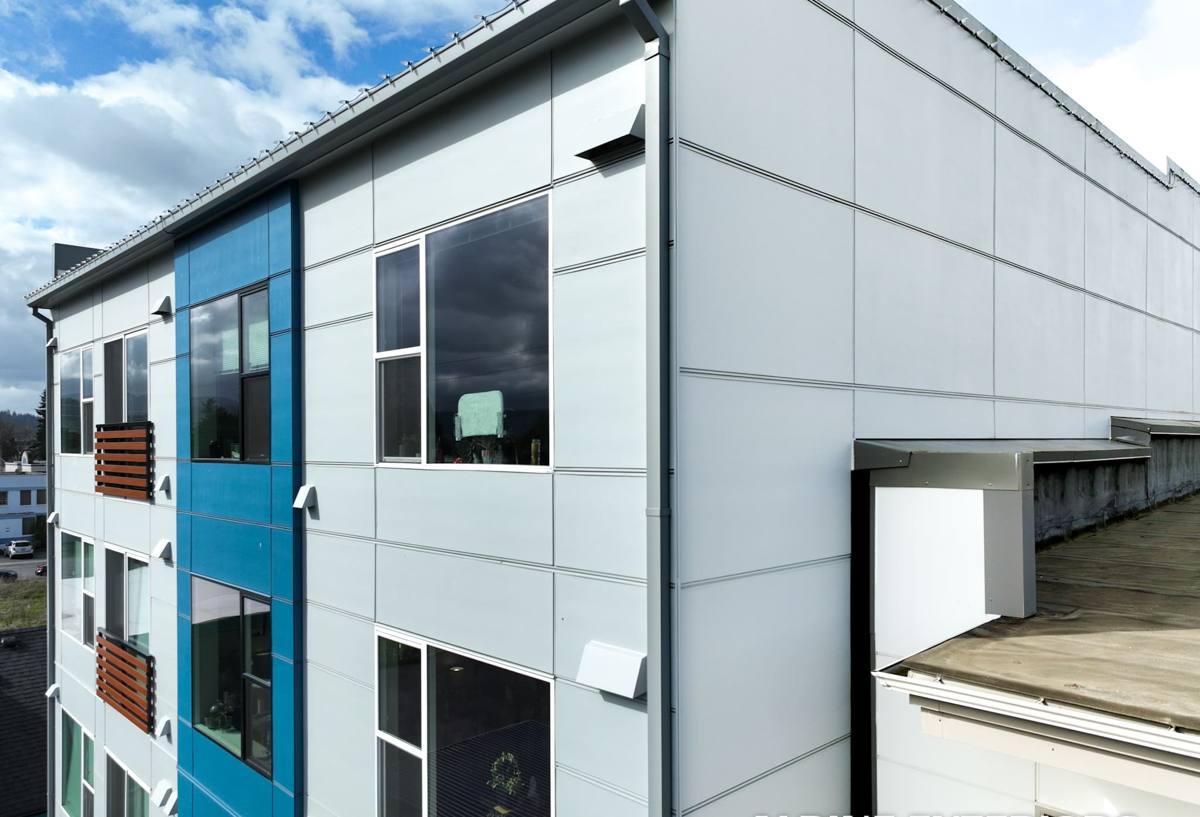
The Blaine and Whatcom County Climate Factor
Being close to the water changes what a window has to hold up to. Salt-laden marine air speeds up corrosion on hardware, fasteners, and lower-grade frame components faster than it would happen a few miles inland. Storms push rain sideways into the wall and window flashing rather than letting gravity carry it away, so water finds any gap in the flashing or sealant that a calmer climate would never test. And the shade and dampness common in this part of Whatcom County support a moss and mildew season that can run most of the year on north- and west-facing exteriors.
Energy-efficient glass and frames don't cancel any of that out on their own. A high-performance window installed with a weak flashing detail will still let moisture in, and once that happens, insulation and interior finishes suffer regardless of how good the glass package is.
Where the Energy Loss Actually Happens
On most older Grandview homes, the glass itself isn't the biggest source of heat loss — the perimeter is. Gaps around the frame, compressed or failed weatherstripping, and air sealing that was never done correctly at install account for a large share of the draft and heat loss homeowners notice. That's why we treat the installation, not just the window unit, as the energy-efficiency decision.
What "Energy-Efficient" Actually Means
Every window sold in the U.S. carries an NFRC label with a few numbers that matter more than any marketing claim. U-factor measures how much heat the window lets through — lower is better for our winters. Solar Heat Gain Coefficient (SHGC) measures how much solar heat passes through the glass — a useful number to balance depending on which direction a window faces. Air leakage measures how much outside air gets through the assembly itself, separate from the installation around it.
Picking the Right Numbers for This Climate
Blaine sits in a marine climate with cool, wet winters and mild summers, so the priority for most Grandview homes is a low U-factor to cut winter heat loss, paired with glass coatings chosen by orientation — a bit more solar gain on south-facing glass can help with passive winter warmth, while west-facing glass often benefits from a coating that cuts glare and afternoon heat. We'll walk through what the label numbers mean for your specific windows and orientation rather than quoting a single "best" spec for every wall of the house.
What a Correct Installation Involves
Assessment and Measuring
We start by looking at the actual condition of the existing openings — not just the glass, but the framing, sill, and any signs of past moisture intrusion. Field measurements come from the real opening, not assumptions based on the home's age or a quick look from the outside.
Removal and Opening Prep
Old windows come out carefully so we can see what's actually happening behind the trim. This is where we typically find out whether sill framing has taken on moisture damage over the years, which is common enough on older coastal homes that we plan for the possibility rather than treating it as a surprise change order.
Flashing and Air Sealing
This is the step that decides whether an energy-efficient window actually performs like one. Flashing has to be sequenced so water sheds outward and down, never trapped behind the siding. Air sealing around the frame — done with the right materials, not just a bead of caulk — is what stops the drafts that a lot of homeowners assume are a glass problem when they're actually a perimeter problem.
Frame Material Selection
Frame material affects both energy performance and how the window holds up to salt air over time. We'll cover the trade-offs for your specific project below, but the short version is that the frame needs to match the exposure of that particular wall, not just the house as a whole.
Practical Checklist Before You Sign a Contract
- Ask for the U-factor and SHGC numbers on the actual window being quoted, not a generic brand claim
- Confirm the flashing plan for your specific wall exposure, especially on west- and north-facing openings
- Ask how air sealing is handled around the frame, separate from the caulking on the exterior trim
- Get a written scope that separates the window unit's warranty from the installation labor warranty
- Ask whether existing sill or framing damage is included in the estimate or handled as a separate line item if found
- Confirm current Washington contractor licensing and insurance before signing anything
Frame Materials for Grandview's Coastal Climate
We don't default to one frame material for every home. Vinyl performs well thermally and holds up to moisture with low maintenance, which makes it a common choice for straightforward replacements. Fiberglass costs more but resists expansion and contraction across temperature swings better than vinyl, which matters on walls that see full sun exposure alongside cold, wet winters. Wood-frame and wood-clad windows can still be the right call where the interior look matters, but they carry a real maintenance obligation in a climate this damp — exposed or poorly maintained wood is where we see the most moisture and rot problems on older Grandview homes.
| Frame Material | Energy Performance | Coastal Durability | Maintenance |
|---|---|---|---|
| Vinyl | Good thermal performance; multi-chamber designs improve it further | Handles salt air and moisture well | Low — no painting or sealing required |
| Fiberglass | Strong thermal performance; stable across temperature swings | Very good; resists expansion-related seal wear | Low — occasional cleaning |
| Wood / Wood-Clad | Good, especially with a modern glass package | Depends heavily on cladding and upkeep | Higher — exterior wood needs regular attention in this climate |
| Aluminum (older stock) | Poor without thermal breaks; conducts cold directly | Prone to corrosion in salt air over time | Moderate, but performance limits remain regardless of upkeep |
What actually drives the decision for a given Grandview home is usually a mix of budget, how exposed a particular wall is to weather, and whether the interior look calls for a wood appearance. We'll walk through which factors apply to your house before recommending a material, rather than starting from a single default.
Our Process, Start to Finish
- On-site assessment — we look at existing window condition, framing, and any signs of past moisture intrusion specific to that opening
- Honest recommendation — frame material, glass package, and U-factor/SHGC targets explained in plain terms, not brand talking points
- Written scope and timeline — what's included, what the warranty covers on the unit versus the labor, and a realistic schedule
- Removal and opening prep — old units come out carefully, and any hidden framing or sill issues get addressed before new windows go in
- Installation, flashing, and air sealing — set, shimmed, flashed, and sealed to a sequence built for that wall's exposure
- Final walkthrough — checking operation, seals, and finish work before we consider the job complete
Cost Factors Worth Understanding
Energy-efficient windows cost more upfront than the cheapest available option, and the honest answer is that the range depends on size, glass package, frame material, and how many units are being replaced at once. What tends to move the price on a Grandview project: the number of openings, whether any framing or sill repair is needed, frame material choice, and the glass package selected for a given wall's sun exposure. We won't quote a number without seeing the actual openings, but we'll walk through which of those factors apply to your home before you commit to anything.
Why a Local Grandview Crew Matters
Manufacturer installation instructions are written for average, moderate-climate conditions. Grandview doesn't offer average conditions — the combination of salt air, wind-driven rain, and a long wet season in this part of Whatcom County stacks the deck against a shortcut installation more than it would somewhere drier and calmer. A crew that has actually installed energy-efficient windows on homes in and around Blaine knows which parts of the standard guidance are non-negotiable here, and where extra time on flashing or air sealing pays off even when it isn't strictly required by code.
That experience shows up in decisions that don't come up in a sales pitch — how much lap a flashing course needs on a west-facing wall that takes the brunt of the weather, when a sill needs a sloped detail instead of relying on sealant alone, and which frame materials actually hold up to a full Whatcom County winter versus one that only looks good in a showroom. Those choices decide whether an energy-efficient window is still performing cleanly in fifteen years or letting in drafts and moisture in five.
If you're dealing with drafty, foggy, or aging windows in a Grandview home, it's worth having someone look at the actual openings before you start comparing quotes. We offer free, no-pressure estimates for energy-efficient window projects in Grandview and the surrounding Blaine area — use the form below to get a time on the schedule.