 Blaine Window
 Deck Replacement in Grandview: What Local Homes Are Up Against
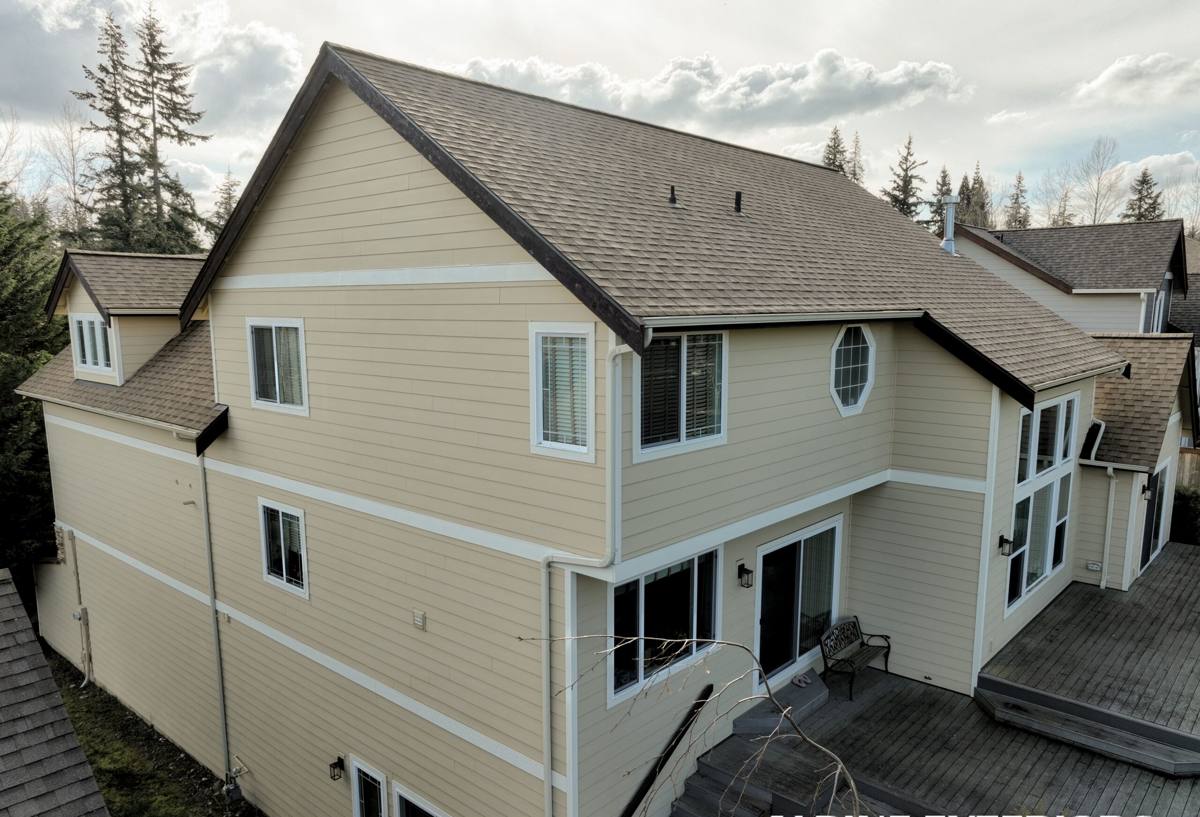
A deck in the Grandview area doesn't fail for the same reasons a deck in a drier, inland climate does. Homes here sit close enough to the water that salt-laden air is a constant, and Whatcom County's long wet season means a deck can stay damp for days at a stretch even without a hard rain. Add a moss season that can run from early fall through late spring, and you've got three separate forces working against wood, fasteners, and framing at the same time. When we talk to Grandview homeowners about deck replacement, we're rarely talking about a deck that failed all at once. It's almost always a slow accumulation of moisture, corrosion, and organic growth that a repair can no longer keep ahead of.
This page is specifically about replacing a deck in this part of Blaine — not general deck advice that could apply anywhere. The materials, structural details, and maintenance expectations below all reflect what actually holds up in this climate, and what doesn't.
Why Decks Here Wear Out Sooner Than Homeowners Expect
Salt Air and Metal Corrosion
Salt air doesn't just affect decks right on the water — it travels. Fasteners, joist hangers, and structural screws are usually the first thing to go, well before the visible decking boards look bad. Standard galvanized hardware can start showing surface corrosion in a handful of years in a salt-air environment, and once fasteners weaken, the whole structure is compromised even if the boards on top still look fine. This is one of the main reasons a deck that "looks okay from the top" can still need a full replacement underneath.
Driving Rain and Trapped Moisture
Whatcom County doesn't get the sudden downpours some regions do — it gets long, steady, driving rain that finds its way into every gap, seam, and fastener hole. On an older deck, that means moisture works its way into ledger boards, joist tops, and the underside of decking where it can't dry out between storms. Wood that stays wet for extended periods doesn't just weather cosmetically — it loses structural integrity from the inside, often faster than homeowners realize because the surface can still look intact.
Moss, Algae, and Shade
Combine damp conditions with the tree cover and cloud cover common around Grandview, and you get an environment where moss and algae establish quickly on any horizontal wood surface. Beyond making a deck slippery and unsightly, moss holds moisture directly against the wood surface, which accelerates rot in exactly the spots where it's already hardest for the deck to dry out.
Repair or Replace? How to Tell
Not every aging deck needs full replacement — sometimes a repair to a few boards or a railing section is genuinely the right call. But there's a point where patching individual problems stops being cost-effective and starts masking a bigger structural issue. Here's what tends to signal a full replacement is the smarter move:
- Soft, spongy, or springy spots in the decking or framing when you walk across it
- Visible rot, splitting, or crumbling wood at the ledger board where the deck meets the house
- Rust staining or visibly corroded fasteners, joist hangers, or post bases
- Persistent moss or algae that returns within weeks of cleaning
- A railing that flexes or feels loose when pushed on — a safety issue, not just cosmetic
- Multiple past repairs to different sections within just a few years
- A deck that's more than 15-20 years old and was built to older, less moisture-resistant standards
If you're seeing two or more of these, it's worth having someone assess the structure — not just the decking boards — before spending more money on spot repairs.
What a Correct Deck Replacement Actually Involves
Structure First: Ledger, Footings, and Framing
The part of a deck replacement that matters most is also the part nobody sees once it's finished. A correct replacement starts with the ledger board connection to the house — properly flashed so water can't get behind it and into the house framing — along with footings sized and set to current standards, and joists spaced and sized for the actual span and load. In a climate like this, we also pay close attention to hardware: stainless steel or heavily coated fasteners and connectors matter more here than in a drier region, because standard hardware is exactly what corrodes first.
Decking Material Selection
The decking surface itself — the boards you actually walk on — is where most homeowners focus, and it's a legitimate decision point. But it should be chosen to match how the structure underneath is built and how much moisture exposure the deck actually sees, not just on appearance or upfront cost. We walk through the real trade-offs of each option rather than pushing whatever's easiest to install.
Railings, Stairs, and Code Compliance
Railing height, baluster spacing, and stair geometry aren't just style choices — they're governed by building code, and an older deck built decades ago may not meet current requirements. A replacement is the right time to bring these up to standard, both for safety and because it avoids problems if you sell the home later and a buyer's inspector flags an outdated railing system.
Comparing Decking Materials for This Climate
There's no single "best" decking material — the right choice depends on your budget, how much upkeep you're willing to do, and how much moisture and shade the deck actually sees. Here's how the common options compare specifically for a wet, salt-air, moss-prone environment like this one:
| Material | Upfront Cost | Maintenance | Moisture & Moss Resistance | Typical Lifespan |
|---|---|---|---|---|
| Pressure-treated wood | Lowest | Annual cleaning, periodic staining/sealing | Moderate — needs upkeep to stay ahead of moss and rot | 10-15 years with consistent maintenance |
| Cedar | Moderate | Regular sealing to maintain color and resist moisture | Naturally moisture-resistant, but surface still needs care | 15-20 years with maintenance |
| Capped composite | Higher | Occasional washing, no staining or sealing | Strong — capped surface resists moisture absorption and staining | 25-30+ years |
| PVC / cellular PVC | Highest | Minimal — occasional washing | Excellent — contains no wood fiber for moisture to penetrate | 25-30+ years |
In a climate with this much rain and moss pressure, the maintenance column matters as much as the cost column. A lower upfront cost only pencils out if you're realistic about the cleaning and sealing schedule it requires to actually last.
What Affects the Cost of a Deck Replacement
Deck replacement costs vary widely based on a handful of factors, and most full replacements in this region land somewhere in a broad middle range depending on size and material — a simple single-level deck in pressure-treated wood is far less than a large, multi-level deck in premium composite or PVC with upgraded railings. Rather than quote a number that won't match your specific project, here's what actually drives the price:
| Cost Factor | Why It Matters |
|---|---|
| Deck size and shape | More square footage and complex layouts mean more material and labor |
| Height and structural complexity | Multi-level decks and taller decks need more substantial framing and footings |
| Condition of the existing structure | Rotted framing or failed footings add rebuild work beyond a simple decking swap |
| Decking material chosen | Wood, cedar, composite, and PVC span a wide cost range, as shown above |
| Railing style and material | Cable, glass, and metal railing systems cost more than standard wood or composite balusters |
| Permitting and code upgrades | Bringing an older deck's railings, stairs, or footings up to current code adds scope |
| Site access | Decks with difficult access for material delivery or equipment take longer to build |
Our Deck Replacement Process
We keep the process straightforward and try to remove guesswork for homeowners who've never gone through a full deck replacement before:
- On-site assessment — we inspect the existing deck's framing, ledger connection, footings, and hardware, not just the surface decking, to determine what's actually salvageable versus what needs to be rebuilt.
- Written scope and material walkthrough — you get a clear, itemized plan covering structural work, decking material, railings, and any code upgrades, so there's no ambiguity about what's included.
- Permitting — we handle verifying what permits your specific project requires and pulling them, so you're not left tracking down Whatcom County or city requirements yourself.
- Removal of the old deck — full teardown of decking, railings, and any framing that's being replaced, with debris hauled off-site.
- Structural rebuild — footings, ledger flashing, framing, and hardware installed to current standards, built for this climate's moisture exposure.
- Decking, railings, and stairs installed — using the material you've chosen, with attention to fastening methods that resist the corrosion issues common here.
- Final walkthrough — we go over the finished deck with you, confirm everything meets the agreed scope, and clean up the site.
Why Hire a Crew That Already Works in Grandview
Deck replacement done right depends on understanding the specific conditions a deck will face — not just following a generic build spec. A crew that already works in and around Grandview knows which fastener grades hold up against the salt air here, how deep footings need to go given local soil and moisture conditions, and how much of a slope or drainage detail a deck needs to shed the volume of rain this area sees without pooling water against the house. That's the kind of judgment that comes from repeated experience with this specific stretch of Blaine and Whatcom County, not from a one-size-fits-all approach applied the same way everywhere.
It also means fewer surprises during the project. A crew familiar with local permitting and typical lot conditions in this area can flag issues — an undersized existing footing, a ledger board with hidden rot — before they turn into change orders mid-project.
Caring for Your New Deck
Whatever material you choose, a little routine care goes a long way toward getting the full lifespan out of a new deck in this climate. A simple seasonal checklist:
- Sweep off leaves, needles, and debris regularly, especially in fall — trapped organic matter holds moisture and feeds moss
- Wash the deck surface at least once or twice a year to remove early moss and algae growth before it takes hold
- Check and clear any gaps between boards so water can drain through rather than pooling
- For wood or cedar decks, re-seal or re-stain on the schedule recommended for that product — don't wait until it looks worn
- Inspect railings and stairs periodically for looseness, especially after storms
- Keep an eye on the area where the deck meets the house — this ledger connection is the most common spot for hidden moisture problems to start
If your deck is showing signs of age, feels unsafe, or you're just ready to stop patching it season after season, we're happy to take a look and walk you through honest options for your specific situation. Reach out for a free, no-pressure estimate using the form below.