 Blaine Window
 Grandview sits close enough to the water that everything built outdoors in this part of Blaine has to answer to the weather sooner or later. A deck is no exception. Get the details right and it will carry a family through decades of summer evenings and rainy-season mornings. Get them wrong, and the signs show up fast: soft spots near the house, black streaks on the boards, rust bleeding from fasteners, railings that wobble after a couple of wet winters.
Why Grandview Decks Take a Different Kind of Beating
Whatcom County's coastal edge doesn't get extreme heat or brutal cold, but it makes up for that with sheer persistence. Salt-laden air moving off the bay settles on every exposed surface, working into metal fasteners and hardware over time. Driving rain, often pushed sideways by wind rather than falling straight down, finds its way into joints and seams that would stay dry in a calmer climate. And the long stretch of gray, wet months between fall and spring gives moss, algae, and mildew months of uninterrupted growing time on any surface that doesn't shed water well or get enough sun and airflow.
None of that means a deck in Grandview can't last. It means the build has to plan for those conditions instead of treating them as an afterthought.
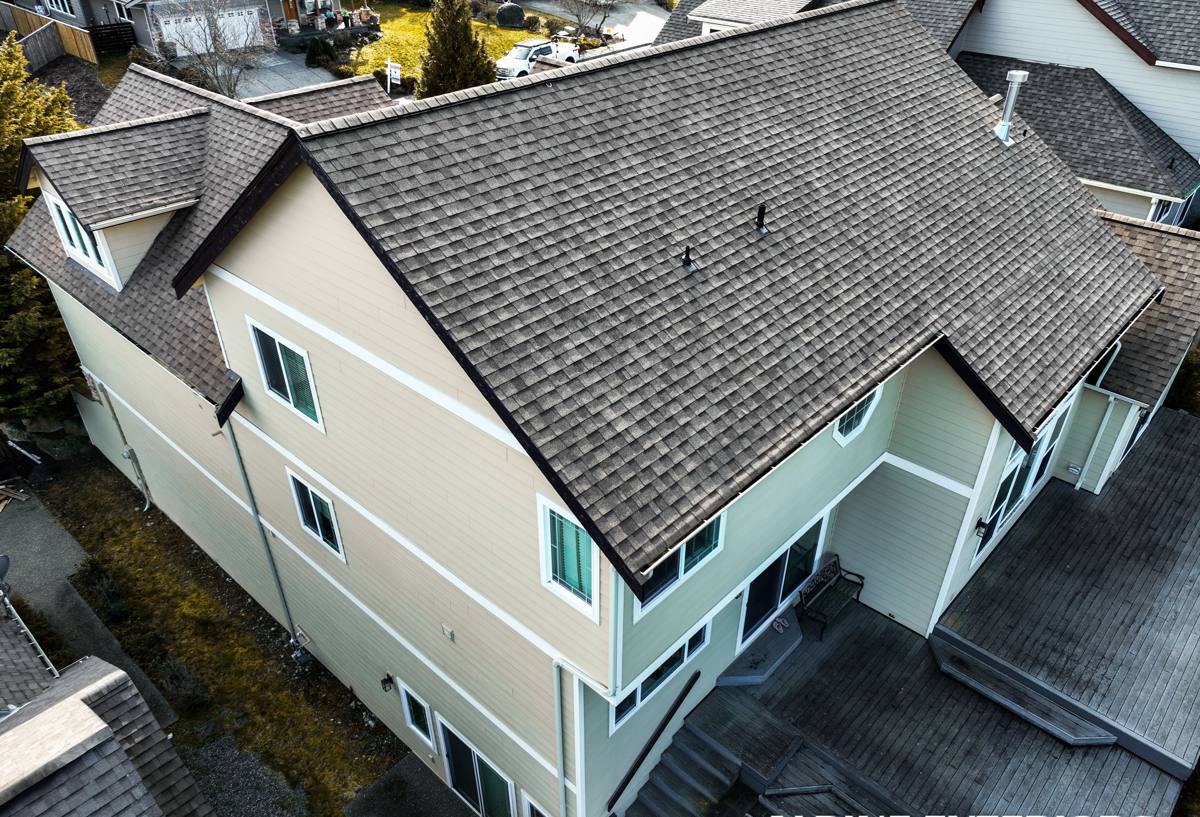
What a Correctly Built Deck Needs Here
Ledger Flashing Where the Deck Meets the House
The single most common failure point on any deck, in any climate, is the ledger board — the piece that bolts the deck to the house. In a region with as much sideways rain as this one, a ledger that isn't properly flashed and sealed becomes a slow, hidden leak path into the rim joist and framing behind it. We flash every ledger connection with a proper drip cap and moisture barrier, and we keep a gap between the ledger and the siding so water has somewhere to go instead of sitting against the wall.
Drainage Under and Around the Structure
Standing water is the enemy of every wood component on a deck. Board spacing, joist orientation, and grading underneath the structure all need to move water away rather than let it pool. On lower decks and covered porches especially, we pay close attention to how water sheets off the surface and where it ends up once it leaves the boards.
Fasteners and Hardware That Can Handle Salt Air
Standard galvanized fasteners hold up fine in a lot of the country. This close to Drayton Harbor and the Strait, salt-laden moisture accelerates corrosion on hardware that isn't rated for it. We use stainless steel or coated fasteners and connectors specified for coastal exposure, along with joist tape on framing members to keep moisture from wicking into end grain and fastener holes.
Choosing a Decking Material for Salt Air and Moss
There's no single right decking material for every homeowner — budget, maintenance appetite, and appearance preferences all factor in. What matters is understanding how each option actually behaves once it's sitting outside in Blaine's climate year after year, not just how it looks in a showroom.
| Material | How It Handles Moss & Moisture | Upkeep |
|---|---|---|
| Pressure-treated wood | Absorbs moisture readily; needs a film or penetrating finish to resist mildew and staining | Annual cleaning and periodic re-staining or sealing |
| Cedar | Naturally rot-resistant and handsome, but still needs finish maintenance to fend off moss in shaded, damp spots | Regular cleaning and re-oiling to hold its color and resistance |
| Composite | Won't rot, but textured composite boards can hold moisture and grow algae in low-light areas without regular cleaning | Occasional washing; no staining or sealing |
| PVC/capped polymer | Fully sealed surface sheds water and resists mildew growth better than any wood or wood-composite option | Lowest maintenance; periodic washing only |
We don't push one material on every homeowner. What we do insist on is being straight about the trade-offs — a beautiful cedar deck in a shaded, north-facing yard is going to need more attention than the same deck built somewhere it gets afternoon sun, and that's worth knowing before you commit to a material.
Framing, Footings, and the Ground Underneath
What's under the decking matters more than what's on top of it. Whatcom County's soil holds moisture longer than sandier ground further inland, and footings need to be sized and set to local frost depth and load requirements rather than a generic rule of thumb. We dig and pour footings to spec, not to whatever's fastest, and we set posts on bases that keep the wood itself off the concrete and out of standing moisture.
Joist spacing and beam sizing get calculated for the actual decking material and span, not assumed. Composite and PVC boards, for example, often call for tighter joist spacing than solid wood to avoid flexing over time. Skipping that detail is a common way cut-rate decks end up feeling bouncy within a few years.
Railings, Stairs, and Blaine's Building Code
Any deck of meaningful height needs a code-compliant railing system, and the requirements aren't optional extras — they're there because a railing that looks fine but doesn't meet baluster spacing or height requirements is a real safety gap. Most jurisdictions in Washington, including the City of Blaine, require railings at a minimum height with baluster gaps small enough that a young child can't pass through, along with proper stair stringer support and graspable handrails on any run of stairs.
Decks above a certain height or attached to the house typically require a building permit, and Blaine's permitting process will look at footing depth, ledger attachment, and railing details specifically. We handle that process as part of the job rather than leaving it for the homeowner to sort out.
Our Process, Start to Finish
- On-site walk-through: We look at the yard, the house's ledger wall, sun and shade patterns, drainage, and how you actually want to use the space before talking materials.
- Design and material selection: We go over decking options, railing styles, and layout, with an honest rundown of upkeep for each material.
- Permitting: We prepare and submit what the City of Blaine requires so the project is inspected and approved, not just built.
- Footings and framing: Footings poured to spec, ledger flashed and sealed, framing built with coastal-rated fasteners and joist protection.
- Decking, railings, and stairs: Installed with attention to fastening pattern, board spacing for drainage, and code-compliant railings.
- Final walk-through: We go over the finished deck with you, including what maintenance to expect based on the material you chose.
What Affects the Cost of Your Deck
Every deck is priced around its own size, materials, and site conditions, so we won't quote a number without seeing the property. What we can tell you up front are the factors that move the price up or down.
| Factor | Effect on Cost |
|---|---|
| Deck size and number of levels | Larger, multi-level decks require more framing, footings, and labor |
| Decking material | Pressure-treated wood is the least expensive up front; PVC and premium composites cost more but need less upkeep over time |
| Height above grade | Taller decks need deeper footings, more substantial framing, and stair construction |
| Site access and grading | Sloped or hard-to-reach yards add labor for excavation and material staging |
| Railing and finish details | Custom railing styles, built-in seating, or lighting add to both material and labor cost |
A free on-site estimate is the only reliable way to put real numbers to your specific project, but knowing these factors ahead of time makes that conversation more useful.
Keeping a Grandview Deck Healthy Year After Year
Even a well-built deck needs some regular attention in this climate. Most of it is simple, and doing it consistently is what separates a deck that looks good at fifteen years from one that's already showing rot and moss damage.
- Sweep debris and standing leaves off the boards regularly, especially in fall when moss growth accelerates
- Rinse or wash the surface periodically to keep algae and mildew from taking hold in shaded areas
- Check the ledger flashing and the gap between the deck and the siding for signs of trapped moisture
- Inspect fasteners and railing connections annually for rust staining or looseness
- Re-stain or reseal wood decking on the schedule the finish manufacturer recommends, not just when it looks faded
- Keep gutters and downspouts near the deck clear so roof runoff isn't dumping extra water onto the structure
Why Hire a Crew That Already Works in Grandview
A lot of deck problems in this area trace back to a build that was done to a generic standard instead of a coastal Whatcom County one — flashing details borrowed from a drier climate, fasteners rated for inland use, or a footing depth that wasn't actually checked against local code. None of those mistakes show up on day one. They show up two or three winters later, after the driving rain and moss season have had time to find every gap.
Working in and around Blaine means we're familiar with what the City's permitting process expects, how the ground behaves on this stretch of the county, and which material and hardware choices actually hold up against salt air rather than just resisting it on paper for the first year. That's the difference between a deck that needs real attention by year five and one that's still solid at twenty.
If you're planning a new deck in Grandview or want an honest look at one that's already showing its age, we're happy to come take a look. The estimate is free, there's no pressure, and you'll get a straight answer about what your project actually needs.