 Blaine Window
 Why Siding Choice Matters More in Sumas Than It Looks Like It Should
Sumas sits in the Nooksack Valley near the Canadian border, in a part of Whatcom County that gets more rain-on-wall exposure than people expect from a spot that isn't right on the water. Storms move through off the Pacific and dump driving rain that hits siding sideways, not just from above. Add in the marine-influenced air that reaches across the whole county — including inland valley towns like Sumas — and you get siding that stays damp longer than it would in a drier climate. That combination is exactly what separates siding that looks fine for five years from siding that actually performs for twenty.
Most siding failures we get called out for in this area aren't dramatic. They're slow: caulk joints that opened up, paint that started chalking and peeling early, panel edges that swelled, or moss and algae staining north-facing walls that never get enough sun to dry out between rains. None of that happens overnight. It happens because a product or an installation wasn't matched to what this climate actually does to a wall, year after year.
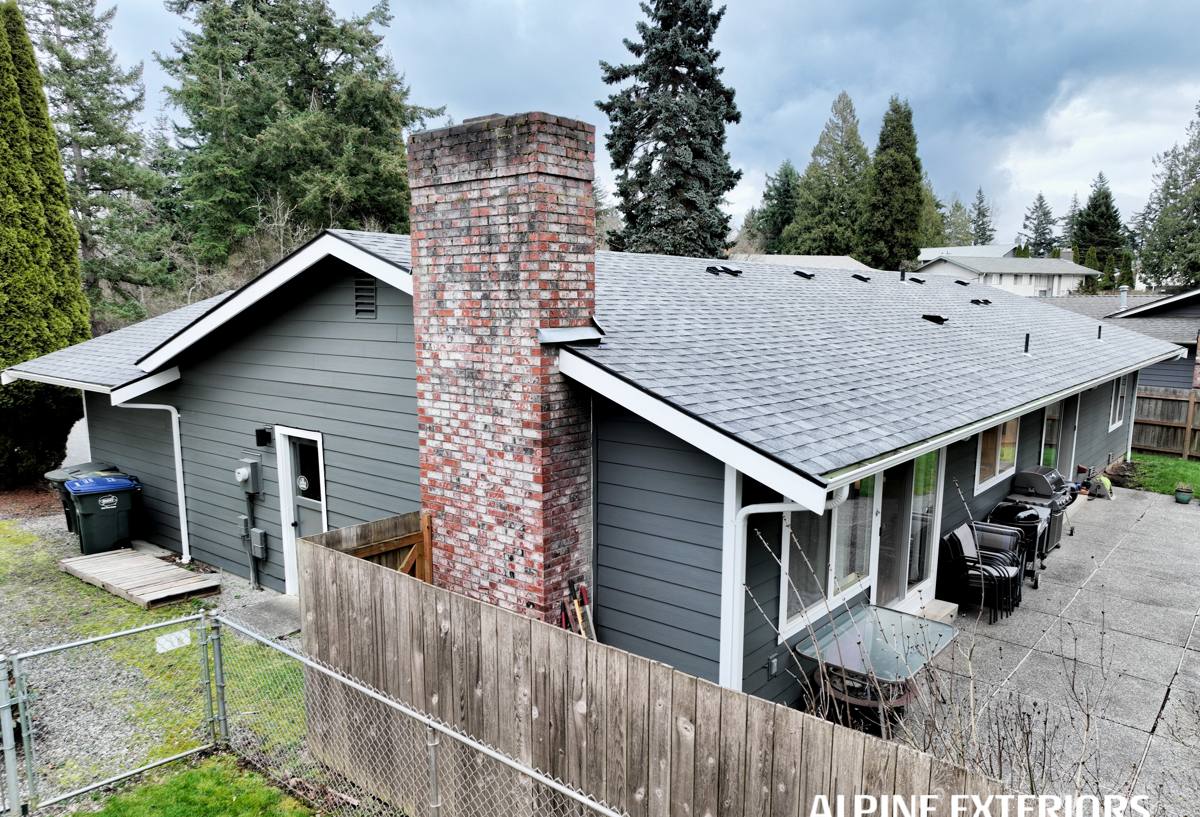
What Sumas's Climate Actually Does to Exterior Walls
Driving Rain and Wind-Driven Moisture
Rain that falls straight down is easy to shed. Rain that's pushed sideways by wind — which is common during the fall and winter storm systems that move through Whatcom County — finds every weak point in a siding system: unsealed laps, poorly flashed windows, gaps at trim, and butt joints that weren't backed properly. Over time, wind-driven rain is what turns a small installation shortcut into a rot problem behind the siding, not just on it.
Long Damp Season, Long Moss Season
Whatcom County doesn't get a short "rainy season" the way some regions do — it gets a long stretch of overcast, damp weather where walls simply don't dry out fast between storms. Shaded sides of a house, areas under eaves with poor airflow, and anything near mature trees are especially prone to moss and algae growth. That's a moisture problem before it's ever a cosmetic one: sustained dampness against a wall is what accelerates rot in wood-based products and breaks down paint film faster than the manufacturer's warranty assumes.
Salt-Influenced Marine Air
Whatcom County's marine air carries salt-tinged moisture well inland from the Strait, and it's one more reason coatings and fastener choices matter here more than they would in a landlocked climate. Salt-influenced air accelerates the breakdown of lower-grade paint finishes and corrodes the wrong fasteners over time — small details that add up to bigger problems on a 20-30 year siding investment.
Why We Only Install James Hardie Fiber Cement in This Climate
We don't install vinyl, LP SmartSide, Cemplank, Allura, primed spruce, or cedar. That's not a marketing line — it's a standard we hold because of exactly the conditions described above. Each of those alternatives has real strengths, but each also has a trade-off that shows up faster in a wet, shaded, long-winter climate like Sumas sees than it would somewhere drier.
| Product | What it does well | Why it's a harder fit for this climate |
|---|---|---|
| Vinyl siding | Low upfront cost, no painting | Can warp or crack in temperature swings; seams and panels give moisture a path in without proper flashing behind them |
| LP SmartSide | Engineered wood strength, lighter install | Wood-strand core is more moisture-sensitive at cut edges and joints; needs disciplined sealing to hold up long-term in a wet climate |
| Cemplank / Allura | Fiber cement basics, lower price point than Hardie | Coating systems and engineering aren't matched to Pacific Northwest moisture cycling the way Hardie's HZ5 line is |
| Primed spruce / cedar | Natural look, traditional appeal | Wood absorbs and releases moisture constantly; in a long damp season that means more repainting, more caulk maintenance, more risk of rot |
| James Hardie fiber cement | Non-combustible, engineered for regional moisture, factory-baked ColorPlus finish | Higher material cost than vinyl; requires correct installation to deliver on its warranty |
James Hardie's HZ5 product line is engineered specifically for climates with freeze-thaw cycling and sustained moisture exposure — which describes a Whatcom County winter well. The fiber cement itself doesn't absorb and swell the way wood-based products can, and the ColorPlus factory finish is baked on under controlled conditions, which holds color and resists cracking and peeling far longer than field-applied paint on wood or engineered wood siding.
What Correct Fiber Cement Installation Involves
Fiber cement siding is only as good as the installation behind it. Hardie's own warranty is written around installation being done to their specifications — skip steps and you can void the coverage you're paying for, regardless of how good the panels are.
The details that actually matter
- Correct water-resistive barrier and weather-resistant flashing at every window, door, and penetration — this is the layer that stops driving rain before it ever reaches the panel
- Proper fastener placement and type, matched to substrate and Hardie's blind- or face-nailing specs
- Minimum clearance from grade, roofing, and decks so siding isn't sitting in standing moisture
- Correctly sized gaps at butt joints and trim, sealed with the right sealant — not caulked shut in a way that traps moisture
- Rainscreen or drainage plane detailing appropriate to wall assembly, so any moisture that does get behind the siding can drain and dry
- Factory-cut and factory-primed edges kept intact wherever possible, since field-cut edges need proper sealing to match the ColorPlus warranty
Any one of these done wrong doesn't usually show up as a problem in year one. It shows up in year five or year ten, as a soft spot behind a window, a stain that won't wash off, or paint failing years before it should. That's why the installer matters as much as the product.
Our Process for a Sumas Siding Project
1. On-Site Assessment
We walk the exterior and look at drainage, existing moisture damage, trim and window condition, and how sun and shade fall across each wall — the north and shaded sides of a house in this climate need different attention than the south side.
2. Scope and Product Plan
We spec the right James Hardie panel profile, plank width, and ColorPlus color for the home, along with trim and flashing details specific to that wall assembly. This is where we flag anything — old sheathing, existing rot, inadequate drainage — that needs to be corrected before new siding goes on, not covered up underneath it.
3. Removal and Substrate Check
Old siding comes off and we inspect the sheathing and framing underneath. Any rot or moisture damage gets addressed here — installing new siding over a compromised substrate just hides the problem for a few more years.
4. Weather Barrier and Flashing
This is the step that determines how the wall performs in driving rain, and it's the one that's easiest to shortcut and hardest to inspect later. We install house wrap or equivalent barrier and flash every penetration correctly before a single piece of siding goes up.
5. Installation to Hardie Spec
Panels go up following Hardie's fastening, clearance, and joint-sealing specifications, so the manufacturer's warranty stays intact.
6. Final Walkthrough
We review the finished job with the homeowner, covering basic care and what to watch for over the first year or two.
What to Ask Before Hiring Anyone for Siding Work in Sumas
- Are they James Hardie certified or specifically experienced installing fiber cement, not just "familiar with siding in general"?
- Do they inspect and address substrate condition before installing new siding, or just cover what's there?
- Can they explain their flashing and weather-barrier approach in plain terms, unprompted?
- Do they carry proper licensing and insurance for exterior work in Washington?
- Have they worked on homes in this specific area, dealing with the same rain exposure and moss conditions?
Cost Factors for a Sumas Fiber Cement Project
Exact pricing depends on the home, but a few factors consistently move the number more than homeowners expect:
| Factor | Why it affects cost |
|---|---|
| Substrate condition | Rot or moisture damage found during removal adds repair work before new siding can go on |
| Home complexity | More corners, dormers, and trim details mean more cutting, flashing, and labor time |
| Panel profile and color | Lap width and ColorPlus color selection affect material pricing |
| Access and site conditions | Tight lots, slopes, or landscaping close to the house can add setup and labor time |
| Existing siding removal | Tear-off and disposal of old material is a separate line item from installation |
We give homeowners a real number after seeing the house, not a phone estimate — too much of the cost depends on what's actually happening at the substrate level.
Long-Term Ownership: What to Expect
James Hardie fiber cement, installed correctly, is built to handle years of Pacific Northwest weather cycling with minimal upkeep — an occasional rinse to keep moss and algae from taking hold on shaded walls, a periodic check of caulk joints and trim, and that's largely it. It won't need repainting on the schedule that wood or field-painted products do, because the ColorPlus finish is factory-applied and warrantied separately from the substrate. That's the practical payoff of matching the right product to this climate instead of installing whatever's cheapest and hoping it holds up.
If you're planning a siding project in Sumas and want a straight answer about what your home actually needs, we're happy to take a look and put together a free, no-pressure estimate — no obligation, just an honest assessment.