 Blaine Window
 Why Ferndale Roofs Wear Differently Than Roofs Inland
Ferndale sits close enough to the water that salt-laden air is a constant, low-grade stressor on exposed metal, fasteners, and shingle granules. Add in the long stretch of driving rain that comes through Whatcom County every fall and winter, plus a shade-and-moisture combination that keeps roofs damp for weeks at a time, and you get a climate that's genuinely harder on a roof than the marketing photos on a shingle wrapper suggest. None of this means asphalt shingle roofing is the wrong choice for a Ferndale home — it's still the most practical, cost-effective option for the vast majority of houses in this area. It means the installation details matter more here than they would in a drier, calmer climate, and cutting corners shows up faster.
A roof that's installed correctly for this environment sheds wind-driven rain instead of letting it work sideways under the shingles, breathes properly so trapped moisture doesn't rot the decking from underneath, and resists the moss and algae growth that our extended damp season practically guarantees if the roof isn't set up to discourage it. That's the standard we install to, and it's the standard we check for when we're asked to look at a roof someone else put on.
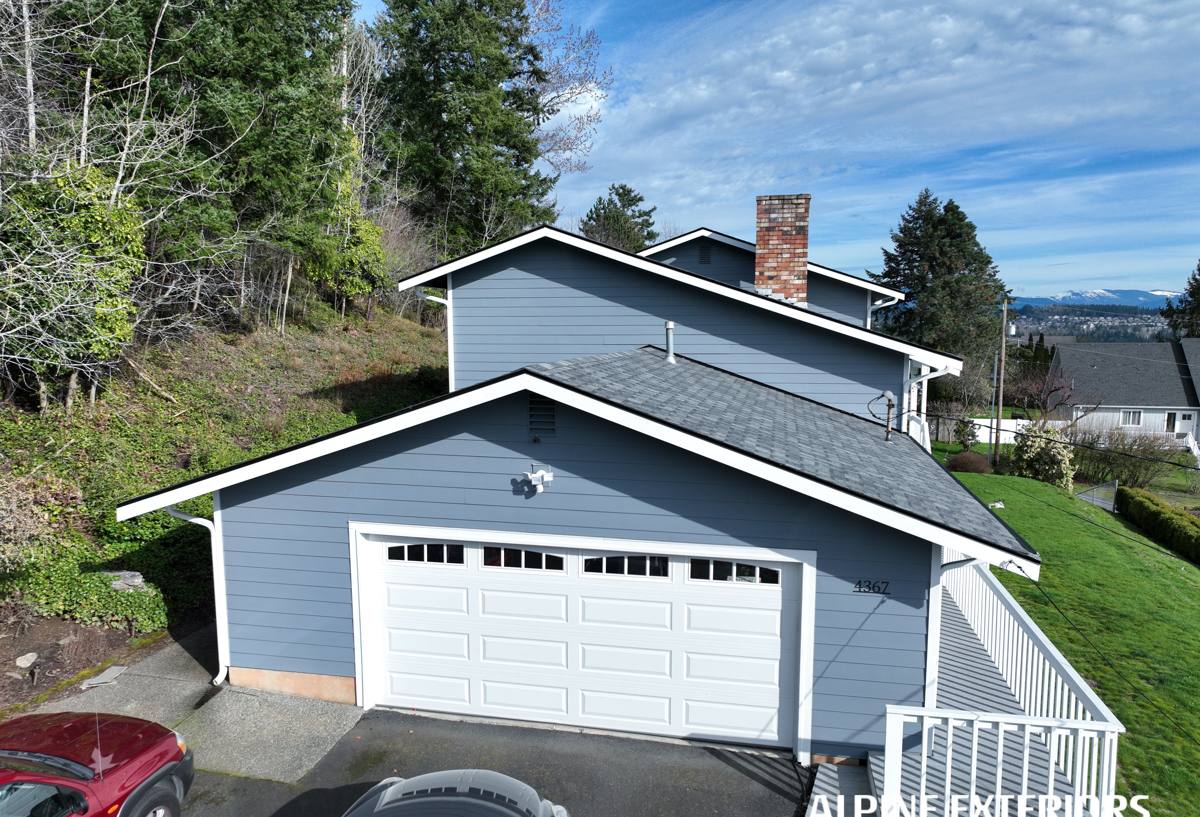
What Correct Installation Actually Involves Here
Asphalt shingle roofing looks simple from the ground, which is part of why bad installs are so common — the shingles can look fine for a year or two even when the underlying work was rushed. The details below are the ones that matter most in a marine climate like ours.
Underlayment and Water Barriers
We use synthetic underlayment rather than old-style felt paper across the full roof deck, because synthetic holds up far better to the repeated wet-dry cycling typical of a Pacific Northwest winter. In valleys, around chimneys and skylights, and along the eaves — the spots where wind-driven rain is most likely to find a way under the shingles — we install self-adhering ice-and-water barrier as a second line of defense, not just where code requires it.
Flashing
Flashing failures, not shingle failures, are the most common source of roof leaks we find on service calls. Step flashing at walls and chimneys, proper valley metal, and a continuous drip edge at the eaves and rakes all need to be installed in the correct sequence with the underlayment and shingles — not caulked in as an afterthought. Caulk is a maintenance item, not a waterproofing plan.
Ventilation
A roof that can't breathe traps moisture in the attic, which shortens the life of the decking and the shingles from the inside out. We balance intake venting at the soffits with exhaust venting at the ridge so air actually moves through the attic space rather than just sitting there. This matters as much for a Ferndale roof as the shingle brand does — a premium shingle on a poorly ventilated roof will still underperform its expected lifespan.
Fastening for Wind
Coastal and near-coastal wind gusts put real stress on shingle tabs. We nail to the manufacturer's high-wind pattern rather than the minimum standard pattern, which keeps more fasteners in the nailing strip and reduces the odds of shingles lifting or blowing off during winter storms.
Choosing a Shingle That Suits This Climate
Not every shingle product is a good fit for a house that sits in salt air and shade for much of the year. The table below covers the three general tiers homeowners choose between, and how each one holds up here.
| Shingle Type | Typical Lifespan | Wind Rating | Moss/Algae Resistance | Best Fit |
|---|---|---|---|---|
| 3-Tab (standard) | 15–20 years | Lower | Standard granules only | Budget-conscious re-roofs, secondary structures |
| Architectural/Dimensional | 25–30+ years | Higher | Often available with algae-resistant granules | Most Ferndale homes — our most common recommendation |
| Premium/Designer | 30–50 years (varies by line) | Highest | Algae-resistant standard | Homes wanting a heavier, dimensional look and longer warranty |
For most homes we work on in this area, architectural shingles with algae-resistant (AR) granules — copper or zinc-infused — hit the right balance of upfront cost, wind performance, and resistance to the black streaking that algae causes on north-facing and shaded slopes. We'll walk you through the manufacturer options that fit your budget and the specific exposure of your roof rather than pushing one product for every house.
Moss, Algae, and Salt Air: The Slow Damage
Moss
Whatcom County's long, cool, damp season is close to ideal moss-growing weather, especially on roof slopes shaded by trees or facing away from direct sun. Moss isn't just cosmetic — as it establishes itself, it lifts shingle edges, holds moisture directly against the shingle surface, and accelerates granule loss. Left untreated for years, it can shorten a roof's usable life meaningfully. Zinc or copper strips installed near the ridge, combined with periodic gentle cleaning, are the standard prevention approach — pressure washing shingles is not, since it strips granules and voids most manufacturer warranties.
Salt Air and Wind
Proximity to the water means faster corrosion on unprotected metal — flashing, fasteners, vent caps — than you'd see on an identical roof further inland. We spec corrosion-resistant flashing and fastener materials for homes with meaningful salt exposure, and check flashing condition as a standard part of any roof inspection in this area.
Our Process, Start to Finish
- Inspection and estimate. We look at the existing roof, the decking condition where accessible, attic ventilation, and any problem areas — then give you a written estimate with no pressure to decide on the spot.
- Tear-off (when needed). Old shingles and underlayment come off down to the deck so we can actually inspect it, rather than layering a new roof over hidden problems.
- Deck repair. Any soft, rotted, or delaminated decking gets replaced before anything new goes down — this is where roofs installed over hidden damage go wrong.
- Underlayment and water barriers. Synthetic underlayment plus ice-and-water shield at vulnerable areas, as described above.
- Flashing. New step, valley, and drip edge flashing installed in the correct sequence.
- Shingle installation. Installed to the manufacturer's high-wind nailing pattern, with attention to starter course and ridge detail.
- Ventilation check. Soffit and ridge venting confirmed balanced, with upgrades recommended if the attic isn't breathing properly.
- Final walkthrough. We review the completed roof with you and go over warranty paperwork before we consider the job done.
Repair, Full Replacement, or Maintenance?
Not every roof problem calls for a full replacement, and we'll tell you honestly when a repair or a maintenance visit is the right call instead of trying to upsell a new roof.
- Isolated leak or a handful of damaged shingles: usually a targeted repair, especially if the roof is under 15 years old.
- Widespread granule loss, curling, or multiple soft spots: a sign the roof is nearing the end of its service life and replacement is likely the more cost-effective path.
- Heavy moss coverage with shingles still intact underneath: often a cleaning-and-prevention job, not a replacement.
- Flashing failures with otherwise healthy shingles: a repair focused on the flashing, not the field of the roof.
- Roof at or past its rated lifespan with recurring issues: replacement, so you're not paying for repeated repairs on a roof that's simply worn out.
What Actually Drives the Cost
Roofing quotes vary house to house for real reasons, not just pricing games. Here are the factors that move the number most:
| Cost Factor | Why It Matters |
|---|---|
| Roof size and number of facets | More material, more cut angles, more labor hours |
| Number of existing layers | Extra tear-off work if the roof has been overlaid before |
| Deck condition | Rotted or delaminated sheathing needs replacement before shingles go on |
| Pitch and access | Steep or hard-to-access roofs take longer and require more safety setup |
| Shingle tier chosen | 3-tab, architectural, and premium products carry different material costs |
| Ventilation upgrades needed | Adding or correcting soffit/ridge venting is additional scope, not part of a basic install |
| Flashing and valley complexity | Multiple valleys, chimneys, or skylights add material and labor |
We give itemized, written estimates so you can see exactly what's driving your number rather than a single lump-sum figure with no breakdown.
What to Look For in a Ferndale Roof Estimate
- Written scope that specifies tear-off vs. overlay, not just "reroof"
- Underlayment type called out by name (synthetic vs. felt)
- Ice-and-water shield locations specified — eaves, valleys, penetrations
- Flashing replacement included, not just "reuse existing" without inspection
- Ventilation assessed, with any needed corrections itemized
- Nailing pattern and shingle wind rating disclosed
- Manufacturer material warranty and a separate workmanship warranty from the installer
- Cleanup and magnetic nail sweep included as standard, not an upsell
Why a Locally Experienced Crew Matters Here
A roofing crew that works Ferndale and the surrounding Whatcom County area regularly knows how to schedule around our weather windows rather than getting caught mid-tear-off by a system rolling in off the water. They know which shingle products actually perform well against local moss and salt exposure versus which ones just look good in a brochure, and they've seen what happens to roofs that skip flashing or ventilation details in this specific climate — because they're often the ones called back to fix it. That local track record is worth more than a low bid from a crew passing through the area for one job.
If you're weighing a repair, a full replacement, or just want an honest read on how much life is left in your current roof, we're glad to come take a look. Fill out the form below for a free, no-pressure estimate.