 Blaine Window
 Building a Deck That Actually Holds Up in Everson
Everson sits in the Nooksack River valley, away from the coast but still squarely inside Whatcom County's wet marine-influenced climate. That means a deck here has to deal with a long, low-angle rain season, valley humidity and fog that settle in the bottomland, and enough shade and moisture in the shoulder seasons to grow moss on almost any horizontal surface that isn't built and finished correctly. A deck that would hold up fine in a dry inland climate can start showing problems within a few years out here if the framing, fasteners, and decking weren't chosen with this environment in mind.
We build and repair decks throughout the area, and Everson jobs get the same attention to moisture management that we'd give a property closer to the water. Rain doesn't need to be salty to rot a joist or lift a fastener — it just needs somewhere to sit.
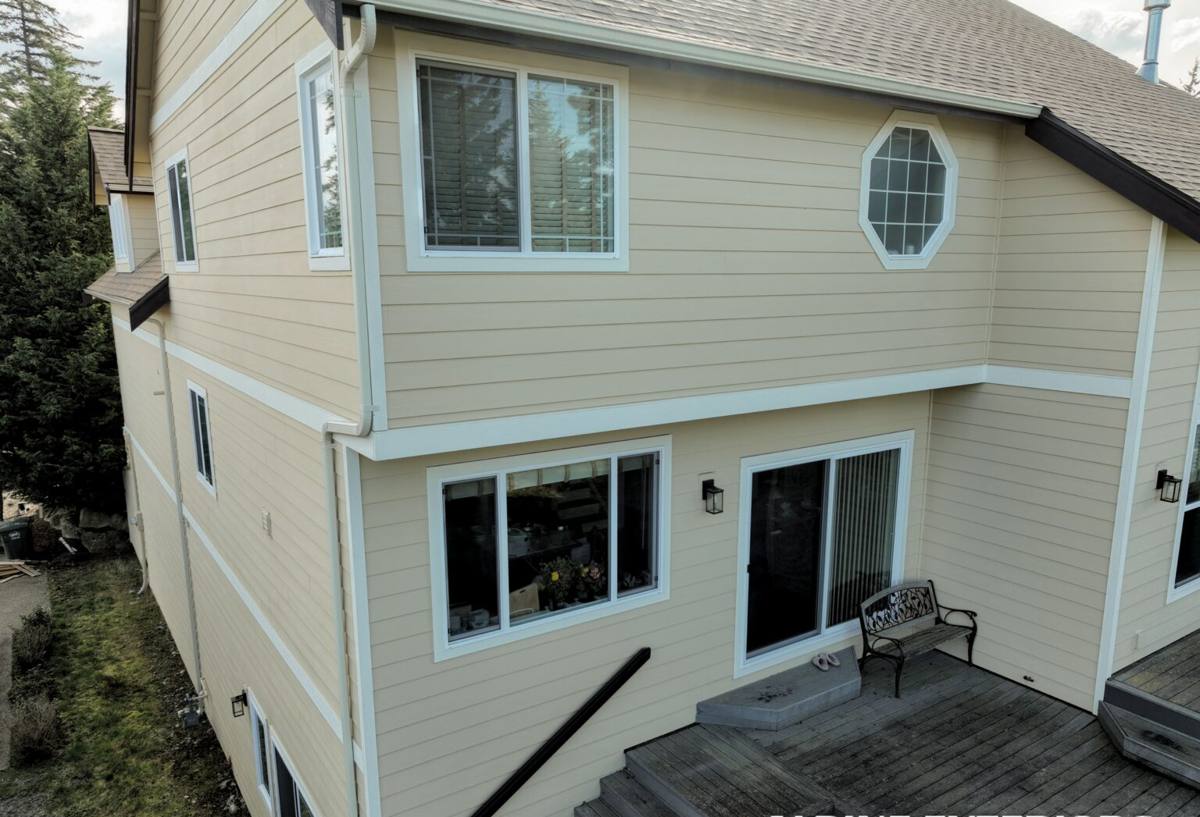
What Local Conditions Do to a Deck Over Time
Before talking about materials or process, it helps to understand the specific ways Everson's climate works against an outdoor structure. This isn't generic "rain is bad" advice — it's the actual failure pattern we see on decks in this part of the county.
Moisture that doesn't leave
River valley locations tend to hold humidity and morning fog longer than open, breezy sites. A deck tucked under trees or against the house, with limited sun and airflow, dries out slower after every rain. That extended damp period is exactly what wood-decay fungi and moss need to establish.
Moss and algae growth
A long wet season with mild temperatures is ideal moss habitat. On a deck, moss doesn't just look bad — it holds water against the board surface, makes footing slick and dangerous, and accelerates surface breakdown on untreated or poorly finished wood.
Freeze-thaw cycling
Whatcom County gets enough cold snaps each winter to freeze standing moisture in end grain, fastener holes, and ledger connections. Repeated freeze-thaw is what turns a small water intrusion point into a cracked board or a loosened connection over a few winters.
Regional marine air
Even away from the immediate coastline, the broader Whatcom County climate carries damp, salt-tinged marine air inland on prevailing weather systems. It's a smaller factor for Everson than for waterfront properties, but it's part of why we spec corrosion-resistant fasteners and hardware as standard, not as an upgrade.
Choosing Decking Material for This Climate
There's no single "best" decking material — there's a best material for your budget, your maintenance appetite, and how much sun and airflow your specific yard gets. Here's how the common options actually perform in a wet, moss-prone environment like Everson's.
| Material | Moisture & moss behavior | Maintenance | Typical lifespan here |
|---|---|---|---|
| Pressure-treated wood | Absorbs and releases moisture readily; needs a real finish to shed water and resist moss | Annual cleaning, re-stain or seal every 2-3 years | 15-20 years with upkeep |
| Cedar | Naturally more decay-resistant, but still needs sealing to prevent graying and moss in shaded spots | Cleaning and sealant every 2-3 years | 15-25 years with upkeep |
| Composite decking | Doesn't rot, but capless or older composite can still trap surface moisture and support algae film | Periodic washing, no staining or sealing required | 25-30+ years |
| PVC/cellular decking | Fully synthetic, sheds water and resists moss growth best of the common options | Occasional washing only | 30+ years |
We install all of the above and won't push a homeowner toward the highest-margin option. Wood is still the right call for a lot of Everson budgets, especially on a covered or well-ventilated deck. Where a deck sits in heavy shade or gets minimal airflow, though, we'll say so plainly — that's a spot where composite or PVC earns its higher upfront cost through drastically lower moss and maintenance headaches.
A note on fasteners and hardware
Whatever decking material you choose, the fasteners, joist hangers, and structural screws matter as much as the boards themselves. We use hot-dip galvanized or stainless hardware rated for ground contact and exterior exposure — not the cheaper coated fasteners that can start corroding within a few wet seasons and streak or weaken the connection they're supposed to hold.
Framing and Substructure: Where Deck Failures Actually Start
Most deck problems we get called out to fix in this area aren't about the decking boards — they're about what's underneath. A few specific points deserve real attention on any Everson deck:
- Footings sized for local soil and frost conditions — undersized or shallow footings shift over time in saturated valley soil.
- Ledger board flashing — the single most common source of hidden rot on an attached deck; the ledger has to be properly flashed and sealed where it meets the house, not just bolted on.
- Joist spacing matched to your decking material — composite and PVC boards often require tighter joist spacing than solid wood; using wood-rated spacing under composite decking can lead to noticeable flex or long-term sagging.
- Airflow underneath the deck — low decks built close to grade with no ventilation trap moisture and encourage moss and mildew on both the underside of the decking and the joists.
- Post-to-beam and beam-to-joist connections — proper structural hardware here, not just toe-nailing, is what keeps a deck solid through years of freeze-thaw movement.
Our Deck Building Process
We run the same disciplined process on every deck, whether it's a small ground-level platform or a full multi-level deck off the back of the house:
- On-site assessment — we look at sun exposure, drainage, existing structure (for replacements), and how the specific spot on your property handles moisture.
- Design and material walkthrough — honest talk about wood versus composite versus PVC for your budget and that particular location's shade and airflow.
- Permitting — we handle the Whatcom County permit application and inspection scheduling for anything that requires it.
- Footings and framing — proper footing depth, ledger flashing, and joist layout matched to your chosen decking material.
- Decking, railing, and stairs — installed to manufacturer spec (critical for composite and PVC warranties) with attention to board gapping for drainage and expansion.
- Final walkthrough — we go over care and maintenance specific to the material you chose before we consider the job done.
Permits and Local Considerations
Most decks above a certain height or attached to the house require a building permit in Whatcom County, and elevated decks often need engineered footing or ledger details rather than a standard prescriptive design. Setback rules can also come into play depending on your lot and how close the structure sits to a property line. We pull the permits, handle the paperwork, and schedule inspections as part of the job — you shouldn't have to chase that down yourself, and skipping it isn't worth the risk to a home sale or insurance claim down the road.
Maintenance Realities by Material
Whatever you choose, a deck in this climate needs some routine attention. Here's the honest breakdown of what each option actually asks of you:
- Wood decks: annual cleaning to knock back moss and mildew, plus re-sealing or staining every 2-3 years — skipping this is the single biggest cause of premature wood deck failure we see.
- Composite decks: periodic washing with a deck cleaner or mild soap to prevent surface algae film, especially in shaded areas; no staining needed.
- PVC decks: the lowest-maintenance option — occasional rinsing is usually enough, even in low-airflow spots.
- All decks: keep gutters and downspouts clear of anything that dumps extra water onto or near the deck, and keep vegetation trimmed back so sun and air can reach the surface.
- All decks: check railing and stair connections once a year — these take the most structural stress and are the first place a loose fastener shows up.
Why Hire a Crew That Already Works in Everson
A deck builder who mainly works drier inland regions can build something that looks fine and struggles within a few years out here. Framing details, fastener choices, and finish schedules that are optional elsewhere are standard practice for us because we already know what this valley's rain, humidity, and moss season do to a structure left unprotected. That local experience shows up in things a homeowner might not think to ask about upfront — ledger flashing, joist spacing for the specific decking chosen, and hardware rated for long-term wet exposure — the details that determine whether a deck is still solid in year fifteen or needs major repair in year six.
If you're planning a new deck or replacing one that's showing its age, we're happy to come out, take a look at your specific site conditions, and put together a straightforward, no-pressure estimate. There's a form below to get that scheduled.