 Blaine Window
 Why Decks in Blaine Harbor Wear Out Faster Than You'd Expect
A deck built the same way in Bellingham or Lynden can hold up for years longer than the identical deck built two blocks from Blaine Harbor. The difference isn't the carpentry. It's the exposure. Homes near the harbor sit in a near-constant flow of salt-laden air coming off Semiahmoo Bay and the Strait of Georgia, and that air does something ordinary Whatcom County weather doesn't: it accelerates corrosion in fasteners, hardware, and connectors long before the wood itself would normally fail.
Layer on top of that the region's driving rain — wind-driven storms that push water sideways into end grain, fastener holes, and any gap where two boards meet — and you have moisture finding its way into places a dry-climate deck would never see it. Then comes moss season, which in this part of the Pacific Northwest can run from fall through spring. Moss and algae don't just look bad; they hold moisture directly against the decking surface for months at a time, which is exactly the condition that rots wood and corrodes metal fastest.
None of this means a deck near Blaine Harbor is doomed. It means the materials, fasteners, and construction details have to be chosen for this specific exposure, not for a generic inland build. Decks that back up to the water or sit fully exposed to prevailing wind off the harbor tend to show wear first, and often the ones where a previous repair used hardware that simply wasn't rated for the setting.
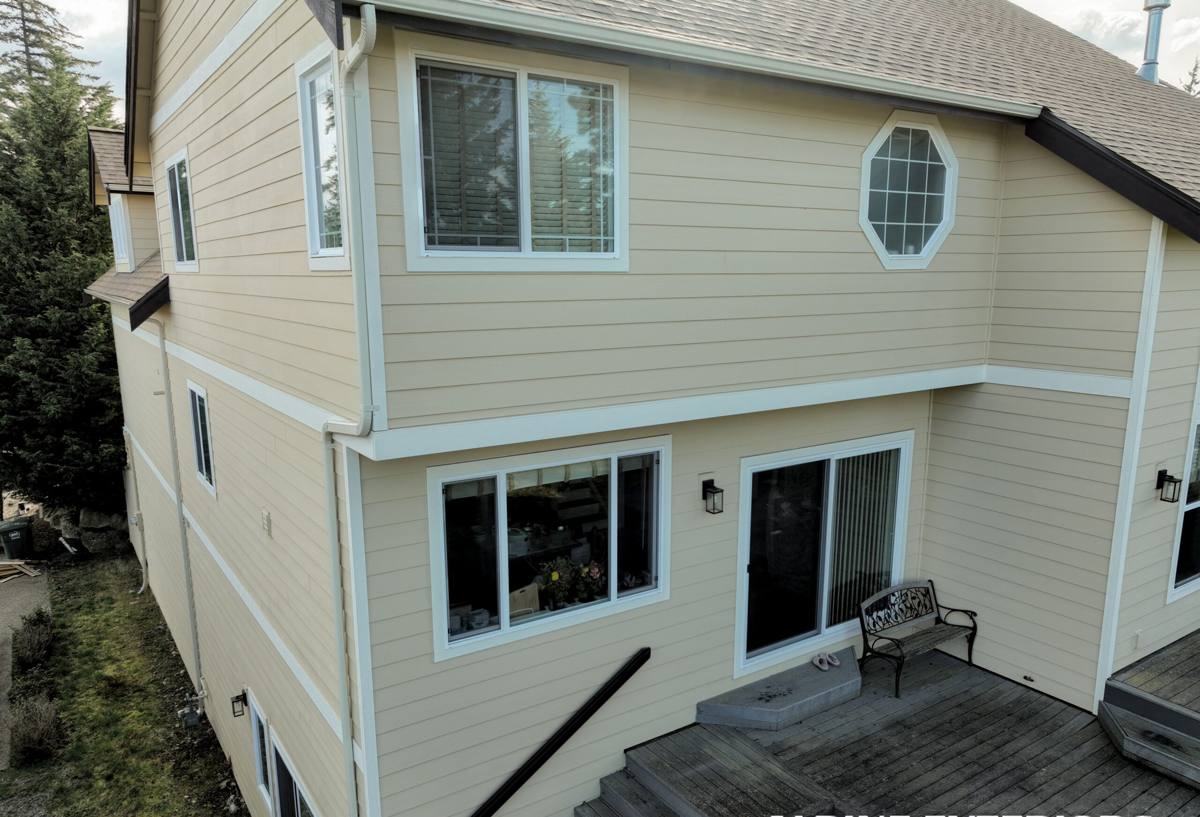
Repair or Replace? Reading the Signs Correctly
Not every tired-looking deck needs a full replacement, and not every deck that looks fine from the yard is actually sound. Here's how we tell the difference on an inspection.
Signs that point to replacement
- Joists or beams that feel soft, spongy, or give underfoot when you walk the deck
- A ledger board pulling away from the house, or visible daylight behind the flashing
- Fasteners that are rusted, streaking the wood orange-brown, or backing out on their own
- Posts that are soft or crumbling at or below grade, where moisture sits longest
- Railings that flex or wobble under normal pressure, a safety issue, not a cosmetic one
Issues that don't necessarily mean replacement
Gray, weathered-looking boards, minor surface cupping, or a few loose screws are often maintenance items, not structural failures. A straightforward on-site inspection is the only reliable way to know which category your deck falls into. We'll tell you honestly if repair is the more sensible option, rather than selling a full rebuild you don't need yet.
What a Correct Deck Replacement Actually Involves
"Deck replacement" gets used loosely. Done correctly, it's not just pulling up old boards and screwing down new ones. It's a rebuild from the ground up, with the framing and flashing given at least as much attention as the visible decking.
Substructure and framing
The ledger board connection to the house, the joists, and the beams carry the entire structural load. On a replacement, we inspect all of it, and where the framing is undersized, spaced too far apart for the new decking material, or shows any rot or corrosion, it gets addressed before a single new board goes down. Rebuilding a deck surface over compromised framing just hides the problem for a season or two.
Footings and posts
Posts and footings need to meet current code for the deck's height, span, and load, not just match what was there before. Older decks in this area were sometimes built to standards that have since tightened up, particularly around post-to-beam connections and lateral bracing.
Stairs and railings
Stair stringers and railings take constant abuse from foot traffic and are usually the first components to show fatigue on an older deck. Railing height, baluster spacing, and stair guard requirements are all governed by code, and a replacement is the right time to bring older railings that predate current spacing rules up to a safe, compliant standard.
Decking and fastening
The visible surface is the last step, not the first, and the material and fastening method you choose here matters more in a marine climate than almost anywhere else in Whatcom County.
Choosing Decking Material for a Marine Climate
There's no single "best" decking material. There's a best fit for your budget, your maintenance tolerance, and how close your home sits to the salt air. Here's how the common options actually perform once they're a few years into Blaine Harbor exposure.
| Material | Upfront Cost | Maintenance in Salt Air & Moss | Realistic Lifespan Here |
|---|---|---|---|
| Pressure-treated fir/pine | Lowest | Needs regular cleaning and re-sealing to resist moss and moisture cycling | 10-15 years with upkeep |
| Cedar | Moderate | Naturally moisture- and insect-resistant, but still needs periodic cleaning and finish | 15-20 years with upkeep |
| Composite decking | Higher | No sealing or staining, but still needs regular cleaning to keep moss and algae from taking hold | 20-25+ years, varies by product line |
| PVC decking | Highest | Fully moisture-resistant surface; lowest ongoing maintenance of the group | 25+ years |
Whatever material you choose, we'll walk you through the honest trade-offs rather than pushing one product line. Composite and PVC cost more upfront but remove the recurring staining and sealing work that salt air and moss season make more frequent here than in a drier inland town.
Fasteners, Flashing, and the Details That Actually Prevent Rot
Most deck failures near the water don't start with the decking boards. They start with the metal and the moisture barrier behind the scenes.
Fasteners and hardware
Standard galvanized fasteners corrode faster in salt-influenced air than most homeowners expect, sometimes staining the deck and losing holding strength years ahead of schedule. We use stainless steel or coated fasteners and connectors rated for coastal exposure throughout the build, including the joist hangers and structural hardware that never see the light of day once the deck is finished.
Ledger flashing
The ledger board, where the deck attaches to the house, is the single most common source of hidden rot on any deck, and it's made worse by driving rain. Correct flashing directs water away from this connection entirely instead of trusting caulk or sealant to do the job over time.
Hidden fasteners vs. face screws
Hidden fastener clip systems leave no exposed screw heads for water to collect around and no metal streaking on the board face, a real advantage in a climate where moisture sits on horizontal surfaces for long stretches. Face-screwed decking costs less and is simpler to replace board by board, which is worth weighing against the cleaner look and moisture handling of a hidden system.
What Affects the Cost of a Deck Replacement
Every deck is priced on its own specifics, but the same handful of factors drive most of the variation we see on Blaine Harbor projects.
- Total square footage and shape: multi-level decks and non-rectangular layouts cost more per square foot than a simple rectangle
- Height above grade: taller decks need more substantial framing, footings, and sometimes engineering review
- Tear-off and haul-away of the old structure, which varies with how the old deck was built and fastened
- Decking material chosen, from pressure-treated wood through PVC
- Stair and railing complexity, including any code upgrades needed on an older deck
- Permit fees and any structural engineering required for larger or elevated decks
We break all of this out in writing before any work starts, so you know exactly what you're paying for and why.
Our Deck Replacement Process, Start to Finish
- On-site inspection and honest assessment: we look at the framing, not just the surface, before recommending replacement over repair
- Written estimate: material options, scope, and price laid out clearly, no pressure to decide on the spot
- Permitting: we handle the paperwork with the local jurisdiction so the work is inspected and legal
- Tear-off and structural evaluation: old decking comes up and the framing gets a real look before we proceed
- Framing, footings, and flashing: the structural work and moisture barriers that determine how long the deck actually lasts
- Decking, railing, and finish details: installed with corrosion-rated fasteners throughout
- Final walkthrough: we go over the finished deck with you and answer maintenance questions before we call it done
Deck Maintenance Checklist for Blaine Harbor Homeowners
A well-built deck still needs a little seasonal attention in this climate, mostly to stay ahead of moss and standing moisture before they become a problem.
- Sweep debris and fallen leaves off the deck regularly, especially going into fall and winter
- Treat or scrub moss and algae growth as soon as it appears rather than letting it establish
- Keep gutters and downspouts clear so roof runoff isn't draining directly onto the deck surface
- Check fastener heads and railing connections once a year for corrosion or looseness
- Reseal or re-stain wood decking on the schedule the finish manufacturer recommends, don't wait for visible graying
- Confirm the ledger flashing and any deck-to-house seals still look intact after major storms
Why Hiring a Crew That Already Works Blaine Harbor Matters
A contractor who works this specific stretch of coastline regularly already knows which fastener grades hold up, which decking finishes actually resist the local moss cycle, and how local permitting works for a deck rebuild in Whatcom County. That familiarity shows up in fewer surprises mid-project, not in a sales pitch, just in a job that's specified correctly the first time because we've built decks in this exact exposure before, not a generic version of it.
It also means we're realistic about timing. Scheduling around the wettest stretches of the year and giving framing and flashing time to cure and dry properly, rather than rushing a build between storm systems, is part of doing this correctly in a harbor climate. And when a deck ties into a home's siding or trim, knowing how those systems are supposed to interact keeps water from finding a new path in once the deck itself is sound.
If your deck is showing its age or you're just not sure whether it needs repair or full replacement, we're happy to take a look. Use the form below to request a free, no-pressure estimate for your Blaine Harbor home.