 Blaine Window
 Siding Built for Dakota Creek's Weather, Not Just Its Curb Appeal
Homes along Dakota Creek sit close enough to the water and the open weather patterns of Whatcom County that siding takes a beating most inland homes never see. Salt-laden air blows in off the Strait of Georgia and Semiahmoo Bay, driving rain comes in sideways for months at a stretch, and the shaded, moisture-heavy stretches near the creek grow moss on anything that stays damp long enough. Siding replacement here isn't just a cosmetic upgrade — it's a chance to fix the specific conditions that wore out the old siding in the first place.
We work on homes in this area regularly, and the pattern repeats: siding that was rated fine for a generic Pacific Northwest install starts failing early near Dakota Creek because the site conditions are more aggressive than the average. A replacement done right accounts for that from the first planning conversation, not as an afterthought.
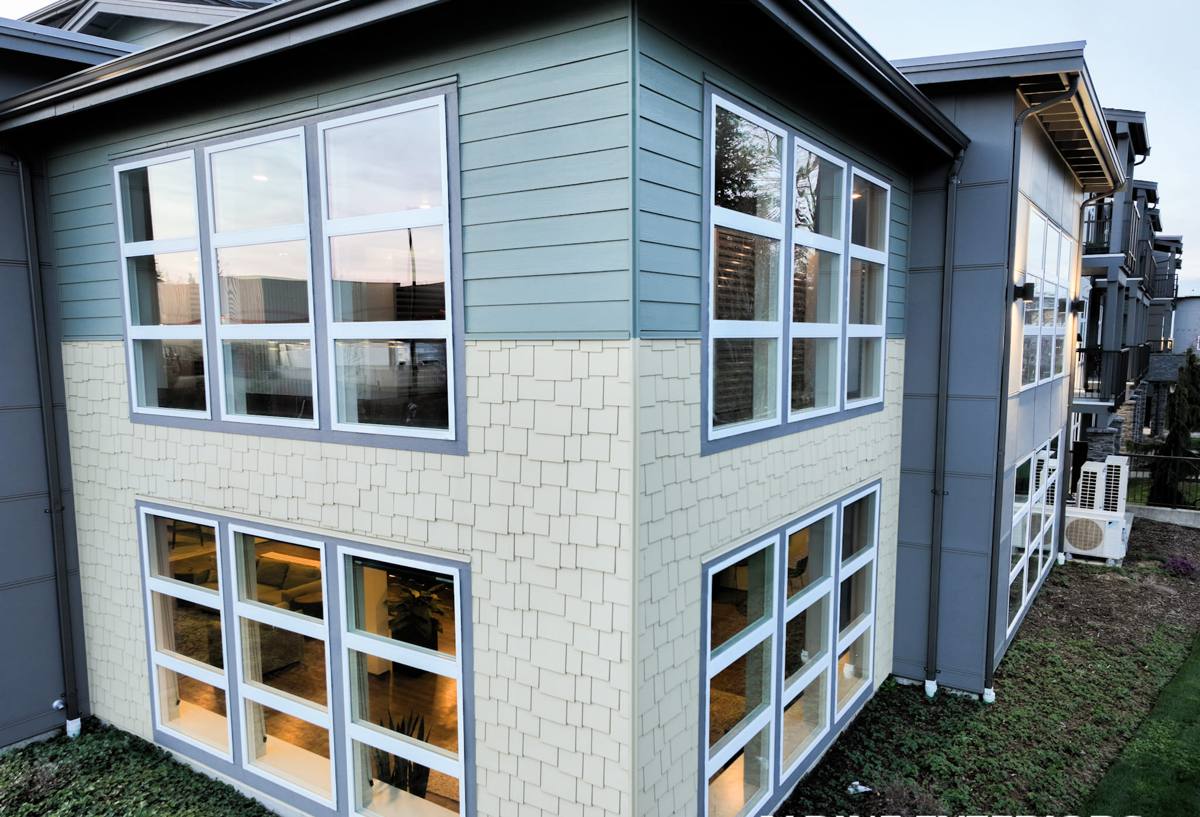
What Salt Air, Driving Rain, and Moss Actually Do to Siding
Each of these three conditions attacks siding differently, and understanding the mechanism matters when you're choosing a replacement product and installation approach.
Salt Air
Airborne salt is corrosive to exposed metal fasteners, flashing, and trim hardware, and it accelerates the breakdown of finishes that aren't formulated to resist it. Paint applied on-site tends to chalk and fade faster in salt-exposed areas because the film wasn't engineered for constant marine-adjacent exposure.
Driving Rain
Wind-driven rain doesn't just run down a wall — it gets pushed sideways and upward into laps, seams, and penetrations that a calm-weather install would never stress. Siding systems that rely on tight tolerances or caulk to stay sealed are the first to leak once wind-driven moisture becomes routine instead of occasional.
Moss and Sustained Moisture
Shaded, damp stretches near the creek stay wet longer after every rain event, which is exactly the environment moss and mildew need to establish. Once moss holds moisture directly against a wall surface, any siding material that can absorb or swell from that contact starts to degrade from the back side, often before it looks bad from the street.
Signs a Dakota Creek Home Needs Siding Replacement
Because these three stressors work slowly, homeowners often notice the small signs long before there's an obvious failure. Worth checking for on your own home:
- Soft or spongy spots when you press on the siding, especially near the bottom courses and around windows
- Persistent moss or dark streaking that comes back within weeks of cleaning
- Paint that's chalking, peeling, or fading unevenly, particularly on walls facing the water or prevailing wind
- Visible gaps, cupping, or warping at panel seams and corner boards
- Rust staining below fasteners or trim, a sign the metal underneath is corroding
- Interior signs — musty smells, discolored drywall, or peeling interior paint on exterior-facing walls
Any one of these on its own might be minor. Several together, especially on the water-facing or shaded sides of the house, usually mean the siding system as a whole has stopped doing its job.
What a Correct Siding Replacement Job Actually Involves
Siding replacement is often sold as a surface-level swap, but the parts nobody sees are what determine whether the new siding lasts fifteen years or fifty. For a Dakota Creek home, we treat these steps as non-negotiable:
Full Tear-Off and Sheathing Inspection
Old siding comes off completely so we can inspect the sheathing underneath for rot, delamination, or prior water damage — problems that are common on homes that have already been fighting salt air and driving rain for years. Any compromised sheathing gets replaced before anything new goes on; covering over damaged wood just hides the problem.
Weather-Resistive Barrier and Flashing
A correctly lapped house wrap, paired with properly integrated window, door, and penetration flashing, is what actually keeps wind-driven rain out of the wall assembly. This is the layer that does the real waterproofing work — the siding itself is the second line of defense, not the first.
Rainscreen Detailing Where It Counts
In a climate this wet, giving water a path to drain and dry behind the siding matters. We detail furring and flashing to keep bulk water moving down and out instead of trapped against the wall, which directly reduces the conditions moss and rot need to take hold.
Fastening and Clearances to Manufacturer Spec
Fastener type, spacing, and depth all affect how well siding resists wind and moisture over time — corrosion-resistant fasteners matter in salt air specifically. We also hold proper clearance from grade, roof lines, and decks so moisture doesn't wick up into the bottom courses, a common failure point we see on older Dakota Creek homes.
Why We Install Only James Hardie Fiber Cement
We install James Hardie fiber cement siding exclusively — not vinyl, not LP SmartSide, not cedar, not primed spruce, not other fiber cement brands. That's a deliberate standard, not a sales preference, and it's especially relevant on a site like Dakota Creek.
Fiber cement doesn't absorb moisture the way wood-based products can, which matters directly in a moss-prone, sustained-moisture environment. It's non-combustible, which is a real consideration anywhere wildfire risk touches Western Washington in dry summer stretches. And James Hardie's ColorPlus factory finish is baked on and warrantied against fading in a controlled process, rather than relying on a field-applied coat to hold up against years of salt air and UV exposure.
James Hardie also builds region-specific HZ product lines engineered for different climate zones, so the siding specified for a home here is matched to Pacific Northwest moisture exposure rather than a generic national spec. Paired with a strong transferable warranty, that's the combination we've found actually holds up here — which is why we don't install anything else.
How Siding Options Compare in This Climate
| Material | Moisture Behavior Near Water | Finish Durability in Salt Air | Maintenance Burden |
|---|---|---|---|
| James Hardie fiber cement | Does not swell or rot from moisture exposure | Factory-applied ColorPlus finish resists fading | Low — periodic washing, no repainting cycle in most cases |
| Vinyl siding | Can warp or buckle with temperature swings and wind-driven rain | Field-applied gloss fades over years of UV and salt exposure | Low to moderate — replacement panels can be hard to match later |
| LP SmartSide (engineered wood) | Wood-based core is more moisture-sensitive at cut edges and seams | Relies on field-applied or factory coatings that need upkeep | Moderate — edge sealing and inspection matter more here |
| Cedar / primed spruce | Natural wood absorbs moisture readily, especially in shaded, damp areas | Coatings need reapplication on a regular cycle | High — repainting, sealing, and moss treatment are ongoing |
Our Siding Replacement Process, Start to Finish
- On-site assessment: We walk the exterior, check for moisture damage, and identify how sun, shade, and prevailing wind affect each elevation of your specific home.
- Scope and product plan: We spec the James Hardie line, profile, and color that fits the home and confirm quantities, trim details, and any sheathing repair likely needed.
- Tear-off and inspection: Old siding comes off, sheathing is inspected and repaired as needed, and we document anything unexpected before closing the wall back up.
- Weather barrier and flashing installation: House wrap, window and door flashing, and rainscreen detailing go in correctly before a single piece of siding is hung.
- Siding installation to spec: Panels are installed to James Hardie's fastening, clearance, and joint requirements — the details that actually determine long-term performance.
- Final inspection and walkthrough: We check the finished work against the plan and walk the property with you before calling the job complete.
What Affects the Cost of Siding Replacement Here
Every home is different, but the same handful of factors drive most of the cost variation we see on Dakota Creek projects:
| Cost Factor | Why It Matters Here |
|---|---|
| Sheathing condition | Homes that have absorbed years of driving rain often need more repair before new siding goes on |
| Home size and wall complexity | Dormers, bump-outs, and multiple elevations add labor and trim detail |
| Siding profile and trim package | Lap width, trim boards, and accent details affect material and labor cost |
| Access and site conditions | Slopes, landscaping, and creek-adjacent grading can affect staging and cleanup |
| Extent of flashing and rainscreen work | Homes needing more moisture-management upgrades take more time to do correctly |
We don't quote a number without seeing the home — anyone who does is guessing, and guessing on a job like this is how corners get cut.
Why Local Experience in Dakota Creek Actually Matters
A siding contractor who's worked this stretch of Whatcom County knows which elevations take the worst of the driving rain, which yards stay shaded and damp long enough to grow moss fast, and where salt air does the most damage to fasteners and trim first. That's not something you learn from a spec sheet — it's learned by seeing which homes in this exact area fail early and which ones don't.
That local pattern-recognition changes real decisions on your project: where we add extra flashing attention, which elevations get the most careful clearance work, and how we sequence the job around the wetter months. A crew that's only worked drier, inland jobs doesn't have that reference point, and it shows up later in the parts of the house you can't see from the street.
If your Dakota Creek home is showing early wear from salt air, driving rain, or moss, we're happy to take a look and give you a straight assessment — no pressure, no obligation. Use the form below to request a free estimate.