 Blaine Window
 Deck Replacement in the Dakota Creek Area — Why the Timing Question Matters
Homes in the Dakota Creek area sit close to a shaded, low-lying waterway on the edge of Blaine, and that setting puts a different set of demands on an outdoor deck than a wide-open, sun-exposed lot does. Mature tree cover along the creek keeps decks damp longer after a storm, and that dampness stacks on top of the driving rain and long moss season that already define Whatcom County's marine climate. A deck built or repaired without accounting for that combination tends to show trouble years before a homeowner expects it.
This page is about deck replacement specifically — not a new custom build, and not a quick board patch. It covers how to tell when a deck near Dakota Creek has actually reached the end of its useful life, what a correct replacement involves once you get past the surface boards, and why a crew that already works this specific pocket of Blaine handles that job differently than one seeing it for the first time.
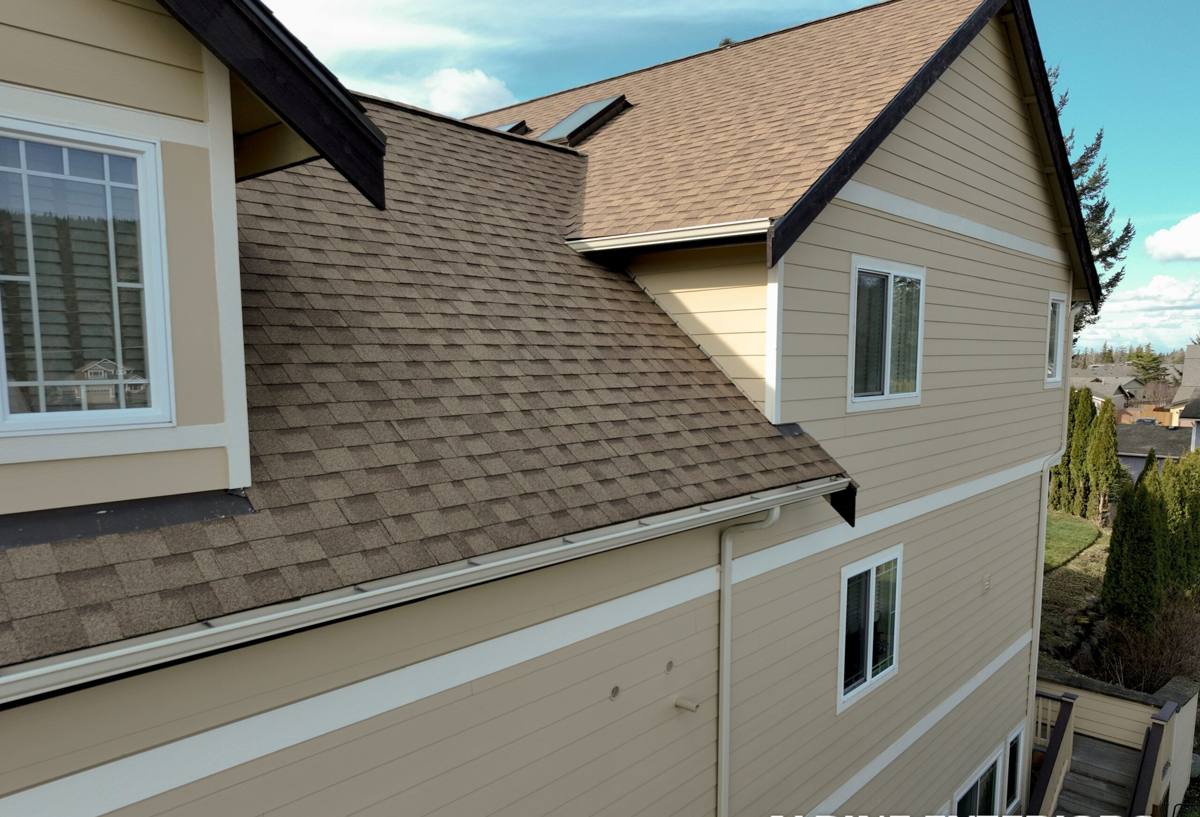
What Makes Decks Near Dakota Creek Age Differently
Shade and Standing Moisture From the Creek Corridor
Tree cover along Dakota Creek is good for the property in plenty of ways, but it also means less direct sun reaching the deck surface and slower drying after rain. A deck out in the open can shed water and dry out within a day; a shaded deck near the creek often stays damp for several days at a time, especially through the fall and winter months. That extended dampness is exactly the condition wood and even some composite products struggle with over the long run.
Whatcom County's Wet Season and a Moss Window That Runs Most of the Year
Low winter sun angles combined with near-constant drizzle give moss a long growing season across this part of the county, and a shaded deck near a creek is about as favorable a spot for it as there is. Moss doesn't just sit on top of the boards — it holds moisture against the surface and works into any porosity in the material, which is part of why an older, unmaintained deck in this setting often looks worse than its actual age would suggest.
Salt Air Still Reaches This Far Inland
Dakota Creek properties aren't directly on the open bay, but Blaine's coastal air still carries salt further inland than people expect, and it still shortens the life of standard, non-corrosion-rated fasteners and hardware. It's a lighter dose than a waterfront lot gets, but combined with the extra moisture from the creek and tree cover, it's enough that fastener and hardware selection still matters on a replacement here — it isn't just a concern for homes with a bay view.
Signs Your Deck Has Passed the Point of Repair
Not every tired-looking deck needs a full replacement, but there's a point where patching individual boards stops addressing what's actually wrong. Before assuming a repair will hold, check for the following:
- Soft or spongy decking boards, particularly near the house or in shaded corners that stay damp longest
- Discoloration, softness, or gaps where the ledger board meets the house wall
- Rusted, staining, or loosening fasteners, brackets, and post hardware
- Joists or beams that flex, bounce, or sag noticeably under normal foot traffic
- Posts or footings that have shifted, settled unevenly, or show rot at ground contact
- Moss or algae that returns within a few weeks of cleaning, even after a thorough wash
- Boards that have cupped, warped, or pulled apart enough to widen the gaps between them
One or two of these on their own might be worth a repair. Several at once, or any sign of trouble at the ledger connection or main framing, usually means the deck's structure is compromised in ways a surface patch won't fix — and that's the point where replacement is the more honest recommendation, not just the more profitable one.
Repair or Replace — A Practical Way to Decide
It helps to break the decision down by component rather than judging the whole deck at once, since different parts of a deck fail on different timelines. Here's roughly how we sort it out during an assessment:
| Deck Component | What We're Checking | Repair Can Work | Replacement Is the Right Call |
|---|---|---|---|
| Decking boards | Surface graying, cupping, isolated soft spots | Yes — a limited number of boards can often be swapped | Yes, if rot or softness is widespread across the surface |
| Ledger board & house connection | Flashing condition, moisture staining, wood softness | Rarely — this connection is foundational to the whole structure | Yes, if flashing has failed or the wood behind it is soft |
| Framing (joists & beams) | Flex, sag, corrosion at connectors, moisture damage | Sometimes, for isolated hardware corrosion only | Yes, if structural members are soft, sagging, or unreliable |
| Posts & footings | Ground-contact rot, settling, cracking, level | Occasionally, if the footing itself is sound | Yes, if posts have shifted, rotted, or lost bearing |
| Railings & guards | Wobble, loose connections, post condition | Often, if the posts they're attached to are solid | Yes, if the posts themselves have failed |
The pattern worth noticing: repair usually works fine for the decking surface itself, but almost never for the ledger connection, and only sometimes for framing and posts. That's why an honest assessment has to look underneath the boards, not just at how the surface looks from a few feet away.
What a Correct Deck Replacement Actually Involves
Full Tear-Out and an Honest Look Underneath
A proper replacement means removing the decking, railings, and any damaged framing down to what's structurally sound, not building a new surface over old problems. That tear-out is also where we usually find what a homeowner couldn't have known was there — a soft ledger connection hidden under trim, a footing that's shifted slightly, or fastener corrosion that hasn't reached the surface yet. In a shaded, damp setting like Dakota Creek, it's common for the framing to be in worse shape than the decking boards suggested from above.
Rebuilding the Ledger Connection Correctly
The ledger board — where the deck attaches to the house — is one of the most common failure points on older decks, and it's also one of the most consequential if it's done wrong, since it's what ties the whole structure to the building. A correct replacement means proper flashing that routes water away from the house band board instead of trapping it against it, along with corrosion-resistant fasteners rated for sustained exposure. This connection gets covered up once the decking goes back on, so it needs to be right the first time.
Framing and Hardware Sized for a Damp, Shaded Site
Joist spacing needs to match the span rating of whatever decking product goes on top, not a generic layout used on every job regardless of material. Given the extra moisture and shade this area sees, we also pay close attention to ventilation and grading underneath the deck, so the framing actually gets a chance to dry out between rain events instead of staying damp for days at a time. Fasteners and connector hardware need to be corrosion-resistant throughout — standard hardware corrodes faster here than it would on a dry, sun-exposed lot further from the water.
Decking Material That Makes Sense for Shade and Moss Pressure
Wood decking can still work here, but it needs more frequent sealing or staining under tree cover than it would in full sun, since shade slows drying and gives moss more time to take hold between maintenance cycles. Capped composite and cellular PVC hold up better against sustained shade and moisture without that upkeep schedule, which is why they're a common choice for replacements in this specific setting — not because wood is a bad product, but because a shaded, damp lot asks more of it than most homeowners want to keep up with.
How Our Deck Replacement Process Works
- Site visit and assessment — we look at the existing deck top to bottom, including what shape the framing and ledger connection are in, not just the decking surface.
- A straight repair-or-replace recommendation — based on what we actually find, using the same reasoning laid out above, not a default push toward the bigger job.
- Permitting — handled as part of the project rather than left for the homeowner to sort out separately.
- Full tear-out — old decking, railings, and any compromised framing removed down to sound structure.
- Rebuild — framing, ledger flashing, decking, and railings installed with materials and fasteners suited to this specific site's shade and moisture exposure.
- Final walkthrough — covering what your specific decking material actually needs going forward, which varies by product and is worth knowing rather than guessing at.
Permits and Code Basics for a Whatcom County Deck Replacement
Deck replacement work that goes beyond a simple board swap — meaning it touches framing, the ledger connection, footings, or railing structure — generally falls under permitting requirements through the City of Blaine or Whatcom County, depending on where the property sits. Guardrail height, footing depth, and ledger attachment methods are all things a building department will want built to current code, even on a like-for-like replacement of an older deck. We handle that permitting as part of the job so it isn't something the homeowner has to chase down separately, and we'd rather confirm the specifics for your property directly than guess at requirements that can vary by parcel.
Keeping a New Deck Ahead of Moss and Moisture Near the Creek
A correctly built replacement should need far less attention than the deck it replaced, but a shaded, creek-adjacent lot still isn't a maintenance-free setting. A few habits go a long way toward protecting the investment:
- Sweep or rinse the deck regularly, especially in fall when leaf litter from the creek's tree cover builds up fastest
- Keep the gaps between boards clear of debris so water and airflow can move through as designed
- Trim back branches and vegetation that shade the deck more than necessary or keep it damp longer than it needs to be
- Check the ledger flashing and fastener hardware once a year, ideally before the wet season sets in
- Treat any soft framing or standing water underneath as a structural issue to address right away, not something to watch and wait on
Why a Crew That Already Works Dakota Creek Matters
A contractor who mostly works drier, sun-exposed lots elsewhere in the county can still frame a deck correctly, but they're not necessarily thinking about how shade and creek-side moisture change the drying time, moss pressure, and fastener requirements on a given day. Working this area regularly means we already know which failure points show up first on a Dakota Creek deck — the ledger connection more often than the decking surface, framing rot in shaded corners before it's visible from above, and hardware corrosion that shows up sooner here than it would a few miles inland. That familiarity means less guesswork on your project and a more accurate read on what your specific deck actually needs, rather than a generic recommendation applied to every job in Blaine.
If your deck near Dakota Creek is showing soft spots, moss that won't quit, or just feels less solid than it used to, we're happy to take a look and give you a straight read on repair versus replacement. Reach out below for a free, no-pressure estimate.