 Blaine Window
 Deck Repair Built for Dakota Creek Conditions
Decks in the Dakota Creek area take a different kind of beating than decks twenty miles inland. You're close enough to the water for salt-laden air to work its way into fasteners and end grain, you get long stretches of driving rain off the Strait, and the shaded, damp winters here in Whatcom County grow moss on anything that isn't sloped and ventilated correctly. A deck repair that doesn't account for those three things tends to fail again within a couple of seasons. Our job is to fix what's actually wrong, not just patch what's visible, so the repair holds up through the next several wet winters, not just through the next dry summer.
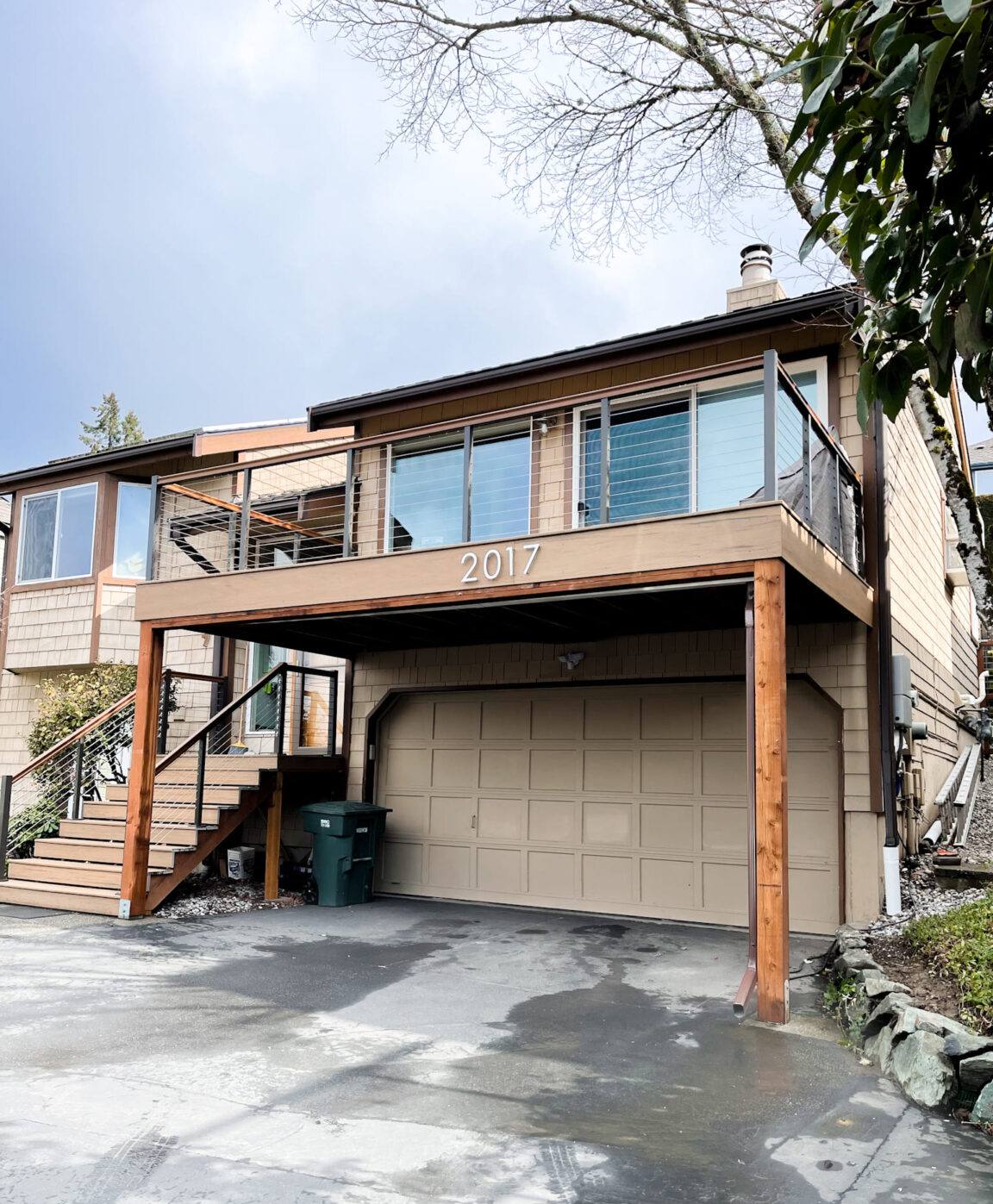
Why Decks Near Dakota Creek Wear Faster
Three regional factors do most of the damage to decks in this part of Blaine, and they usually work together rather than alone.
Salt Air
Being close to Semiahmoo Bay and the Strait of Georgia means the air here carries more salt than a deck built further inland ever has to deal with. Salt accelerates corrosion in fasteners, joist hangers, and any exposed metal hardware. A screw or hanger that would last decades in a dry inland climate can start rusting and weakening in a fraction of that time near the water. Once fasteners corrode, they lose grip strength long before the wood around them looks obviously bad — which is why so many "surprise" structural problems turn up when a repair crew finally pulls the decking boards.
Driving Rain
Pacific Northwest rain in this region doesn't just fall straight down — wind off the water pushes it sideways into ledger boards, rim joists, and any gap where flashing was skipped or installed wrong. Water that gets behind a ledger board or under a post base and can't get back out is the single most common cause of hidden rot we find on local decks. The deck can look fine from on top while the framing underneath is quietly failing.
Moss and Prolonged Dampness
Whatcom County's long, mild, wet winters give moss and algae months to establish themselves on any deck surface that stays shaded or doesn't drain and dry properly. Moss holds moisture directly against the wood or composite surface, which speeds up rot in real wood decking and can stain and degrade composite boards over time. It also makes the deck surface genuinely slick and dangerous underfoot, which is a safety issue as much as a maintenance one.
Signs a Dakota Creek Deck Needs Repair
Most deck problems out here start small and hidden, then show up as something obvious once they've gotten worse. Catching them early is cheaper and safer.
- Soft, spongy, or springy spots when you walk across the decking
- Boards that have cupped, split, or pulled away from their fasteners
- Rust streaks below joist hangers, screws, or bolts
- Visible gaps or dark staining where the deck ledger meets the house
- Railings or posts that wobble or flex more than they used to
- Persistent moss or algae that comes right back after cleaning
- Stair stringers that feel uneven, loose, or have visible cracking
- A musty smell coming from underneath the deck
Any one of these on its own might be minor. Several at once, especially soft framing plus rust plus moss, usually means water has been getting into the structure for a while and the repair needs to go past the surface.
What a Correct Repair Actually Involves
A deck repair that only replaces the boards you can see is a cosmetic fix, not a structural one. A correct repair starts from the ground up.
Structural Inspection First
Before we touch decking boards, we check the framing underneath: joists, beams, posts, footings, and the ledger connection to the house. This is where rot and corrosion actually start in this climate, and it's the part a homeowner usually can't see without pulling boards or getting underneath.
The Ledger Connection
The ledger board — where the deck attaches to the house — is the single most important connection on the whole structure, and it's also the most common place we find hidden water damage locally. Correct flashing here, installed so water sheds away from the house rather than behind the ledger, matters more than almost anything else on the repair.
Fasteners and Hardware
Given the salt air near Dakota Creek, we use corrosion-resistant fasteners and hangers rated for the exposure, not the cheapest option that happens to fit. Mixing incompatible metals, or using standard interior-grade hardware outdoors here, is a shortcut that shows up as rust and failure within a few years.
Drainage and Airflow
A repair that doesn't improve drainage and airflow under the deck is treating the symptom, not the cause. We look at board spacing, grading underneath the deck, and whether ventilation is adequate enough to let the structure actually dry out between rain events, which is what keeps moss and rot from coming right back.
Repair or Replace: How We Decide
Not every deck problem calls for a full rebuild, and not every deck is worth patching. We base the recommendation on what we find in the framing, not on what's easiest to sell.
| Condition | Usually Repair | Usually Replace |
|---|---|---|
| Surface boards worn, splintered, or faded | Yes — board replacement | Not required |
| Isolated soft spot in decking | Yes — spot repair | Not required |
| Rot limited to one or two joists/posts | Yes — sistering or section replacement | Not required |
| Rot at the ledger board or rim joist | Sometimes, if caught early | Often, if damage is extensive |
| Widespread soft framing throughout | Rarely cost-effective | Yes |
| Deck is 20+ years old with recurring issues | Case by case | Often, long-term value favors rebuild |
We'll walk you through what we actually see underneath before recommending either path, and explain the reasoning so it's your decision, not a guess.
Our Deck Repair Process
- On-site assessment — We inspect the decking, framing, ledger, posts, and footings, including getting underneath the deck where possible.
- Honest scope and estimate — You get a clear breakdown of what needs repair, what's optional, and roughly what each part costs before any work starts.
- Demo of failed material — We remove only what's actually compromised, boards, framing, or hardware, so we're not tearing into sound structure unnecessarily.
- Structural repair — Rotted or undersized framing gets sistered or replaced, ledger flashing gets corrected, and corrosion-resistant hardware goes in.
- Surface restoration — New decking boards, railings, or stair components are installed to match or upgrade the existing deck.
- Final walkthrough — We check for level, secure railings, and proper drainage before calling the job done.
Decking Material Considerations for This Climate
What you repair or replace with matters as much as the repair itself when the deck sits this close to salt air and rain.
| Material | Moisture Behavior | Maintenance | Typical Lifespan Locally |
|---|---|---|---|
| Pressure-treated wood | Resists rot when sealed regularly; end cuts are vulnerable | Annual cleaning and periodic sealing | 15-20 years with upkeep |
| Cedar | Naturally rot-resistant but still needs sealing near salt air | Regular cleaning and sealing | 15-20 years with upkeep |
| Composite decking | Won't rot, but can trap moisture against fasteners if not vented properly | Periodic cleaning to prevent moss/algae buildup | 25-30+ years |
| PVC decking | Fully moisture-resistant surface material | Low; occasional cleaning | 25-30+ years |
None of these materials are maintenance-free in this climate — the difference is how much maintenance they need and how forgiving they are of a missed year. We'll talk through what makes sense for your deck's exposure and your appetite for upkeep, rather than pushing one product line.
Keeping a Dakota Creek Deck Healthy Between Repairs
- Sweep debris and needles off the deck regularly so moisture doesn't sit trapped underneath them
- Clean moss and algae off the surface at the first sign of it, rather than waiting until it's established
- Check the ledger board area yearly for staining, gaps, or soft wood
- Keep gutters and downspouts near the deck clear so runoff isn't dumping extra water onto or under it
- Look underneath the deck once a year for rust streaks, soft framing, or standing water
- Reseal wood decking on the schedule the product calls for, not just when it looks dry
- Trim back vegetation that's shading the deck and keeping it damp longer than it should stay
Why Local Experience Matters for This Repair
A deck repair crew that mostly works drier, inland jobs will size fasteners, flashing, and ventilation for a climate that isn't this one. Working regularly in and around Blaine and Whatcom County means we already know which connection points fail first near the water, which hardware actually holds up against the salt air, and how much drainage and airflow a deck here needs to keep moss from taking over again in a year. That local pattern recognition is what keeps a repair from becoming a repeat job.
If you're seeing soft spots, rust, or moss coming back no matter what you do, we're happy to take a look and give you a straight answer on what it actually needs. Reach out for a free, no-pressure estimate using the form below.