 Blaine Window
 Building Decks That Actually Hold Up in Dakota Creek
Dakota Creek sits close enough to the water and the tree line that a deck here takes a different kind of beating than one built twenty miles inland. Salt-laden air moves in off the bay, rain comes sideways more often than straight down, and the shaded, moisture-heavy stretches of the year run long. A deck that would be fine in a drier part of Whatcom County can start showing problems in this neighborhood within a few seasons if it wasn't built with those conditions in mind.
This page is about one job, done right, in one area we know well: deck building for Dakota Creek homes. Not a general overview of decks everywhere — the specific choices that matter when the deck you're building has to survive salt air, sustained rain, and moss for decades, not just look good the first summer.
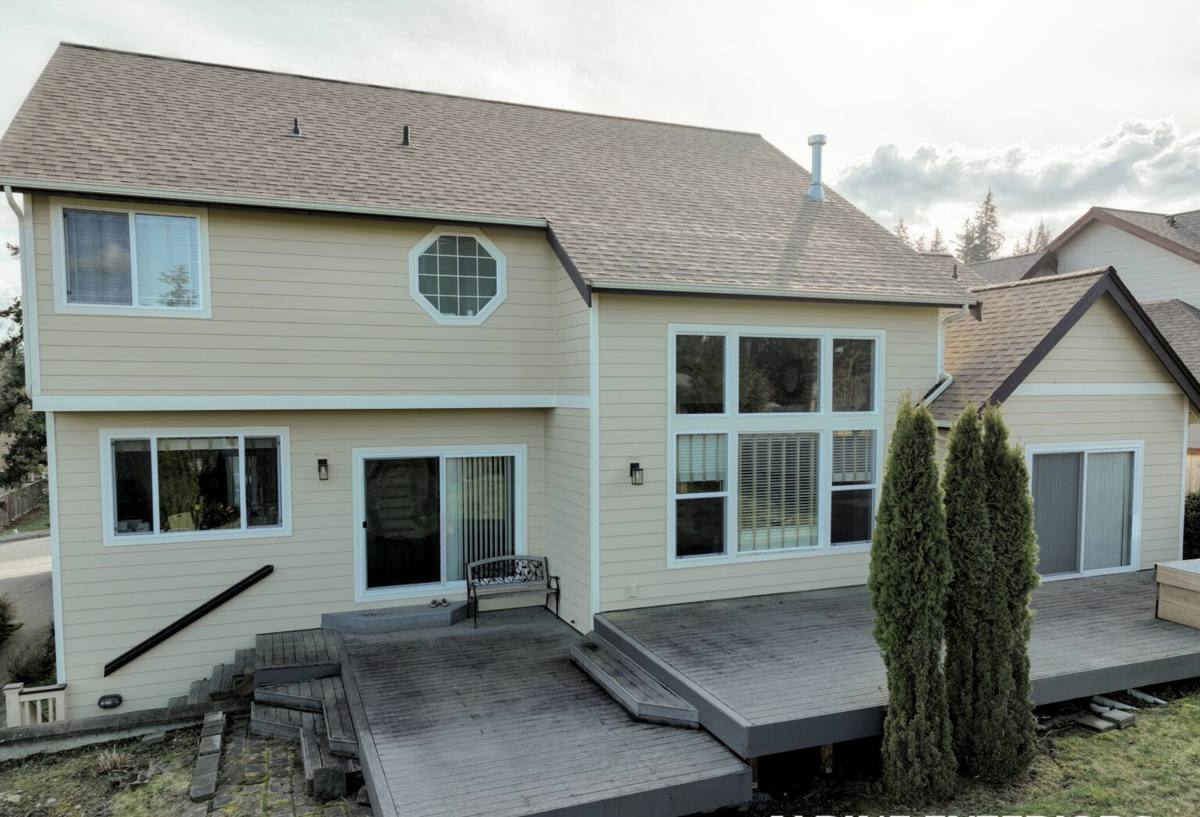
What Dakota Creek's Climate Actually Does to a Deck
Salt air
Even a mile or two inland from open water, airborne salt finds its way onto exposed metal. Over time it accelerates corrosion on fasteners, brackets, and hardware that aren't rated for it. The visible damage — rust streaks bleeding down a deck board, a loose railing bracket — usually shows up years after the actual corrosion started, underneath the surface where you can't see it.
Driving rain
Wind-driven rain doesn't just fall on a deck, it gets pushed into joints, under ledger boards, and into any gap where two pieces of material meet. A deck built assuming water only comes from straight overhead will leak at exactly those points — usually where the deck attaches to the house, which is the worst possible place for a slow leak to go unnoticed.
A long moss season
Shaded, damp conditions for much of the year mean moss and algae aren't a cosmetic nuisance here — they're a maintenance reality that shapes which materials and which construction details make sense. A deck surface that stays damp longer than it should, because of poor drainage or too little airflow underneath, will grow moss faster and hold moisture against the wood longer, which is where rot gets its start.
What a Correctly Built Deck Needs in This Environment
None of this is exotic. It's a matter of choosing the right materials and details for the actual conditions, instead of building to a generic spec and hoping the climate cooperates.
- Fasteners and structural hardware rated for coastal/corrosive exposure, not standard-grade galvanized
- Proper flashing at the ledger board where the deck meets the house — this is the single most common source of hidden water damage on any deck
- Decking material chosen with moss and moisture in mind, not just appearance or upfront cost
- Enough gap spacing between boards and enough clearance underneath for real airflow, so the deck can dry out between rains instead of staying damp
- Footings and framing sized and set for our soil and frost conditions, not a one-size-fits-all span table
- A surface texture and drainage slope that shed water instead of holding it in low spots
Decking Material Comparison for Dakota Creek Conditions
Every decking material has trade-offs. What changes in a climate like ours is how much those trade-offs actually cost you in upkeep over time — a material that's a fine choice inland can be a much bigger maintenance commitment here.
| Material | Moss / Moisture Behavior | Maintenance | Relative Cost |
|---|---|---|---|
| Pressure-treated wood | Absorbs moisture; needs sealing to resist moss and staining | Annual cleaning and periodic re-sealing | Low upfront |
| Cedar | Naturally rot-resistant but still needs care in shaded, damp spots | Regular cleaning, periodic oil or stain | Mid |
| Capped composite | Resists moisture absorption; surface texture affects how easily moss gets a foothold | Occasional washing, no sealing or staining | Mid to high upfront, lower long-term labor |
| PVC decking | Doesn't absorb moisture at all; performs consistently in wet, shaded areas | Occasional washing | Highest upfront, lowest long-term labor |
There's no universally "correct" answer here — it depends on your budget, how much of the deck sits in shade, and how much upkeep you're willing to do. What matters is that the choice is made with our actual conditions in mind, not a catalog description written for a different climate.
Why we're careful about which composite and PVC products we install
Not every composite or PVC product on the market handles our moisture and moss exposure equally well, and installation sensitivity varies by manufacturer — some systems are far less forgiving of gapping and ventilation mistakes than others. We stick to products and installation methods we've seen perform well locally over years, not just what a spec sheet promises, and we're upfront about the maintenance and warranty trade-offs of whatever you choose.
Framing and Structural Details That Matter Here
The decking surface is what you see, but the framing underneath is what determines whether the deck is still sound in fifteen years. A few details we treat as non-negotiable on every Dakota Creek deck:
- Ledger flashing: proper flashing and a drainage gap where the deck meets the house siding, so wind-driven rain can't work its way behind the ledger board
- Corrosion-rated hardware: joist hangers, bolts, and screws rated for exposure to salt-laden, moist air, not standard interior-grade fasteners
- Post footings: set to the correct depth and bearing for local soil conditions, so the structure doesn't shift with seasonal ground moisture
- Joist protection: flashing tape or equivalent protection on top of framing lumber, since joists that sit wet longest are usually the first to rot
- Under-deck airflow: enough clearance and ventilation beneath the structure that the framing can actually dry out between rain events
Living With Moss: A Realistic Maintenance Approach
No deck material in this climate is entirely maintenance-free, no matter what it's marketed as. What a well-built deck gives you is a maintenance routine that's manageable instead of a losing battle. That generally means:
- An annual wash-down before the wet season sets in, focused on shaded areas and anywhere debris collects
- Keeping gutters and nearby vegetation trimmed back so less moisture and organic debris lands directly on the deck
- Checking board gaps and drainage paths periodically to make sure they haven't clogged with needles, leaves, or dirt
- Addressing any soft spots, discoloration, or hardware rust early, before it spreads to surrounding material
Decks that get this basic attention once or twice a year hold up dramatically better here than decks left to fend for themselves.
Our Process for a Dakota Creek Deck Build
We approach every deck project in this neighborhood the same structured way:
- Site assessment: we look at sun and shade exposure, drainage patterns, soil conditions, and how close the site sits to salt air influence, since these vary even within a small area
- Design and material selection: we walk through decking, railing, and hardware options with the trade-offs specific to your site, not a generic pitch
- Permitting: we handle the local permit and inspection requirements that apply to your project
- Construction: footings, framing, flashing, and decking installed in that order, with each stage set up to protect the one built on top of it
- Final walkthrough: we go over drainage, maintenance expectations, and any warranty details before calling the job done
Why Local Experience in Dakota Creek Matters
A crew that only occasionally works this close to the water can miss things that aren't obvious until a few winters have passed — how much salt exposure a particular site really gets, where moss tends to establish first on a given lot, or which framing details actually hold up against our rain patterns versus which just look right on paper. A crew that regularly builds and repairs decks around Dakota Creek and the rest of Blaine has already seen what fails here and why, which shapes every material and framing decision before the first post goes in the ground.
That local track record also matters for permitting and inspection — knowing what Whatcom County and local building requirements expect for footings, guardrails, and stair details avoids delays and rework partway through the project.
Questions worth asking any deck contractor before you hire
- Do you rate your fasteners and hardware for coastal or high-moisture exposure?
- How do you flash and protect the ledger board connection to the house?
- What decking material do you recommend for a shaded, moisture-heavy site, and why?
- How do you handle drainage and airflow underneath the deck?
- Are you familiar with the permitting process for deck work in this area?
- What's the maintenance routine you'd recommend once the deck is built?
Let's Talk About Your Deck
Every lot around Dakota Creek handles sun, shade, and moisture a little differently, so the right build for your home depends on seeing the actual site. If you're planning a new deck or replacing one that's showing its age, we're happy to take a look and walk you through your options — no pressure, no obligation. Use the form below to request a free estimate.