 Blaine Window
 Why Custer Roofs Wear Out Differently Than Roofs Inland
Custer sits close enough to Drayton Harbor, Boundary Bay, and the Strait of Georgia that salt-laden air is a constant factor, even on properties that don't have a water view. Combine that with Whatcom County's long, wet winters and the heavy tree cover common on rural and semi-rural Custer lots, and you get a roofing environment that's genuinely tougher than what a lot of national roofing guides assume. A roof rated for a dry inland climate is not automatically the right roof for a property a few miles from Blaine's coastline.
Three things drive most of the premature roof failures we see out here: salt air accelerating corrosion on fasteners and metal flashing, driving rain that finds its way under poorly lapped or under-nailed shingles, and a moss season that can run eight or nine months out of the year on shaded, north-facing slopes. None of these are exotic problems. They're just persistent, and a roof that isn't installed with them in mind will show it years before it should.
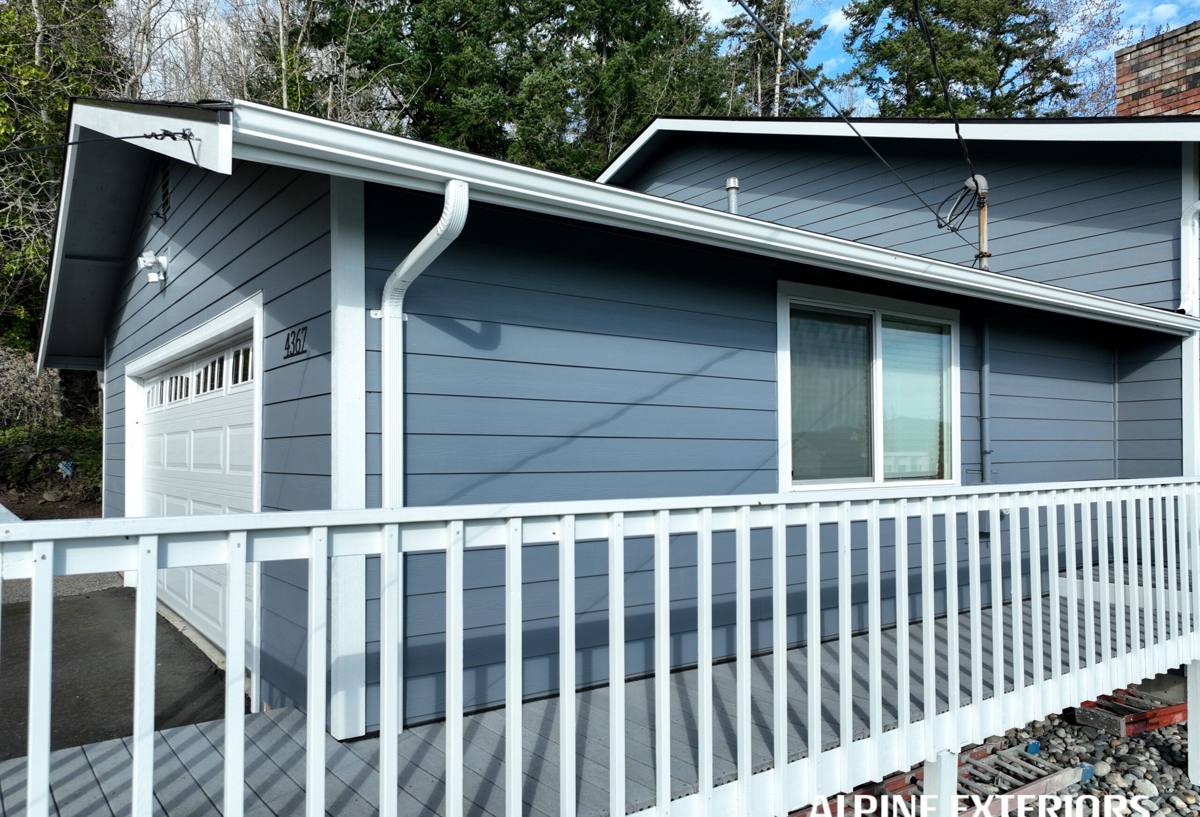
What "Correct" Actually Means on a Custer Roof
A new roof installation isn't just laying shingles over what's there. Done right, it's a sequence of decisions that each matter more here than they would in a drier climate.
Full Tear-Off, Not an Overlay
We remove the old roofing down to the deck on every install. Overlaying a new layer on top of old, moisture-compromised shingles traps rot in place and voids most manufacturer warranties outright. Tear-off also gives us the only real chance to check the deck itself for soft spots, delamination, or water staining that tells us where a leak has already been working.
Deck Inspection and Repair
In a climate this wet, we expect to find some deck sheathing that needs replacing, especially around old vent boots, chimneys, and valleys. We price this as a per-sheet allowance up front so there are no surprise change orders mid-project, and we show you what we replaced before we cover it up.
Underlayment Built for Wind-Driven Rain
Standard felt underlayment is a minimum, not a standard, for this area. We use synthetic underlayment with taped or lapped seams, and we run self-adhered ice-and-water membrane at eaves, valleys, and any low-slope transitions — the spots where driving rain off Boundary Bay tends to find weaknesses that a dry-climate install would never expose.
Flashing That Won't Corrode
Salt air is hard on bare or low-grade galvanized flashing. We flash chimneys, sidewalls, skylights, and roof-to-wall transitions with corrosion-resistant materials and proper step-and-counter-flashing technique, not just caulk and hope. Caulk fails; correctly lapped flashing doesn't rely on sealant to do the waterproofing.
Ventilation Sized for Moss and Moisture
An underventilated attic stays damp longer after our wet stretches, which feeds moss growth on the roof surface and can lead to sheathing rot from the underside. We calculate intake and exhaust ventilation to the actual square footage of the attic, not a generic rule of thumb, and correct it as part of the install rather than leaving an existing imbalance in place.
Roofing Material Options for Custer Homes
There's no single "best" roofing material — the right choice depends on your roof's slope, tree cover, budget, and how long you plan to own the home. Here's how the common options stack up specifically against Custer's salt-air, high-moisture, high-moss conditions.
| Material | Moss & Moisture Resistance | Typical Lifespan Here | Notes for This Area |
|---|---|---|---|
| 3-Tab Asphalt Shingle | Low — flat profile holds debris and moisture | 12–18 years | Least expensive upfront; shows algae staining faster in shaded areas |
| Architectural/Laminate Shingle | Moderate to good, especially with algae-resistant granules | 20–30 years | Best balance of cost and durability for most Custer homes |
| Standing Seam Metal | Excellent — sheds moss and debris, minimal seams for water entry | 40–50+ years | Higher upfront cost; needs coated or coastal-rated fasteners near salt air |
| Cedar Shake | Poor without diligent upkeep — moisture-retentive by nature | 15–25 years with maintenance | Can work on select homes but demands consistent moss/moisture maintenance |
For the majority of Custer properties we work on, an algae-resistant architectural shingle hits the right balance of upfront cost and real-world durability. Metal roofing earns its higher price tag on homes with heavy tree cover or steep, hard-to-maintain slopes where reducing moss and maintenance visits matters more than initial cost.
What Drives the Cost of a New Roof
Every roof is priced on its own specifics, but the factors that move the number are consistent. Knowing them ahead of time makes the estimate conversation more useful.
| Factor | Why It Matters |
|---|---|
| Roof pitch and complexity | Steep slopes and multiple valleys/dormers slow the crew down and increase material waste |
| Deck condition | Rotted sheathing found during tear-off adds material and labor to replace |
| Layers being removed | Tearing off two layers of old roofing costs more in labor and disposal than one |
| Material choice | Asphalt, metal, and specialty materials carry very different per-square costs |
| Access and site conditions | Tree cover, tight driveways, and dumpster placement affect labor time and setup |
| Ventilation and flashing upgrades | Correcting an underventilated attic or old flashing adds scope but prevents callbacks |
We don't quote a number without walking the roof and the attic first. A phone estimate on a re-roof is a guess, and guesses lead to change orders — we'd rather get it right the first time.
Our Installation Process
- On-site inspection. We walk the roof, check the attic for ventilation and moisture signs, and photograph problem areas before quoting anything.
- Written proposal. Material options, scope, and a firm price — including what triggers a deck-repair allowance and what doesn't.
- Scheduling around weather. We plan installs for stretches with a realistic dry window and stage materials to minimize how long the deck sits exposed.
- Tear-off and deck inspection. Old roofing comes off, the deck gets checked sheet by sheet, and any needed repairs are done before anything new goes down.
- Underlayment, flashing, and ventilation. Installed in the order and manner described above — this is where a roof's real lifespan gets decided.
- Roofing material installation. Installed to manufacturer specification, including nailing pattern and exposure, so your warranty is actually valid if you ever need it.
- Cleanup and magnetic sweep. Full site cleanup, including a nail sweep of the yard and driveway.
- Final walkthrough. We go over the finished roof with you before we consider the job done.
Signs a Custer Roof Needs Replacing, Not Just Patching
Not every roof problem calls for full replacement, but there are signs that patching is just delaying the inevitable — and often costing more in the long run.
- Granule loss heavy enough that you're finding grit in gutters and downspouts every season
- Moss established in mats, not just surface streaking, especially on north- or shaded-facing slopes
- Shingles that are curling, cupping, or cracking across multiple sections of the roof
- Daylight visible through the attic decking, or damp insulation after a rain event
- Repeated leaks in different spots rather than one isolated failure point
- Roof is approaching or past the manufacturer's rated lifespan for its material
- Flashing around chimneys, skylights, or sidewalls that's visibly rusted, lifted, or over-caulked
If you're only seeing one or two of these, a repair may still be the honest answer — we'll tell you that instead of pushing a replacement you don't need yet.
Moss, Maintenance, and What Happens After Install
No roof in Whatcom County is maintenance-free, including a brand-new one. What changes with a correct install is how much maintenance actually matters. A well-ventilated attic and an algae-resistant material slow moss regrowth significantly, but Custer's tree cover means most homes will still see some moss activity within a few years. Periodic gentle moss removal — not pressure washing, which strips granules and shortens shingle life — combined with keeping gutters clear so water isn't backing up under the eaves, is the difference between a roof that reaches its full rated lifespan and one that doesn't.
We're glad to talk through a simple maintenance rhythm at the end of a project, and we're honest that this is upkeep you can mostly do yourself or with periodic help — not something that requires us back every year.
Why a Crew That Already Works Custer Matters
Roofing crews that mostly work drier climates tend to under-spec underlayment, skip ice-and-water membrane in spots that don't need it inland, or size ventilation off a generic chart instead of the actual attic. None of that shows up as a problem on day one — it shows up two or three winters later as a leak or premature moss return. A crew that works Blaine, Custer, and the rest of Whatcom County regularly is making these decisions with this specific climate as the baseline, not as an exception.
There's also a practical side: local crews know realistic scheduling around this area's wet stretches, understand county permitting for reroofs, and aren't guessing at disposal logistics for rural or tree-covered lots. That familiarity shows up in fewer surprises during the project, not just in the finished roof.
Ready for a Straight Answer on Your Roof?
If your Custer roof is showing its age — moss, granule loss, a leak that keeps coming back — we'll come take an honest look, walk the attic, and give you a clear written proposal with no pressure to sign anything on the spot. Use the form below to request a free estimate.