 Blaine Window
 Deck Replacement Built for Cherry Point's Coastline
Cherry Point sits right on the water north of Blaine, in Whatcom County, which means every deck out here lives a harder life than one built even a few miles inland. Salt-laden air moves off the Strait of Georgia and settles into wood fibers, fastener heads, and the gaps between boards. Add Whatcom County's driving rain and a moss season that can run from October through May, and you have a climate that finds every weak point in a deck within a few years, not decades. When we talk about deck replacement in Cherry Point, we're not describing a generic Pacific Northwest deck job — we're describing a build sequenced and detailed specifically for a saltwater-exposed, high-moisture property.
Homeowners here usually call us for one of two reasons: the deck looks tired and they want to know if it's worth saving, or it already failed in a way that's obvious — soft boards, a wobbly rail post, ledger rot at the house connection. Either way, the first conversation is the same: is this a repair situation or a full replacement, and what does "done right" actually look like on a lot this close to the water.
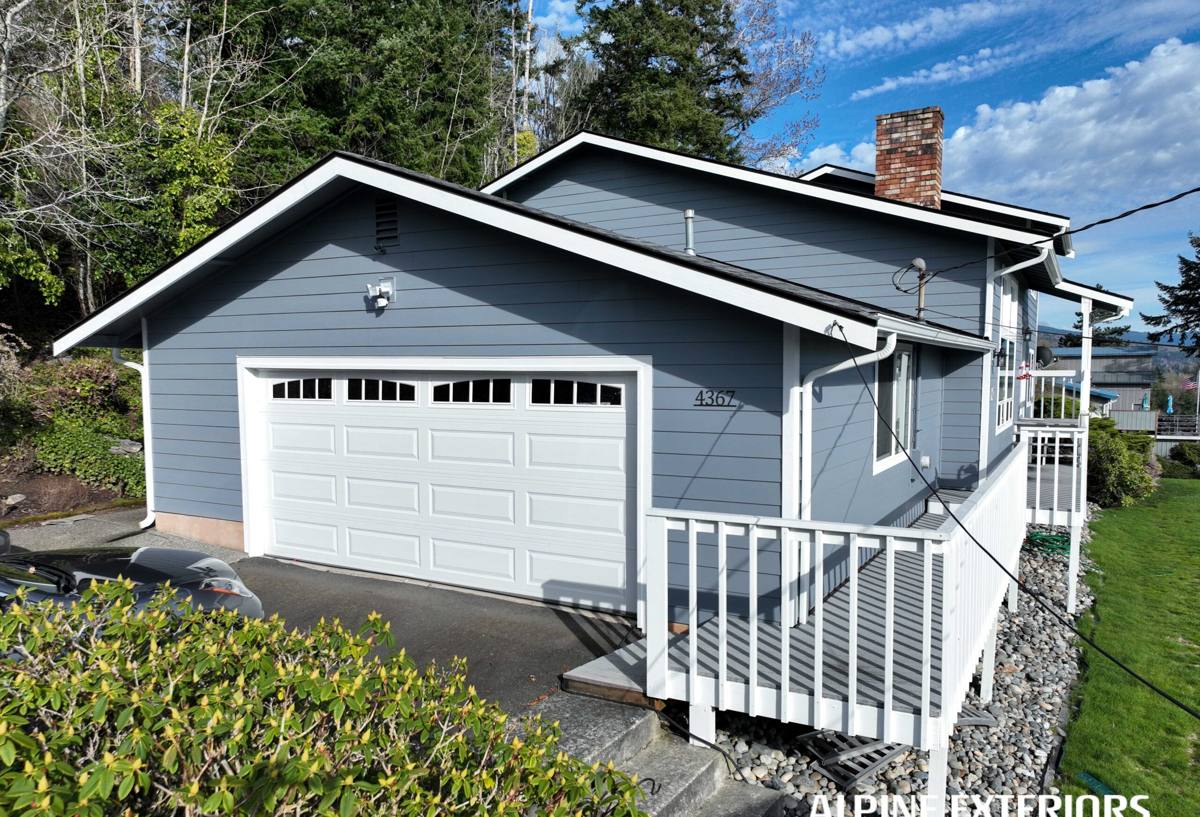
Why Cherry Point Decks Wear Out Faster
Three forces work against a deck here, often at the same time.
Salt Air and Corrosion
Airborne salt accelerates corrosion in fasteners, joist hangers, and any exposed metal hardware. A screw or hanger rated for general outdoor use inland can start showing rust streaks within a couple of seasons on a Cherry Point lot. Once a fastener corrodes, it loses holding strength long before it looks obviously bad, which is part of why a deck can seem fine and still have a structural weak point underneath.
Driving Rain
Wind-driven rain off the water doesn't just fall on a deck — it gets pushed sideways and up under railings, into end-grain cuts, and behind ledger boards. Water that gets trapped rather than shed is the single biggest cause of hidden rot, and it's almost always a flashing or drainage detail that let it in, not the decking material itself.
Moss and Prolonged Moisture
Blaine's long wet season means moss and algae get a real head start on any surface that doesn't dry out quickly — north-facing decks, shaded corners under overhangs, and areas with poor airflow underneath. Moss holds moisture against the board surface for months at a time, which softens wood fiber, degrades finishes, and turns boards slick and slippery underfoot.
Signs Your Cherry Point Deck Needs Replacement, Not Repair
Not every tired-looking deck needs a full tear-off. But a few conditions almost always mean replacement is the honest recommendation:
- Soft or spongy spots in the decking, especially near the house or at board ends
- Rust staining or visible corrosion around fasteners and hardware
- Rot at the ledger board where the deck attaches to the house — a structural and moisture-intrusion issue, not cosmetic
- Persistent moss or dark staining that returns within weeks of cleaning
- Rail posts that flex or feel loose when pushed
- A deck older than 15-20 years built with older fastening or flashing standards
If it's mostly surface graying or light moss on an otherwise sound structure, cleaning, sealing, or board-level repair may be enough. We'll tell you that plainly if it's true — a full replacement isn't the right call for every deck we look at.
What a Correct Replacement Involves Here
A deck replacement done for this environment needs more attention to a handful of details than the same job would inland.
Ledger and House Connection
This is where most rot originates on a coastal deck. Proper flashing between the ledger board and the house siding — installed so water sheds outward rather than tracking behind it — is non-negotiable. We inspect the sheathing behind the ledger before reattaching anything; if there's existing moisture damage, that gets addressed before the new deck goes up, not covered over.
Fasteners and Hardware
For a salt-air site, corrosion-resistant fasteners and structural hardware aren't an upgrade, they're the baseline. We match hardware coatings and fastener types to the framing material so galvanic corrosion isn't an issue down the road, and we keep metal connectors out of standing water paths wherever the design allows.
Framing and Drainage
Joist spacing, beam sizing, and footing depth all get set to current structural requirements, not just matched to what was there before. We also pay attention to airflow underneath the deck — a common trouble spot on shaded or low-clearance decks where moss and mildew take hold fastest.
Decking Material Choice
There's no single "best" decking material for Cherry Point — there's a best fit for your budget, sun exposure, and how much upkeep you want to do. Here's how the common options actually compare in this climate:
| Material | Moisture/Moss Resistance | Maintenance | Typical Lifespan Here |
|---|---|---|---|
| Pressure-treated wood | Good if sealed regularly; end grain is vulnerable | Annual cleaning and periodic sealing | 10-15 years |
| Cedar | Naturally moisture-tolerant, but surface needs upkeep | Regular sealing to prevent graying and moss | 15-20 years |
| Composite decking | Excellent — won't rot, resists moss buildup on the board itself | Occasional washing; no sealing | 25-30+ years |
| PVC decking | Excellent — fully synthetic, sheds water | Low; occasional washing | 25-30+ years |
Composite and PVC decking have become the more common choice for waterfront and near-waterfront properties in this area simply because they hold up to the salt-and-moisture combination with far less annual upkeep. Wood is still a legitimate choice if you're prepared for the sealing schedule it requires — we'll walk you through what that commitment actually looks like before you decide.
Our Process for Cherry Point Deck Replacement
- On-site assessment — we inspect the existing deck, ledger connection, and substructure to confirm whether repair or replacement is the right call
- Design and material discussion — sizing, railing style, decking material, and how the deck will handle sun, wind, and drainage on your specific lot
- Permitting — Whatcom County and City of Blaine permitting requirements are handled as part of the project, not left to the homeowner
- Removal and structural inspection — old decking and framing come off, and we check the ledger, rim joist, and sheathing behind it for hidden moisture damage before building over it
- Framing, flashing, and decking installation — built to current structural code with fastener and flashing choices matched to a salt-air site
- Final walkthrough — we go over drainage, railing, and any maintenance the material you chose will need going forward
Timing a Deck Replacement Around Blaine's Weather
Deck replacement can happen most of the year here, but scheduling around Whatcom County's wet season matters for both the work and the outcome. Dry framing installs faster and more reliably, and any exposed structural wood has less chance of picking up moisture before it's protected. Late spring through early fall is typically the smoothest window, though we work with homeowners on timing that fits their calendar — including projects staged to avoid the heaviest rain stretches.
Why Hire a Crew That Already Works Cherry Point
A deck built to a generic inland spec doesn't hold up here — we've replaced enough of them to know exactly which details get skipped. Crews unfamiliar with saltwater-adjacent construction often use standard-grade fasteners, skip proper ledger flashing, or don't account for how fast moss establishes in shaded, low-airflow spots. Those shortcuts don't show up as problems for a year or two, which is exactly why they keep happening — by the time the rot or corrosion is visible, the homeowner is looking at a second replacement years earlier than they should be.
Working regularly in Blaine and the surrounding Whatcom County waterfront means we're not guessing at what this environment does to a deck — we're building around it from the first framing decision. That includes knowing which fastener and hardware specs actually hold up on a Cherry Point lot, how local permitting works, and how to sequence a project around the wet season instead of fighting it.
Get an Honest Look at Your Deck
If your deck is showing rust, soft spots, rot at the house connection, or moss that keeps coming back no matter how often you clean it, it's worth a straightforward assessment before you decide what to do next. We'll give you a clear read on whether repair or full replacement makes sense, walk through material options suited to a Cherry Point property, and provide a free, no-pressure estimate — no obligation, just an honest answer.