 Blaine Window
 Cherry Point Is a Different Climate Than a Typical Whatcom County Job
Cherry Point sits right up against the water on the edge of Blaine, and that location changes what a window has to survive. You're not just dealing with Pacific Northwest rain — you're dealing with salt-laden air blowing in off the strait, wind-driven rain that hits siding and glass at an angle instead of falling straight down, and a moss and algae season that runs a good chunk of the year on anything north-facing or shaded. Windows here take a beating that inland Whatcom County homes simply don't see.
That combination is hard on window materials in specific ways: salt air accelerates corrosion on hardware and metal components, driving rain finds any weak point in flashing or sealant, and constant moisture keeps wood surfaces and vinyl seams damp longer than they'd stay in a drier part of the county. A window that's rated fine for a general Pacific Northwest install can still underperform out here if it wasn't chosen and installed with this specific exposure in mind.
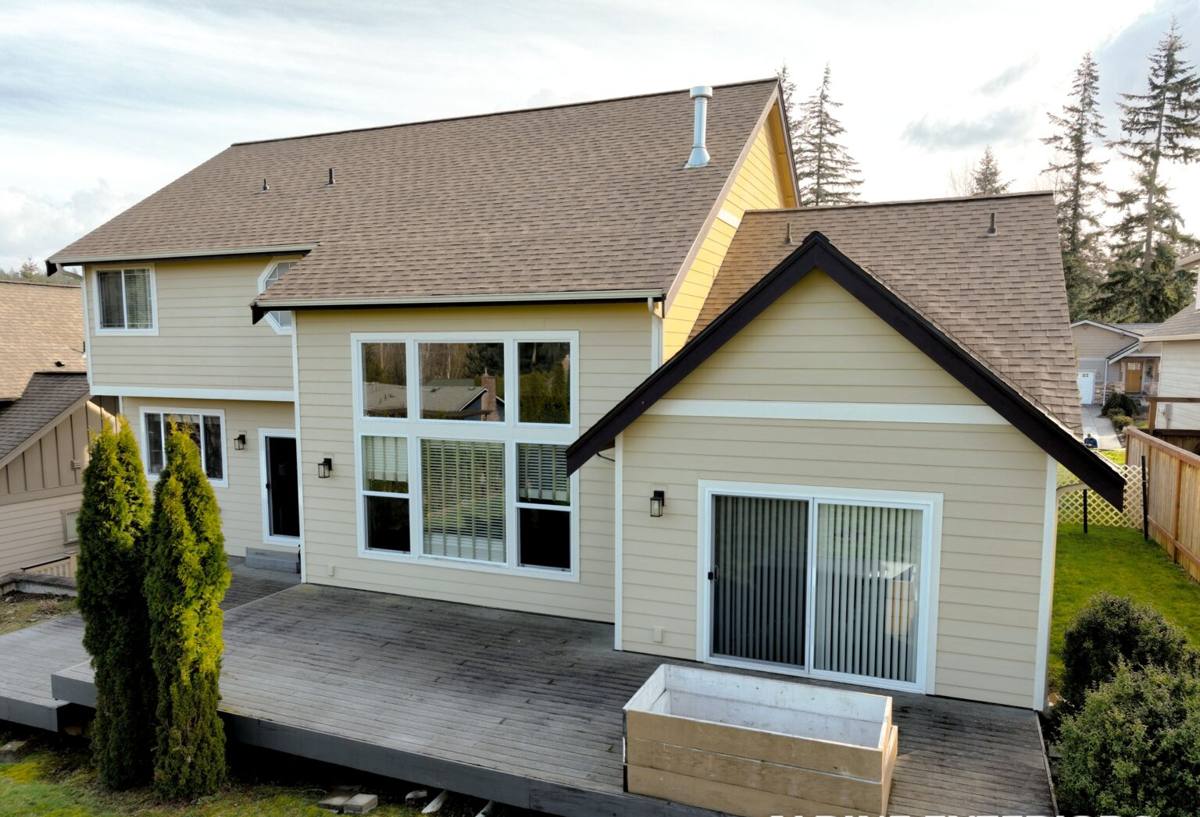
What "Custom" Actually Means for a Cherry Point Home
"Custom" gets used loosely in this industry, so it's worth being specific about what it means on a job like this. It rarely means an exotic shape or a decorative feature. Most of the time it means:
- The opening isn't a standard modern size, which is common in older homes and additions built before manufacturers standardized dimensions.
- The wall assembly needs a window built to fit the existing rough opening rather than resizing the wall to fit a stock window off the shelf.
- The home's orientation to wind and water calls for a specific glass package or frame reinforcement that a generic order wouldn't include.
- Matching sightlines and trim details across a home that's been added onto or partially updated over the years.
Custom work costs more than a stock swap because it involves real measuring, sometimes special ordering, and installation that accounts for a wall assembly that isn't a clean, modern cavity. Anyone offering to match a custom opening at stock-window pricing is usually cutting a corner somewhere — often in the flashing or shimming, which is exactly where coastal homes can't afford it.
Common Cherry Point Openings We See
Homes in this area span decades of construction, so it's common to run into single-pane originals in wood frames, older aluminum sliders from a mid-century remodel, and a mix of opening sizes even within the same house. Each of those calls for a different approach to the new window and the surrounding wall, which is part of why we measure every opening in person rather than quoting off a floor plan.
Material Options and How They Hold Up in Salt Air
There's no single "best" window material — there's a best fit for a given home, budget, and exposure. For a Cherry Point property, the honest trade-offs look like this:
| Material | Salt air / moisture behavior | Maintenance | Where it fits best |
|---|---|---|---|
| Vinyl | Won't corrode or rot; seams and hardware are the weak point over time | Low — occasional cleaning | Budget-conscious replacements, rentals, most standard openings |
| Fiberglass | Very stable in wet, salty conditions; expands/contracts close to glass, so seals last | Low | Full-exposure walls facing the water or prevailing wind |
| Wood, clad exterior | Good if cladding and flashing are done right; interior wood still needs a dry house | Higher — clad exterior helps, but detailing matters more here than inland | Homes where interior wood trim and character matter |
| Aluminum | Conducts cold and can corrode faster in salt air without a marine-grade finish | Moderate | Rarely our first recommendation this close to the water |
We don't push one material as universally correct. We'll tell you plainly if a product isn't a good match for a wall that takes direct weather off the water, and we'll say so before you've spent money on it — not after a problem shows up.
What a Correctly Installed Window Involves Here
The window unit itself is maybe half the job. The other half — and the part that actually determines whether a Cherry Point window survives its first few wet winters — is the install detailing:
- Sill pan flashing so any water that gets past the window has a path back out instead of soaking into the framing.
- Proper flashing sequencing (weather-resistive barrier lapped correctly with the flashing, not just caulked over top) so wind-driven rain can't work its way behind the trim.
- Sealant chosen for the exposure — not every exterior sealant holds up the same way under constant salt spray and UV.
- Correct shimming and squaring so the window operates and seals properly for its full service life, not just on install day.
- Insulation at the perimeter gap without overpacking it, which can bow frames on some materials.
Skipping or rushing any one of these is how a brand-new window ends up with a soft sill or a moldy corner two winters later. It's rarely the window itself that fails first out here — it's the installation detail around it.
Our Process on a Cherry Point Job
1. On-Site Assessment
We look at the actual openings, the wall assembly behind them, and the specific exposure of each elevation — a window on the water-facing side of a house needs different attention than one tucked on a sheltered wall.
2. Measuring and Product Selection
We measure every opening by hand and talk through material and glass options based on that wall's real exposure, not a generic recommendation.
3. Ordering and Scheduling
Custom units take longer to arrive than stock sizes. We'll give you a realistic timeline up front rather than an optimistic one.
4. Removal and Installation
Old units come out, the opening gets inspected for hidden rot or damage before anything new goes in, and the new window is flashed, sealed, and finished properly — including any part of the job that isn't visible once trim goes back on.
5. Walkthrough and Cleanup
We check operation on every window, clean up the site, and go over care specific to your home's exposure before we leave.
Signs Your Windows Are Losing the Fight with This Climate
It's worth catching problems before they turn into framing repairs. Watch for:
- Persistent fogging or moisture between panes on double- or triple-glazed units
- Soft or discolored wood at the sill or lower corners
- Difficulty opening, closing, or latching that wasn't there a year or two ago
- Visible moss, algae, or green staining building up on the frame or trim
- Drafts or cold spots near the window on windy, wet days
- Corroded or stiff hardware — locks, cranks, or hinges that have gone rough
- Paint or finish failing faster on window trim than on the rest of the exterior
Any one of these on its own isn't an emergency. Several at once, especially on a water-facing wall, usually means moisture is getting past the window somewhere.
Why It Matters That We Already Work This Stretch of Coastline
A crew that mostly works drier, inland jobs will spec and install a window the same way regardless of exposure — because most of their jobs don't need anything different. Working Cherry Point and the rest of the Blaine area regularly means we've seen which materials, sealants, and flashing details actually hold up here versus which ones look fine on install day and cause trouble two winters later.
That local experience also covers the practical side of the job: knowing what Whatcom County permitting typically requires for window replacements, being realistic about weather windows for exterior work on this part of the coast, and understanding how a given home's orientation to wind and water should change our recommendation. It's the difference between a generic install and one that's actually built for where the house sits.
A Quick Pre-Hire Checklist
- Do they measure and assess in person before quoting, or just go off numbers you give them?
- Can they explain their flashing and sealant approach in plain language?
- Are they upfront about lead times on custom or special-order units?
- Do they talk honestly about trade-offs between materials instead of pushing one product?
- Do they have experience with homes in this specific exposure, not just general window work?
Living With It: Maintenance That Actually Helps
Even a well-installed window in this climate benefits from a little upkeep. Rinse salt film off glass and frames periodically, especially after storms. Keep gutters and nearby drainage clear so water isn't sheeting down across window walls. Address moss or algae on trim promptly with a gentle wash rather than letting it sit and hold moisture against the finish. Check weep holes on vinyl and fiberglass units occasionally to make sure they're clear and doing their job of draining trapped water back out.
What Custom Window Work Tends to Cost Here
Every home and opening is different, so exact numbers only come from an on-site look. In broad terms, the biggest cost drivers on a Cherry Point custom job are:
| Factor | Why it moves the price |
|---|---|
| Non-standard opening sizes | Special ordering and more careful fitting than stock sizes |
| Material choice | Fiberglass and clad-wood typically cost more than vinyl but handle this exposure better |
| Wall condition behind the old window | Hidden rot or damage found during removal adds repair work before the new unit goes in |
| Number of exposed elevations | Water- and wind-facing walls may need upgraded sealant or flashing detail |
| Access and site conditions | Difficult access or extra site protection can add labor time |
We'd rather walk your home and give you real numbers than guess at a range that doesn't mean much until we've seen the openings and the wall behind them.
If your Cherry Point home has windows that are struggling against the salt air, rain, and moss this stretch of coastline throws at it, we're happy to take a look. Fill out the form below for a free, no-pressure estimate — we'll assess your specific openings and give you a straight answer on what it'll take to get them right.