 Blaine Window
 Decks Built for Cherry Point's Marine Environment
Cherry Point sits right up against the Strait of Georgia, which means homes here take a different kind of weather beating than a deck built a few miles inland in Blaine or Ferndale. Salt-laden air moves off the water and settles on every exposed surface, driving rain comes in sideways more often than straight down, and the long, damp shoulder seasons keep wood and composite surfaces wet for weeks at a time. A deck built to a generic spec sheet will show its age here faster than it should. A deck built for these specific conditions can hold up for decades.
This page covers what actually matters when you're putting a custom deck on a Cherry Point property — the material choices, the structural details, the finishing touches, and the maintenance habits that separate a deck that ages gracefully from one that needs major repair inside ten years.
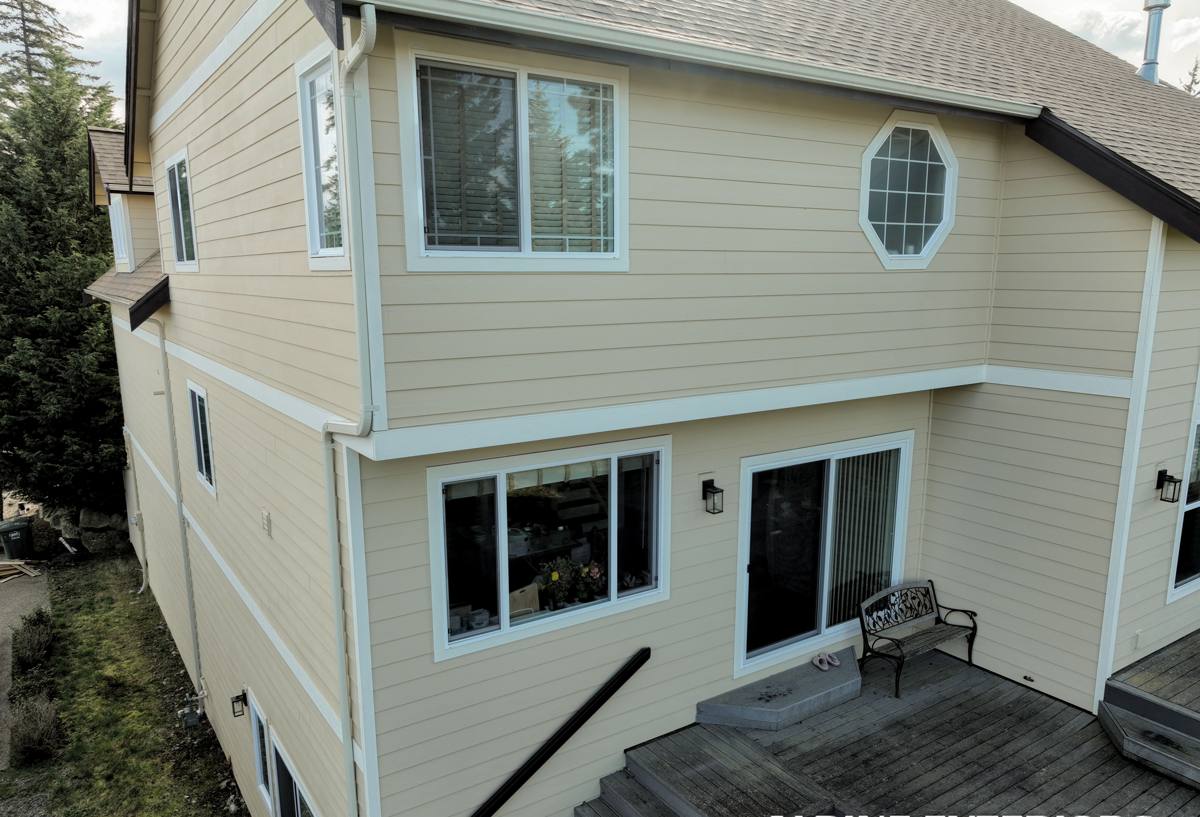
What Salt Air and Coastal Moisture Actually Do to a Deck
Homeowners moving to the area from inland communities are sometimes surprised by how fast corrosion and surface wear show up near the water. It's worth understanding the mechanics, because it changes what you should be asking for in a build.
Corrosion
Airborne salt is conductive and mildly corrosive. It accelerates rust on any fastener, bracket, or connector that isn't rated for coastal exposure. On a standard-grade deck, this shows up first at hidden structural connections — joist hangers, ledger bolts, post bases — long before it's visible on the surface. By the time rust staining bleeds through the decking boards, the hardware underneath has often been corroding for years.
Moisture cycling
Driving rain off the Strait doesn't just fall on a deck — it gets pushed under railings, into end-grain cuts, and behind ledger boards where flashing is thin or missing. Wood and even composite materials expand and contract as they wet and dry repeatedly. Over years, that cycling loosens fasteners, opens gaps at butt joints, and stresses any spot where two materials meet.
Moss and biological growth
Whatcom County's long, wet moss season (roughly October through April, longer in shaded or north-facing spots) gives moss, algae, and lichen plenty of time to establish on any deck surface that doesn't shed water quickly. Beyond looking bad, a mossy deck surface is a slip hazard and holds moisture against the boards far longer than a clean, well-drained surface would.
Choosing Decking Material for This Climate
There's no single "best" decking material for every home — it depends on your budget, how much sun the deck gets, and how much upkeep you want to do. But some materials are clearly better suited to salt air and constant moisture than others.
| Material | Salt air performance | Moss/algae resistance | Maintenance |
|---|---|---|---|
| Cedar | Good — naturally rot-resistant, but surface grays and can check over time | Moderate — needs regular cleaning in shaded areas | Annual cleaning, periodic oil or stain |
| Pressure-treated fir/hem-fir | Fair — the treatment protects the wood, but fasteners and connectors must be rated for treated lumber | Lower — rougher surface holds moisture and debris | Regular cleaning and refinishing every 2–3 years |
| Capped composite | Very good — dense, sealed surface resists salt buildup | Good — smoother surface sheds moss more easily, though it still needs washing | Occasional washing, no staining or sealing |
| PVC decking | Excellent — fully synthetic, does not absorb moisture | Good — similar to capped composite | Low — washing only |
We don't push one product on every homeowner. A shaded, north-facing deck a few steps from the water gets a different recommendation than a south-facing deck with good sun exposure, even on the same street. The right call depends on where the sun hits, how exposed the deck is to wind-driven rain, and how much time you want to spend maintaining it.
Why we're selective about lower-grade composite products
Not all composite decking is built the same way. Older-generation, uncapped composite boards can absorb moisture at cut ends and fastener holes, which leads to swelling and surface degradation faster than a fully capped board — especially in a climate this wet. Our standard is to spec capped composite or PVC where a customer wants low maintenance, and to be upfront when a cheaper composite option isn't going to hold up as well here. It's a maintenance and moisture-behavior tradeoff, not a knock on any one manufacturer.
The Structural Details That Actually Matter
The decking surface is what you see, but the framing and hardware underneath determine whether the deck is still solid in fifteen years. This is where a lot of the corner-cutting on lower-bid decks happens, because it's invisible once the boards go down.
Footings and posts
Whatcom County soils vary block to block, and near-shore properties can have different drainage and frost behavior than inland lots. Footings need to be sized and set to local code depth, on solid bearing soil, not just poured to a minimum spec. We evaluate the actual soil on site rather than assuming a standard footing will work everywhere.
Ledger attachment and flashing
The ledger board — where the deck attaches to the house — is the single most common failure point on decks in wet coastal climates. Proper flashing (not just caulk) needs to direct water away from the house band joist, with the right fasteners set at correct spacing and depth. A poorly flashed ledger is where water intrusion into the home itself usually starts, and it's often invisible until there's already rot behind the siding.
Fasteners and connectors
This is the detail most likely to get skipped on a budget build. In a salt air environment, hardware needs to be rated for both treated lumber corrosion and coastal exposure — typically stainless steel or heavy hot-dip galvanized, not standard zinc-coated screws that will start rusting within a few seasons. Joist hangers, post bases, and structural screws all need to match that standard, not just the visible fasteners on the decking surface.
Moss, Drainage, and Keeping the Surface Safe
A deck that drains well and gets some airflow underneath will fight moss growth on its own. A few design choices make a real difference over the life of the deck:
- Proper gapping between deck boards so water sheds through rather than pooling on the surface
- Adequate clearance and airflow underneath the deck, not framing tight to grade
- Sloping the deck surface slightly away from the house for drainage
- Keeping nearby vegetation trimmed back so shaded, damp pockets don't form on the deck surface
- Choosing a board profile and material that doesn't hold standing water at fastener heads
None of this eliminates the need for occasional cleaning, but it dramatically reduces how often and how aggressively you have to clean, and it keeps the surface safer underfoot through the wet months.
Railings, Stairs, and the Details People Overlook
Railings and stair systems take direct weather exposure and constant hand contact, so they show wear fast if the wrong materials or fasteners are used. Metal railing components need the same corrosion-resistant hardware standard as the framing — a good-looking railing with standard hardware will show rust streaks at every connection point within a couple of wet seasons. Stair treads, especially, need a surface that stays grippy when wet; a smooth or worn board on stairs is a real fall risk once moss or algae film forms.
We also pay attention to post attachment at the rim — this is a code-driven structural point, not just a cosmetic one, and it's one of the areas inspectors look at closely on a permitted deck.
Cost Factors on a Cherry Point Deck Project
Every deck is different, and we don't quote a project without seeing the site, but these are the main factors that move the price on a custom deck build here:
| Factor | Why it matters here |
|---|---|
| Decking material | Capped composite and PVC cost more upfront than wood but reduce long-term maintenance in salt air |
| Footing count and soil conditions | Site-specific soil and slope can require deeper or more numerous footings |
| Fastener and hardware grade | Coastal-rated stainless or galvanized hardware costs more than standard-grade connectors, but it's not optional here |
| Railing system | Metal, cable, and glass railing systems vary widely in cost and in how well they hold up to salt exposure |
| Deck size and layout complexity | Multiple levels, angles, or built-in features add labor beyond simple square footage |
| Permitting | Whatcom County and local permitting requirements factor into timeline and, in some cases, structural requirements |
How Our Process Works
We keep the process straightforward, because a custom deck is a big investment and homeowners deserve to know what's happening at each stage.
- On-site evaluation. We look at your yard's exposure — how much direct salt air and driving rain it gets, sun versus shade, existing drainage — before recommending materials.
- Design and material selection. We walk through decking, railing, and layout options with honest tradeoffs for your specific site, not a one-size-fits-all package.
- Permitting. We handle the permit process with the local jurisdiction so the footings, framing, and railings all meet code.
- Framing and structural work. Footings, posts, joists, ledger flashing, and hardware — all specified to hold up in this climate, not just meet the minimum.
- Decking, railing, and finish work. The visible layer goes on last, once we know the structure underneath is solid.
- Final walkthrough. We go over care and maintenance specific to the materials you chose before we consider the job done.
Maintenance Checklist for Cherry Point Homeowners
Whatever material your deck is built from, a few habits go a long way toward getting the full lifespan out of it in this climate:
- Sweep off standing debris and organic buildup before it has a chance to hold moisture against the surface
- Wash the deck surface at least once or twice a year, more often in shaded areas prone to moss
- Check railing connections and fastener heads annually for early rust staining
- Keep gutters and downspouts near the deck clear so runoff isn't dumping extra water onto the structure
- Re-oil or re-stain wood decking on the manufacturer's recommended schedule, not just when it looks faded
- Trim back vegetation that's shading the deck or blocking airflow underneath it
- Have the ledger flashing and structural connections inspected periodically, since these are hidden failure points
Why Hiring a Crew That Already Works Cherry Point Matters
A contractor who mostly builds decks inland or in drier parts of the state will spec the same materials and hardware they'd use anywhere. That's not negligence — it's just a different set of conditions they're used to working around. A crew that regularly builds and repairs decks along this stretch of Whatcom County shoreline already knows which fastener grades hold up, which decking profiles shed water and moss best, and where the ledger and footing details actually get tested by the weather here.
That experience shows up less in what you can see on day one and more in how the deck looks and performs five or ten years later — no rust bleeding through the boards, no soft spots at the ledger, no railing that's loosened up from moisture cycling. That's the standard we build to for every Cherry Point project.
If you're planning a new deck or replacing an aging one in Cherry Point, we're happy to come take a look and talk through what makes sense for your specific site. There's no pressure and no cost to get an estimate — just a straight answer on what your deck needs to hold up to the weather here.