 Blaine Window
 Why California Creek Homes Need a Different Approach to Siding
California Creek sits close enough to the water that homes here deal with a different set of conditions than siding manufacturers assume when they write their general installation guidelines. Salt-laden air off the bay, wind-driven rain that comes at the wall sideways instead of straight down, and a shoulder season that stays damp and shaded long enough to grow moss on anything that holds moisture — all of that adds up over the years. Siding here isn't just a cosmetic decision. It's the layer standing between your framing and a climate that never really dries out for more than a few weeks at a time.
We install siding across Whatcom County, and the homes closest to the water — including California Creek — are consistently the ones where we find the earliest and most severe siding failures on wood-based and vinyl products. That's not a coincidence. It's why this page focuses specifically on what a correct siding installation looks like out here, not siding in general.
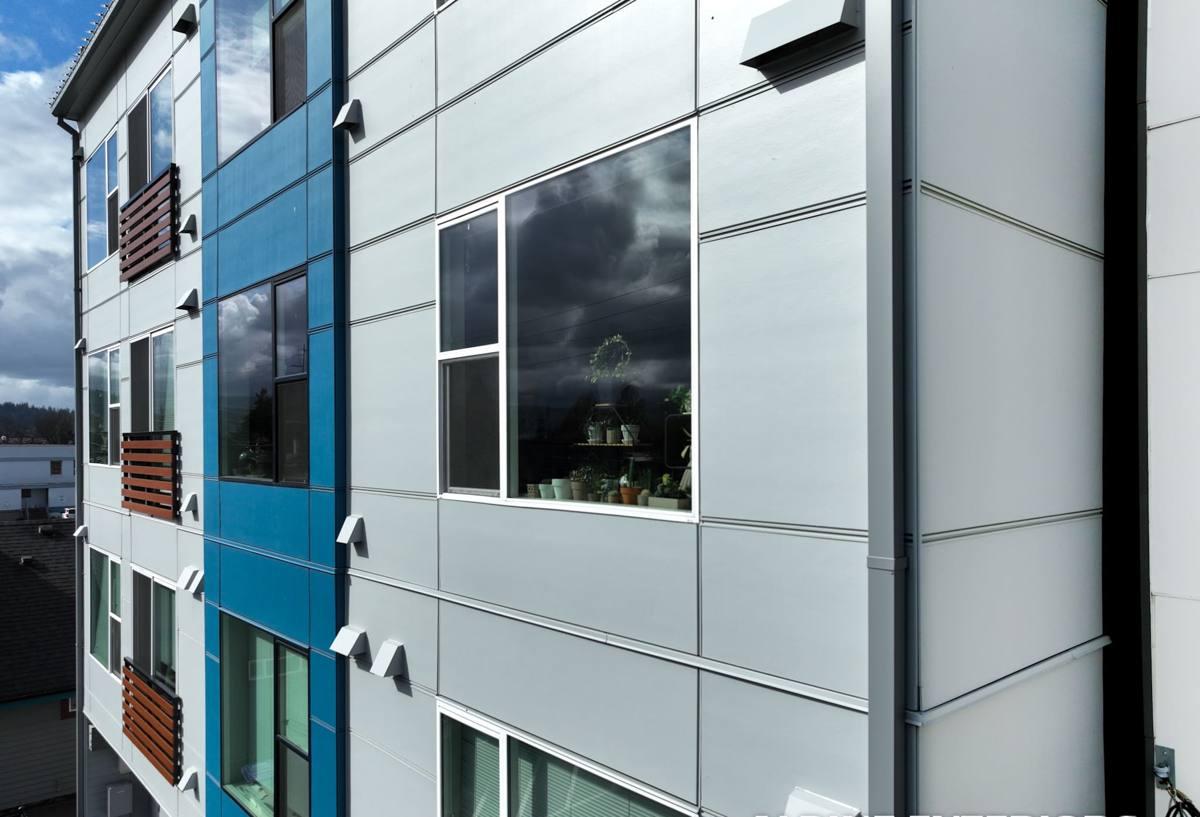
What Salt Air, Driving Rain, and Moss Actually Do to a Wall
Each of these three factors attacks siding differently, and understanding the mechanism matters when you're deciding what to put on your house and how it should be installed.
Salt Air
Airborne salt is corrosive to metal fasteners, flashing, and trim, and it's abrasive to painted and coated surfaces over time. Cheaper fastener packages and unprotected cut edges degrade faster this close to the water. It also draws moisture — salt is hygroscopic, meaning it pulls humidity out of the air and holds it against whatever surface it's settled on, which keeps siding surfaces damp longer than they would be a few miles inland.
Driving Rain
Blaine's storms frequently come off the water with real wind behind them, which pushes rain sideways into wall assemblies rather than letting it run straight down and off. That means laps, joints, and penetrations that would shed water fine in a calm rain can take on water in a wind-driven one. The installation detail — not just the material — is what determines whether that water stays on the surface or finds its way behind it.
Long Moss Season
Shaded, damp conditions for much of the year create ideal moss and algae growth on any siding surface that retains surface moisture or has a porous, absorbent face. Moss holds water against the surface even longer, which accelerates whatever damage the material was already prone to — rot in wood-based products, mildew staining in some finishes, and adhesive or seam failures in others.
What a Correct Siding Installation Involves
A siding job is only as good as what's underneath it and how the details are executed. The visible panel is the last five percent of the job — the other ninety-five percent is what determines whether it lasts fifteen years or fifty.
Tear-Off and Substrate Inspection
We don't install over existing siding. Removing the old material lets us actually see the sheathing, framing, and any window or door penetrations before they're covered again. This is usually where hidden problems from a prior installation — missed flashing, rotted sheathing sections, gaps around openings — get found and fixed instead of sealed in behind a new surface.
Weather-Resistive Barrier and Flashing
A properly lapped weather-resistive barrier, with flashing integrated correctly at every window, door, and penetration, is what actually stops wind-driven rain from reaching your framing. Siding sheds the majority of the water; the barrier and flashing behind it are what handle the water that gets past the surface. This is the single most common place we find corners cut on older installations in this area.
Rainscreen Gap
A ventilated gap between the back of the siding and the weather-resistive barrier lets any moisture that does get behind the panel drain and dry out instead of sitting against the wall assembly. In a climate with California Creek's humidity and rain patterns, this detail matters more than it would in a drier region, and it's one we treat as standard rather than optional.
Fastening and Finish
Fastener type, spacing, and placement are specified by the manufacturer for a reason — get them wrong and you create stress points where panels can crack, or gaps where water intrudes. Cut edges get sealed and touched up so the factory finish's protection isn't compromised at the one place it's most vulnerable.
Why We Install Only James Hardie Fiber Cement
We don't install vinyl siding, LP SmartSide, cedar, primed spruce, Cemplank, or Allura. That's a deliberate standard, not a lack of options. In a climate like this one, the material itself has to hold up to conditions that punish weaknesses fast.
Fiber cement is non-combustible and doesn't rot, unlike wood-based products that can absorb and hold moisture at cut edges and seams — a real liability given how long things stay damp here. James Hardie's ColorPlus factory finish is baked on under controlled conditions and backed by a real finish warranty, which matters when salt air and UV exposure are working against a painted surface year-round. Hardie also engineers specific product lines — its HZ5 and HZ10 systems — for different climate zones, so the product going on the wall is matched to the moisture and temperature profile of the region it's installed in, not a one-size-fits-all specification.
None of this means other products are unusable everywhere. It means that for the specific combination of salt exposure, wind-driven rain, and moss-friendly humidity found in California Creek, we've made a professional judgment about what we're willing to put our name behind — and fiber cement, installed correctly, is what we stand on.
How Common Siding Materials Hold Up in This Climate
| Factor | Vinyl | Wood / LP-Type Composite | James Hardie Fiber Cement |
|---|---|---|---|
| Moisture absorption at cut edges | Low, but can warp/buckle | Higher risk, needs sealed edges | Low when edges sealed per spec |
| Combustibility | Melts/deforms under heat | Combustible | Non-combustible |
| Salt air / coastal exposure | Can chalk and become brittle | Accelerated wear at joints | Engineered HZ lines for coastal/humid zones |
| Factory finish warranty | Varies by manufacturer | Varies, often shorter | Long-term ColorPlus finish warranty |
| Moss/algae surface resistance | Moderate | Lower, porous surface | Higher, engineered surface |
Our Process, Start to Finish
1. On-Site Assessment
We walk the exterior with you, look at the current siding's condition, check for signs of moisture intrusion, and talk through what's driving the project — failing siding, a remodel, or getting ahead of a problem before it starts.
2. Detailed Estimate
You get a clear, itemized proposal covering material, prep work, and any repairs the tear-off is likely to expose, so there are no surprise change orders once the walls are open.
3. Tear-Off and Prep
Old siding comes off, sheathing gets inspected and repaired where needed, and the weather-resistive barrier and flashing go in correctly before anything new goes up.
4. Installation to Manufacturer Spec
Rainscreen gap, fastener pattern, and trim details are installed to James Hardie's published specifications for this climate zone — not shortcuts, not "close enough."
5. Final Walkthrough
We review the finished work with you, cut edges are sealed and touched up, and the site is cleaned up before we consider the job done.
Signs Your Current Siding Is Already Losing the Fight
- Dark streaking, staining, or moss growth that comes back shortly after cleaning
- Soft or spongy spots when you press on the siding, especially near the bottom courses
- Visible warping, buckling, or gaps opening up between panels or at seams
- Paint that's peeling, bubbling, or chalking well before it should
- Rising exterior maintenance costs — repainting, caulking, or patching more often than feels normal
- Musty smells or interior staining near exterior walls, which can indicate moisture getting past the siding entirely
Why Hiring a Crew That Already Works California Creek Matters
A siding crew that hasn't worked this specific stretch of Whatcom County doesn't know, from experience, which walls take the worst of the wind-driven rain, how much moss pressure to expect on the shaded north sides, or how aggressively salt air degrades unprotected fasteners and trim over a five-year span. We do, because we've done this work up and down this coastline repeatedly. That translates into decisions on your job — where to add extra flashing attention, which details not to skip — that a crew coming from a drier, inland climate might not think twice about.
It also means we're familiar with the permitting and inspection process for exterior work in this part of the county, so the paperwork side of the project doesn't become its own delay.
Maintenance After Installation
Correctly installed James Hardie siding is low-maintenance, not zero-maintenance. A periodic rinse to knock off salt residue and any moss or algae starting to establish, a visual check of caulking at trim joints every year or two, and prompt attention to any impact damage will keep the system performing the way it's designed to for decades. None of that requires the kind of ongoing sealing, staining, or edge-repair that wood-based sidings demand in this climate.
If you're seeing any of the warning signs above, or you're simply planning ahead for a home in California Creek, we'd be glad to walk the exterior with you and give you a straight, no-pressure estimate using the form below.