 Blaine Window
 Roofing in California Creek: A Different Set of Rules
California Creek sits close enough to the water that homes here take on a combination most inland roofers rarely have to plan for: salt-laden air drifting off Semiahmoo Bay and the Strait of Georgia, long stretches of driving rain through fall and winter, and a moss season that can run nine months out of the year in shaded, north-facing sections of a roof. None of these factors are dramatic on their own. Together, over ten or fifteen years, they're what separates a roof that makes it to its full warranty life from one that starts failing at year twelve.
A roof replacement here isn't just "put new shingles on." It's an opportunity to correct whatever the original roof got wrong for this environment — usually ventilation, flashing detail, or underlayment choice — so the new roof actually holds up to Whatcom County's weather instead of just looking good for a season or two.
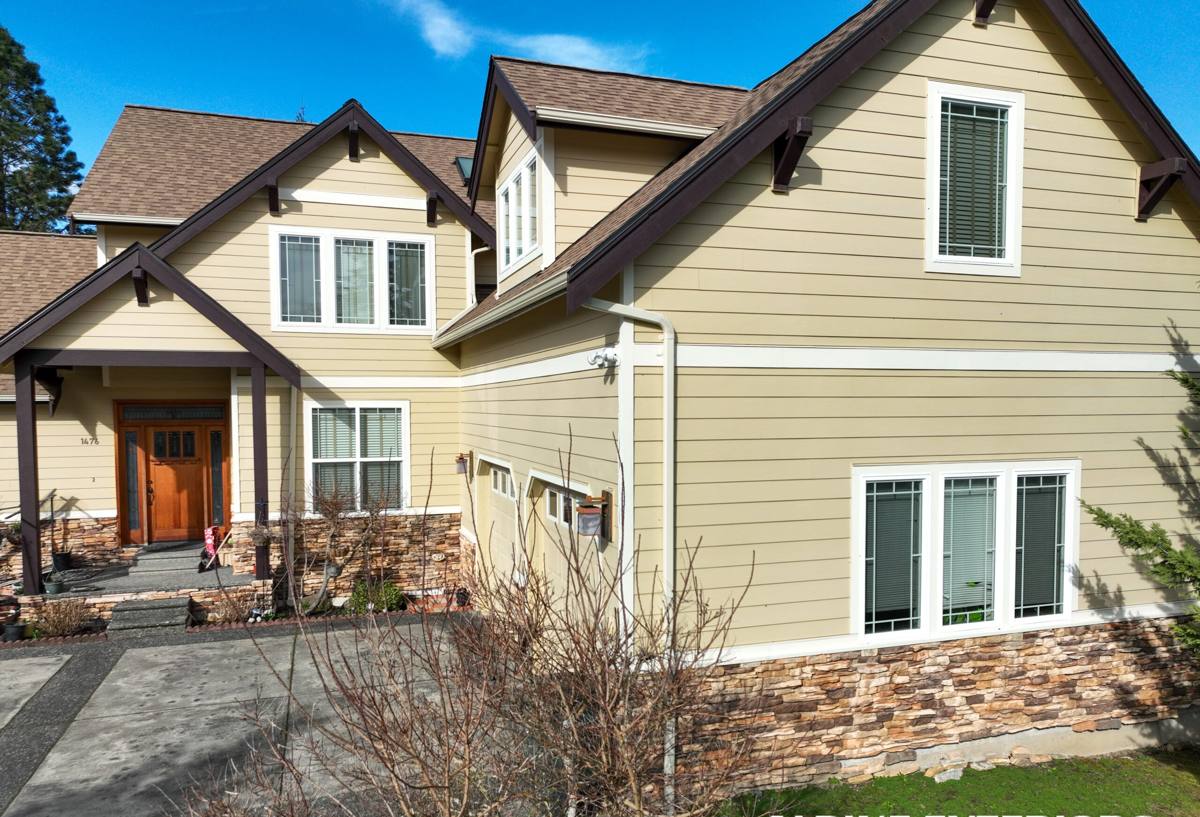
How Salt Air, Rain, and Moss Actually Damage a Roof
Salt Air and Metal Fasteners
Salt-bearing moisture accelerates corrosion on exposed metal — nail heads, flashing seams, valley metal, and vent stacks. On a roof close to the water, standard galvanized fasteners can start showing rust streaks well before the shingles themselves are due for replacement. That streaking isn't just cosmetic; it's usually a sign the coating on that fastener has broken down, which shortens its holding life.
Driving Rain
Blaine gets rain that doesn't just fall straight down — wind off the water pushes it sideways and up under laps, flashing edges, and exposed nail heads. A roofing system that's fine in a calmer climate can leak here simply because it wasn't detailed for wind-driven rain. Underlayment coverage, flashing laps, and how deep the fastener pattern is set all matter more in a coastal wind exposure than they do a few miles inland.
Moss and Shade
Moss doesn't cause damage by sitting there — it causes damage by holding moisture against the shingle surface and working its root structure under tabs and granules. On roofs with tree cover or north-facing slopes that stay damp longer, moss growth accelerates granule loss, and once granules are gone, the asphalt underneath is exposed to UV and moisture with no protection left. By the time moss is visibly thick, the shingle underneath it has usually already lost years of service life.
Signs a California Creek Roof Needs Replacement, Not Another Repair
- Granules collecting in gutters or at downspout outlets in noticeable amounts
- Shingles that are cupping, curling at the edges, or look brittle when walked
- Moss that regrows within a season or two of cleaning, especially on shaded slopes
- Rusted or streaking flashing around chimneys, vents, or valleys
- Daylight visible through the roof deck from the attic, or damp insulation after a wind-driven rain event
- Multiple past repairs in different areas rather than one isolated problem spot
- Roof age at or beyond the manufacturer's rated life, especially if it was never properly ventilated
One or two of these on their own might mean a repair is enough. Several at once — especially granule loss combined with recurring moss and aging flashing — usually means the roof system as a whole is at the end of its useful life, and patching individual spots is just delaying a full tear-off.
What a Correct Roof Replacement Involves Here
A roof replacement done right for this area isn't just a materials swap. It's a full system, and each layer earns its place:
Tear-Off and Deck Inspection
We remove the old roofing down to the deck rather than layering over it. That's the only way to actually see the deck condition — soft spots, rot around old flashing penetrations, or damage that's been hidden under the old roofing for years. Any compromised decking gets replaced before anything new goes down; installing new roofing over a weak deck just resets the clock on the same problem.
Underlayment Built for Wind-Driven Moisture
In a coastal wind exposure, we lean toward synthetic or high-quality underlayment with proper lap coverage, and self-adhered membrane in vulnerable areas — eaves, valleys, and around penetrations — where wind-driven rain is most likely to find a way in. This is the layer that saves a roof when a shingle eventually fails; it's not optional detailing, it's the backup system.
Flashing That Won't Corrode Prematurely
Chimney flashing, valley metal, and vent boots all get chosen and installed with the salt-air exposure in mind — corrosion-resistant materials, properly lapped and sealed rather than just caulked over. Flashing failures are one of the most common causes of "mystery leaks" on otherwise sound roofs, and they're almost always fixable at the install stage for a fraction of what a later leak repair costs.
Ventilation Correction
A huge share of premature roof failure in this region traces back to poor attic ventilation — trapped moisture condensing on the underside of the deck, which rots sheathing from the inside and shortens shingle life from below. Replacement is the right time to correct intake and exhaust balance, not just replace what was there before if what was there wasn't working.
Material Comparison for a Coastal Whatcom County Roof
| Material | How It Handles Salt Air & Rain | Moss Resistance | Typical Lifespan |
|---|---|---|---|
| Architectural asphalt shingle | Good with proper flashing and corrosion-resistant fasteners | Moderate; benefits from algae/moss-resistant granules | 25–30 years |
| 3-tab asphalt shingle | Adequate but thinner profile is less forgiving of wind uplift | Lower; loses granules faster under moss | 15–20 years |
| Standing seam metal | Excellent when fasteners and coatings are marine-rated | High; moss struggles to hold on smooth metal | 40–50+ years |
| Composite/synthetic shingle | Good; resists moisture absorption well | Moderate to high depending on product | 30–50 years |
We don't push one material as universally "best" — the right choice depends on the home's roof pitch, budget, HOA or neighborhood expectations, and how much shade the roof sits under. What we will do is walk through the real trade-offs: upfront cost versus lifespan, maintenance needs, and how each option actually performs under this area's specific mix of salt air, rain, and shade-driven moss.
Our Roof Replacement Process
- On-site assessment — we inspect the existing roof, attic ventilation, and deck condition, and talk through what we're seeing before quoting anything.
- Written estimate — a clear scope of work and material options, no pressure to decide on the spot.
- Scheduling around weather — in Whatcom County, timing a tear-off around dry windows matters; we plan the job to minimize how long the deck is exposed.
- Tear-off and deck repair — old roofing removed, deck inspected and repaired as needed.
- Underlayment and flashing installation — the moisture-management layer goes in before the finish material.
- Roofing installation — shingles or metal installed to manufacturer spec and to the wind/rain exposure of the site.
- Ventilation check and final walkthrough — we confirm intake/exhaust balance and walk the finished roof with the homeowner.
- Cleanup — magnetic sweep for stray fasteners and full site cleanup before we leave.
Moss Prevention After Replacement
A new roof still needs some ongoing attention in a climate that grows moss nine months of the year, especially on shaded or north-facing slopes. A few habits go a long way toward protecting the investment:
- Keep overhanging branches trimmed back so shaded sections of roof get more sun and airflow
- Clear gutters and valleys of debris each fall before the heavy rains start
- Have moss growth addressed early — light growth is easy to manage, established growth is not
- Avoid pressure washing shingles directly; it strips protective granules and can void material warranties
- Consider zinc or copper strips near the ridge on shaded slopes, which release trace metals that discourage moss regrowth over time
Why Hiring a Crew That Already Works This Area Matters
A roofer who mainly works drier, inland areas can still put on a technically fine roof — and still get the details wrong for California Creek's specific exposure, because those details simply haven't been a problem for them elsewhere. Fastener corrosion resistance, wind-driven rain detailing at laps and flashing, and ventilation sized for a consistently damp climate aren't things you notice missing until years later, when the roof starts failing early. A crew that already works Blaine and the surrounding Whatcom County coastline has seen what actually fails out here and builds for it from the start, not after a callback.
Local presence also matters for warranty follow-through and permitting. Roofing work typically requires a permit, and having a contractor familiar with the local process keeps that part of the project simple instead of becoming a delay.
What Affects the Cost of a Roof Replacement
Every roof is priced based on its own specifics, but the main variables are consistent:
- Roof size and number of planes, valleys, and penetrations
- Pitch and accessibility — steep or complex roofs take longer and require more safety setup
- Material selected — asphalt, metal, and composite carry different material and labor costs
- Deck condition — any rot or soft decking found during tear-off adds material and labor
- Ventilation corrections needed to bring the attic system up to standard
We provide a written estimate that spells out what's included, so there aren't surprises once the tear-off reveals the deck condition. Any changes get discussed and approved before the work continues.
Ready to Talk About Your Roof?
If your California Creek home is showing granule loss, recurring moss, or aging flashing, it's worth having someone look at it before another wet season adds to the damage. We offer free, no-pressure estimates — we'll walk the roof, tell you honestly what we see, and lay out your options so you can make the call on your own timeline. Fill out the form below to get started.