 Blaine Window
 Why Decks Near California Creek Wear Out Faster
If you own a home near California Creek, you already know your deck doesn't age the same way one might in a drier inland town. Between the marine air drifting up from the bay, the long stretch of rain that settles in every fall and doesn't let up until late spring, and the shade from mature trees along the creek corridor, decks here take on moisture almost year-round. That combination is exactly what breaks decks down from the inside before they ever look bad from a distance.
Salt-laden air corrodes fasteners and hardware faster than people expect, especially anything galvanized rather than stainless or coated for coastal exposure. Driving rain finds its way into every seam, screw hole, and end-grain cut that wasn't properly sealed or flashed. And the moss and algae that thrive in shaded, damp corners don't just look bad — they hold water against the wood surface, which accelerates rot in exactly the spots you can't see until you step on a soft board.
None of this means a deck near California Creek can't last. It means it has to be built and replaced with this specific climate in mind, not with generic construction assumptions from a drier part of the country.
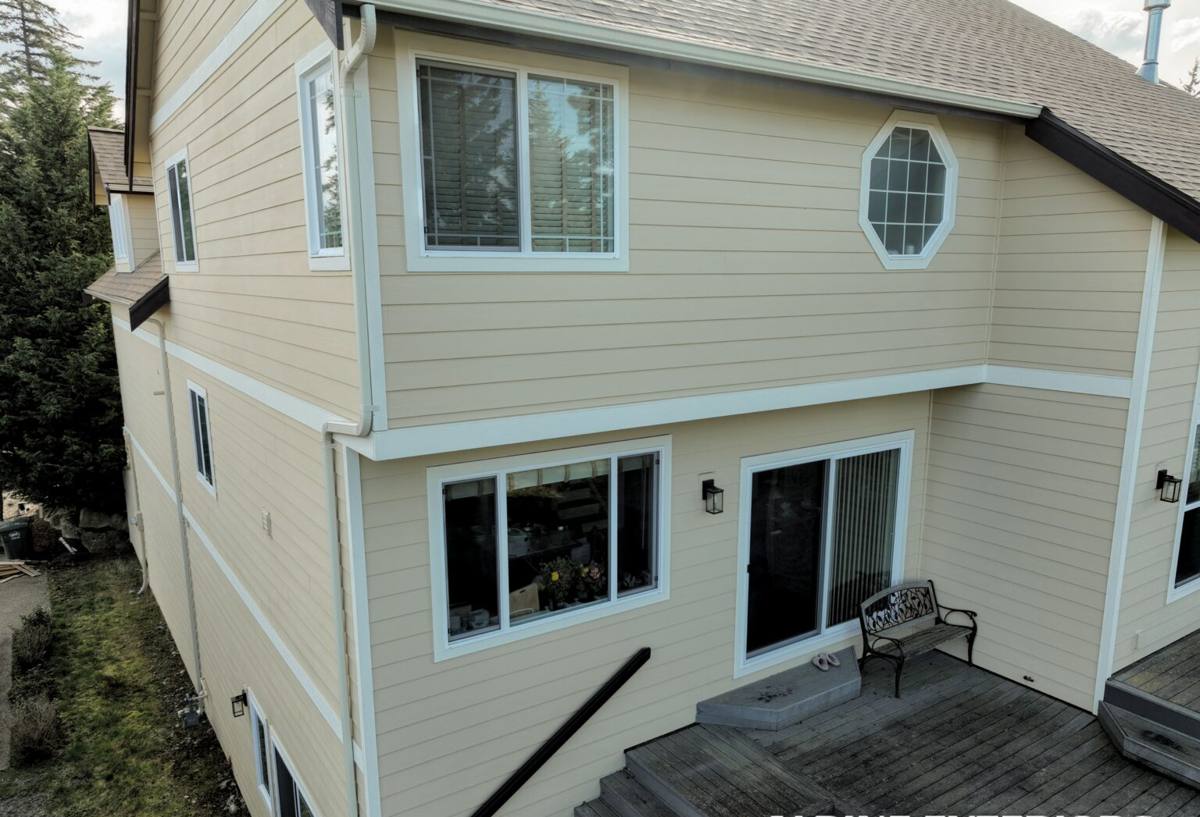
Signs You Need a Replacement, Not Another Repair
We get calls every year from homeowners who've had a deck "repaired" three or four times and are tired of chasing the same soft spot around the yard. Repairs make sense when the damage is isolated and the structure underneath is sound. Replacement makes sense once the problems are systemic — which, in this climate, tends to happen sooner than most homeowners assume.
- Boards that feel spongy, springy, or soft underfoot, especially near the house or in shaded areas
- Visible rot or dark staining where the deck attaches to the house (the ledger board)
- Fasteners that are rusted, popped up, or leaving dark streaks in the wood
- Railings or posts that wiggle or feel less solid than they did a year or two ago
- Persistent moss or algae that comes right back within weeks of cleaning
- Noticeable sag, bounce, or unevenness across the deck surface
- Support posts sitting directly on soil or a base that holds standing water after rain
If you're seeing two or more of these, it's worth having someone look at the framing underneath, not just the surface boards. A deck that looks 70% fine on top can be hiding a ledger connection or joist system that's already failed structurally.
Why Surface Damage Often Means Deeper Trouble
Decking boards are the sacrificial layer — they're meant to take the brunt of sun, rain, and foot traffic. But by the time you can see rot or soft spots on the surface, moisture has usually already been working on the framing underneath for a season or two longer. That's especially true in a shaded, damp setting like California Creek, where wood stays wet longer between dry spells than it would in an open, sunnier yard.
What a Correct Deck Replacement Involves Here
A deck replacement built for this climate isn't just swapping old boards for new ones. It's an opportunity to fix the structural and moisture-management details that caused the failure in the first place.
Ledger Board and Flashing
The ledger board — where the deck bolts to the house — is the single most common failure point we find, and it's almost always a flashing problem, not a wood problem. Water gets behind the ledger, sits against the house sheathing, and rots both the ledger and the wall framing behind it. Correct replacement means proper flashing that directs water away from this connection entirely, not just a fresh coat of sealant over the same gap.
Framing, Fasteners, and Hardware
In a marine-air environment, hardware choice matters more than it does further inland. We use fasteners and structural connectors rated for coastal or treated-lumber exposure, not standard galvanized hardware that can corrode and stain within a few seasons. Joists get proper joist tape or flashing to keep water out of the end grain, which is the fastest place for rot to start.
Drainage and Ground Contact
Post bases need to sit above grade on proper footings, not buried or resting in soil that holds water. On lots near a creek or with heavy shade, we pay close attention to how water moves under and around the deck — standing water at the base of posts is a slow-motion problem that shows up as failure years later.
Decking Material Comparison for This Climate
Material choice affects how much maintenance you'll actually do, not just how the deck looks the first year. Here's how the common options compare for a shaded, damp, salt-air setting like California Creek.
| Material | Upfront Cost | Moisture & Salt-Air Behavior | Moss/Algae Resistance | Ongoing Maintenance |
|---|---|---|---|---|
| Pressure-treated wood | Lowest | Good if sealed regularly; end grain is vulnerable | Low — needs regular cleaning | Annual cleaning and re-sealing recommended |
| Cedar | Moderate | Naturally rot-resistant but softens over time in constant damp shade | Moderate | Periodic cleaning and oiling to hold color and resistance |
| Composite (capped) | Higher | Very good — doesn't absorb water like wood | Good, though surface cleaning still needed in shaded spots | Occasional washing; no sealing or staining |
| PVC decking | Highest | Excellent — fully synthetic, no wood fiber to hold moisture | Best of the group | Lowest — mostly just periodic washing |
There's no single "right" answer here — it depends on your budget and how much upkeep you actually want to do. What we won't do is install a product without being upfront about its trade-offs. Wood costs less up front but asks more of you every year in a climate like this. Composite and PVC cost more initially but shift the ongoing burden away from sealing and staining, which matters if your deck sits in shade most of the day.
Our Deck Replacement Process
- On-site assessment. We check the ledger connection, framing, posts, and footings — not just the decking surface — so you know exactly what's failing and why.
- Honest scope and estimate. You get a clear breakdown of what needs full replacement versus what can be reused, and a straightforward cost range with no pressure to upgrade beyond what makes sense for your home.
- Removal and framing inspection. Old decking and, where needed, framing comes out so we can confirm the condition of ledger, joists, and posts before anything new goes in.
- Flashing and structural correction. This is where we fix the root causes — proper ledger flashing, coastal-rated hardware, joist protection, and drainage at the posts.
- Decking installation. Whatever material you've chosen goes in with attention to spacing and fastening that accounts for our wet-dry cycle and seasonal movement.
- Final walkthrough. We go over the finished deck with you, including what maintenance (if any) your chosen material will need going forward.
Permits and Whatcom County Requirements
Most deck replacements in this area require a permit, particularly when framing, footings, or the ledger connection are being rebuilt rather than just the surface boards. Requirements can depend on deck height, size, and how attached structures are handled near property lines or setbacks. We handle the permit process as part of the job so you're not stuck figuring out county requirements on your own, and so the finished deck is something that holds up to inspection, not just to a first glance.
Living With Your New Deck: Maintenance in a Moss-Prone, Salty Climate
Whatever material you choose, a little seasonal attention goes a long way here. Keep gutters and downspouts clear so runoff isn't dumping extra water onto or under the deck. Sweep leaves and debris out of corners before they trap moisture and feed moss growth. If you went with wood, plan on a real cleaning and resealing cycle rather than an occasional rinse. If you went composite or PVC, an annual wash with a soft brush keeps shaded areas from developing the green film that's common on decks tucked under tree cover near the creek. None of this is complicated, but skipping it is exactly how a well-built deck ends up needing early repairs.
Why Hire a Crew That Already Works Near California Creek
Deck construction that works fine in a dry, sunny climate can fail early here — not because the crew did bad work, but because they didn't build in the margin this climate demands. A contractor who already works homes near California Creek knows to flash the ledger like it's going to get tested every winter, because it will. They know which hardware holds up to salt air and which corrodes early. They know that a shaded lot needs different drainage thinking than an open one two miles away.
That local familiarity isn't a marketing point — it shows up in fewer callbacks, fewer surprises, and a deck that's still solid well past the point where a generically-built one would be showing soft spots again.
If your deck is showing any of the signs above, or you'd just like a straight opinion on repair versus replacement, we're happy to take a look. Reach out below for a free, no-pressure estimate — there's no obligation, and you'll walk away with a clear picture of what your deck actually needs.