 Blaine Window
 Board & Batten Siding, Built for Nooksack's Weather
Board and batten is one of the most requested siding profiles in Whatcom County right now, and Nooksack homes wear it especially well — the vertical lines suit the area's farmhouse and craftsman-style homes, and the deep shadow lines the battens create hold up visually against the gray-sky months better than flat lap siding does. But the look is only half the job. Out here, board and batten siding has to survive salt-laden air pushing in off the Strait of Georgia, long stretches of driving rain, and a moss season that can run most of the year on shaded north- and west-facing walls. A profile that photographs well but traps moisture behind it is a problem waiting to show up in three to five years, not a good long-term investment.
We install board and batten in one material: James Hardie fiber cement, run in the HardiePanel vertical siding system with HardieTrim battens. We don't offer it in engineered wood, primed spruce, or vinyl, and this page explains why that matters specifically for a Nooksack property.
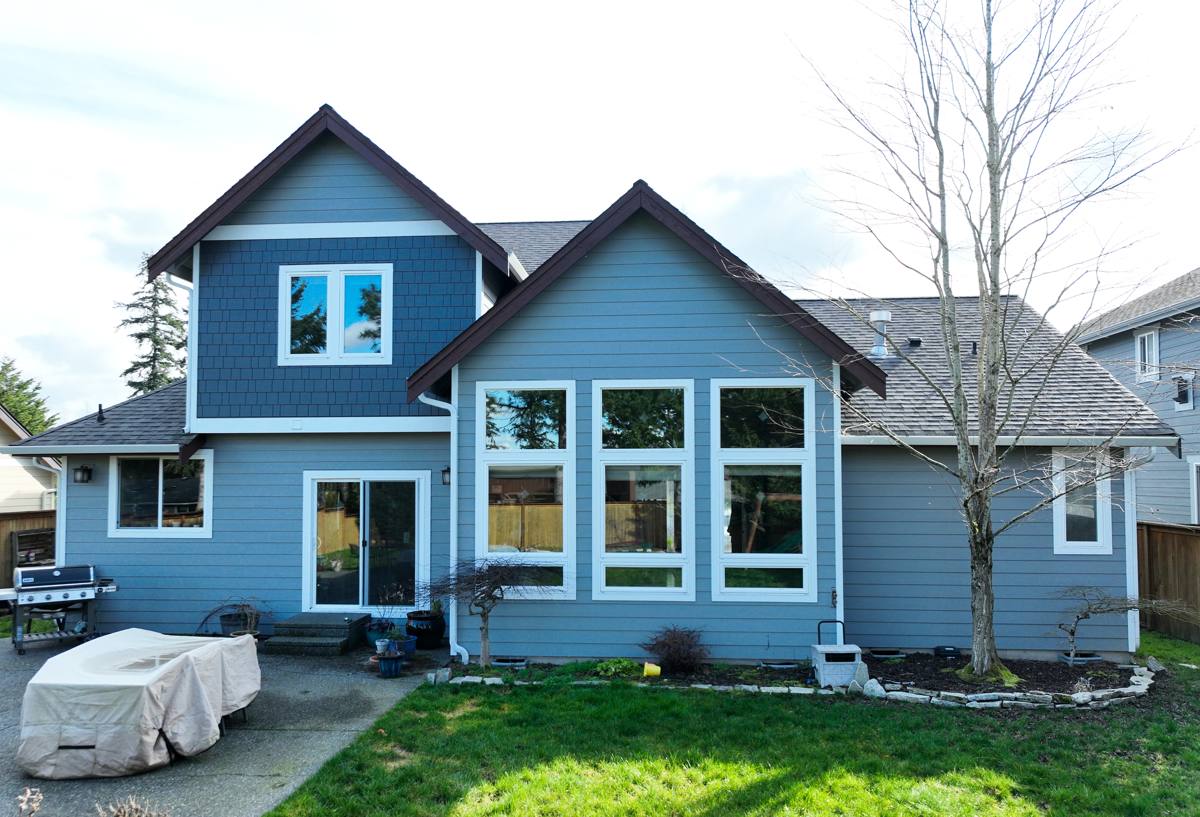
Why This Detail Is Harder Than It Looks
Board and batten looks simple — wide panels, narrow battens covering the seams — but it's one of the less forgiving siding profiles to get right. The vertical panel seams and the batten-to-panel gap are exactly the spots where wind-driven rain wants to get behind the cladding. On a coastal Whatcom County property, that rain isn't occasional; it's a seasonal reality, and it usually arrives sideways, pushed by wind off the water.
What Goes Wrong With a Rushed Install
- Battens face-nailed directly through panel seams instead of into structural framing, creating a path for water to track behind the cladding
- No rainscreen gap, so any moisture that gets behind the panel has nowhere to drain or dry
- Missing or undersized flashing at window and door heads, where board and batten's vertical lines make water shed differently than lap siding
- Batten spacing that ignores panel expansion, leading to buckling or cracked caulk lines within a couple of seasons
- Cut panel edges left unsealed, which is where fiber cement is most vulnerable to moisture intrusion
None of these are exotic failures — they're the predictable result of installing board and batten the same way a crew would install standard lap siding. The profile demands its own detailing, and that detailing matters more here than it would in a drier inland climate.
Why We Only Install James Hardie for This Profile
James Hardie's HardiePanel vertical siding is manufactured as a fiber cement product engineered specifically for board and batten and similar vertical applications. It's non-combustible, dimensionally stable in a way wood and wood-composite panels aren't, and it carries a factory-applied ColorPlus finish that's baked on rather than field-brushed. For a Nooksack home sitting in a marine climate, those properties aren't marketing points — they're the reason the siding is still doing its job a decade from now.
What We Won't Install and Why
We get asked regularly about engineered wood board and batten and about primed spruce or cedar in this profile. Both can look good on day one. The honest trade-offs:
- Engineered wood (LP SmartSide and similar): Uses a wood-strand substrate with a resin-saturated overlay. It performs reasonably in dry climates but is more sensitive to sustained moisture exposure at cut edges and seams — exactly the exposure points board and batten creates, and exactly the conditions a salt-air, high-rainfall property produces year-round.
- Primed spruce or cedar: Real wood, and it can look excellent, but it needs a maintenance commitment — recoating, caulk inspection, and moisture monitoring — that most homeowners underestimate until the siding is a few years old. In a moss-prone, high-moisture climate, that maintenance window shrinks.
- Vinyl: Not typically available in a true board and batten profile with real depth and shadow lines, and it doesn't hold up structurally to the wind loads this area sees off the water the way a rigid fiber cement panel does.
We're not saying these products are junk — we're saying we've made a professional call to standardize on the one material that holds up consistently in this specific climate, and we'd rather turn away a job than install something we don't trust to still look right in fifteen years.
Material Comparison for Board & Batten in a Marine Climate
| Material | Moisture Behavior in Coastal Climate | Maintenance | Typical Lifespan Here |
|---|---|---|---|
| James Hardie fiber cement | Won't rot, swell, or absorb water at cut edges when properly sealed and flashed | Occasional wash; ColorPlus finish holds color, no repainting cycle | 30+ years with correct install |
| Engineered wood | Vulnerable at seams and cut edges under sustained wet exposure | Requires vigilant caulk and edge inspection | Variable; shorter in wet-edge conditions |
| Primed spruce/cedar | Prone to swelling, checking, and moss growth if not maintained | Repainting and recaulking on a recurring cycle | Depends heavily on upkeep |
| Vinyl (limited profiles) | Doesn't rot, but can warp or crack under wind and temperature swings | Low, but limited to shallow-profile board and batten looks | 20-30 years, appearance degrades sooner |
Moss and Salt Air: The Two Things That Actually Age Siding Here
Whatcom County's moss season isn't a cosmetic annoyance — moss holds moisture against a wall surface, and any siding material that can absorb or wick that moisture will age faster wherever moss takes hold. Fiber cement doesn't give moss anything to feed on the way wood-based products can, but moss can still grow on the surface, and the real defense is site-specific: proper roof overhangs, correct panel-to-grade clearance, and gutters that actually route water away from the wall plane instead of dumping it down the siding face.
Salt air is the other factor, and it's often underestimated by homeowners moving inland from Blaine proper into Nooksack. Airborne salt accelerates corrosion on fasteners and metal flashing, which is why we spec stainless or hot-dip galvanized fasteners and correctly lapped flashing on every board and batten job, not just the ones directly on the water. A siding job that's fine in Bellingham's more sheltered pockets can fail faster here if the fastener and flashing spec isn't upgraded for the exposure.
Our Board & Batten Installation Process
1. Site and Exposure Assessment
We walk the home and identify which elevations take the worst of the wind-driven rain and which stay shaded long enough to grow moss. That assessment drives decisions on flashing detail, fastener spec, and where we pay extra attention to the rainscreen gap.
2. Weather-Resistive Barrier and Rainscreen
A correctly lapped weather-resistive barrier goes down first, followed by a rainscreen furring system that creates a drainage and drying gap behind the HardiePanel. This gap is what lets any incidental moisture that gets behind the cladding actually drain and dry instead of sitting against the sheathing.
3. Panel Layout and Flashing
We plan panel layout around window and door openings before cutting anything, so head and sill flashing integrates cleanly rather than being patched in around a fixed layout. Cut edges are factory-primed or field-sealed per Hardie's specification before the batten goes on.
4. Batten Installation
Battens are fastened into structural framing at the correct spacing for panel expansion, not just face-nailed through the panel seam. This is the single most common shortcut we see on other board and batten jobs in the area, and it's the detail most likely to cause problems down the road.
5. Finish and Walkthrough
ColorPlus-finished panels mean no field painting is required for the color coat. We walk the finished job with the homeowner, point out where flashing and drainage details are (even though they're hidden), and explain what routine maintenance actually looks like — which, with this system, is minimal.
What a Correct Job Should Include
- Weather-resistive barrier lapped correctly, shingle-style, top to bottom
- A true rainscreen gap behind the panel, not battens fastened flat against the WRB
- Battens fastened into framing, not just through the panel seam
- Stainless or hot-dip galvanized fasteners rated for coastal exposure
- Sealed and primed cut edges on every panel, including field cuts
- Proper head, sill, and jamb flashing at every window and door
- Correct clearance between the bottom panel edge and grade or hardscape
- A manufacturer warranty that stays intact because installation followed spec
Cost Factors for a Nooksack Board & Batten Project
Every home is different, but the variables that actually move the price on a board and batten job here are consistent:
| Factor | Why It Matters |
|---|---|
| Home size and number of stories | More surface area and higher wall sections increase material and labor time, plus scaffolding needs |
| Existing siding removal | Tear-off and disposal of old siding, plus sheathing repair if moisture damage is found underneath |
| Trim and window count | Board and batten's flashing detail work scales with the number of openings, not just wall area |
| Exposure level | Elevations facing prevailing wind and rain may need upgraded flashing and fastener detail |
| Color and finish selection | ColorPlus finish tiers vary; some premium colors carry a modest upcharge |
We give exact numbers only after seeing the home in person, since guessing at removal scope or sheathing condition from a phone call does homeowners a disservice.
Why a Local Crew Matters for This Job
Board and batten done wrong doesn't usually fail in year one — it fails in year four or five, after the crew that installed it is long gone. A crew that already works Nooksack and the surrounding Whatcom County area knows which elevations on a typical local lot take the worst weather, has already dealt with the region's moss and moisture patterns on other jobs, and specs fasteners and flashing for salt-air exposure as a default, not an upsell. That local track record is worth more than a slightly lower bid from a crew unfamiliar with this coastline.
If you're planning a board and batten project in Nooksack, we'll walk the property, talk through what your specific exposure and layout actually need, and give you a straightforward estimate — no pressure, no upsell. The form below gets you started.