 Blaine Window
 Building New Near the Water in Blaine Harbor
Putting windows into a new build is a different job than swapping out old ones, and it matters even more when that build sits close to Drayton Harbor and Semiahmoo Bay. Blaine Harbor homes take on salt-laden air, driving rain off the water, and a wet season that can stretch for months. New construction gives you one real chance to get the window opening, the flashing, and the product selection right before siding and trim close everything up. Get it right at this stage and the windows should give you decades of trouble-free service. Get it wrong, and the mistakes get sealed behind finish materials where nobody sees them until there's a stain on the drywall.
This page is specifically about new-construction window installation for homes being built or substantially framed in the Blaine Harbor area of Whatcom County. If you're replacing windows in an existing home, the considerations are different — this is about doing it correctly the first time, while the walls are still open.
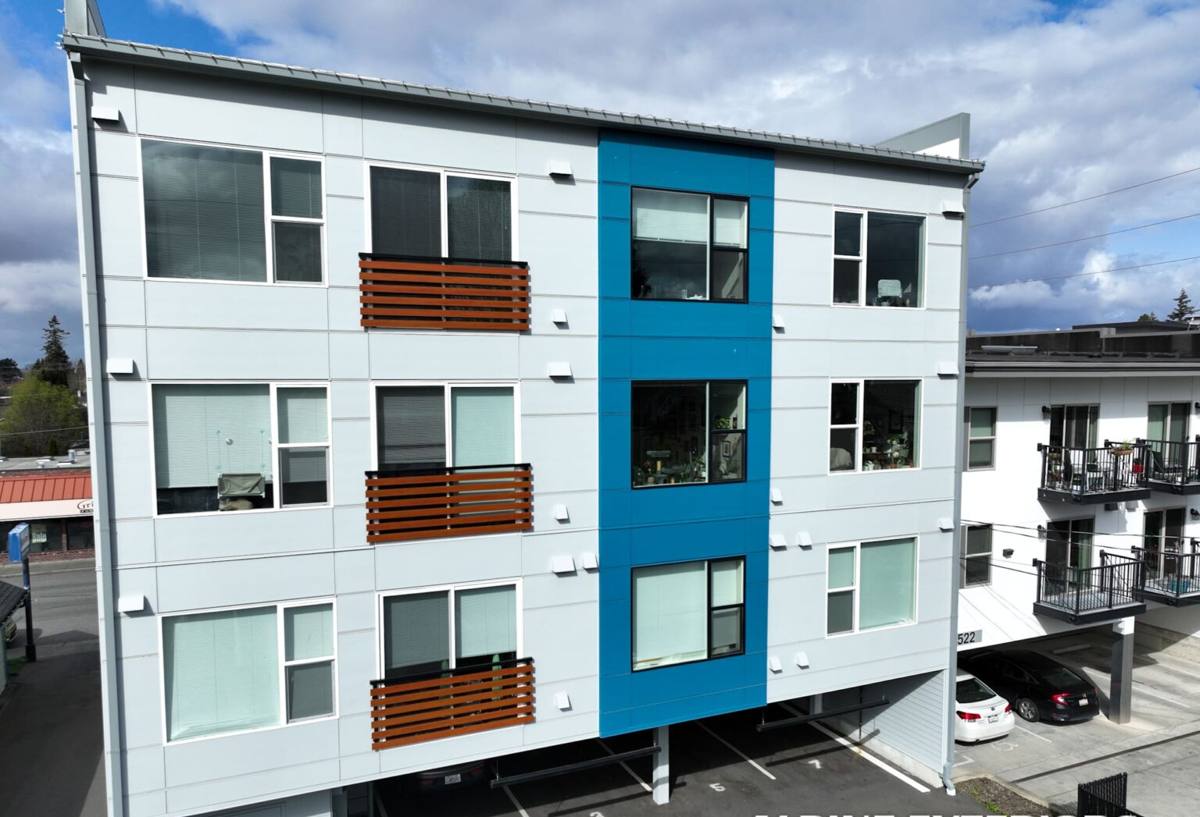
What This Climate Actually Does to a Window Opening
Whatcom County's northwest corner gets a specific combination of stressors that inland builders don't deal with as often:
Salt Air and Metal Components
Proximity to Semiahmoo Bay and the Strait of Georgia means airborne salt reaches building materials even a mile or two inland, and Blaine Harbor is closer than that for many homes. Salt air accelerates corrosion on window hardware, screws, and any exposed metal flashing that isn't rated for coastal exposure. Cheap fasteners and unprotected aluminum trim pieces show pitting and staining years before they should.
Driving, Wind-Driven Rain
Storms coming off the water don't just fall straight down — wind pushes rain sideways into wall assemblies, testing every seam around a window opening. A flashing detail that would hold up fine in a sheltered inland lot can fail on a harbor-facing wall because the water is being forced into gaps under pressure, not just running down by gravity.
A Long Moss and Mildew Season
Whatcom County's wet months run long, and constant dampness on sills, trim, and nearby siding feeds moss and mildew growth. Moss holds moisture against wood and composite surfaces far longer than open air would, which is one more reason the materials and details around the window opening need to shed water quickly rather than trap it.
New Construction vs. Replacement: Why the Sequence Matters
In a replacement job, we're working around an existing wall, trying to seal a new window into an opening that was built years ago, often with materials and methods that no longer meet current standards. In new construction, we get the opening built correctly from scratch — but that only pays off if the sequence of work is followed in the right order.
Flashing Happens Before the Window, Not After
The rough opening needs a properly lapped weather-resistive barrier and sill pan flashing installed before the window ever goes in. Water that gets past the window itself — and eventually, some always does — needs somewhere to go. A sill pan with a slight outward slope gives it an exit path instead of a place to pool against the framing.
Coordinating With the Builder's Schedule
New-construction window work has to sync with the framer, the siding crew, and whoever's doing the weather barrier. Show up too early and the opening isn't ready; show up too late and you're fighting a schedule to keep the building dried in. We coordinate directly with builders and general contractors working in the Blaine Harbor area so windows go in at the right moment — not rushed, not delayed.
Choosing a Frame Material for a Harbor-Facing Build
Every frame material has trade-offs. For a new build near the water, the right choice depends on exposure, budget, and how much upkeep the homeowner wants to take on.
| Frame Material | Coastal Performance | Maintenance | Typical Trade-Off |
|---|---|---|---|
| Vinyl | Won't corrode or rot; handles salt air well | Low — occasional cleaning | Can expand/contract more with temperature swings; frame color choices are more limited |
| Fiberglass | Very stable in wet, salty conditions; strong dimensionally | Low | Higher upfront cost than vinyl |
| Wood-clad | Good if cladding is intact; exposed wood is vulnerable to moisture and moss | Higher — finish and seals need periodic attention | Best appearance for some homeowners, but demands more long-term care in this climate |
| Aluminum | Conducts cold and can corrode without proper coatings near salt air | Moderate | We're selective about where we'll recommend it on harbor-exposed walls |
We're not going to tell a homeowner that any one brand or material is the only correct answer — it depends on the wall's exposure, the home's design, and budget. What we will say plainly: on a wall that takes direct salt spray or driving rain off the water, we lean toward vinyl or fiberglass for the frame, and if wood-clad is wanted for appearance, we make sure the cladding and sealant details are done right so the wood behind it stays protected.
Glass and Performance Specs Worth Getting Right
New construction is the easiest time to spec the right glass package, because there's no old frame limiting your options.
U-Factor
Whatcom County's marine climate is milder than inland Washington, but homes near the water still lose heat through glass on cold, windy nights. A lower U-factor keeps interior glass surfaces warmer, which also helps with condensation control — a real issue in a house that runs humid for months at a time.
Low-E Coatings and Gas Fill
A quality low-E coating and argon or krypton gas fill between panes improves both comfort and energy performance. For a harbor-facing home, we also look at how the glass package handles condensation resistance, since damp air meeting a cold pane is a daily occurrence here for a good chunk of the year.
Condensation Resistance Rating
This spec gets overlooked more than it should. A window with a strong condensation resistance rating will keep moisture from beading on the interior glass and dripping onto sills and trim — which matters directly for mildew and finish longevity in a wet climate like this one.
How We Install New-Construction Windows Correctly
The installation itself is where most long-term problems either get prevented or get built in. Our process on new builds in the Blaine Harbor area follows the same core sequence every time:
- Verify the rough opening is square, plumb, and sized correctly before the window arrives on site
- Install sill pan flashing with a slight outward slope, lapped correctly with the weather-resistive barrier
- Set the window plumb, level, and square, shimming at manufacturer-specified points — not just at the corners
- Fasten with corrosion-resistant hardware rated for coastal exposure
- Flash the head and jambs in the correct shingle-lap order so water sheds outward at every layer
- Seal per manufacturer specification — not over-sealed in a way that traps moisture behind the window
- Confirm operation of every sash and lock before final trim goes on
- Photograph flashing details before they're covered, so there's a record of what's behind the finish materials
That last step matters more than homeowners usually expect. Once siding and interior trim go on, nobody can see the flashing again without tearing something open. Documenting it during the build protects both the homeowner and us if a question ever comes up years down the road.
Our Process, From First Call to Final Walkthrough
For new-construction projects in Blaine Harbor, the process generally looks like this:
- Plan review — we look at window schedules and elevations to flag anything that needs adjusting for coastal exposure before ordering.
- Product selection — we walk the homeowner and builder through frame material, glass package, and hardware choices suited to the specific wall's sun and weather exposure.
- Scheduling with the build team — installation is timed with the framer and weather-barrier crew so windows go in at the right stage, not too early or too late.
- Installation — following the flashing and fastening sequence above, on every opening, every time.
- Walkthrough — we test operation, check seals, and go over care basics with the homeowner before we consider the job finished.
Why Local Experience in Blaine Harbor Matters
A crew that mainly works drier, inland jobs can still install a window competently — but they may not have a feel for how hard a harbor-facing wall gets tested in a January storm, or how quickly unprotected hardware corrodes this close to salt water. Working regularly in Blaine and the surrounding Whatcom County coastline means we've seen which details hold up here and which ones don't, and we build that judgment into every new-construction opening we flash and set — not just the ones that happen to face the water.
New construction is also where a local crew's relationships with area builders pay off. Knowing how framers, siding crews, and inspectors in this area sequence their work means fewer scheduling headaches and fewer windows sitting exposed to weather longer than they should be.
Get a Straight Answer for Your Build
If you're building in Blaine Harbor and want an honest read on window material, glass specs, or installation timing for your project, we're happy to take a look at your plans and talk through it — no pressure, no obligation. Use the form below to request a free estimate.