 Blaine Window
 Why Birch Point Roofs Take a Different Kind of Beating
Birch Point sits close enough to the water that its roofs live a harder life than a roof ten miles inland in Whatcom County. The same salt air that makes the area a nice place to live is slowly working on every metal fastener, flashing seam, and exposed nail head on the roof above you. Add driving rain that comes in sideways during winter storms, and a moss season that can run eight months out of the year in the shaded, damp spots, and you've got three separate stressors hitting the same roof at the same time. Most roofing problems we see out here aren't the result of one dramatic storm — they're the slow accumulation of all three, until a windstorm finally exposes the weak point.
That's the lens we bring to storm damage repair in this neighborhood. A patch job that would hold up fine in a drier, more sheltered part of Blaine can fail here in a season or two if it doesn't account for what the site actually throws at a roof.
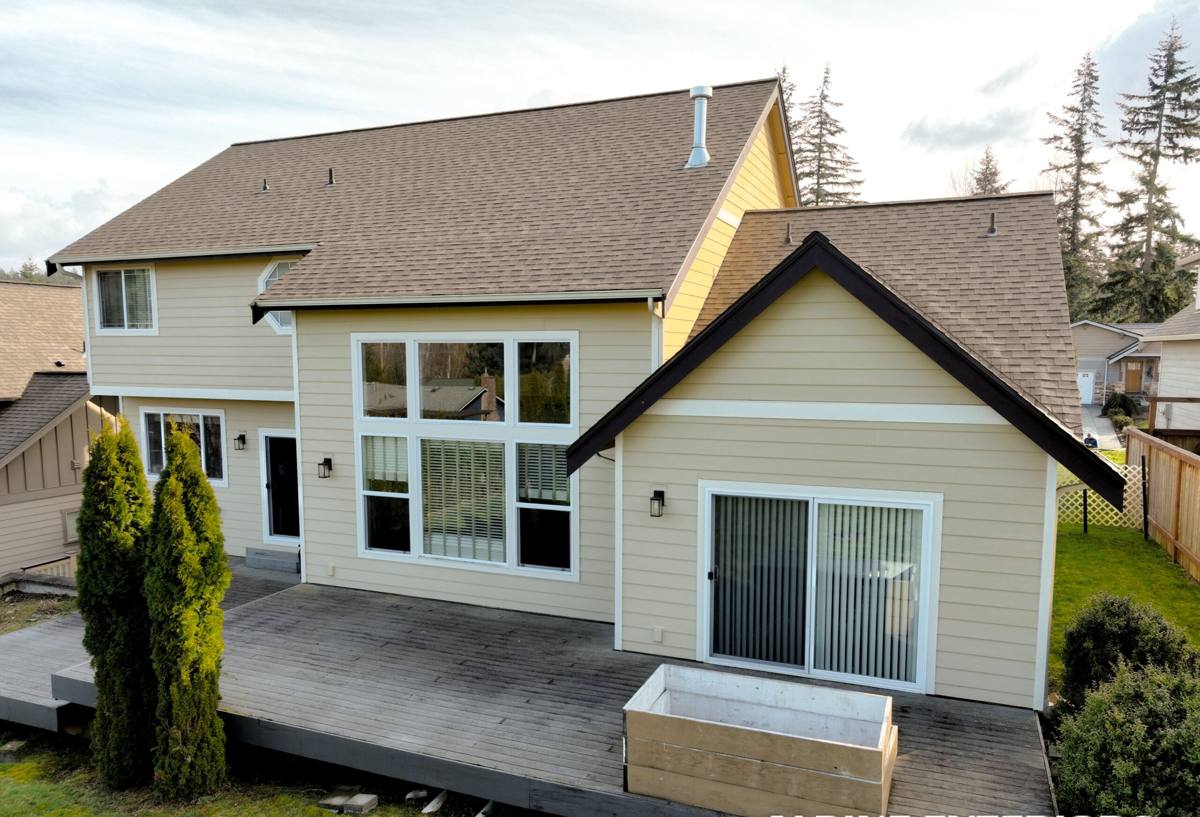
What Storm Damage Actually Looks Like on a Birch Point Roof
Wind and Gusts Off the Water
Open water exposure means fewer trees and structures to break up wind before it hits the roofline. Gusts during a winter system can lift shingle tabs, work sealant strips loose, and pull ridge cap or hip pieces away from the deck. The damage is often partial — a section of a slope, a run along a ridge, an area around a chimney or vent where wind gets under an edge and starts prying.
Wind-Driven Rain and Hidden Leaks
Rain that comes in at an angle behaves differently than rain that falls straight down. It can work its way under shingle tabs, around flashing edges, and through fastener holes that would never leak in calmer weather. This is why storm damage often shows up as a ceiling stain days or weeks after the actual event — the water found a small opening and has been tracking along the underlayment or sheathing before it finally soaks through somewhere visible.
Moss, Debris, and Blocked Drainage
Moss doesn't cause storm damage on its own, but it sets the roof up to fail when a storm hits. A moss mat holds moisture against the shingle surface, lifts edges slightly as it grows, and clogs valleys and gutters so water has nowhere to go during a heavy rain event. A roof that's been carrying a moss problem for a year or two is far more likely to lose shingles or develop a leak during a storm than a roof that's been kept clean.
What a Correct Storm Repair Actually Involves
The difference between a repair that lasts and one that fails again next winter usually comes down to whether the crew actually diagnosed the damage or just patched what was visible from the ground.
| Quick patch approach | Proper storm repair |
|---|---|
| Reseals or replaces only the shingles that are obviously missing or torn | Checks the surrounding field, valleys, and flashing for wind-lifted or cracked sealant that hasn't failed yet |
| Uses whatever fasteners and flashing are on the truck | Matches fastener and flashing material to the coastal exposure at this site |
| Ignores underlayment condition unless it's visibly torn | Checks underlayment and decking for water tracking beyond the entry point |
| Doesn't document the damage | Photographs and notes damage in a way that supports an insurance claim if needed |
A storm repair that only addresses what's visible from a ladder is a coin flip. Wind and rain rarely damage a roof in one clean, contained spot — the entry point you can see is often connected to a wider area of loosened sealant, lifted flashing, or saturated underlayment that won't announce itself until the next storm.
How We Approach a Storm Repair Call in Birch Point
1. Inspection Before Anything Else
We walk the roof (weather permitting) and check the attic or ceiling from inside where access allows. We're looking for the full extent of the damage, not just the spot that's leaking, and we check flashing, valleys, and vent boots along the way since those are common failure points in wind and driving rain.
2. A Straight Answer on Repair vs. Replacement
Most storm damage is repairable, especially when it's caught early. But if the roof is already near the end of its service life or the damage is spread across multiple areas, we'll tell you that honestly rather than stack repair after repair on a roof that needs to be replaced. You make the call — we just want you working from accurate information.
3. The Repair Itself
This means matching shingle type and, where possible, color and manufacturer so the repair doesn't stand out or create a mismatched wear pattern down the road. Flashing and fasteners are chosen for this environment, not just whatever is standard elsewhere. Underlayment is replaced wherever it's been compromised, not just resealed over.
4. Documentation for Insurance
If you're filing a storm damage claim, we document the damage with photos and a written description before and after the repair. We're not your insurance adjuster and can't promise a claim outcome, but we can make sure you're not walking into that conversation without solid documentation.
Material Choices That Actually Hold Up This Close to the Water
Salt air shortens the life of standard fasteners and lower-grade flashing. It's not dramatic — it's slow oxidation that eventually leads to a fastener backing out, a flashing seam corroding thin, or a metal edge losing its finish and becoming a weak point. On a repair, we default to corrosion-resistant fasteners and flashing rated for coastal exposure rather than the cheapest option that technically fits the hole. It costs a little more up front and saves you from doing the same repair again in three years.
Underlayment Matters More Here Than Most Homeowners Expect
In a climate with this much sustained rain and wind-driven moisture, the underlayment is doing more work than people give it credit for. When we're repairing a section of roof, we don't just lay shingles back over old, degraded underlayment — if it's compromised, it gets replaced as part of the repair, because that's the layer actually keeping water off your decking when a shingle fails.
Cost Factors for Storm Damage Roof Repair
Every repair is different, but the following factors are what actually move the price, and they're worth understanding before you get quotes.
| Factor | Why it matters |
|---|---|
| Extent of the damage | A single section repair costs far less than damage spread across multiple slopes or valleys |
| Underlayment condition | Replacing saturated or degraded underlayment adds labor but prevents a repeat leak |
| Roof pitch and access | Steeper or harder-to-access roofs take longer and require more safety setup |
| Material matching | Matching existing shingle type, age, and color can affect material sourcing and cost |
| Flashing and fastener grade | Coastal-rated materials cost more than standard grade but last longer here |
We won't quote a number without seeing the roof, but we'll walk you through exactly what's driving the estimate so there are no surprises.
After a Storm: What to Check Before You Call Anyone
You don't need to get on the roof yourself, and we'd rather you didn't after a storm when conditions are still unstable. But there are things you can safely check from the ground or inside the house that help us diagnose faster when we arrive.
- Ceiling stains, especially near chimneys, skylights, or where two roof planes meet
- Shingle pieces or granules in the yard, gutters, or downspouts after a windstorm
- Visible gaps or lifted sections along the roofline, viewed safely from the ground
- Gutters that are overflowing or pulling away from the fascia
- Any musty smell in the attic or upper floor that wasn't there before
- Soft or discolored spots on ceilings that weren't damp before the storm
If you notice any of these, it's worth getting a roof looked at sooner rather than later. A small entry point left over the winter can turn into decking damage that's a much bigger repair by spring.
Why Hiring a Crew That Already Works Birch Point Matters
A roofer who works across a wide swath of Whatcom County sees a mix of conditions — some sheltered, some exposed, some dry, some wet. A crew that regularly works the Birch Point area knows which repair details matter here specifically: the fastener grade that holds up against salt exposure, the moss patterns typical of the shaded and damp sections common to the area, and the flashing details that actually stand up to sustained, wind-driven rain off the water. That familiarity shows up in fewer callbacks and repairs that are built for the conditions they'll actually face, not generic conditions.
It also means we're not guessing at what "normal" wear looks like for a coastal Blaine roof versus what's actual storm damage. That distinction matters if you're deciding whether to file an insurance claim or simply schedule a repair.
Get a Straight Answer on Your Roof
If a recent storm left you with a leak, missing shingles, or just a nagging feeling that something's not right up there, we're happy to take a look. The estimate is free, there's no pressure to move forward, and you'll get a plain explanation of what we find and what it would take to fix it properly. Use the form below to get started.