 Blaine Window
 Why Birch Point's Shoreline Climate Is Hard on Siding
Homes along Birch Point sit close enough to the water that siding takes a different kind of beating than it does a few miles inland in Blaine or elsewhere in Whatcom County. Salt-laden air corrodes fasteners, softens paint films, and accelerates the breakdown of anything not built to handle it. Add the wind-driven rain that comes off the Strait during fall and winter storms, and you've got moisture being pushed sideways into laps, seams, and trim joints — not just falling straight down where gravity and good flashing can shed it easily.
Then there's moss and algae. The long, damp shoulder seasons this part of Washington gets — wet falls, mild grey winters, cool springs — give organic growth months at a time to take hold on north-facing walls and anything shaded by trees or neighboring structures. On the wrong siding material, that moss holds moisture directly against the surface, and that's when real damage starts, whether it's paint failure, substrate softening, or in worse cases, rot.
None of this means siding is doomed on a Birch Point home. It means the material and the installation details matter more here than they would in a drier, more sheltered part of the state.
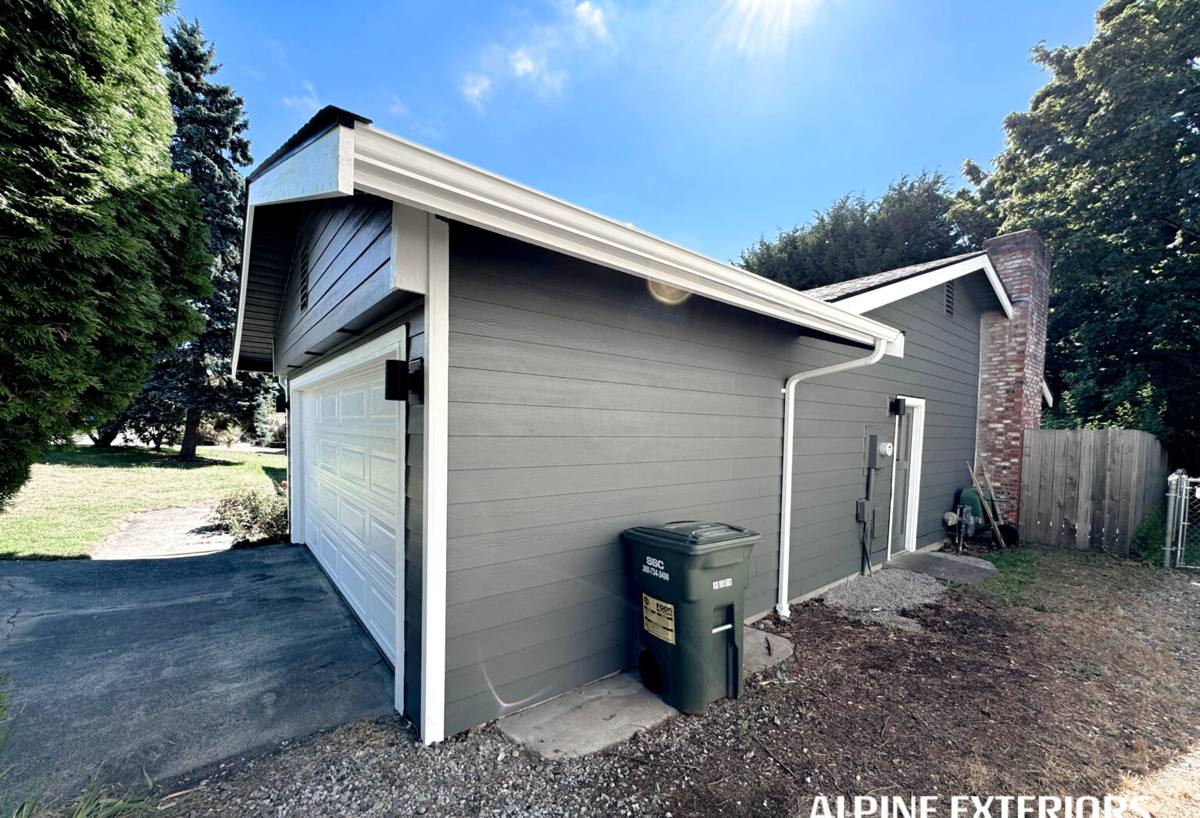
Signs Your Birch Point Home May Need Siding Replacement
Because coastal exposure accelerates wear, siding problems here often show up earlier than homeowners expect from the material's rated lifespan. Worth checking for:
- Paint that's chalking, peeling, or bubbling, especially on walls facing the water or prevailing wind
- Soft or spongy spots when you press on the siding, particularly near the bottom courses and around window and door trim
- Persistent moss or dark streaking that comes back within a season or two of cleaning
- Visible gaps, warping, or cupping in individual boards or panels
- Fastener heads showing rust bleed, or nails backing out of the surface
- Rising utility bills or noticeably drafty rooms, which can point to a failing weather-resistive barrier behind the siding
- Siding that's original to a home 20-plus years old and has never been fully replaced, only patched
Any one of these on its own might be a repair. Several at once, or damage concentrated on the weather-facing side of the house, usually means the assembly behind the siding has been compromised and a full replacement is the more honest answer.
What a Correct Siding Replacement Actually Involves
Siding replacement isn't just swapping old boards for new ones. Done right, it's a rebuild of the whole water-management system on the outside of the house — and in a location like Birch Point, cutting corners on any one layer shows up faster than it would somewhere more sheltered.
Tear-Off and Sheathing Inspection
Once the old siding is off, the sheathing underneath gets inspected before anything new goes up. This is the point where hidden moisture damage from years of wind-driven rain gets caught — soft OSB, stained framing, or trapped moisture behind old house wrap. Replacing siding over compromised sheathing just locks the problem in for another 20 years.
Weather-Resistive Barrier and Flashing Details
A new weather-resistive barrier goes on, lapped correctly from bottom to top so water is always directed outward and down. Flashing at windows, doors, and any horizontal trim gets integrated with that barrier — not caulked over as an afterthought. Given how much sideways rain this stretch of coastline sees, flashing details around openings are often the single biggest factor in whether a siding job holds up.
Fastening and Clearances
Correct fastener type, spacing, and penetration depth matter more near salt air than almost anywhere else — the wrong fastener corrodes and stains the siding face within a few years. Proper clearance between the bottom of the siding and grade, decks, patios, or roof lines also keeps splash-back moisture from wicking into the material over time.
Why We Install Only James Hardie Fiber Cement Siding
We don't install vinyl, LP SmartSide, primed spruce, cedar, or other fiber cement brands like Cemplank or Allura. That's a deliberate standard, not a lack of options. In a coastal environment like Birch Point, the trade-offs of those other products show up faster and cost more to deal with over the life of the siding.
Vinyl softens, fades, and can warp under direct sun and heat exposure, and it doesn't hold paint if a homeowner ever wants to change the color. Engineered wood products like LP SmartSide perform well when the installation is perfect and maintenance stays on schedule, but they're wood-based, which means they're more sensitive to sustained moisture exposure than fiber cement — a real concern with the rain and moss season this area gets. Primed spruce and cedar are beautiful materials, but they require ongoing painting, caulking, and moisture vigilance that most homeowners don't want to sign up for indefinitely, especially this close to the water.
James Hardie fiber cement siding is non-combustible, dimensionally stable, and engineered specifically for different climate zones — including a version built for exactly the kind of moisture exposure Birch Point deals with. The factory-applied ColorPlus finish is baked on and warrantied against fading and peeling, which matters when a house is taking direct salt spray and UV off the water. It's the product we're willing to put our name behind on every job we do.
Matching the Right Hardie Product to a Birch Point Home
HardiePlank Lap Siding, HZ5 Zone
Most Whatcom County homes, including those near the water in Birch Point, fall in Hardie's HZ5 climate zone — engineered for regions with sustained moisture and cooler, wetter weather patterns. HZ5 products are formulated to resist moisture-related damage better than the standard formulation sold in drier climates, which is exactly the kind of climate-matching that generic siding products don't offer.
Panel Siding for Accent Areas
Some homes use vertical HardiePanel siding on gables, entry accents, or mixed with lap siding for a layered look. The same climate-engineered backer applies, and detailing at panel seams gets the same flashing attention as every other joint on the house.
ColorPlus vs. Field-Applied Paint
ColorPlus finishes are factory-cured under controlled conditions, which gives more consistent color and better long-term adhesion than paint applied on site after installation. For a house exposed to salt air, that finish durability translates directly into fewer repaint cycles over the years.
Our Siding Replacement Process
- On-site assessment of existing siding, trim, and any visible moisture or rot damage
- Written estimate covering material selection, HZ5 product specs, color, and scope of work
- Full tear-off of old siding and trim, with sheathing inspected and any damaged material addressed before moving forward
- Installation of new weather-resistive barrier with correct lapping and integrated flashing at all penetrations
- Installation of James Hardie siding to manufacturer fastening and clearance specifications
- Trim, caulking, and final detail work at corners, windows, and doors
- Final walkthrough with the homeowner before we consider the job done
What Affects the Cost of a Siding Replacement in Birch Point
| Factor | Why It Matters |
|---|---|
| Home size and number of stories | More surface area and higher access needs (staging, lifts) increase labor time |
| Condition of existing sheathing | Hidden moisture damage found during tear-off may require sheathing repair before new siding goes on |
| Siding profile and trim complexity | Multiple gables, dormers, or accent details take more cutting and detail work than a simple rectangular wall |
| ColorPlus vs. primed-for-paint product | Factory finish adds cost up front but reduces repainting over the life of the siding |
| Access and site conditions | Waterfront lots with limited staging space or steep grades can affect equipment and labor logistics |
We walk every one of these through with the homeowner during the estimate so there are no surprises once tear-off starts.
Why Hire a Crew That Already Works in Birch Point
A crew that's worked this stretch of coastline knows what to look for before the first board comes off — which walls take the worst of the wind-driven rain, where moss tends to build up fastest, and how much clearance to leave near grade on lots that sit close to the water. That local pattern recognition means fewer surprises during tear-off and a better match between the product spec and what the house actually needs.
It also means a crew that's not guessing at code requirements or inspection expectations for Whatcom County. Familiarity with the area translates into a straighter, more predictable project from estimate to final walkthrough — which matters most when the whole point of the job is a siding system that's supposed to hold up for decades, not just look good on install day.
Caring for Your New Siding After Installation
James Hardie siding is low-maintenance, not no-maintenance, especially in a salt-air, high-moss environment. A simple annual routine keeps it performing the way it's supposed to:
- Rinse the exterior once or twice a year to clear salt residue, pollen, and debris, especially on walls facing the water
- Check and refresh caulking at trim joints and penetrations every few years
- Trim back vegetation and tree branches that shade siding and keep it damp longer than it needs to be
- Address moss or algae growth promptly with a gentle wash rather than letting it establish
- Walk the exterior after major storms to check for any impact damage or loosened trim
If you're weighing a siding replacement for a home in Birch Point, we're glad to take a look and talk through what your house actually needs — no pressure, no obligation. Fill out the form below and we'll set up a free estimate.