 Blaine Window
 Siding Repair in Birch Point: What the Coastal Climate Demands
Birch Point sits close enough to the water that homes there take a different kind of weathering than siding further inland in Whatcom County. Salt-laden air works into seams and fastener heads. Driving rain off the Strait pushes moisture sideways into laps and corners rather than just falling straight down. And the long, damp moss season here — stretching well past what most of the country would call "winter" — keeps north-facing and shaded wall sections wet for weeks at a time. None of that is dramatic on its own, but stacked year after year, it's exactly the kind of slow, cumulative stress that turns a small siding problem into a wall problem if it's ignored.
Siding repair in a spot like this isn't just about matching paint and patching a hole. It's about understanding why that section failed in the first place — usually moisture, sometimes wind-driven debris, occasionally just age — and fixing the actual cause, not just the symptom.
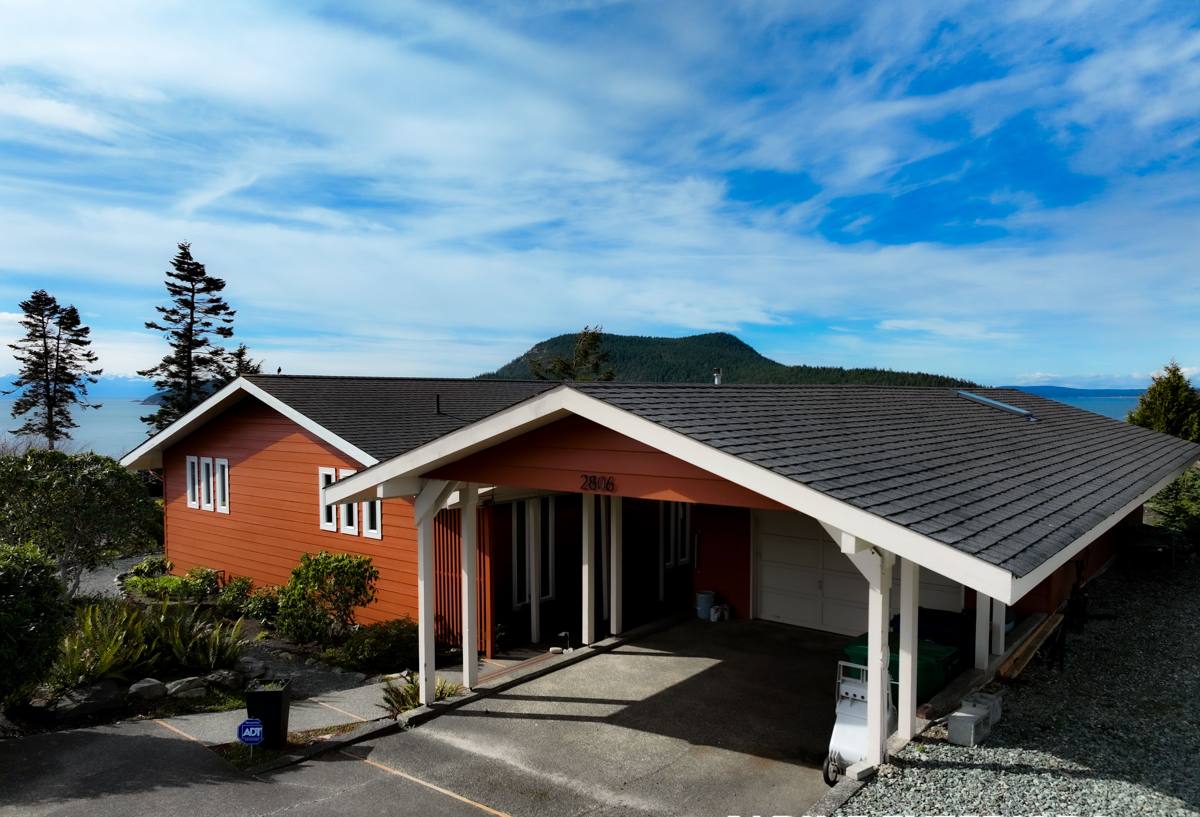
Signs Your Birch Point Home Needs Siding Repair
Coastal siding damage doesn't always announce itself. A lot of homeowners in this area don't notice a problem until it's already spread past the original spot. Here's what we tell Birch Point homeowners to watch for:
- Soft or spongy spots when you press on a board, especially near the bottom courses or around window trim
- Visible cracking, splitting, or bowing in individual boards or panels
- Paint that's peeling, bubbling, or failing faster than the rest of the house — often a sign moisture is trapped behind it
- Persistent green or black staining on north- or shade-facing walls that comes back quickly after cleaning
- Gaps opening up at seams, corners, or where siding meets trim, window frames, or the foundation
- Rust streaks around fastener heads, which usually means the fasteners themselves are compromising
- Any section that feels noticeably colder or damp on the interior wall directly behind it
Any one of these on its own might be minor. Two or three in the same area, especially anywhere that catches wind-driven rain or stays shaded most of the day, is worth a closer look before another wet season passes.
What a Correct Repair Involves
A repair that just covers the visible damage tends to fail again within a season or two, because it doesn't address what let moisture in to begin with. A repair that's actually going to hold up in a Birch Point environment involves a few steps that are easy to skip if a crew is moving fast:
1. Find the real entry point
Damaged siding is often the effect, not the cause. We look at flashing above windows and doors, caulking at trim joints, the condition of house wrap or building paper behind the siding, and whether the original installation left any gaps that salt-driven rain could work into over time.
2. Check what's behind the siding
If water has been getting behind a board for a while, there's a real chance the sheathing or framing underneath has taken on moisture too. Replacing the visible siding without checking behind it just hides the problem for another year.
3. Match materials correctly
Mixing siding products or thicknesses on a repair — even when it's not visible from the street — creates uneven expansion, uneven paint wear, and new seams that fail faster than the surrounding wall. Repairs should match the existing product as closely as possible, or the surrounding section should be brought up to a consistent standard.
4. Rebuild the water management, not just the surface
Flashing, house wrap, and proper caulking at joints matter more than the siding material itself when it comes to keeping a coastal home dry. A repair that reinstalls the same flawed flashing detail is just delaying the next repair call.
Repair vs. Replacement: How We Decide
Not every damaged section needs a full re-side, and not every home is a good candidate for a patch. We walk Birch Point homeowners through this honestly rather than defaulting to the bigger job:
| Situation | Repair usually makes sense | Replacement usually makes more sense |
|---|---|---|
| Extent of damage | Isolated to one or two wall sections | Recurring damage across multiple walls or elevations |
| Age of existing siding | Siding is younger and otherwise sound | Siding is near or past its expected service life |
| Underlying moisture | Sheathing behind the damage is dry and intact | Moisture has already reached sheathing or framing |
| Material match | Matching product is available or the difference won't compromise performance | Original product is discontinued, mismatched, or already failing house-wide |
| Root cause | Cause is localized and fixable (one bad flashing detail, one impact spot) | Cause is systemic (original install issues, house-wide moisture pattern) |
We'll tell you straight if a repair will hold, or if you'd be paying for a patch on a wall that's going to keep giving you trouble. Sometimes the honest answer is "repair this section and keep an eye on that other one" rather than a full replacement quote.
Why We Repair and Rebuild With James Hardie Fiber Cement
When a repair calls for new material — whether that's a few boards or a full wall section — we use James Hardie fiber cement, and only James Hardie. We don't install vinyl, LP SmartSide, cedar, primed spruce, or other fiber cement brands, and that's a deliberate standard, not a sales preference.
In a coastal, high-moisture, moss-prone environment like Birch Point, the material matters as much as the workmanship. Fiber cement doesn't rot, doesn't feed mold or moss the way wood-based products can, and it's non-combustible. James Hardie's ColorPlus factory finish is baked on under controlled conditions rather than field-applied, which matters a lot in an area where paint failure from trapped moisture is one of the most common complaints we see. Hardie also engineers specific product lines (HZ5) for wetter, harsher climate zones — which the Blaine coastline qualifies as — with adjusted formulations for better moisture and freeze-thaw performance.
That doesn't mean every other product is a bad product. It means that for the specific conditions this stretch of Whatcom County deals with — salt air, driving rain, and a moss season most of the country doesn't have to think about — we decided fiber cement done right was the standard we'd stand behind, and we've built our repair and installation process entirely around it. Mixing in a different material for a "quick patch" would create exactly the kind of long-term mismatch problem described above.
Our Process for Birch Point Homeowners
A siding repair visit here typically follows the same sequence:
- On-site assessment — we look at the damaged area and the surrounding wall, not just the spot you called about, since coastal moisture damage often extends further than what's visible.
- Diagnosis — we identify the actual cause: flashing failure, caulk breakdown, impact damage, age-related material failure, or a combination.
- Honest scope recommendation — repair, partial section replacement, or full replacement, explained in plain terms with the reasoning behind it.
- Repair or rebuild — including flashing and water-management corrections, not just new boards over the same flawed detail.
- Finish match — matching factory-finished color and profile as closely as the situation allows.
We don't upsell a full re-side when a targeted repair will genuinely hold up. We also won't quote a "quick patch" on a wall where we can already see the underlying problem is going to resurface next winter.
Why a Crew That Already Works Birch Point Matters
Siding repair isn't one-size-fits-all across Whatcom County. A crew that mostly works drier, inland jobs can misjudge how much moisture-driven damage has already spread behind a Birch Point wall, because the same visible symptoms mean something different this close to the water. Knowing how exposure, wind direction, and shade patterns play out on this stretch of coastline changes where we look for hidden damage and how we prioritize the repair.
There's also a practical side: familiarity with the area means fewer surprises on scheduling around weather windows, since repair work — especially anything involving flashing or house wrap — needs a dry stretch to do correctly. A crew that already knows the local pattern plans around it instead of rushing a repair into marginal conditions.
Maintenance After the Repair
A correctly done repair should hold for years, but a little upkeep goes a long way in this climate:
- Rinse siding periodically to clear salt residue and organic buildup before it establishes on the surface
- Keep gutters and downspouts clear so runoff isn't sheeting down wall sections
- Trim back vegetation that keeps a wall section shaded and damp longer than it needs to be
- Re-caulk trim joints if you notice gaps opening, rather than waiting for water to get behind the board
- Have any new soft spots, staining, or paint failure checked promptly rather than waiting for the next scheduled inspection
Catching a small issue early is almost always cheaper and less disruptive than letting it turn into a section replacement.
If you're seeing early warning signs on your Birch Point home, or you just want an honest read on whether a section needs repair versus something more, we're happy to take a look. Fill out the form below for a free, no-pressure estimate — we'll tell you what we actually see and what it would take to fix it right.