 Blaine Window
 Deck Repair Built for Birch Point's Conditions
Birch Point sits out on the water side of Blaine, close enough to the shoreline that salt air, wind, and driving rain are part of daily life for the homes there, not an occasional weather event. A deck at Birch Point takes that exposure directly, with no wall or roofline to soften it, which means the boards, hardware, and framing underneath wear down faster than they would on a similar deck a few miles inland in Whatcom County. What starts as a gray board or a slightly loose railing often has more going on underneath than it lets on from the surface.
Deck repair done right out here isn't about patching whatever looks bad and moving on. It's about correctly telling apart what's cosmetic from what's structural, using hardware and materials suited to a coastal setting, and understanding which failure points are common on this stretch of shoreline versus a sheltered inland lot. This page covers what Birch Point's climate actually does to a deck, what a correct repair involves, how we approach the work, and why a crew that already works this area gets it right the first time.
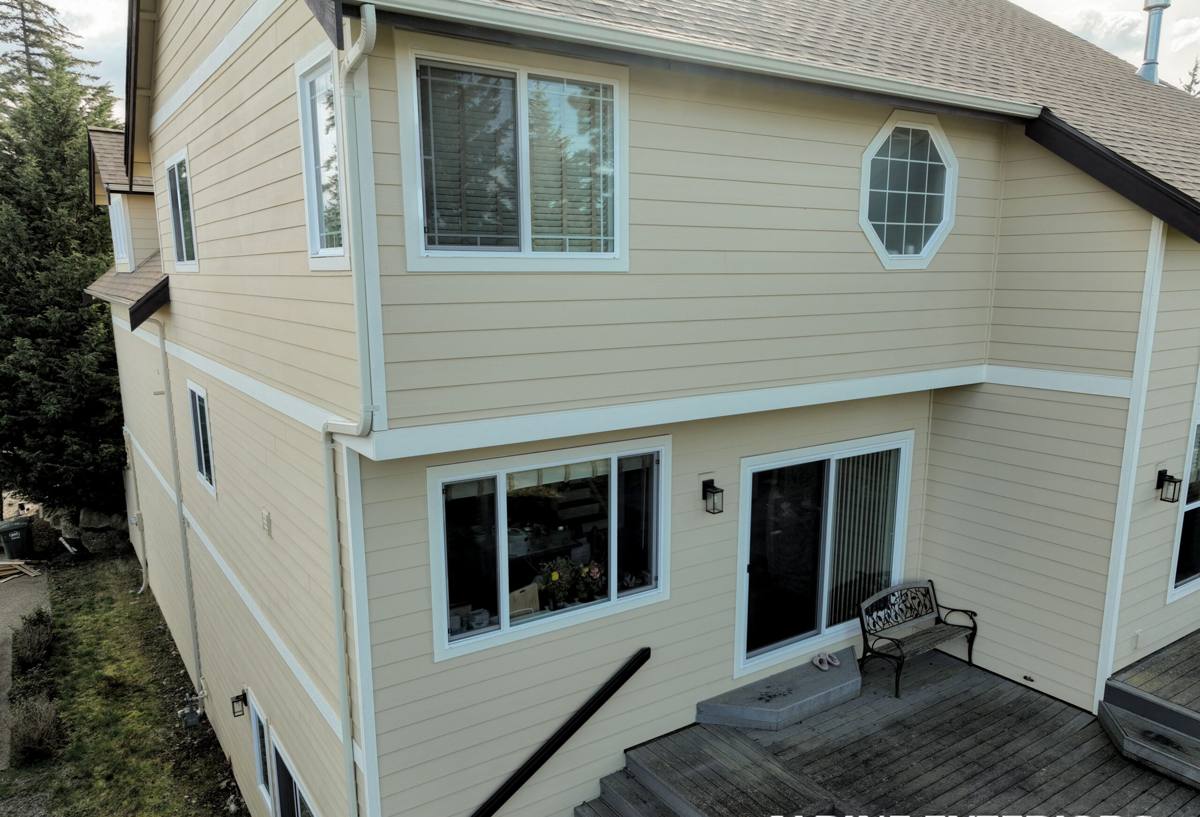
What Birch Point's Climate Does to a Deck
Salt Air Off the Water
Homes at Birch Point sit close enough to the water that salt-laden air is a near-constant presence, working on exposed metal even on days with no obvious weather to point to. That matters most for fasteners, joist hangers, and railing hardware — a fastener losing holding strength to corrosion doesn't announce itself, it just shows up later as a board that's started to lift or a railing with more give in it than it should have. On a deck this close to the shoreline, hardware condition is usually the first thing worth checking, not the last.
Driving Rain and Open Wind
Storms coming off the water at Birch Point push rain sideways rather than straight down, driving it up under railings, into ledger connections, and between boards that aren't gapped quite right. That's a different moisture load than a calm, sheltered inland deck ever has to handle, and it's why installation details that hold up fine elsewhere in the county can still fail here — the water is finding a way in from an angle the original build didn't fully account for.
A Moss Season That Runs Most of the Year
Mild temperatures and near-constant dampness give moss and mildew a long growing season in this part of Whatcom County, and a horizontal deck surface is one of the first places it takes hold, since it holds water longer than a vertical wall and stays damp between rain events. Shaded areas and north-facing sections of a deck are usually first to show it, and any decking material with even a little surface porosity gives moss something to grip onto over time.
Cosmetic Wear vs. Structural Problems
Not every issue on a Birch Point deck calls for the same response, and getting that distinction right is the real starting point of an honest repair estimate.
| Symptom | Usually Cosmetic | Often Structural |
|---|---|---|
| Grayed or weathered wood surface | Yes — sun and salt-air weathering | Only if boards are also soft or splitting deeply |
| Squeaking or slight bounce underfoot | Sometimes — loose board fasteners | Often — loosened joists or hangers |
| Railing that flexes or wiggles | Rarely | Usually — loose posts or corroded hardware |
| Soft or spongy spot in decking | No | Yes — rot or moisture damage below the surface |
| Rust staining around fastener heads | Cosmetic if isolated | Can point to hardware failure underneath |
| Gap or shift where deck meets house | No | Yes — ledger connection needs immediate attention |
Cosmetic wear affects appearance and can usually wait for a routine maintenance visit. Structural issues affect the deck's ability to safely carry weight and shouldn't be put off, especially anything touching the ledger board connection, joist hangers, or support posts.
How We Diagnose a Deck Before Recommending Repair
A repair estimate that actually means something starts with a real inspection, not a guess based on what's visible from a few feet away. On a Birch Point deck, that typically includes:
- Checking the ledger board connection to the house, since it's the most common serious failure point and the hardest one to catch from a casual look
- Probing boards and framing directly for soft spots that indicate rot or trapped moisture, not just a visual pass
- Inspecting joist hangers, fasteners, and railing hardware for corrosion, which shows up earlier here than it does further inland
- Checking support posts and footings for movement, settling, or contact with standing water at grade
- Assessing railing attachment and code compliance, particularly on elevated decks where a failure has real fall consequences
- Looking at drainage and board spacing for signs that water and debris are sitting rather than shedding off the deck
That inspection is what turns into an actual scope of work, rather than a flat price quoted off a quick walk-through.
Common Repairs We Handle at Birch Point
Board Replacement
Individual boards that are cracked, badly cupped, or soft from moisture get pulled and replaced rather than left in place with a coat of sealant over the problem. On composite or PVC decks, this means matching the existing profile and color as closely as the manufacturer's current lineup allows; on wood decks, it means matching species and treatment so the new board weathers at a similar rate to the rest of the deck.
Hardware and Fastener Upgrades
A repair that reuses standard-grade hardware in a salt-air setting like Birch Point tends to fail again on a similar timeline, so we typically upgrade to stainless steel or coastal-rated fasteners and hangers as part of the repair, not as an optional add-on. That's a bigger factor in how long a repair actually lasts than the decking material sitting on top of it.
Railing Repair and Reinforcement
Loose railing posts and worn connections come up often on decks this close to open wind exposure, and since railings are a life-safety component, we treat play or flex in a railing as something to fix properly — resetting posts, replacing corroded hardware, or reinforcing the connection to framing — rather than tightening a screw and calling it done.
Framing and Substructure Repair
The most serious repairs involve what's underneath the visible decking: joists, beams, posts, and the ledger connection. Moisture-related rot or corrosion at the substructure is usually further along than the surface symptoms suggest, since it starts underneath before it shows on top. This is also the category of repair where cutting corners has real consequences, because the substructure is doing all the structural work the rest of the deck depends on.
Repair vs. Full Rebuild
Not every worn deck needs to be torn out and started over, but at some point a series of repairs stops making financial sense compared to a rebuild. A few factors that usually decide it:
| Factor | Leans Toward Repair | Leans Toward Rebuild |
|---|---|---|
| Damage location | Isolated to a few boards or fasteners | Spread across framing or multiple structural points |
| Ledger and substructure condition | Sound, no rot or movement found | Rot, corrosion, or movement present |
| Age of the deck | Newer deck with a maintenance gap | Original deck reaching or past typical service life |
| Code and railing compliance | Meets current requirements | Falls short in ways that affect multiple areas |
| Cost so far | Repairs are targeted and one-time | Repeated repairs to the same areas over recent years |
Cost for a targeted repair — a section of decking, a hardware upgrade, a railing fix — is usually a modest expense measured in the low hundreds to a couple thousand dollars depending on scope. A rebuild involving structural framing runs considerably higher. The honest answer for any given deck depends on what the inspection finds, which is why we walk it and give a specific recommendation rather than a blanket number over the phone.
Keeping a Repaired Deck From Needing the Same Fix Twice
A few habits go a long way toward protecting the work once a repair is done, especially in a salt-air, high-moisture setting like Birch Point:
- Rinse the deck surface periodically to clear salt residue and organic buildup before it works into the wood or cap layer
- Keep gaps between boards clear of leaves and debris so water can drain and air can move underneath as designed
- Check railing posts and visible hardware once a year for early corrosion or looseness, especially before the wet season sets in
- Trim back plants or branches that hold moisture against the deck or block sun and airflow across the surface
- Address any soft framing or standing water underneath right away — that's a structural issue, not a cosmetic one, and it only gets worse with time
Why It Matters That We Already Work Birch Point
A crew that mostly repairs decks further inland can still do competent work, but Birch Point has conditions that don't come up as often elsewhere in Whatcom County — hardware corrosion running ahead of schedule from sustained salt exposure, wind-driven rain finding its way into connections a calmer site wouldn't test, and a moss season that runs longer than most homeowners expect. Working this stretch of coastline regularly means we're not learning those variables on your project. We've seen which repairs actually hold up against Birch Point's specific mix of salt air, driving rain, and moss, and which shortcuts show up again within a season or two.
That familiarity also shows up in smaller judgment calls — knowing which fastener grade is worth the extra cost on this kind of exposure, and being straightforward about what a given repair will and won't fix.
Get a Straight Answer About Your Deck
Whether it's a single soft board, a railing that's started to worry you, or a deck you're not sure is worth repairing at all, we're happy to take a direct look and lay out the options plainly. Reach out below for a free, no-pressure estimate.