 Blaine Window
 A New Roof Built for Birch Bay's Coastal Conditions
Birch Bay sits right on the water in Whatcom County, and that waterfront location shapes what a roof needs to survive here. Salt-laden air drifts in off the bay year-round, storms push rain sideways instead of straight down, and the region's mild, damp climate gives moss and algae a growing season that barely pauses. A roof installed with generic materials and a generic approach may look fine on install day, but those three conditions working together are exactly what shortens a roof's real service life faster than the manufacturer's warranty paperwork suggests.
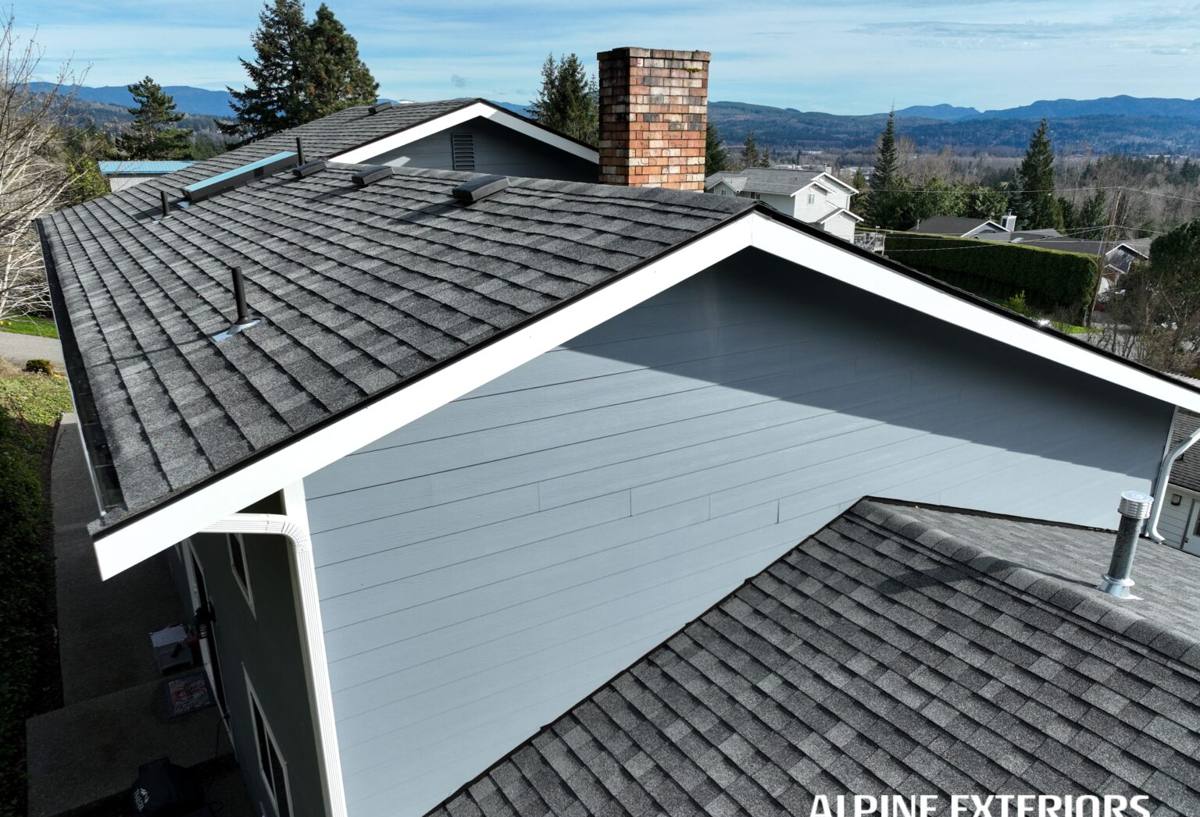
A correct new roof for a Birch Bay home accounts for all of that from the start — material selection, underlayment strategy, ventilation, and the small flashing and fastening details that either hold up to salt air and wind-driven rain or slowly fail because of them. This page covers what Birch Bay homes specifically need from a new roof, what a properly done installation involves, and why local experience with this stretch of Whatcom County coastline matters when you're choosing who does the work.
What Birch Bay's Climate Does to a Roof
Salt Air Off the Water
Homes close to the water in Birch Bay take a steady, ongoing dose of salt-laden air, and metal roofing components feel it first. Nail heads, flashing, drip edge, vent stacks, and any exposed fastener are all vulnerable to accelerated corrosion when salt is in the air constantly rather than occasionally. A fastener or flashing seam that starts corroding loses its ability to keep water out well before it's visibly rusted through, which is part of why roofs near the water tend to develop leaks at flashing points before the field of the roof itself shows any wear.
Driving Rain and Wind Off the Bay
Storms coming off Birch Bay rarely drop rain straight down. Wind drives it sideways and up under shingle tabs, ridge caps, and flashing edges that would shed water fine in a calm rain but not in a wind-driven one. That pattern puts extra demand on underlayment, on how shingles or panels are fastened, and on flashing details around every roof penetration and edge — the places a roof is most likely to leak are almost never the open field, they're the transitions and seams.
A Moss and Algae Season That Runs Most of the Year
Mild temperatures and near-constant moisture mean moss and algae growth in Birch Bay isn't a summer problem or a shaded-roof problem — it's close to a year-round condition on any roof surface with enough texture to hold water and organic debris. Moss does more than look bad: as it grows it lifts shingle edges, holds moisture against the roof deck, and works its way into seams over time. North-facing slopes and roofs under tree cover are usually first to show it, but in a town this close to the water, no roof is fully exempt.
Choosing the Right Roofing Material for This Climate
Material choice matters more in Birch Bay than it does in a drier, more sheltered inland town, because the difference in how well a product handles salt air, wind-driven rain, and moss shows up faster here. Most homeowners are choosing between asphalt composition shingles, metal roofing, and in some cases synthetic or composite shingle products.
Asphalt Composition Shingles
Asphalt shingles remain the most common roofing material in this area, and for good reason — they're cost-effective, widely available, and perform well when the right grade of shingle and the right algae-resistant granules are specified for a coastal, moss-prone climate. Not every asphalt shingle product is built the same way, and choosing one without algae-resistant (AR) granules in a place like Birch Bay is choosing to fight moss and streaking sooner rather than later.
Metal Roofing
Standing seam and other metal roofing systems shed wind-driven rain and moss growth better than most other materials, since there's little horizontal texture for water or organic debris to sit on. The trade-off is upfront cost and the need for corrosion-resistant fastener and flashing systems specifically rated for coastal, salt-air exposure — a metal roof detailed with the wrong hardware for this environment can corrode at the fasteners well before the panels themselves show any wear.
Synthetic and Composite Shingles
Synthetic and composite shingle products can offer good moss and moisture resistance with a more traditional shingle appearance, though product performance varies more between manufacturers than it does with asphalt or metal. We evaluate these on a case-by-case basis against warranty structure and real installation requirements rather than recommending them broadly.
| Material | Typical Lifespan | Moss Resistance | Coastal Considerations |
|---|---|---|---|
| Asphalt shingle (AR-rated) | 20-30 years | Good with algae-resistant granules | Verify AR rating; standard shingles streak and moss faster near water |
| Standing seam metal | 40-60+ years | Very good — little surface for growth to grip | Requires coastal-rated fasteners and flashing hardware |
| Synthetic/composite shingle | 30-50 years (varies by product) | Good, product-dependent | Warranty and installation requirements vary widely by manufacturer |
What a Correct Installation Involves
Tear-Off and Deck Inspection
A new roof starts with a full tear-off down to the deck, not an overlay on top of existing material. That's the only way to actually inspect the roof deck for rot, soft spots, or moisture damage that's been hiding under the old roofing — and in a climate like Birch Bay's, hidden moisture damage under an aging roof is common enough that skipping this step means building a new roof on a compromised foundation.
Underlayment Built for Wind-Driven Rain
Given how often rain arrives sideways here, underlayment choice and installation matter as much as the shingle or panel on top. A synthetic underlayment with a self-adhering, waterproof membrane at eaves, valleys, and around penetrations gives the roof a real second line of defense when wind pushes water somewhere the outer roofing wasn't designed to stop it.
Flashing at Every Penetration and Transition
Chimneys, vent stacks, skylights, and roof-to-wall transitions are where roofs actually fail, far more often than the open field of shingles or panels. Correctly formed and properly lapped flashing at every one of these points — installed to shed water downhill in the right order, not just caulked over gaps — is one of the details that separates a roof that holds up in coastal wind from one that doesn't.
Ventilation That Matches the Home
Proper intake and exhaust ventilation keeps the attic dry and temperature-regulated, which matters for shingle lifespan and for controlling condensation in a consistently damp climate. A roof that looks right from the ground can still be under-ventilated in a way that traps moisture against the deck from underneath, which is a slower but just as real path to premature failure.
Fasteners and Hardware Rated for Salt Air
Every nail, screw, and piece of flashing hardware on a Birch Bay roof should be specified for coastal exposure, not standard-grade. This is a small line-item cost at installation and a significant factor in how long the roof actually performs before flashing or fastener corrosion becomes a leak point.
What a Properly Installed Roof Should Include
- Full tear-off and deck inspection, with any damaged decking replaced before new roofing goes on
- Synthetic underlayment with self-adhering waterproof membrane at eaves, valleys, and penetrations
- Algae-resistant shingles or a moss-resistant material appropriate to the roof's exposure and slope
- Correctly formed step, valley, and counter-flashing at every wall transition and penetration
- Balanced intake and exhaust ventilation sized to the attic space
- Corrosion-resistant, coastal-rated fasteners and flashing hardware throughout
- A clear manufacturer warranty explained in writing, including what is and isn't covered
Our Process for a Birch Bay Roof Installation
We start with an on-site inspection and a straightforward conversation about what your roof needs, not a sales pitch built around whatever material we happen to have on hand. That includes a look at the current roof's condition, the home's slope and ventilation setup, and how exposed the house is to wind and salt air given its position relative to the water.
From there we provide a written estimate that spells out material, underlayment, flashing approach, and cost, so there's no ambiguity about what's included before work starts. Once a project is scheduled, we handle tear-off, deck repair as needed, underlayment, flashing, and final roofing installation as a coordinated job — not a rushed one-day pass that skips the details that matter most in this climate. We clean up thoroughly and walk the finished roof with you before considering the job done.
Why Local Experience in Birch Bay Matters
A roofing crew that already works in Birch Bay and the surrounding Whatcom County coastline knows what this exposure actually does to a roof over time, not just in theory. That means specifying AR-rated shingles or coastal-grade metal hardware as a default rather than an upsell, catching wind-driven rain vulnerabilities in a roof's valleys and transitions during inspection, and building moss resistance into the plan from the start instead of treating it as a maintenance problem to deal with later. It also means understanding how a home's exposure changes depending on how close it sits to the water and which direction it faces — details that matter for material choice and ventilation planning but don't show up on a generic roofing checklist.
Signs Your Roof May Need Replacement, Not Repair
Not every roof problem in Birch Bay calls for a full replacement, but a few signs point toward it being the more honest recommendation rather than another round of patching.
- Shingles that are curling, cupping, or losing granules across large areas of the roof, not just one spot
- Heavy moss coverage that's lifted shingle edges rather than just growing on the surface
- Recurring leaks at the same flashing points despite prior repairs
- Visible sagging in the roofline or soft spots felt underfoot in the attic
- A roof already past or near the end of its material's expected lifespan given its exposure
If you're not sure which category your roof falls into, an honest inspection is a better starting point than guessing based on age alone — a sheltered roof and an exposed waterfront roof of the same age can be in very different condition.
If you're weighing a new roof for your Birch Bay home, we're glad to come take a look and give you a straightforward, no-pressure estimate — use the form below to get started.