 Blaine Window
 Why Dakota Creek Roofs Wear Differently Than Roofs Inland
Dakota Creek sits close enough to the water and to the open fields of Whatcom County that its homes take on a specific combination of stress most roofing crews never have to think about. Salt-laden air moves in off the Strait, driving rain comes in sideways more often than it falls straight down, and the shaded, moisture-heavy stretches of fall through spring give moss and algae months to establish themselves before a homeowner even notices a problem. None of these forces are dramatic on their own. Together, over years, they shorten the working life of a roof that was installed without them in mind.
An asphalt shingle roof built for a dry inland climate and one built for Dakota Creek should not look the same under the hood, even if the shingles on top look identical from the street. The difference is in the underlayment, the flashing details, the ventilation, and the fastening — the parts nobody sees until something fails.
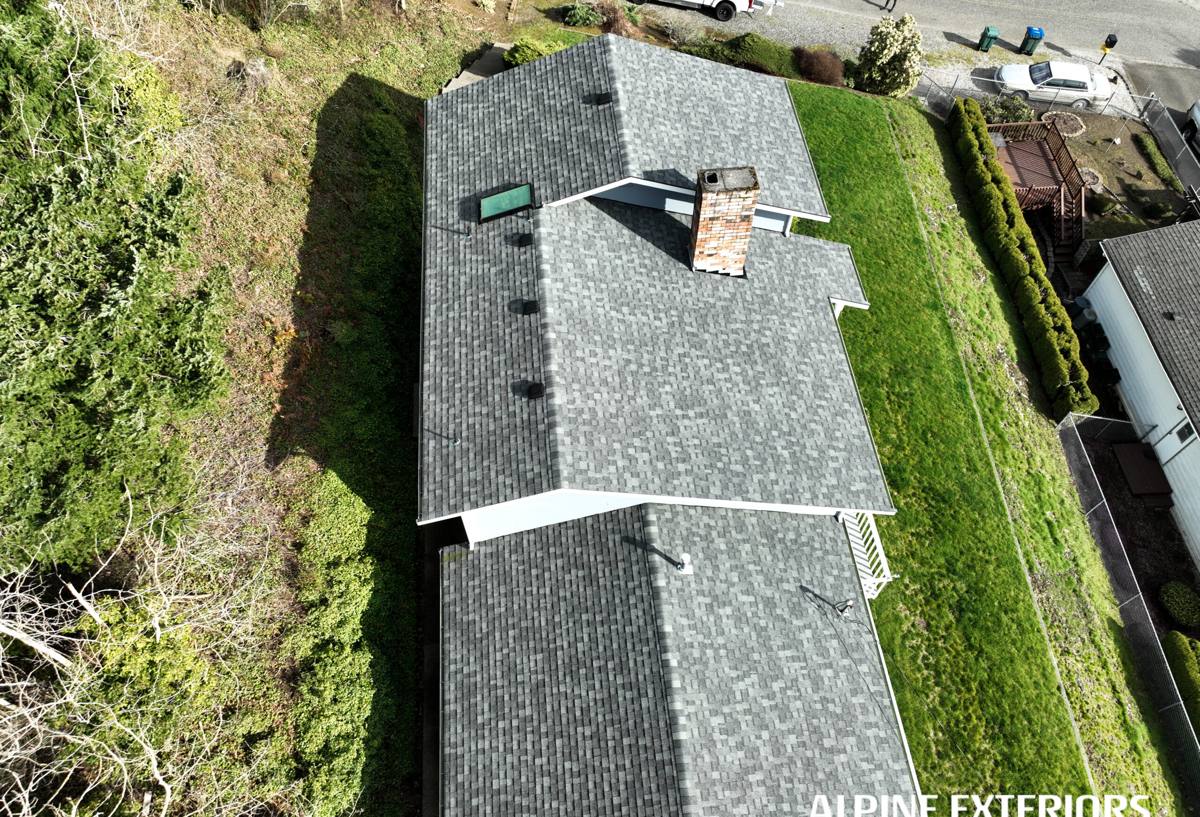
What Salt Air, Driving Rain, and Moss Actually Do to a Roof
Salt Air
Airborne salt accelerates corrosion on exposed metal — nail heads, flashing, drip edge, vent stacks, and any hardware that isn't fully protected. A roof with standard fasteners or thin, unprotected flashing in a salt-exposed area will show rust streaks and metal fatigue years before the shingles themselves are due for replacement. This is a maintenance and materials issue, not a shingle issue, and it's the part most out-of-town crews skip past.
Driving Rain
Wind-driven rain doesn't just run down a roof — it gets pushed sideways and upward under shingle tabs, around vent penetrations, and along valley lines. A roof detailed for calm, straight-down rain can perform fine for years and still leak the first time a real Pacific storm pushes water where it isn't supposed to go. The fix is in the underlayment layering and flashing laps, done correctly the first time, not caulk applied after a leak shows up.
Moss and Algae
Whatcom County's damp, mild winters and shaded lots are close to ideal growing conditions for roof moss and algae. Moss doesn't just look bad — its root structure lifts shingle edges, holds standing moisture against the roof deck, and works granules loose over time. Left unaddressed for a few seasons, moss growth can meaningfully shorten a shingle roof's service life regardless of how good the original installation was.
What a Correctly Built Shingle Roof Includes Here
A shingle roof that's going to hold up in this specific environment needs several things working together, not just a good shingle laid over whatever was there before:
- Ice-and-water shield at eaves, valleys, and around all penetrations — not just the code minimum, but wherever wind-driven rain is likely to find a gap.
- Synthetic underlayment rated for the full field of the roof, providing a continuous secondary water barrier under the shingles.
- Corrosion-resistant flashing and fasteners sized and specified for coastal exposure, not standard-grade hardware that will rust prematurely.
- Balanced ventilation — intake at the eaves and exhaust at the ridge — so moisture from inside the home doesn't condense against the underside of the roof deck.
- Algae-resistant shingle granules (most major manufacturers offer this as a standard option) to slow the biological growth this climate encourages.
- Proper valley and penetration detailing at every roof-to-wall transition, vent stack, and chimney — the places where the large majority of real-world leaks start.
Choosing a Shingle Type for This Environment
Not every asphalt shingle product is a good fit for a salt-air, high-moisture environment. The table below is a general comparison of the shingle classes most homeowners choose between — actual product lines and pricing vary by manufacturer and should be confirmed during your estimate.
| Shingle Type | Typical Lifespan | Moss/Algae Resistance | Best Fit for Dakota Creek |
|---|---|---|---|
| 3-tab (economy) | 15–20 years | Low unless treated | Budget projects; needs more frequent moss maintenance |
| Architectural / laminate | 25–30 years | Moderate to good with algae-resistant granules | Best overall balance of cost, durability, and looks for coastal exposure |
| Premium / designer laminate | 30+ years | Good, especially with copper or zinc strip options | Strong long-term choice for exposed or heavily shaded lots |
For most Dakota Creek homes, a mid-to-upper-tier architectural shingle with algae-resistant granules hits the right balance — meaningfully better moss and weather resistance than economy shingles without paying for features a typical residential roof doesn't need.
Zinc and Copper Strips
On roofs with heavy shade or a history of moss returning quickly, we'll sometimes recommend zinc or copper strips near the ridge. Rain washing over these metals releases trace amounts that inhibit moss and algae growth down the roof plane. It's not a cure-all, but on the right roof it noticeably extends the time between cleanings.
Our Process for a Dakota Creek Re-Roof
- On-site inspection. We check the existing deck, ventilation, flashing condition, and any moss or moisture damage before quoting anything.
- Tear-off and deck assessment. Old material comes off completely so we can see the actual deck condition — soft or rotted sheathing gets replaced, not covered up.
- Underlayment and ice-and-water shield. Installed to the standard described above, with extra attention at valleys, eaves, and penetrations.
- Flashing and drip edge. New, corrosion-resistant flashing at every wall transition, chimney, and vent — this is where most future leaks are prevented or created.
- Shingle installation. Manufacturer-specified nailing pattern and exposure, checked as we go rather than at the end.
- Ventilation check. We confirm intake and exhaust are balanced for the attic volume, adding or correcting vents where needed.
- Final walkthrough. We review the finished roof with you, including care and moss-prevention guidance specific to your lot.
Ventilation and Moisture: The Part You Can't See
A shingle roof can be installed perfectly on top and still fail early if the attic underneath isn't ventilating correctly. In a climate with as much ambient moisture as Whatcom County has for much of the year, warm, humid air from inside the home needs a clear path out through the ridge, balanced by fresh air coming in at the eaves. Without that balance, moisture condenses against the underside of the roof deck, which can cause rot, mold, and premature shingle failure from underneath — problems that show up as a "bad roof" years later when the real cause was never addressed. We check this on every job, not just on request.
What Moss and Algae Maintenance Looks Like After Installation
Even a well-built roof in this area benefits from periodic attention. A realistic maintenance rhythm looks like this:
- Visual check once or twice a year, especially after the wet season, for moss starting at shaded edges or valleys.
- Soft washing (not high-pressure washing, which damages granules) to remove moss and algae before it establishes roots.
- Keeping overhanging branches trimmed back to reduce shade and debris buildup, which slows moss regrowth significantly.
- Clearing gutters and valleys of needles and debris so water has a clear path off the roof.
None of this is expensive or complicated, but skipping it is the single most common reason a good roof underperforms its expected lifespan in this climate.
Cost Factors for a Dakota Creek Shingle Roof
Every roof is different, and we won't quote a number without seeing yours, but the factors that most commonly move the price are consistent:
| Factor | Why It Matters |
|---|---|
| Roof size and pitch | More surface area and steeper pitches take longer and require more safety setup |
| Deck condition | Rotted or soft sheathing found during tear-off needs replacement before shingles go on |
| Number of valleys, penetrations, and transitions | Each one requires additional flashing and labor time to do correctly |
| Shingle tier selected | Economy, architectural, and premium lines carry different material costs |
| Existing moss or moisture damage | Deck repair or extra treatment adds to the scope |
| Ventilation upgrades needed | Adding or correcting intake/exhaust vents is sometimes required to bring an older roof up to a proper standard |
Why It Matters That We Already Work in Dakota Creek
A roofing crew that only shows up in this area occasionally has to relearn the local conditions on your dime — guessing at flashing details, using standard hardware where corrosion-resistant fasteners belong, or missing ventilation issues that are obvious to a crew that sees them every week. Working regularly in and around Blaine and greater Whatcom County means we already know how salt exposure, prevailing wind direction, and shade patterns typically play out on roofs in this area, and we build for those conditions from the first day of the job rather than discovering them later as a warranty claim.
It also means we're a known, reachable local business if a question comes up two years from now — not a crew that was passing through.
Signs It's Time to Have Your Roof Looked At
- Granules collecting in gutters or at downspouts in noticeable amounts.
- Shingle edges curling, cupping, or lifting, especially on shaded slopes.
- Moss visible at valleys, edges, or in shaded patches.
- Daylight visible through the attic roof deck, or damp insulation after storms.
- Roof is approaching or past 20 years old and has never been inspected.
If you're seeing any of these, it doesn't automatically mean a full replacement — sometimes it's a repair, sometimes it's overdue maintenance. An honest inspection will tell you which.
If you're weighing a repair, a re-roof, or just want an honest read on where your roof stands, we're glad to take a look. Fill out the form below for a free, no-pressure estimate on your Dakota Creek home.